How the UAE’s decision to leave Opec could recast the Middle East
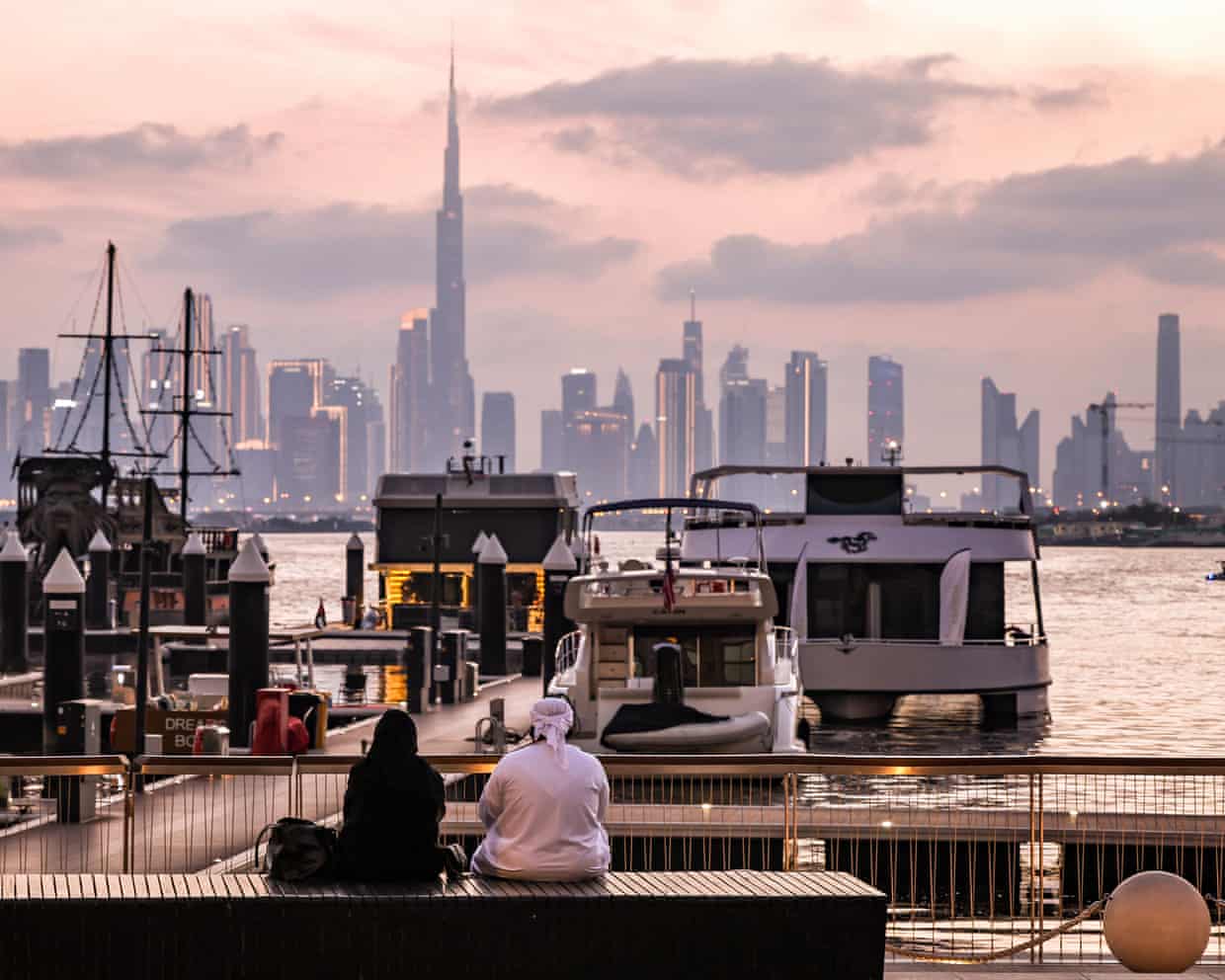
The United Arab Emirates’ decision to walk out of Opec is a political as much as business decision, and will reignite the simmering rows between the UAE and Saudi Arabia – which had been covered up by their shared anger with Iran over its attacks on the Gulf states since the start of the US-Israel war on Tehran,In the short term, leaving the oil producing cartel it joined in 1967 gives the UAE the freedom to respond quickly to a long-term prospect of constrained supplies, and to maximise profit,But it is a decision the UAE has considered before, as UAE and Saudi tensions over production quotas have been longstanding,But the timing and unilateral nature of the UAE decision shows how other intra-Gulf disputes over how to respond to the Iran war could recast the Middle East,The defection is, of course, a blow to Saudi Arabia’s prestige, since it positions the UAE as the Gulf state closest to Donald Trump, a long-term critic of Opec, and weakens the Saudis’ ability to manage the price of oil.
The announcement, without any prior consultation, came as the six-member Gulf Cooperation Council (GCC), which includes Saudi Arabia and the UAE, was meeting in an emergency session in Jeddah, the first time it had done so since the Iran attacks.Ever since the conflict with Iran started the UAE, the Gulf state politically closest to Israel and most hostile to Tehran, has been privately pushing Saudi Arabia and Qatar to launch joint counterattacks against Iran.The UAE was the Gulf state most heavily assaulted by Iran, fending off more than 2,200 drones and missiles, in part a function of its geographical proximity.Despite briefings that Saudi Arabia was urging the US to defeat Iran, no public GCC consensus was formed to take a step that could be seen as highly risky, since it could be interpreted not only as self-defence but as siding with Israel.Unable to build the political solidarity it demanded, the UAE has decided to abandon the economic solidarity of the oil producers’ club and to go it alone.
The state-run firm Adnoc says it will be able to boost production from 3.4m barrels a day before the start of the Iran war to 5m barrels by 2027.After the closure of the strait of Hormuz, the country’s production slumped 44% to 1.9m in March, and its capacity to increase production is contested.Overall, the Iran war wiped out 7.
88m barrels a day of Opec’s production in March, resulting in a 27% fall to 20.79m barrels a day that month, the biggest supply collapse for the producers’ group in recent decades.Dr Ebtesam Al-Ketbi, the president of the Dubai-based Emirates Policy Center, cast the decision as an act of self-interest.“In effect, the UAE is redefining its role from a producer within a bloc to a balancing producer that contributes to market stability through its ability to act,” she said.“While this move may gradually weaken Opec’s cohesion, it simultaneously strengthens the UAE’s position as an actor capable of directly influencing global supply dynamics.
”Determined to diversify, the UAE has been much more dependent on US good will than has Saudi Arabia.The decision to quit Opec may indeed cement the country as Trump’s diplomatic favourite, a status that could have investment consequences for the emirates.The UAE has already been wielding its influence.Earlier this month it recalled $3.5bn deposits from Pakistan, a fifth of Pakistan’s foreign exchange reserves, in an indication of its displeasure with Pakistan’s neutrality over Iran, forcing Saudi Arabia to step in to help Pakistan.
At the same time, in the Horn of Africa, the UAE had been pursuing a largely commercially driven foreign policy that puts it directly at odds with Riyadh,Those tensions may resurface, depending on how the Saudis respond,Warnings about the UAE’s frustration with the Gulf’s collective political response to Iran’s “premeditated attack” have been voiced repeatedly by Dr Anwar Gargash, diplomatic adviser to the UAE president,On Monday, Gargash said the GCC – the political bloc made up of the UAE, Saudi Arabia, Oman, Qatar, Bahrain and Kuwait – was at its lowest ebb,“Unfortunately, the GCC’s position is the weakest in history, considering the nature of the attack and the threat it poses to everyone.
”Hinting at antagonism to Turkey and possibly Pakistan, he said: “We cannot allow anyone outside the Gulf region to dictate our security priorities.These missiles will not be aimed at them tomorrow; they will be aimed at us.“Therefore, there must be a Gulf vision, policy and representation at the national level, and I hope at the collective level as well.National defence is very important but we must also say that Gulf solidarity was not up to the task.”Ahead of the debate in the Gulf states over the future of the US security guarantee, Gargash has staked his ground, insisting Iran remains the great strategic threat – not Israel – and America is still required in the region.
“Today the American role in the region has become more important, not less, because the American role isn’t just about military facilities or anything like that.The American role is a defence system.The American role is political support.The American role is economic and financial engagement.”By leaving Opec, the UAE will hope to have guaranteed that US engagement.
Singing activists disrupt NatWest meeting over ‘climate backtracking’
The chair of NatWest was forced to defend the bank against accusations of “climate backtracking” at a chaotic annual shareholder meeting, which was temporarily suspended owing to singing protesters.Not long after the meeting began in Edinburgh, it was adjourned for about half an hour after a protester interrupted Rick Haythornthwaite’s opening speech.Protesters in the audience, wearing black T-shirts emblazoned with “No more big oil” and “No bombs”, then sang a song to the tune of Frère Jacques, with a chorus of “No more bombs, no more oil”. They appear to represent the campaign group Extinction Rebellion’s XR Money Rebellion, which has targeted NatWest and other banks for financing fossil fuel projects.When the meeting resumed, it was dominated by questions from shareholders about NatWest’s climate policies, as well as staff wages compared with bumper executive pay packets
UAE quits Opec in ‘pivotal moment’ for oil producing group – as it happened
Newsflash: The United Arab Emirates has announced it is quitting the Opec group of oil producers.In an unexpected move, the UAE is leaving Opec and Opec+ (which includes allies such as Russia) from 1 May, a move which could allow it – in theory – to produce more oil and gas.The UAE’s energy ministry says in a statement that the decision “reflects the UAE’s long-term strategic and economic vision and evolving energy profile”, and follows a “comprehensive review” of its production policy, and its current and future capacity.Opec, created back in 1960, agrees and sets production quotes for members in an attempt to control the oil price. The UAE is a long-standing member, having joined in 1967
Europe’s smaller airports ‘under threat’ if fuel shortages cause many cancellations
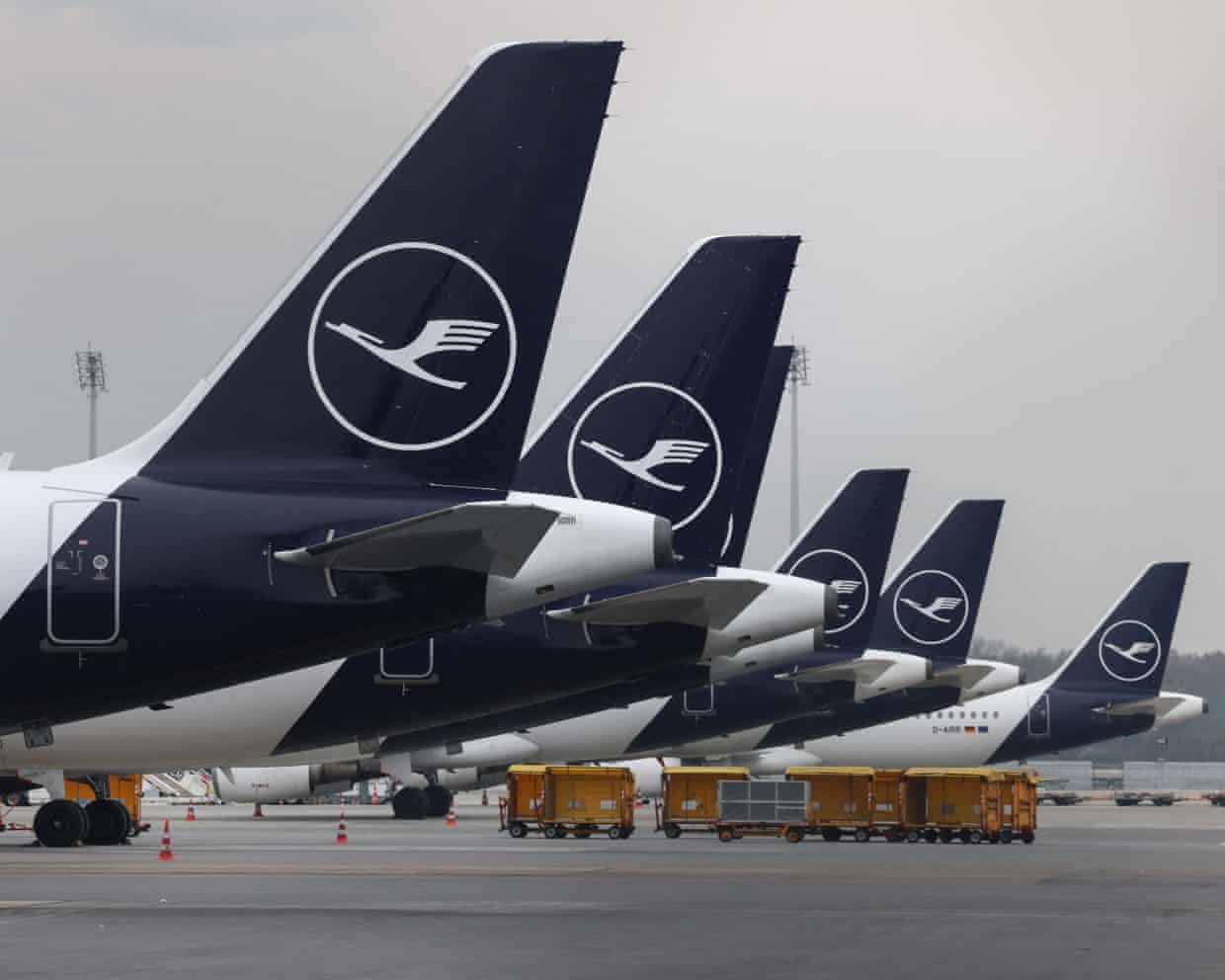
Europe’s smaller airports may not survive if jet fuel shortages triggered by the Middle East crisis lead to widespread route cancellations, the industry’s trade body has warned.Although airlines insist there are currently no supply problems within the normal four- to six-week horizon, the US-Israel war on Iran and the effective closure of the strait of Hormuz have doubled the price of jet fuel, prompting some carriers to cancel flights.The Airports Council of Europe said regional airports were the most exposed and faced an “existential threat” if airlines cut capacity and raised fares, as demand on their routes was generally more price-sensitive – demonstrated when Lufthansa axed 20,000 summer flights operated by its regional subsidiary, CityLine.Olivier Jankovec, the director general of ACI Europe, said that smaller regional airports had still not recovered since the Covid pandemic, with traffic still 30% below 2019 levels, while larger ones had bounced back to growth.He said: “The current levels of jet fuel prices and the prospect of a new cost of living crisis mean that many regional airports across our continent are likely to face both a supply and demand shock
Barclays cuts back risky lending after £228m hit from UK mortgage firm MFS
Barclays is pulling back from lending to risky borrowers, as its chief executive warned of increasing numbers of fraud cases and the bank took a £228m hit from the failure of a mortgage lender.The mortgage lender Market Financial Solutions (MFS) collapsed in February amid allegations of fraud, and the UK’s financial regulator has since launched an investigation into the scandal.Barclays provided banking services to MFS and said the £228m hit had pushed total credit impairment charges to £823m in the first three months of 2026, up from £643m a year earlier.Last year the British bank reported a £110m loss over the US sub-prime auto lender Tricolor, which collapsed amid fraud allegations.The chief executive, CS Venkatakrishnan, said: “This [alleged] fraud, as with the one in Tricolor, indicates to us the importance of strong financial controls at borrowers and the difficulty ex-ante of identifying fraud
BP profits more than double as oil prices soar in Iran war
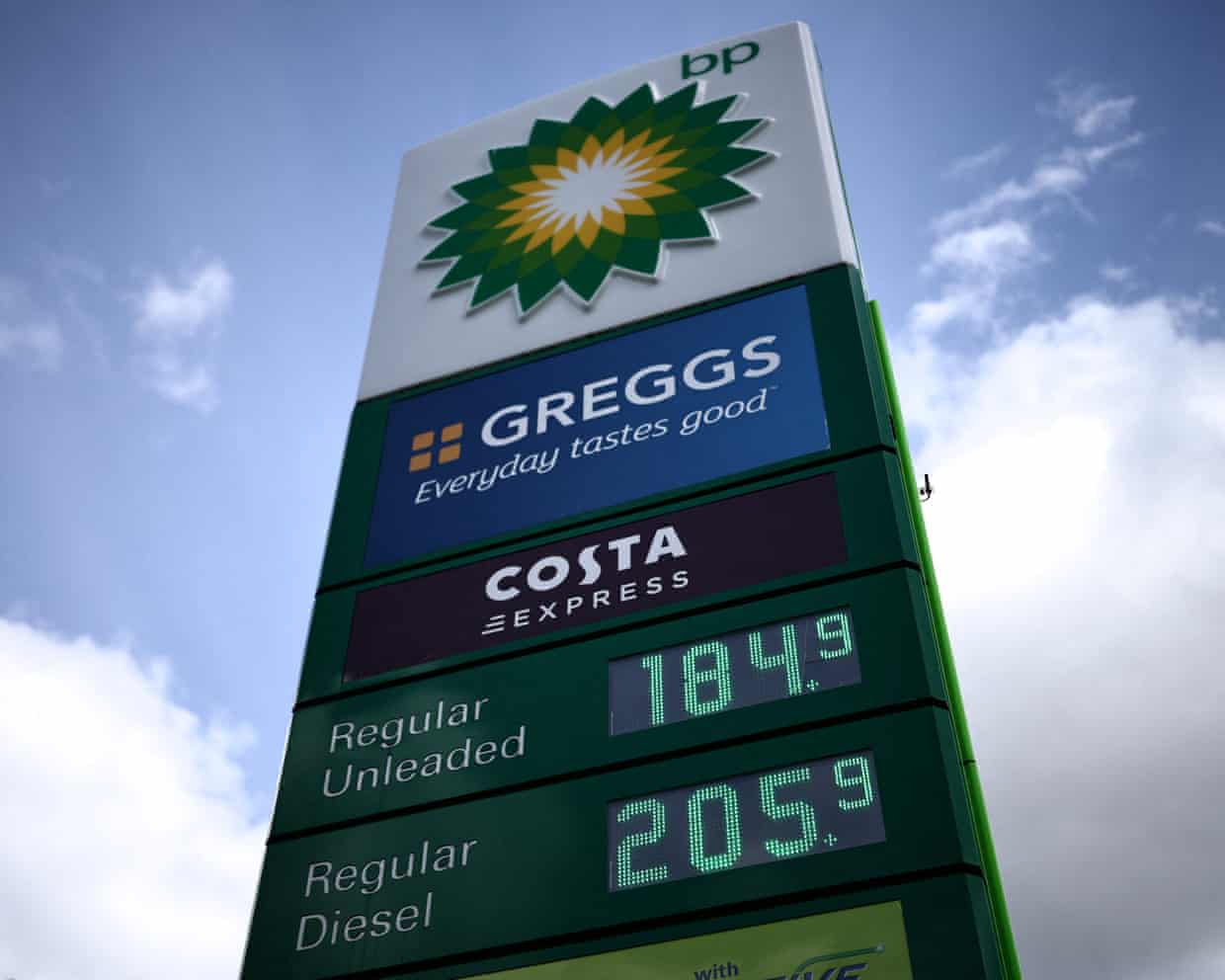
BP has provoked outrage by revealing its profits more than doubled in the first quarter of this year after its oil traders reaped the benefit of the war in Iran.The energy company capitalised on a surge in global oil market prices to report better than expected profits of $3.2bn (£2.4bn) for the first quarter, more than double the $1.38bn it made in the same period last year
Deloitte and Zoom’s trims to parental-leave benefits may hurt them in long run, experts say
Recent moves by US companies Deloitte and Zoom to reduce how much paid parental leave they offer employees could signal a larger reduction in benefits in corporate America, according to labor market experts.American workers are already seen as having less benefits and labor protections than many of their counterparts across the world, especially in Europe.Leadership at the huge accounting and communication technology companies probably made the decisions because the labor market has stagnated, meaning that people looking for jobs do not have the same leverage when considering a job opening, the experts say.But while cutting the benefit might help companies save money in the short term, some consultants argue that the moves will ultimately hurt companies because it will make workers less productive, among other negative consequences.“It feels like someone is just looking at a spreadsheet saying, ‘How can I get more hours?’” said Bobbi Thomason, a professor of applied behavioral science at Pepperdine Graziadio Business School

UK spring sunshine prompts warnings over unsafe fake designer sunglasses

Home blood pressure checks could reduce risks after hypertensive pregnancy

Four-fifths of UK mental health nurses say their workload is unmanageable

Drug use in England spikes during heatwaves and big sports events, research finds

People in UK spend fewer years in good health than a decade ago, study finds

Suicide-related callouts to fire services triple in England in a decade