Starmer announces visa-free travel to China after talks with Xi in Beijing – UK politics live
Keir Starmer has secured a deal on visa-free travel to China for UK citizens during his visit to Beijing, PA Media reports.PA says:Those visiting the country for less than 30 days will no longer need a visa under the agreement, Downing Street has announced.It will apply to those travelling to China for business and as tourists and brings the rules for UK visitors in line with those from 50 other countries including France and Germany.The change will not come into effect immediately, but Beijing is understood to have committed to unilateral visa-free entry for UK citizens with a start date to be confirmed.British passport-holders currently need a visa to enter mainland China.
Starmer said: “As one of the world’s economic powerhouses, businesses have been crying out for ways to grow their footprints in China.“We’ll make it easier for them to do so, including via relaxed visa rules for short-term travel, supporting them to expand abroad, all while boosting growth and jobs at home.”Keir Starmer has taken a major step towards rapprochement with China, opening the door to a UK visit from Xi Jinping in a move that drew immediate anger from British critics of Beijing.As Pippa Crerar and Rowena Mason report, during the first visit by a British prime minister to China in eight years – a period which Starmer described as an “ice age” – he said talks with the Chinese president had left the bilateral relationship in a stronger place.However, while Starmer and his team were flaunting the results of the visit – including a visa waiver, a cut in whisky tariffs and economic cooperation agreements – there was growing concern in the UK over the prospect of a return trip.
Westminster insiders “do not get a licence to lie”, said Andy Burnham on Thursday, in an angry swipe at the political briefing culture in the House of Commons,Millions of “Waspi women” will not receive any compensation, the government has again decided in its latest ruling on the case – but campaigners say they will fight on to secure the justice they say they have been “shamefully denied”,It would be “a disaster for disabled people” if police stop recording and investigating lower-level incidents of abuse that often lead to more serious hate crimes, according to researchers and campaigners,Nigel Farage has paid a visit to Dubai to build diplomatic relations with United Arab Emirates ministers and drum up donations for Reform UK from wealthy expats,The UK could introduce a universal basic income (UBI) to protect workers in industries that are being disrupted by AI, the investment minister Jason Stockwood has said.
Police-recorded homicides in England and Wales have fallen to their lowest level in more than 40 years – driven by a drop in knife crime, PA Media reports,PA says 499 homicides were recorded in the year to September 2025, down 7% from 539 in the previous 12 months, according to ONS figures,Yesterday political journalists got an email from Robert Ford saying Reform UK and the Green party were “neck and neck to win the Gorton and Denton byelection”,Politicos know that Robert Ford is a great elections expert, and it was surprising that he was quite so negative about Labour’s chances in the seat, all factors considered,But this was Betfred’s Robert Ford – who may be a great expert on betting odds, but isn’t a politics professor.
Thankfully, his namesake (or Rob Ford, as he prefers) has pronounced on the byelection too.He has written a very detailed post about the byelection on his Substack blog, which is probably the definitive psephological guide to the contest.It includes this chart about the demographics of the seat, which is a mix of Denton (largely white) and Gorton (less than 50% white, 40% Muslim, 42% graduate or student).As Ford explains, there’s a catch.There are twice as many voters in the constituency from the Gorton end (the green bars) as from the Denton end (the blue bars).
Ford does not predict the result, and his article is worth reading in full, but he says Reform UK may struggle to win,Though Reform have gained a lot of ground in the national polls, they may find Gorton and Denton, where they start 36 points behind Labour, a tough nut to crack,Reform poll poorly among young voters, university graduates, and ethnic minorities – all groups found in large numbers in this seat’s Manchester wards,The three Denton wards have a more Reform-friendly profile but Denton makes up just a third of the seat’s total electorate,There is no history of radical right success in any of these wards, and Reform likely begin with next to no organisational presence in the seat, having stood no candidates here in 2024.
Ford says, on paper, Labour should have the best chance.But he goes on:Things are not so simple for a governing party polling below 20%, led by the most unpopular prime minister in polling history, a prime minister who has particularly struggled with young progressives and Muslim voters.Labour’s vote already fell sharply here in both the 2024 general election and the 2024 locals, as both Muslim voters and younger graduates in the Manchester wards registered their discontent with a party seemingly more interested in listening to Reform voters than listening to them.And, as for the Green party, Ford says they will “hope that a radical left message on domestic and foreign policy will make them the obvious vehicle for discontent among young progressives and Muslims”.But they face competition from the Workers Party of Britain, who could “easily play spoiler, taking a large enough slice off the Muslim electorate to make a Green or Labour win harder, and a Reform win easier”, Ford says.
The latest episode of the Guardian’s Politics Weekly podcast is out.It features Pippa Crerar, who is in China with the PM, discussing the trip with Kiran Stacey.Libby Brooks is the Guardian’s Scotland correspondent.Scottish Labour leader Anas Sarwar used today’s session of first minister’s questions to press John Swinney further on the Glasgow hospital where contaminated water has been linked to infections and some deaths among patients, including children being treated for cancer.Sarwar said he had “damning evidence” from minutes of meetings between Glasgow health board officials and the Scottish government that “political pressure” was applied to open the Queen Elizabeth university hospital in April 2015, just before the general election.
This has previously been denied by Swinney and former first minister Nicola Sturgeon, while the health board has clarified that its reference to pressure in evidence to the inquiry into the building’s infection issues related to internal pressure.Sarwar told MSPs:That decision to open the hospital early has resulted in a decade of lies, deceit and cover-up, bullying and gaslighting of staff, families being lied to and denied the truth, and infections that led to the deaths of children, and possibly adults too – all because politics was put before patient safety.Swinney said all these matters would be dealt with by the inquiry, which heard its final sessions of evidence last week with some shocking admissions from the health board.It finally admitted there was a possible link between the water system and patient infections, as well as acknowledging that the hospital opening before it was ready.Labour has accused Matt Goodwin, the Reform UK candidate in Gorton and Denton of being a “snowflake” after he complained to the police about a misleading video of him it posted on social media.
On Tuesday Labour posted a 10-second clip on X of Goodwin speaking at an event where he said he was “unfortunate enough” to be in Manchester recently where there was no energy.Gorton and Denton is on the outskirts of Manchester and the caption on the video said: “This is what Reform’s latest candidate thinks about where he’s standing to represent.”As the Telegraph reports, this was misleading, because Goodwin was referring to attending the Tory conference in Manchester, not the city itself.Reform UK complained to the police on the grounds that this was a breach of the Representation of the People’s Act 1983, which bans any “false statement of fact” against a candidate.Today Greater Manchester police said they were not taking any action because they did not think an offence had been committed.
Labour responded by taunting Goodwin on social media.These are from the Labour Press account.Matt Goodwin is a snowflake - pass it on https://t.co/auOcLgT3dVSo much for this, eh? pic.twitter.
com/FzrRP1SrbUAnd this is from the main Labour account.Goodwin in 2025:⠀⠀⠀⠀Goodwin in 2026:Home of free speech!⠀⠀Don’t be mean to me :( pic.twitter.com/8wEQBBCdoGManchester, reject this fraud.The Unite union has criticised the government for abandoning a proposal to ensure that, when tips are distributed to workers, staff get full control over who gets what.
The last government passed a law saying that tips should be passed on fully to workers.But employers were still able to decide which workers were included in the group getting a share of the money.Labour promised to address this, and the rules have been changed in the Employment Rights Act.But, while Labour originally promised that workers would get full control of tip allocation, that pledge has been watered down.As Tom Belger revealed in a story for LabourList, the government diclosed the shift in a Q&A in a policy paper explaining how the new law will work.
It says:Under the headline “Why are you not handing full control of tip allocation to workers, as you pledged?”, the document says:Employers will be legally required to consult with their workers when developing their policy on tipping,This must represent a genuine consultation – not simply a paper exercise – something which will be ensured by the new right for workers to view a summary of the views expressed within it,Direct worker control of the tipping distribution, without the guardrails of consultation and accompanying statutory and non-statutory guidance, could risk certain groups of workers being disadvantaged by a ‘tyranny of the majority’ or even indirect discrimination against workers with certain protected characteristics, while such an approach could also be impractical to enforce,Commenting on the change, Sharon Graham, the Unite general secretary (whose first job was as a waitress), said:The government’s fact sheet is wrongheaded and offensive to hospitality workers, it needs to be withdrawn and redrafted,Using language such “the tyranny of majority” of workers, totally fails to appreciate the employment conditions of hospitality workers.
The dangers of discrimination and unfairness will come from imposing a tips policy without the workers’ voice,The suggestion that vulnerable workers would be disadvantaged by a workers’ tips policy is simply insulting,Many workers in front of house positions are low paid, young, women and migrant workers,Yesterday a reader asked if More in Common took into account that, by the next election, the voting age will have been reduced from 18 to 16 (assuming the government legislation goes through) when it produces its seat forecasts from its MRP polls,The answer came back, no.
The latest More in Common MRP poll suggests Reform UK is on course to win a majority of more than 100.It is projecting Reform on 381 seats, Labour 85, Conservatives 70, SNP 40, Lib Dems 35 and the Greens 9.Prompted by the question, More in Common’s Jake Dibden crunched the numbers to see what might happen to these figures if they included 16 and 17-year-olds voting.He says the results would be different in eight seats, the numbers suggest.He says:The last round of census data suggested there were only about ~1.
5 million 16-17 year olds living in the UK,Of course those people were already of age to vote by the time of the 2024 election, but assuming the number is not too far off for current 12-13 year olds and given average turnout rates (and we know younger people tend to vote at lower rates than average), the reform would only be adding around ~800-900,000 active voters to the electorate (compared to the ~28 million that voted in 2024),Given that these voting intention of these would be voters is likely to be divided between many parties (as in the country as a whole) any given party may only obtain an advantage of a couple of hundred votes on average in each constituency,Here is the list of the eight seats where, on the basis of these projections, votes at 16 would change the result,Overall, Labour and the Greens would gain two seats each, the Tories would lose two seats, and Reform UK and the SNP would both end up one seat down.
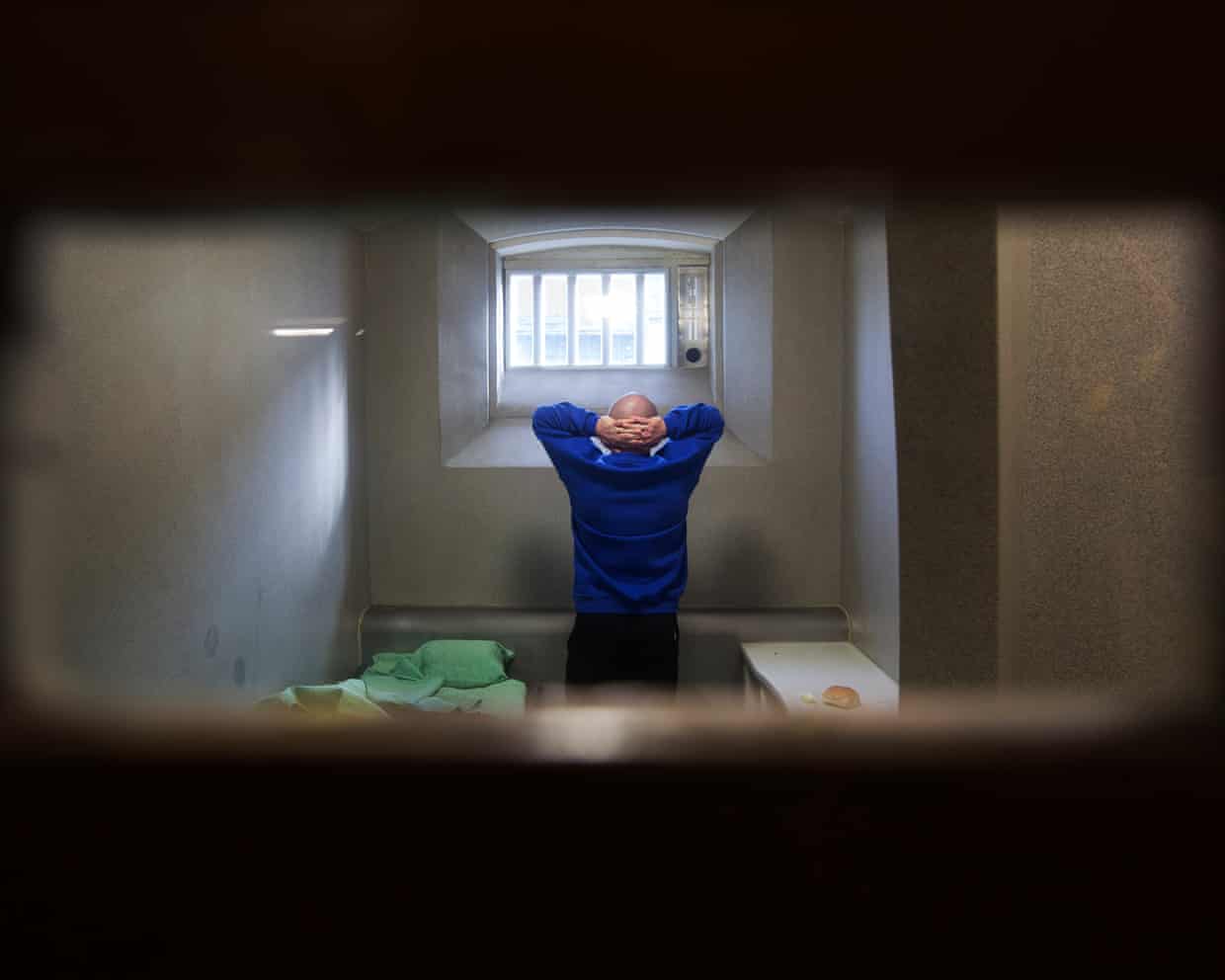
Back to China, and the UK has agreed a tariff reduction deal for Scotch whisky, Gina Davidson, LBC’s Scottish political editor, reports.BREAKING: UK govt has signed a new tariff deal for whisky with China - Scotland’s 10th largest market for the amber nectar by value.It will see tariffs halve - from 10% to 5% Believed to be worth £250m over 5 years for exportersMinisters are no longer forecasting a chronic shortage of prison places – but the “margin for error is slim”, MPs have been told.Jake Richards, a justice minister, said the figures in the lastest annual statement on prison capacity showed that government decisions to reduce prison overcrowding were having an impact.He told MPs:The figures today do show that without the action this government took, opposed every step of the way by the Conservatives and Reform, our law and order system today would be in crisis – criminals allowed to roam the streets, victims failed.
For the first time in a very long time, we are no longer forecasting a chronic deficit of prison places.When the impact of this government’s landmark sentencing reforms is taken into account, supply is now expected to keep pace with demand in our central projected scenario.This is real progress but let me be absolutely clear, this is not the time for complacency.The system remains under considerable pressure.The margin for error is slim and the work to stabilise it is far from finished.
This chart shows what the forecast is for the number of prison places available up to 2032 (the orange line), the number of people likely to be in prison needing those places (the thick blue line) and the number of prisoners there would have been without the Sentencing Act reforms (the dotted blue line).Ben Quinn is a Guardian political correspondent.Nigel Farage is facing calls to suspend a Reform UK candidate in an upcoming council byelection who has been accused of making xenophobic and anti semitic comments.Mike Manning, who is running to join Redcar and Cleveland Borough Council, has been accused of making the comments on X as recently as November.“Jews, Muslims.
.There is something about circumcision that goes to their heads,” an verified X account in his name tweeted last year.Other offensive tweets by the same account included a reference to Jizya, a poll tax levied on non-Muslims in exchange for protection.“We already pay the Jizya tax, it’s called universal credits.They are all on it,” the account tweeted.
The controversy comes after the Reform UK leader of Staffordshire county council, Ian Cooper, was removed from the party last month after being accused of making racist comments on social media.The Liberal Democrats’ deputy leader, Daisy Cooper, has written to the Reform leader to call for Manning’s suspension, accusing the candidate of directing “sickening insults at Jewish and Muslim communities.”Asked if Manning, a former soldier who later worked in IT, had been suspended, a Reform spokesperson said that a disciplinary investigation has been opened.Manning is standing in a 19 February byelection for the Zetland ward of Redcar and Cleveland borough council, where no party has overall control but where Labour is the largest.Downing Street has said that Keir Starmer remains committed to welfare reform – despite the Times reporting that a welfare reform bill won’t feature in the king’s speech in May.
Asked about the report at the No 10 lobby briefing, the PM’s spokesperson said:Final decisions on the contents of the king’s speech haven’t been taken yet, but we are getting on with fixing the broken welfare system we inherited in order to get Britain working.That includes reforms to Motability and universal credit, and launching the youth guarantee.We’ve also commissioned Alan Milburn to look at how we can tackle the number of young people out of work to address the root causes that hold people back, and launched the Timms review co-produced with disabled people and their representative organisations to make sure Pip [the personal independence payment] is fit and fair for the future, and we’ll set out any further legislative plans in due course.Given that the Timms review into Pip is not due to report until the autumn, ministers were not expected to be producing legislation relating to that this spring.But, as Max Kendix points out in his Times story, there are other welfare reform plans due to be implemented, including a proposed new “unemployment insurance”, a beefed-up, contributory, time-limited unemployment benefit.
In his story, Kendix says:Government sources stressed that discussion about legislation was still continuing, and that even if welfare reform was not included in the king’s speech a bill could still be introduced at a later date in the session.One minister said: “Clearly any welfare reform is going to be very difficult with the back benches, and the closer you get to a general election the less you want to do the difficult stuff.We’ve got to remember that largely the public wants to see welfare reform, and we do need to show delivery on that.This is not showing that reform is a priority.”Nigel Farage’s attack on Turkish barber shops amounts to dog-whistle racism without a credible plan to fix struggling high streets across the country, Miatta Fahnbulleh, the devolution, faith and communities minister, has said