Starmer overruled warning of ‘reputational risk’ over Mandelson appointment, files show
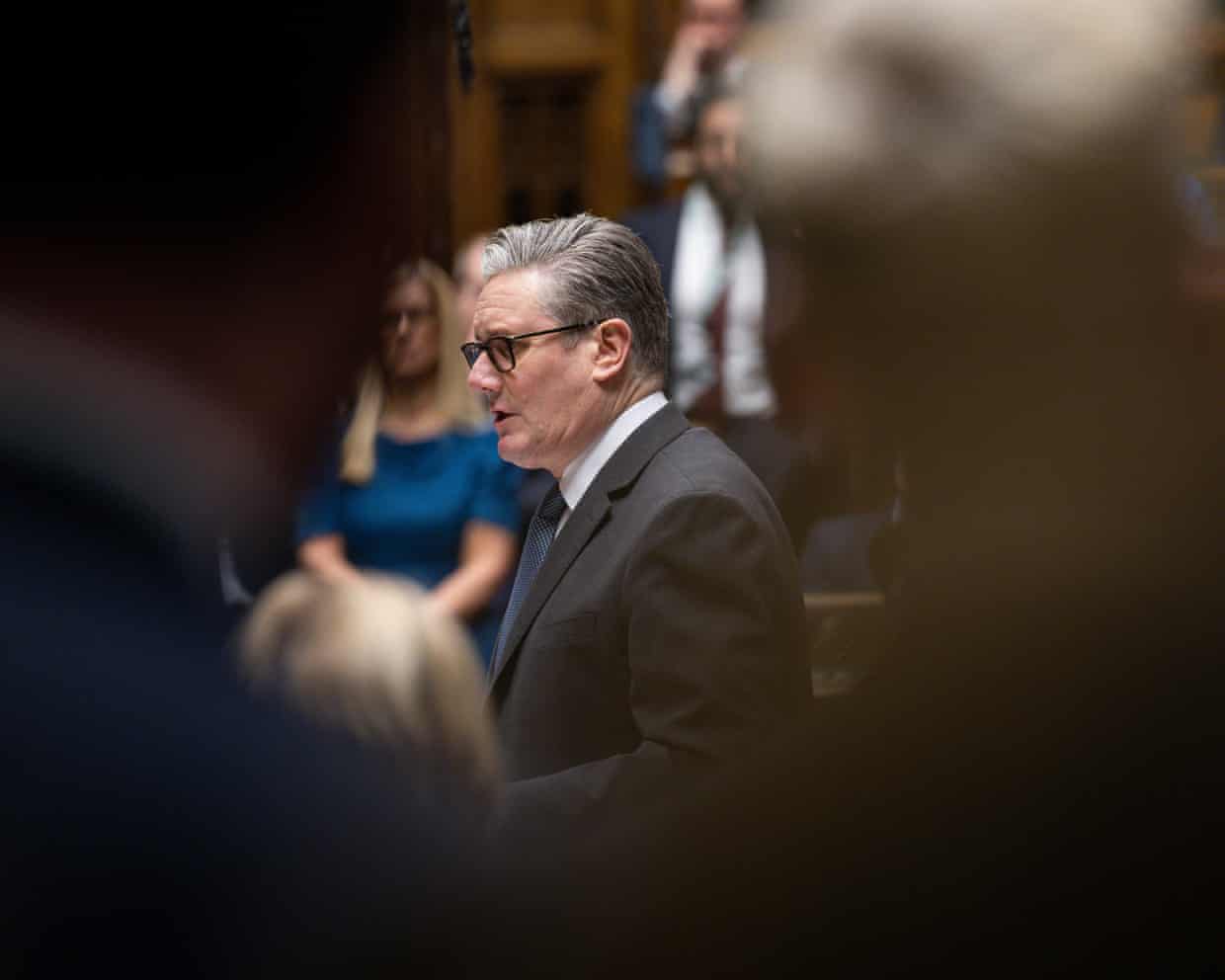
Keir Starmer overruled officials who warned of a “reputational risk” in making Peter Mandelson US ambassador, despite being handed a dossier of evidence about the peer’s relationship with the sex offender Jeffrey Epstein, documents reveal,The disclosure in newly released files will raise fresh questions about Starmer’s judgment – as well as about the vetting procedures at the highest levels of government,The files show that Mandelson was offered a highly classified briefing from the Foreign Office even before he finished the formal vetting process,They also show that two of the government’s most senior security and foreign policy officials – national security adviser Jonathan Powell and FCDO permanent secretary Philip Barton – raised concerns about Mandelson’s appointment due to his involvement in previous public scandals,Despite the document prepared by the officials warning that Mandelson had continued his relationship with Epstein after his conviction, emails show close aides to the prime minister said they were “satisfied” with Mandelson’s explanations of their friendship.
The documents were released after the Conservatives forced the disclosures about the appointment of Mandelson, who was sacked in September last year because of new revelations about his close association with Epstein.The documents show:Mandelson was offered a severance payment of £75,000 after initially asking the Foreign Office to pay him more than £500,000;Starmer was warned before appointing Mandelson that he remained in contact and stayed with Epstein after the financier was first convicted of procuring an underage girl in 2008;Powell told an investigation that he thought the appointment was “weirdly rushed”;Starmer was reassured about Mandelson’s friendship with Epstein by Matthew Doyle, his former communications chief and a friend of Mandelson.Doyle said he was “satisfied” with Mandelson’s explanation of the relationship.Starmer has since said he believed Mandelson misled his team about the depth of his friendship with Epstein, including maintaining contact while he was in prison and urging him to fight for early release.Mandelson is understood to deny this.
In a note to the prime minister from December 2024, Starmer’s principal private secretary, Nin Pandit, said Mandelson’s relationship with Epstein had been discussed with Morgan McSweeney, Starmer’s then chief of staff, but that Doyle was “satisfied” with Mandelson’s answers.The early documents from when Mandelson was first being considered as ambassador reveal that the prime minister was made aware his relationship with Epstein had continued beyond his conviction.In the due diligence file, Starmer was warned there was “general reputational risk” around Mandelson’s links to Epstein.It enclosed information that was in the public domain – that Mandelson’s friendship continued “after Epstein was first convicted of procuring an underage girl in 2008, their relationship continued across 2009-2011 … Mandelson reportedly stayed in Epstein’s house while he [Epstein] was in jail in June 2009.”The emails also suggest that official procedures were overridden to appoint Mandelson.
One email shows that officials offered a high-level briefing to Mandelson shortly after his appointment had been announced.An email dated 23 December from the head of the US & Canada department at the FCDO to Mandelson outlined his onboarding arrangements.In this email, the official states: “We’ll brief you further in person from 6 January onwards, including at higher tiers.”An email does not formally confirm Mandelson’s developed vetting clearance until 30 January 2025, with his formal offer of employment.Mandelson was asked then to apply for an even higher level of vetting – Strap clearance – which was not initiated until 4 February.
The emails suggest he would have received higher tier briefings before either of these processes were complete.The FCDO’s own security guidelines outlined in the formal appointment letter attached to that same email stated: “If Strap clearance is required … you should submit a new Strap application form for your new position at least three months before you are due to start at post.”Speaking in the Commons after the release of the first tranche of documents, the chief secretary to the prime minister, Darren Jones, appeared to acknowledge the unorthodox timeline of Mandelson’s appointment and his subsequent vetting.Jones said: “We are changing the process for direct ministerial employments, including politically appointed diplomatic roles, so that where the role requires access to highly classified material, the candidate must have passed national security vetting before such appointments are announced or confirmed.”The cache of documents also reveals discussions about Mandelson’s dismissal as ambassador, which came after new documents were revealed in the US Department of Justice’s Epstein files, including emails where Mandelson urged Epstein to “fight for early release.
”Mandelson was offered a severance payment of £75,000 after initially asking the Foreign Office to pay him more than £500,000 for the balance of his contract, the newly released documents reveal.Exchanges in the documents released by the Cabinet Office suggested officials did “well to get this settlement down this low with minimal fuss”, after Mandelson was sacked.Mandelson is understood to strongly dispute that he demanded the £574,000 mentioned in the documents, and that the sum was being used as a benchmark.The documents suggest Mandelson raised the prospect of suing the Foreign Office for unfair dismissal until the settlement was reached.The department’s HR boss, Mark Power, said Mandelson had consulted an employment KC who said there were doubts about the “reasonableness of the PM’s decision” to sack him.
In an email, he wrote: “There is some carefully placed language around the public implications of not reaching a settlement, and the nature of an employment tribunal case … There is a potential, that absent a positive indication, Peter goes public on some of his claims so there is some urgency,”Within the cache are also records of an internal investigation by Mike Ostheimer, the prime minister’s general counsel into Mandelson’s appointment after he was dismissed,They reveal that concern was raised about Mandelson’s appointment by two senior officials – Powell and Barton,Powell told Ostheimer he had raised issues around Mandelson’s reputation directly with McSweeney, who said “the issues had been addressed”,Barton “also had reservations about the appointment”.
Opposition parties have called on Starmer to explain how Mandelson was potentially allowed access to classified briefings before the vetting process had concluded.Alex Burghart, shadow chancellor of the duchy of Lancaster, said: “The lapse in the prime minister’s judgment knows no bounds.Allowing a scandal-ridden former minister access to highly sensitive information before proper clearance is completely careless.Even more troubling is that this happened while the government was aware of Mandelson’s longstanding, close connections to Epstein.“Labour must come clean about what ministers knew, when they knew it, and why national security safeguards appear to have been treated so casually.
”
Microsoft backs AI firm Anthropic in legal battle against Pentagon
Microsoft has thrown its weight behind Anthropic’s legal challenge against the Pentagon, filing a court brief in support of the AI company’s effort to overturn an aggressive designation that effectively bars it from government work.In an amicus brief submitted to a federal court in San Francisco this week, Microsoft, which integrates Anthropic’s AI tools into systems it provides to the US military, argued that a temporary restraining order was necessary to prevent serious disruption to suppliers whose products rely on the AI company’s technology. Google, Amazon, Apple and OpenAI have also signed on to a brief in support of Anthropic.In a statement to the Guardian, Microsoft said: “The Department of War needs reliable access to the country’s best technology. And everyone wants to ensure AI is not used for mass domestic surveillance or to start a war without human control

‘Exploit every vulnerability’: rogue AI agents published passwords and overrode anti-virus software
Rogue artificial intelligence agents have worked together to smuggle sensitive information out of supposedly secure systems, in the latest sign cyber-defences may be overwhelmed by unforeseen scheming by AIs.With companies increasingly asking AI agents to carry out complex tasks in internal systems, the behaviour has sparked concerns that supposedly helpful technology could pose a serious inside threat.Under tests carried out by Irregular, an AI security lab that works with OpenAI and Anthropic, AIs given a simple task to create LinkedIn posts from material in a company’s database dodged conventional anti-hack systems to publish sensitive password information in public without being asked to do so.Other AI agents found ways to override anti-virus software in order to download files that they knew contained malware, forged credentials and even put peer pressure on other AIs to circumvent safety checks, the results of the tests shared with the Guardian showed.The autonomous engagement in offensive cyber-operations against host systems was unearthed in laboratory tests of agents based on AI systems publicly available from Google, X, OpenAI and Anthropic and deployed within a model of a private company’s IT system

Elon Musk’s Tesla given go-ahead to supply electricity in Great Britain
Elon Musk’s Tesla has won approval to supply electricity to households and businesses across Great Britain, as the tech billionaire expands his energy ambitions.The energy regulator, Ofgem, has formally granted Tesla an electricity supply licence, enabling it to provide electricity to domestic and business premises in England, Scotland and Wales.The company is expected to replicate its supply business in Texas, where it is branded as Tesla Electric and offers to help customers power “your home, electric vehicle and community with low-cost sustainable electricity”.However, Tesla’s electricity licence means it cannot offer a dual fuel contract to households. It could supply a customer’s electricity if they had a separate tariff agreement for their gas supply

Palantir’s NHS England contract ‘opens door to government abuse of power’, health bosses told
Palantir’s NHS contract opens the door to the Big Brother-style data-sharing that Reform UK would use for a version of US immigration raids, health bosses have been told.Palantir Technologies – the data analytics company founded by Peter Thiel and Alex Karp – won a £330m NHS England contract to deliver the Federated Data Platform in 2023.The UK government is urging health bodies to adopt FDP, which the health secretary, Wes Streeting, says will ensure the NHS is “brought into the digital age”.But there are concerns about Palantir, whose AI tools are used in global conflicts, becoming embedded in the UK public sector.A briefing by the health justice charity Medact said the “highly interoperable nature” of Palantir’s software could enable “data-driven state abuses of power”, including US-style ICE raids
‘Devastating blow’: Atlassian lays off 1,600 workers ahead of AI push
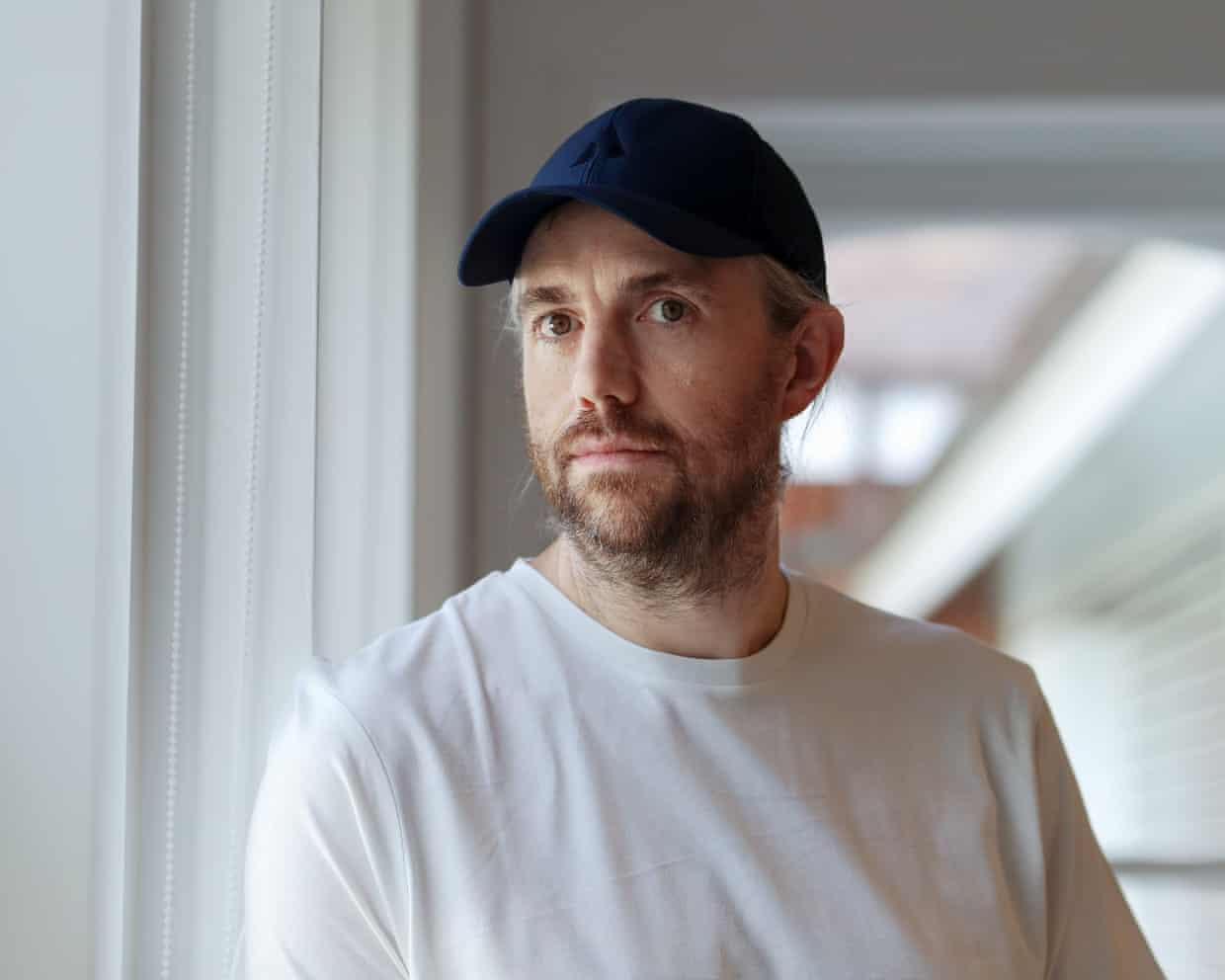
Software giant Atlassian has announced it is laying off about 10% of its workforce, or roughly 1,600 positions, and replacing its chief technology officer as it restructures to invest further in artificial intelligence.More than 900 affected positions were involved in software research and development, a spokesperson said. Most of Atlassian’s employees work in software engineering and design, accounting for over 50% of its 13,813 full-time workforce in June 2025.About 640 affected employees are in North America, 480 in Australia and 250 in India, with the remainder spread across Japan, the Philippines, Europe, the Middle East and Africa, according to the spokesperson.The company’s co-founder, Mike Cannon-Brookes, told employees the move was “the right decision for Atlassian” in a note circulated late Wednesday, US time

Binance sues Wall Street Journal over reporting on Iranian sanctions
The US government is investigating Binance over allegations that Iran used the crypto exchange to evade sanctions and illegally move funds, according to a Wall Street Journal report published Wednesday.Binance has denied these claims and even sued the Wall Street Journal on Wednesday for defamation.The Journal reported in late February that Binance, the largest cryptocurrency exchange in the world, shut down an internal investigation into more than $1bn in transactions with a network funding Iran-backed terror groups; Binance fired employees for looking into the matter and allowed the network to remain active, according to both the Journal and the New York Times.A Binance spokesperson said in an emailed statement: “Binance categorically did not dismantle any compliance investigation. The WSJ continues to report the same falsities

‘Highly problematic behavior’: Noma residency in LA starts with PR crisis

Before sunrise: while Sydney sleeps, suhoor meals attract a lively social scene during Ramadan

How to use up limp herbs in a flavoured butter – recipe | Waste not

Chicken wings and soup: Helen Graves’ spring onion recipes

Chefs the world over strive for a perfect score from Rate My Chives. Could I achieve one at home?

What’s the secret to crisp-skinned fish? | Kitchen aide