What is ‘DV’? Key terms used in the Mandelson vetting row explained

The story of how Peter Mandelson failed his UK security vetting before he took up his post as ambassador to the US – and the overturning of the decision that he should not be given clearance – is full of the abbreviations of the British national security apparatus and the archaic language used to describe parliamentary process,Here are the key terms to understand about the story, as the prime minister, Keir Starmer, faces a vital appearance in the House of Commons in London about who in the government knew what, when,At the heart of the story is Mandelson’s application for a level of security clearance known as “developed vetting” (DV) made after his appointment as ambassador had been announced,According to a government guide to security clearance levels, officials in roles that require them to have “frequent and uncontrolled access” to top secret material and assets need to have DV,That could mean sensitive areas of government buildings as well as classified information.
In the Foreign Office, it is routine for civil servants – including those in much more junior roles than Britain’s most high profile diplomatic posting – to have DV clearance.To get DV, officials are subjected to personal and often quite intrusive interviews; they have to fill out questionnaires and provide referees who are asked about the character and history of the applicant.Security officials complete a form with three options: green, “clearance approved or remains valid”; yellow, “clearance approved or remains valid with risk management”, which might include later follow-up checks or restriction from working on certain policy areas; or red, “clearance denied or withdrawn”.In Mandelson’s case, they chose the third option to deny clearance.Politicians, however, are not vetted: it is deemed their democratic position gives them the right to access the sensitive materials necessary to fulfil their duties.
For most civil servants, vetting processes are carried out by an agency, United Kingdom Security Vetting (UKSV).Those working in the intelligence community are vetted by the security and intelligence services, but the security services’ records are consulted as part of the UKSV process.UKSV is a part of the Cabinet Office, with offices in York.Some of its staff are former police officers, who use their experience to judge whether or not applicants are lying during their interviews.Given the probing nature of the questions – which, according to publicly available government documents, include queries on personal finances, business connections and sexual history – applicants are told that it is lying or hiding something they have done which is more likely to lead to them failing the vetting process, rather than a judgment on their conduct.
The reports produced by UKSV are highly secretive and never publicly disclosed, even to the applicant.Similarly, according to a ruling by the information commissioner, the “vetting decision framework”, a guide used by vetting officers about the factors to consider, is protected by the Cabinet Office from wider public scrutiny.The release of a new batch of documents from the Epstein Files in January 2026 led to a fresh wave of stories about Mandelson and the extent of his friendship with the convicted child sex offender Jeffrey Epstein.That prompted a debate in parliament, where the Conservatives introduced a binding motion, agreed by MPs, forcing the government to publish “all papers” related to Mandelson’s appointment as ambassador.This rarely used motion is called a humble address.
Officials in the Cabinet Office, the department at the centre of the British government which supports the prime minister and his chosen cabinet of ministers, were tasked with responding on behalf of the government to comply with the humble address.It was during this process that documents were sought from UKSV, which led to senior officials in the Cabinet Office learning in March that Mandelson had failed his vetting.But, as the Guardian revealed on Friday, several weeks passed before they told Keir Starmer.Government sources say this was owing to them seeking legal advice on whether they could inform the prime minister.Given the sensitivity of some of the papers within the scope of the humble address, including those relating to Mandelson’s vetting, MPs agreed any documents that could be prejudicial to the UK’s national security or international relations should first be given by the Cabinet Office to a trusted parliamentary committee.
The nine-person cross-party group, called the intelligence and security committee (ISC), routinely oversees the work of the British intelligence services.Its members consist of MPs and peers, and include a former top admiral.They meet in private and are given access to top secret material.Once parliament passed the humble address motion, officials in the Cabinet Office held talks with the ISC on who would be the ultimate decision maker on whether material referred to the committee could be made public.Typically, the ISC’s reports are only published with the authorisation of the prime minister, but in this instance, it was agreed the ISC would, alone, decide what the public could see.
After weeks of internal disagreement by officials on whether the UKSV material could be disclosed in what would be an “unprecedented” move, the Cabinet Office has said the documents about Mandelson’s vetting would be given to the ISC, but is yet to provide a timeframe.

Finance leaders warn over Mythos as UK banks prepare to use powerful Anthropic AI tool
British banks will be given access in the next week to a powerful AI tool that was deemed too dangerous to be released to the public, as a series of senior finance figures warned over its impact.Anthropic, which has so far limited the release of the new model to a small clutch of primarily US businesses, including Amazon, Apple and Microsoft, said it would expand that to UK financial institutions.“That is in the very near term, in the next week,” Pip White, Anthropic’s head of UK, Ireland and northern Europe operations, said in a Bloomberg TV interview. “As you would expect, the engagement I have had from UK CEOs in the last week has been significant.”Anthropic, which is the company behind the Claude family of AI tools, has said that its latest model, Mythos, poses an unprecedented risk because of its ability to expose flaws in IT systems

US tech firms successfully lobbied EU to keep datacentre emissions secret
Microsoft and other US tech companies successfully lobbied the EU to hide the environmental toll of their datacentres, an investigation has found, with demands to block a database of green metrics from public view written almost word for word into EU rules.The secrecy provision, which the European Commission added to its proposal almost verbatim after industry lobbying in 2024, hinders scrutiny of the pollution that individual datacentres emit. It leaves researchers with just national-level summaries of their energy footprints.The rise of AI chatbots has spurred a boom in the construction of chip-filled warehouses with a hunger for power that is being met, in part, by burning fossil gas. Legal scholars warn the blanket confidentiality clause may fall foul of EU transparency rules and the Aarhus convention on public access to environmental information
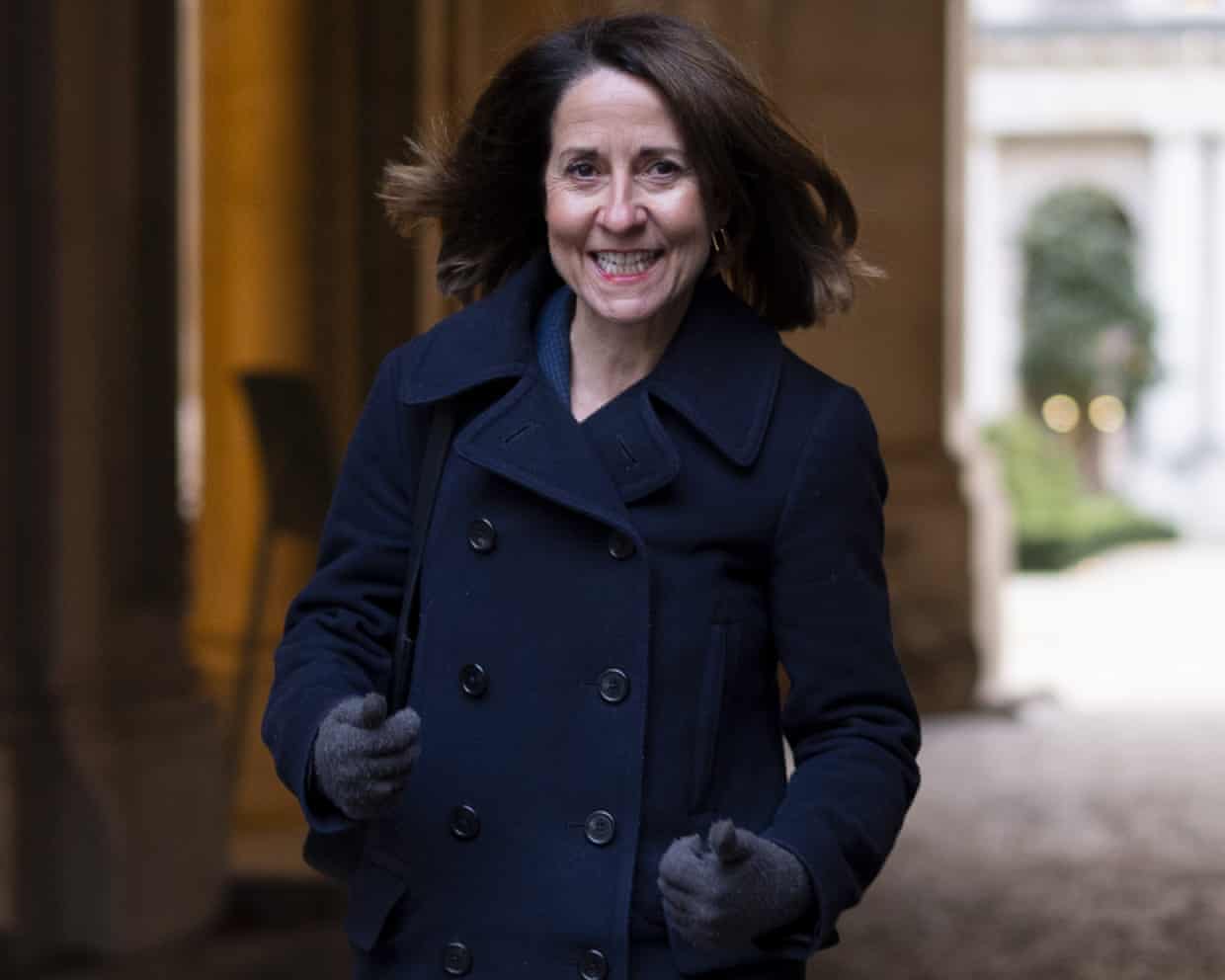
Liz Kendall urges UK public to embrace AI as government makes first £500m fund investment
The UK technology secretary has urged the country to “make AI work for Britain”, brushing off fears about its impact on jobs and cybersecurity as the government announced its first investment under a £500m sovereign AI fund. Liz Kendall said the UK had to “seize” the opportunity offered by AI despite concerns underlined this month when US startup Anthropic revealed it had developed an AI model that posed a potentially significant cyber threat. Asked how the government makes the case for embracing a technology that could disrupt jobs and now cybersecurity, Kendall said: “We have to seize this to make it work, for Britain, for our jobs, for solving the biggest challenges we face as a world.”Speaking on Thursday as the government unveiled its first investment in a UK company as part of a £500m sovereign AI fund, Kendall acknowledged “people are worried about the risks and what it means for their jobs”, but AI entrepreneurs also believed they can “make it work … they can create jobs”.In January Kendall admitted “some jobs will go” as AI automates certain tasks and roles, but it would also create new employment opportunities

‘How do I end a call?’: the elderly Japanese people determined to master smartphones
It’s not only young people whose gaze is fixed on tiny screens. But for these users in Tokyo, clicking and scrolling is anything but second nature.“I can’t deal with all of the apps that jump out at me,” says one. “How do I know if I’ve definitely ended a call?” asks another.They are common concerns among the four women and one man attending a beginner’s smartphone class at a public facility for older residents in Nerima in the Japanese capital’s north-west suburbs

Labour and Lib Dem MPs demand ‘shameful’ Palantir NHS contract be scrapped
MPs have queued up to demand the government scraps its £330m NHS contract with the spy-tech company Palantir, calling it “dreadful” and “shameful” in a debate on Thursday, after which the government said it was “no fan” of the US company’s politics.Labour and Liberal Democrat MPs led the calls for Palantir, which also works for Donald Trump’s ICE immigration crackdown and the Israeli military, to be removed as a supplier to the NHS federated data platform (FDP), with one Labour backbencher, Samantha Niblett, questioning whether it could be “trusted as a custodian of the intimate health records of tens of millions of British citizens”.The Lib Dem MP Luke Taylor, who called the deal “shameful”, said: “Palantir and Peter Thiel must have their hands ripped off of our NHS before it is too late.”Thiel, a Trump-supporting tech billionaire, founded the company and has previously said that democracy and freedom are incompatible.In response to the MPs who spoke in a Westminster Hall debate, the government confirmed it would consider whether to continue with the deal when a break clause is due in spring 2027, although £210m of the £330m has already been spent

Man used AI to make false statements to shut down London nightclub, police say
A businessman has pleaded guilty to making false statements in order to shut down a nightclub, which police believe were generated using AI.A Metropolitan police source said the use of AI to generate letters by complainants who do not exist is a growing issue.Aldo d’Aponte, 47, the CEO of Arbitrage Group Properties, pleaded guilty to writing two letters, supposedly by his neighbours, objecting to the reopening of Heaven nightclub, which temporarily closed after a rape allegation against one of its security guards.D’Aponte was given a 12-month conditional discharge and ordered to pay £85 costs and a £26 victim surcharge.Heaven, an LGBTQ nightclub in central London had its licence suspended in November 2024 after a 19-year-old woman accused a bouncer of rape
Quarter of a million people could lose job by middle of 2027 as UK ‘flirts with recession’, analysis says

William Hill owner Evoke in talks on £225m takeover by casino group Bally’s

Ed Miliband to double down on net zero with measures to combat Iran energy shock
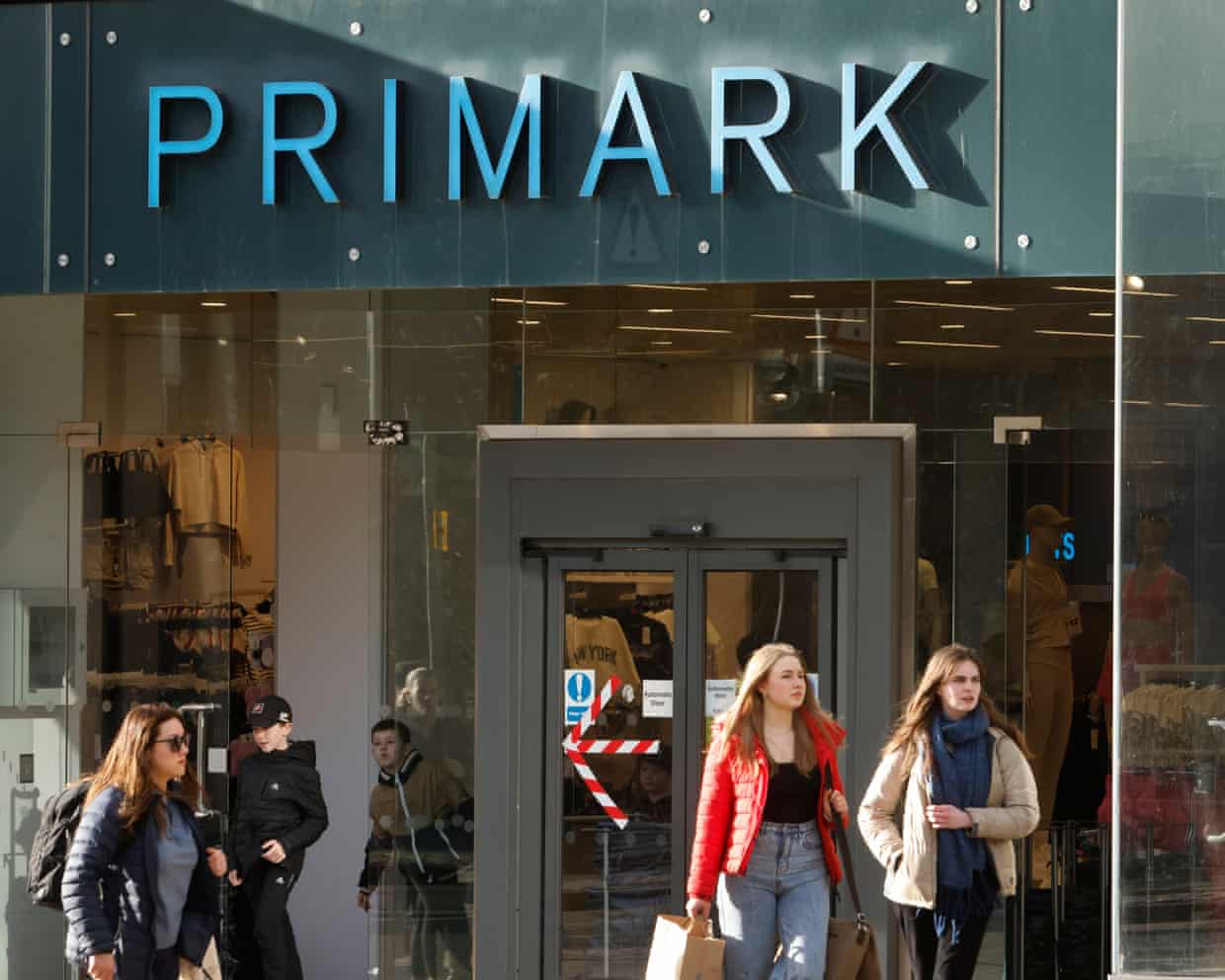
ABF poised to reveal result of Primark and food business demerger plan

We all share blame for the decline of our high streets | Brief letters

Independent bookstores make quiet comeback as big chains dominate retail