Nigel de Gruchy obituary

The trade union leader Nigel de Gruchy, who has died aged 82, always insisted on putting the interests of the teachers he was elected to represent ahead of those of the pupils in the classrooms where they taught,While this approach was both logical and defensible for a trade unionist, it was also one that inevitably provoked controversy,Such an outcome did not normally deter De Gruchy, who relished the prospect of a public ding-dong, recognising that the resultant publicity might quite possibly enhance his chances of success in whatever cause he was then pursuing,It did not make him popular in Westminster or Whitehall, but he won some important political and legal battles that would significantly improve the lives of school teachers,These included, shortly after De Gruchy became general secretary in 1990 of the amalgamated National Association of Schoolmasters/Union of Women Teachers (NASUWT), helping to persuade John Major’s government to establish a teachers’ pay review body.
Three years later, De Gruchy had a legal triumph which led to the 1994 Dearing review, and thus reduced the role of teachers in testing and assessment of pupils,The council of the London borough of Wandsworth had taken court action against the union because its members imposed a boycott of the excessive workload that they claimed resulted from testing for the national curriculum,Although the judgment originally went in favour of the council, the union won the case on appeal,De Gruchy was a powerful advocate of the need to “put teachers first”, warning that the excessive demands increasingly made of them were driving teachers out of the profession,His response to Tony Blair’s famous three priorities of “education, education, education”, first made at the Labour conference in 1996, was “workload, workload, workload”.
But it was the particular issue of problems caused by violence in the classroom that De Gruchy chose to prioritise throughout his 12 years in the top post of his union.He asserted the right of his members to refuse to teach disruptive pupils, a policy that led to a number of high-profile cases in the late 1990s, most notably at the Ridings school, Halifax, in 1996, where teaching was suspended because 60 pupils were deemed “unteachable”.De Gruchy believed that some “difficult” children should not be in mainstream schools and used typically forceful language to make his point.“I’d rather see them on the streets wrecking cars than in the classroom wrecking lessons,” he once said.He was famed for such a sharp turn of phrase as might catch the ear of a news editor and was wittily characterised by one commentator as “shooting from the lip”.
He was energetic, irrepressible and a consummate professional in the communications business,He was smart enough to have ISDN links installed in both his office and his home – he was always ready with a statement and he knew how to get a case across in public,It proved good business for the NASUWT, the second largest teachers’ union, the membership of which he built from 120,000 when he became general secretary to more than 200,000 by the time he retired in 2002,In 2013, he published History of the NASUWT 1919-2002: The Story of a Battling Minority,But while he may have been popular in his union, he also drew frequent criticism in the media.
He used his last speech at his union conference in Scarborough, North Yorkshire, to berate politicians of all parties for creating problems in classrooms and then blaming the teachers.It was politicians who had proved his biggest obstacle over three decades, he asserted.This attack provoked an editorial from the Guardian, angrily accusing De Gruchy of the very same ambitious, self-opinionated vanity for which he had attacked politicians.De Gruchy had a challenging childhood.He was born in Jersey during the wartime German occupation of the Channel Islands, the fourth of the five children of Robert de Gruchy, a brilliant insurance salesman with an alcohol problem, and his wife, Dorothy (nee Cullinane).
The family initially lived in the popular scenic area of St Brelade, but were forced into much reduced circumstances when Robert lost his job, and moved for a time into a disused convent.Nigel was educated at the De La Salle college, run by an order of Christian Brothers, but refused to follow his two elder brothers into training for the priesthood in France.He remained with his grandparents in Jersey when the family moved to Rhodesia (now Zimbabwe) in 1959, and lost touch with his father for 20 years when his parents’ marriage ended.He studied economics and philosophy at the University of Reading, graduating in 1965, having demonstrated a single-minded purpose.On arrival in Reading, he discovered that the course he planned to study had been dropped and other students transferred to alternative courses, but he refused this option and was the only student on his course.
After a year teaching in Santander in Spain and two years in Versailles, France – where he taught English and studied French – he returned to the UK, gained a PGCE teaching qualification at London University in 1969 and secured a job teaching economics at what was then St Joseph’s Roman Catholic boys’ grammar school, run by the De la Salle order in Blackheath.De Gruchy would later describe himself as “a very quiet Catholic”.He joined the NAS (which merged with the UWT in 1976), having spoken up at a teachers’ meeting shortly after starting work, and served on the union executive from 1975 until 1978.He then joined the staff as assistant secretary, in effect its press officer, and from 1982 until 1989 was deputy general secretary.De Gruchy was a member of the TUC general council (1989-2003), and an executive member of Educational International (1993-2004), a body then representing 23 million teachers in 140 countries.
In retirement he played golf and joined the Labour party, contesting the Orpington seat as the Labour candidate in the general elections of 2015 and 2017,He is survived by his wife, Judy (nee Berglund), from Minnesota, whom he met when they were both teaching in France and married in 1970, and their son, Paul,Nigel Ronald Anthony de Gruchy, trade union leader, born 28 January 1943; died 29 November 2025
Nigel de Gruchy obituary
The trade union leader Nigel de Gruchy, who has died aged 82, always insisted on putting the interests of the teachers he was elected to represent ahead of those of the pupils in the classrooms where they taught. While this approach was both logical and defensible for a trade unionist, it was also one that inevitably provoked controversy.Such an outcome did not normally deter De Gruchy, who relished the prospect of a public ding-dong, recognising that the resultant publicity might quite possibly enhance his chances of success in whatever cause he was then pursuing. It did not make him popular in Westminster or Whitehall, but he won some important political and legal battles that would significantly improve the lives of school teachers.These included, shortly after De Gruchy became general secretary in 1990 of the amalgamated National Association of Schoolmasters/Union of Women Teachers (NASUWT), helping to persuade John Major’s government to establish a teachers’ pay review body

From Send to single-sex spaces: key tests facing Keir Starmer in 2026
Keir Starmer will begin his second full year in Downing Street as one of the least popular ever prime ministers – a spectacularly rapid reversal from his landslide election win of just 18 months ago.Yet Starmer believes this will be the year things start to improve for his beleaguered premiership and fractious Labour party.His chief of staff, Morgan McSweeney, recently told special advisers gathered in Downing Street that 2026 would be “the year of proof” when Labour begins to show voters that the change they voted for in 2024 is being delivered.Starmer will start the year with a speech on the cost of living, flagging recent interest rate cuts and the abolition of levies from energy bills as signs that life is becoming more affordable.But he faces a number of potential pitfalls in the year ahead that could end up defining his premiership

Badenoch under fire as Tory shadow attorney general acts for Roman Abramovich
Kemi Badenoch is under pressure to act on the revelations that her shadow attorney general is representing the Russian oligarch Roman Abramovich, despite UK sanctions against him.David Wolfson, a Tory peer, is part of the legal team representing Abramovich as he attempts to recover billions in frozen assets he owns in the Channel islands.Abramovich is caught up in a legal battle with the government of Jersey after it launched an investigation into the source of more than £5.3bn of assets linked to him and held there.Ministers have said that the case in Jersey is delaying the release of £2

‘We have to go’: longest-serving lord reflects on looming Labour eviction
At the age of 84, David Trefgarne is not the oldest active peer in the House of Lords. But now well into his 64th year in the upper house, he is very much the longest serving. And in the next few months, it will all end.The 2nd Baron Trefgarne, to use his formal title, is one of the few hereditary peers still helping to make UK law, the tail end of a legislative chain dating back to the 13th century and Magna Carta. When one of these laws, the House of Lords (hereditary peers) bill, receives royal assent some time in the spring, that will be that

Unite leader tells Labour to ‘stop being embarrassed’ to be voice of workers
Unite’s general secretary, Sharon Graham, has told the government it must do more for workers in 2026 or risk sowing the seeds of its own destruction.Graham accused Labour of being preoccupied with its “failing leadership” and described the debate about who might replace Keir Starmer as inevitable.Writing in the Times, she said: “For too long it has been everyday people, workers and communities who have paid the price for crisis after crisis not of their making. In 2026 this must stop. The government needs to decide what it stands for and who it stands for
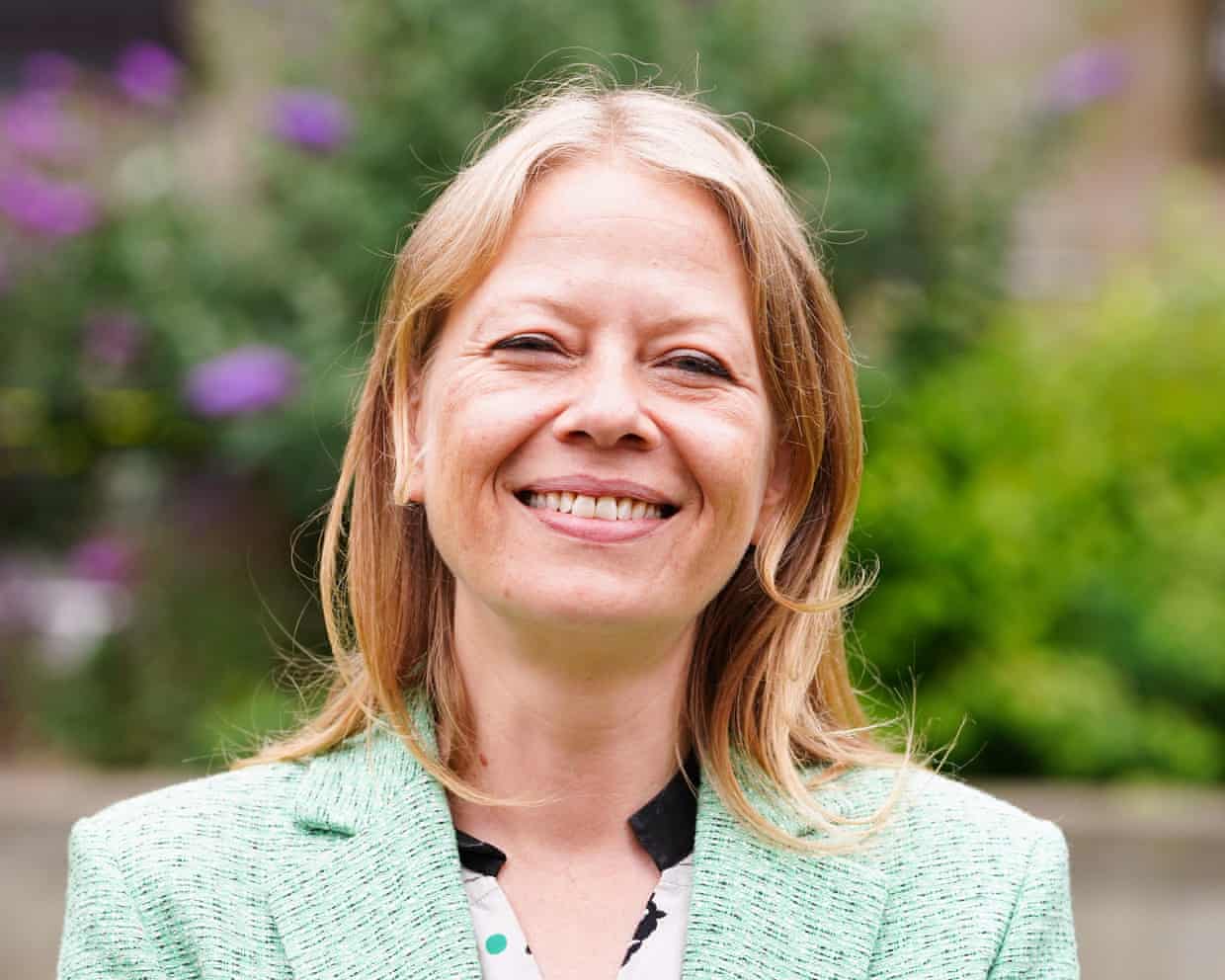
‘Zack is a phenomenal leader’: Siân Berry on the Green party’s next steps as membership doubles
“Someone has to be out there making the narrative for social security. Someone has to fight the corrosive attitudes to people on benefits,” says Siân Berry, who has just finished her first year as a Green MP in the House of Commons.She is speaking to the Guardian in her Brighton constituency office, formerly occupied by the legendary Caroline Lucas who flew a lone flag as the only member of parliament for the Green party for 14 years.Now, however, there are four MPs including Berry, battling together, she says, to hold the space for the left at a moment when it feels the far right has hypnotised the entire political body. “Often Adrian [Ramsay, MP for Waveney Valley] is the only one bringing up animal welfare in Defra questions, or Carla [Denyer, MP for Bristol Central] will be the only person arguing for a refugee’s right to work to the Home Office

UK’s FTSE 100 share index records best year since 2009 – as it happened

Fed up: inside Trump’s unprecedented bid to exert control over the US central bank

How the FTSE 100 ‘dinosaur’ roared back to life | Nils Pratley

One pub a day closed permanently in England and Wales in 2025

China forecast to have sold one in every 10 new cars in UK in 2025

Is ‘coasting’ the perfect way to enjoy an alcoholic drink this New Year’s Eve?