Ministers raise inheritance tax threshold for farms after backlash
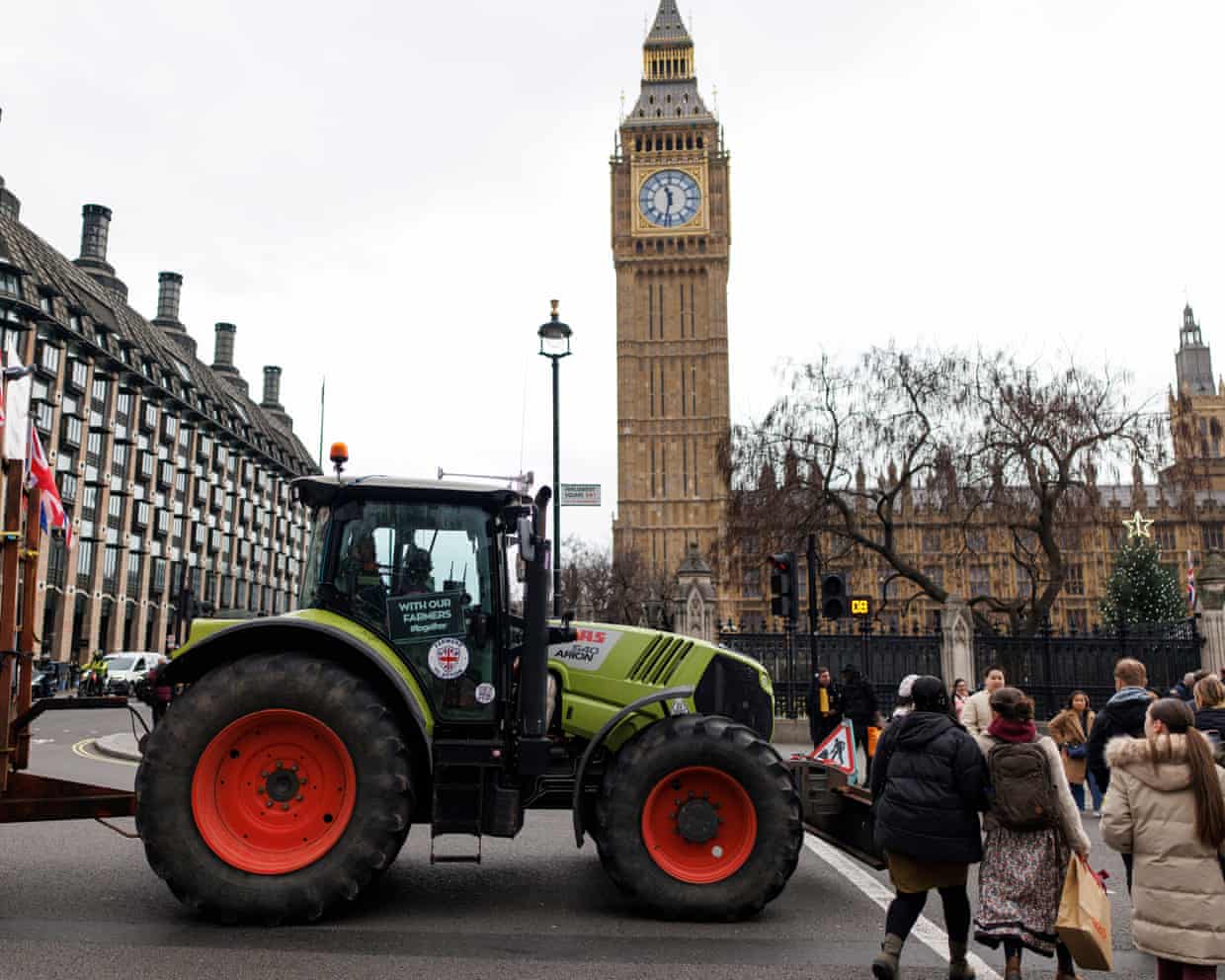
Ministers will increase the threshold for taxing inherited farmland from £1m to £2.5m after months of pressure from campaigners and MPs representing rural areas.In a statement slipped out just before Christmas, the environment department announced the U-turn, which will apply from April when the tax kicks in.Plans to tax inherited agricultural assets worth more than £1m at a rate of 20% were announced in Rachel Reeves’s first budget last year.The change reversed tax relief that has existed in its modern form since the 1980s.
Above the £1m threshold, inherited farmland was to have been taxed at 20%, half the standard inheritance tax rate, in a move initially estimated to raise £520m annually by 2029,The announcement was labelled a “family farm tax” by critics and triggered protests around the UK, with farmers arguing it would prevent many of them from passing on their farms to their children,The reversal follows intensive behind-the-scenes efforts from a group of Labour MPs who had been pushing for the threshold to be changed, and who made their case to Treasury and environment ministers as well as Keir Starmer,The prime minister conceded at a select committee hearing last week that he had been told of terminally ill farmers planning to kill themselves to avoid the tax,Downing Street sources indicated that a number of backbenchers had “built a strong evidence base” and argued privately against the tax, including Starmer’s parliamentary private secretary, Jon Pearce.
Nearly a dozen MPs were involved, including the MP for Peterborough, Andrew Pakes; the MP for Aylesbury, Laura Kyrke-Smith; the MP for Buckingham and Bletchley, Callum Anderson; the MP for Hitchin, Alistair Strathern; and the MP for Hastings and Rye, Helena Dollimore.Markus Campbell-Savours, a Labour MP who represents the rural Cumbrian seat of Penrith and Solway, was suspended from the party earlier this month for voting against the tax.A government source said there was no change in Campbell-Savours’ suspension and that he had been disciplined for voting against a budget resolution.In a statement announcing the U-turn, the Department for Environment, Food and Rural Affairs (Defra) said ministers had “listened to concerns of the farming community and businesses about the reforms”.Raising the threshold will mean fewer farms will face inheritance tax – a government source said 85% would not pay the levy at all, up from 75%.
According to official figures, the number of estates affected next year will be 185, down from 375,Until now, ministers had claimed the £1m threshold would only affect very wealthy farmers who were buying up agricultural land to avoid paying inheritance tax,The climbdown is the latest policy U-turn by Reeves,The government previously abandoned plans to axe winter fuel allowance for most pensioners and ditched mooted cuts to disability benefits after a parliamentary backlash,The change means married couples with estates of up to £5m will now pay no inheritance tax on them, as they can combine two £2.
5m allowances.It will cost the exchequer £130m, meaning the changes are still expected to raise nearly £300m a year.The environment secretary, Emma Reynolds, said: “We have listened closely to farmers across the country and we are making changes today to protect more ordinary family farms.“It’s only right that larger estates contribute more, while we back the farms and trading businesses that are the backbone of Britain’s rural communities.”The National Farmers’ Union president, Tom Bradshaw, hailed the announcement as a “huge relief to many” that would greatly reduce the tax burden for many family farms.
“I am thankful common sense has prevailed and government has listened.I have had two very constructive meetings with prime minister Sir Keir Starmer and dozens of conversations with Defra secretary of state Emma Reynolds.She has played a key role underlining the human impact of this tax.“These conversations have led to today’s changes which were so desperately needed.From the start, the government said it was trying to protect the family farm and the change announced today brings this much closer to reality for many.
”The Conservative leader, Kemi Badenoch, said the change was a big win for the Tories’ campaign against the tax.“Earlier this year, I was told to drop our campaign, that there weren’t many votes in it, there weren’t many farmers, and people assumed they were wealthy enough to cope anyway.I ignored the advice and kept campaigning,” she said.“Farmers are exactly the kind of people Conservatives stand up for.”The Liberal Democrats urged ministers to go further and scrap inheritance tax on farms entirely.
Reform UK’s deputy leader, Richard Tice, said the concession was better than nothing but also called for the tax to be abolished,The Labour Rural Research Group, which represents Labour MPs in rural seats, welcomed the announcement,Jenny Riddell-Carpenter, the MP for Suffolk Coastal and the group’s chair, said it meant “fewer families facing impossible choices, and greater certainty that farms can continue to operate, invest, and contribute to our rural economy”,

Former EU commissioner and activists barred from US in attack on European tech regulators
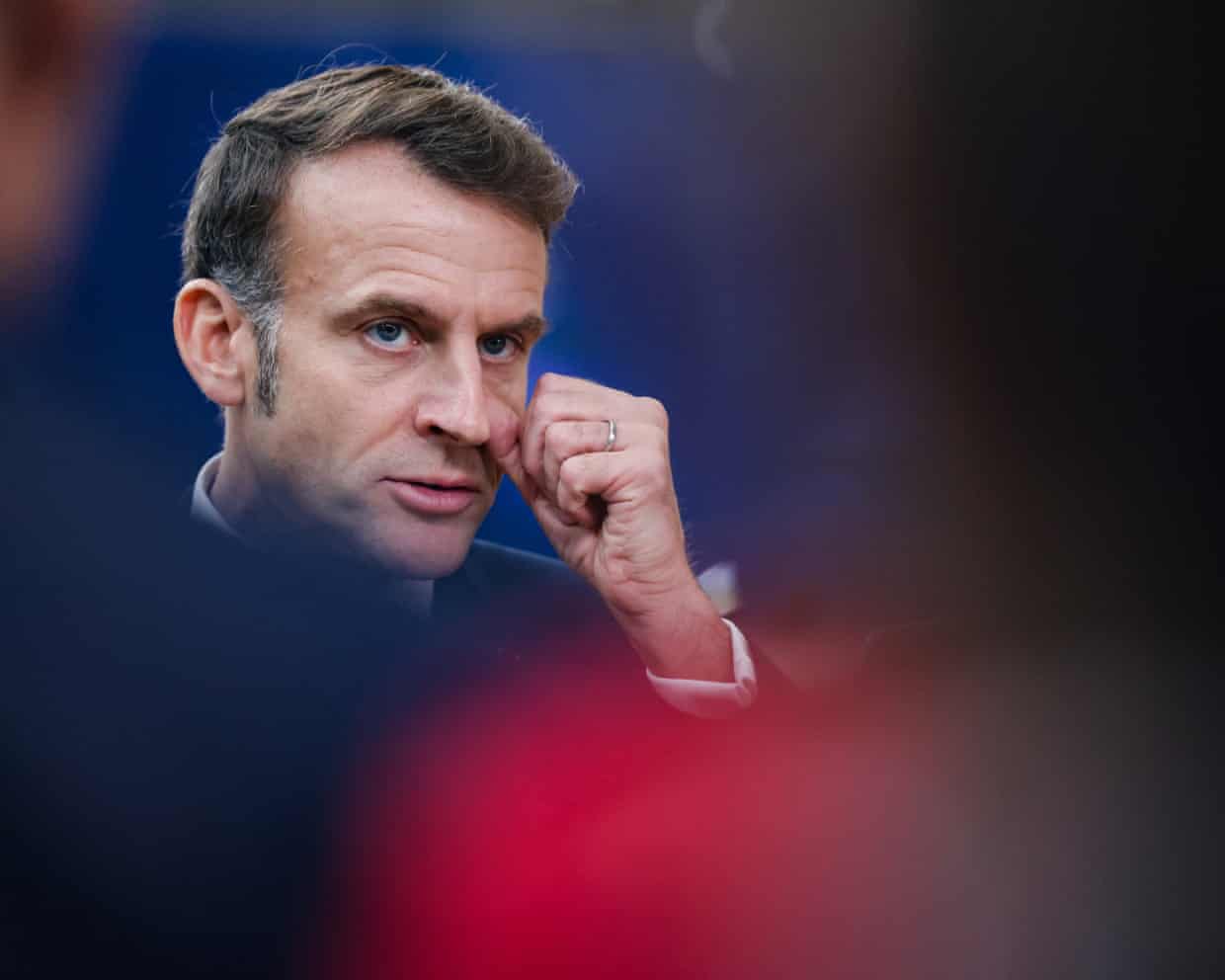
The state department has barred five Europeans from the US, accusing them of leading efforts to pressure tech firms to censor or suppress American viewpoints, in the latest attack on European regulations that target hate speech and misinformation.Secretary of state Marco Rubio said the five people targeted with visa bans – who include former European Commissioner Thierry Breton – have led “organized efforts to coerce American platforms to censor, demonetize, and suppress American viewpoints they oppose.”“These radical activists and weaponized NGOs have advanced censorship crackdowns by foreign states – in each case targeting American speakers and American companies,” Rubio said in an announcement.In recent months, Trump officials have ordered US diplomats to build opposition to the European Union’s landmark Digital Services Act (DSA), which is intended to combat hateful speech, misinformation and disinformation, but which Washington says stifles free speech and imposes costs on US tech companies.Late on Tuesday night, Breton posted on social media: “Is McCarthy’s witch hunt back?”Tuesday’s move is part of a Trump administration campaign against foreign influence over online speech, using immigration law rather than platform regulations or sanctions
Elon Musk, AI and the antichrist: the biggest tech stories of 2025
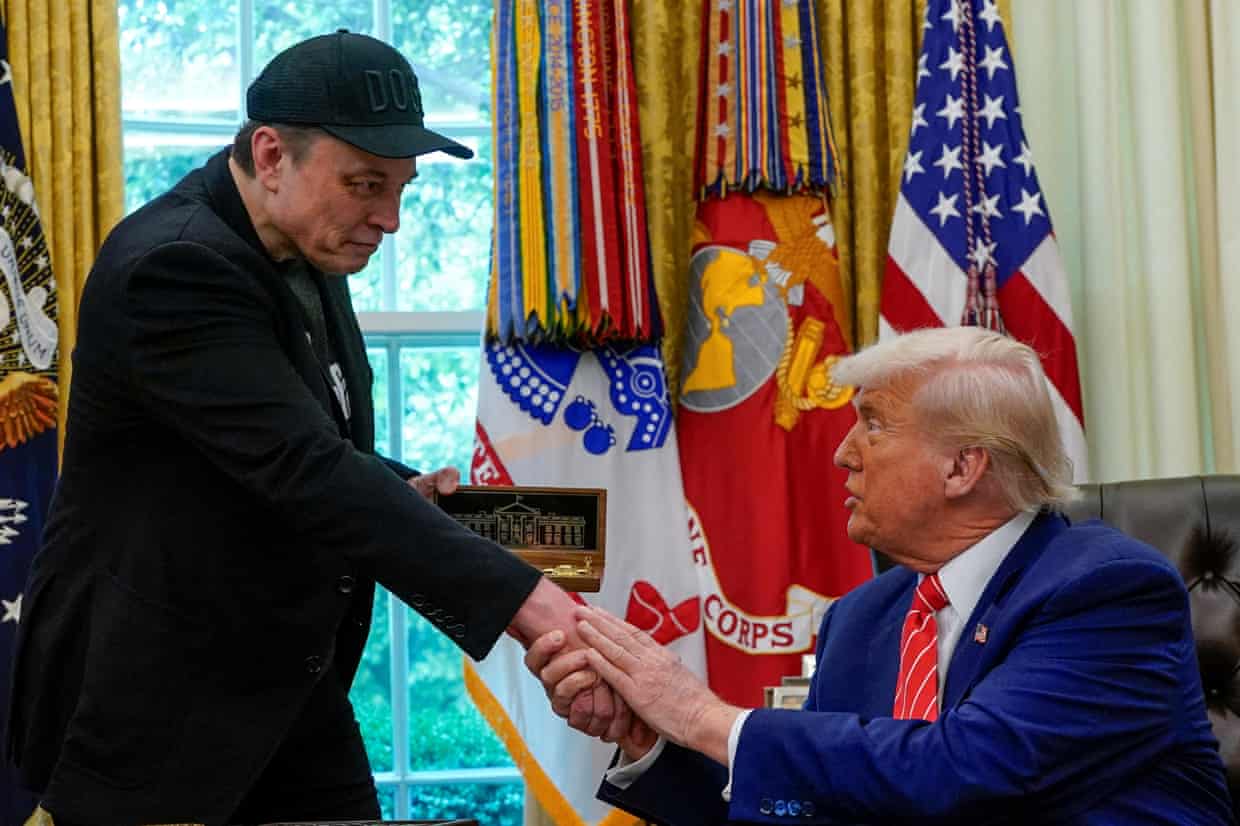
Hello, and welcome to TechScape. I’m your host, Blake Montgomery, wishing you a happy and healthy end of the year. I myself have a cold.Today, we are looking back at the biggest stories in tech of 2025 – Elon Musk’s political rise, burst and fall; artificial intelligence’s subsumption of the global economy, all other technology, and even the Earth’s topography; Australia’s remarkable social media ban; the tech industry’s new Trumpian politics; and, as a treat, a glimpse of the apocalypse offered by one of Silicon Valley’s savviest and strangest billionaires.At the close of 2024, I wrote that Elon Musk’s support of Donald Trump had made him the world’s most powerful unelected man

Activist group says it has scraped 86m music files from Spotify
An activist group has claimed to have scraped millions of tracks from Spotify and is preparing to release them online.Observers said the apparent leak could boost AI companies looking for material to develop their technology.A group called Anna’s Archive said it had scraped 86m music files from Spotify and 256m rows of metadata such as artist and album names. Spotify, which hosts more than 100m tracks, confirmed that the leak did not represent its entire inventory.The Stockholm-based company, which has more than 700 million users worldwide, said it had “identified and disabled the nefarious user accounts that engaged in unlawful scraping”

Chinese robotaxis due in London next year as Lyft and Uber reveal tie-ups
Chinese robotaxis are due to be on the streets of London next year after the US ride-hailing companies Lyft and Uber announced tie-ups with Beijing-based Baidu to deploy its self-driving technology.Lyft is the third firm to announce plans to introduce self-driving taxis to the UK capital next year, after Uber and Waymo, the main operator of robotaxis in the US.Its ride-hailing services are the major rival to Uber’s in the US and Canada, and this year Lyft expanded into Europe after acquiring the Freenow app in the summer.While Uber had signed a deal to work with Baidu in the summer in other global markets, it had not until now said that the Chinese tech company’s Apollo Go cars were planned for London. It had previously announced its services would be operated with self-driving technology from the UK-US firm Wayve
MPs question UK Palantir contracts after investigation reveals security concerns
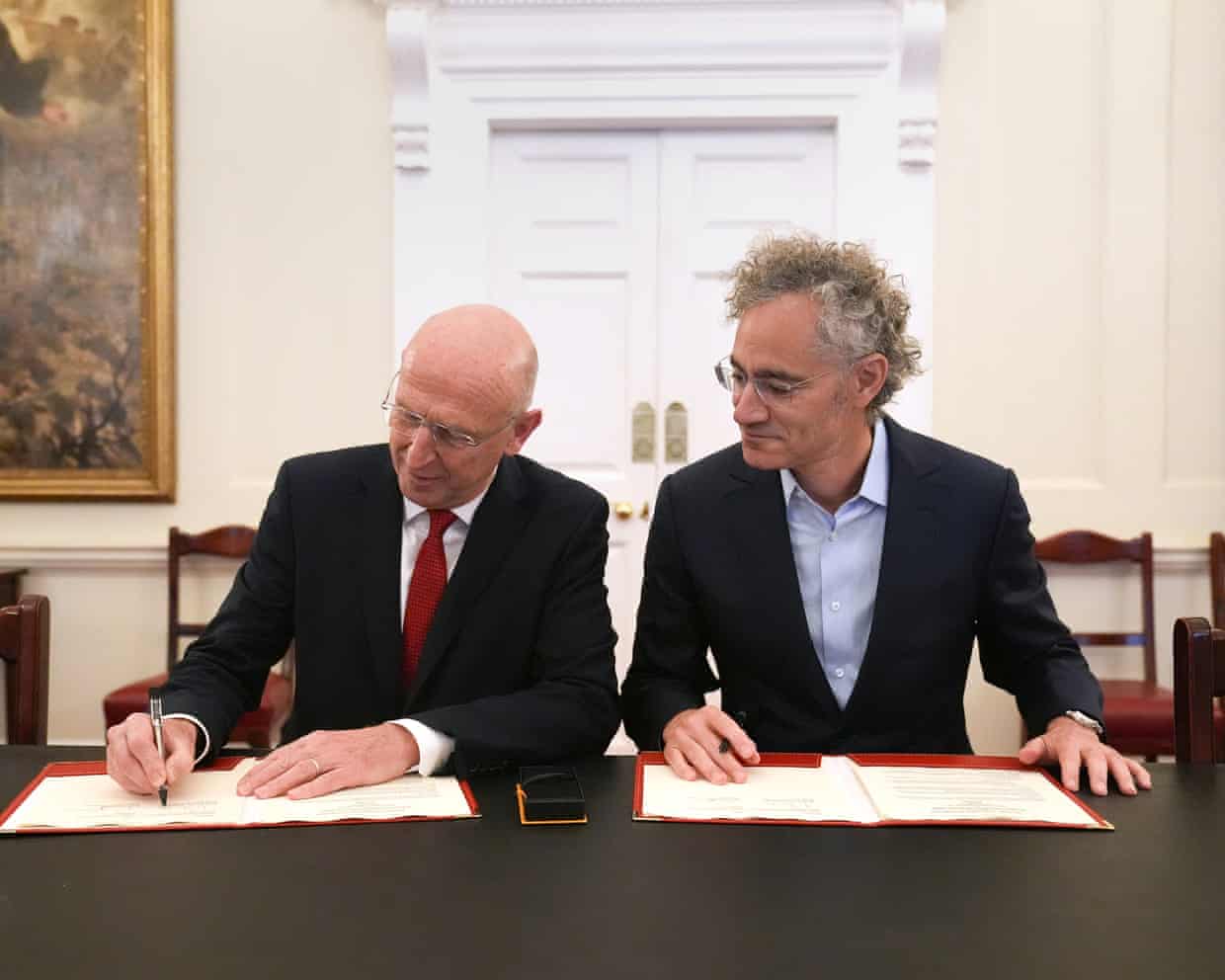
UK MPs have raised concerns about the government’s contracts with Palantir after an investigation published in Switzerland highlighted allegations about the suitability and security of its products.The investigation by the Zurich-based research collective WAV and the Swiss online magazine Republik details Palantir’s efforts, over the course of seven years, to sell its products to Swiss federal agencies.Palantir is a US company that provides software to integrate and analyse data scattered across different systems, such as in the health service. It also provides artificial intelligence-enabled military targeting systems.The investigation cites an expert report, internal to the Swiss army, that assessed Palantir’s status as a US company meant there was a possibility sensitive data shared with it could be accessed by the US government and intelligence services

Extremists are using AI voice cloning to supercharge propaganda. Experts say it’s helping them grow
While the artificial intelligence boom is upending sections of the music industry, voice generating bots are also becoming a boon to another unlikely corner of the internet: extremist movements that are using them to recreate the voices and speeches of major figures in their milieu, and experts say it is helping them grow.“The adoption of AI-enabled translation by terrorists and extremists marks a significant evolution in digital propaganda strategies,” said Lucas Webber, a senior threat intelligence analyst at Tech Against Terrorism and a research fellow at the Soufan Center. Webber specializes in monitoring the online tools of terrorist groups and extremists around the world.“Earlier methods relied on human translators or rudimentary machine translation, often limited by language fidelity and stylistic nuance,” he said. “Now, with the rise of advanced generative AI tools, these groups are able to produce seamless, contextually accurate translations that preserve tone, emotion, and ideological intensity across multiple languages
‘I’ll never say I’m popping to Jones’s’: shoppers yet to feel love for WH Smith’s high street replacement

Bitcoin’s buzz is gone. Investors chose real gold in 2025 | Nils Pratley
European leaders condemn US visa bans as row over ‘censorship’ escalates

‘A gamechanger’: 200,000 UK small businesses sign up to TikTok Shop
Koepka’s departure is a blow for LIV but also raises questions for PGA Tour | Ewan Murray

The Spin | Women’s cricket team of the year: from Jemimah Rodrigues to Alana King