‘Dad never took his customers for granted’: remembering Abdul’s in Sydney’s ‘Little Lebanon’
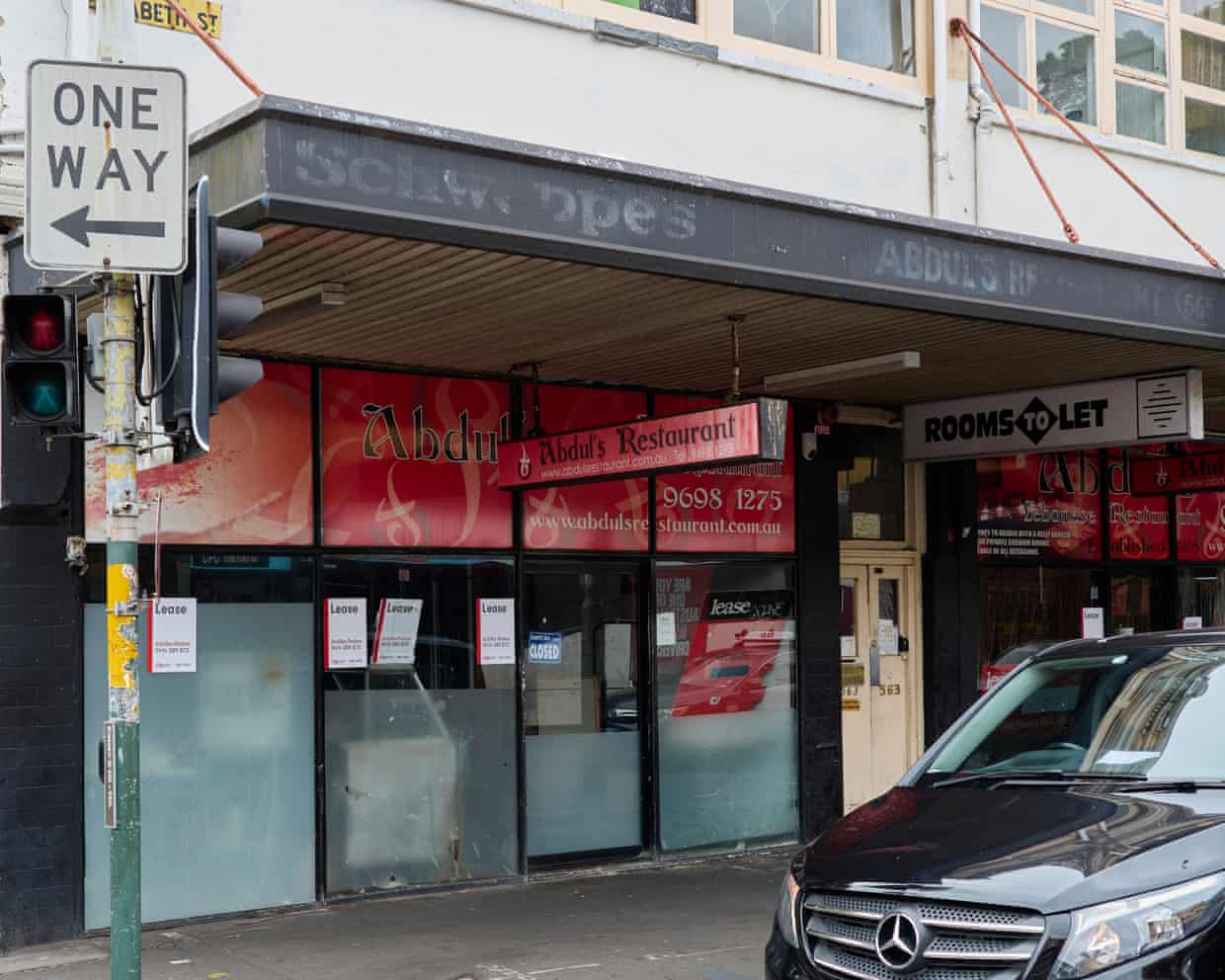
When Abdul’s Lebanese Restaurant closed earlier this month, it was a shock.A beloved fixture of inner Sydney’s landscape since 1968, the restaurant fed celebrities, broke students and anyone in need of a hearty kebab at the end of a night out.For Hiba Damaa, whose parents Dib and Nizam Ghazal opened the restaurant and named it after her eldest brother Abdul – who eventually ran it with his two brothers – it represented the pioneering spirit of early Lebanese migration.“Abdul’s originated as a Lebanese sweets and pastry shop run by my brother-in-law,” she says.“When he wanted to move on, my parents started selling falafel sandwiches.
..It was tiny.There wasn’t any Lebanese bread of course, so my mother made it all from scratch, and the line for those sandwiches used to go halfway down the street.” The business expanded to dine-in tables, then a second shop.
Abdul’s daughter Dina Ghazal, who worked there after school and on weekends, is not surprised by the outpouring of affection.Her father was so dedicated to pleasing his patrons he rarely took time off work.Sign up: AU Breaking News email“Dad never took his customers for granted,” she says.“He was very serious about the business running how it should.In the early years there were tablecloths and wine glasses, and we had to wear a uniform.
”He insisted on making labour-intensive menu items because customers loved them, she says.“And he used to give out a free falafel with tahini sauce if it was really busy and people had to wait in line.”“He always said you could not succeed in the food business if you were not generous.”Many assume Sydney’s Lebanese community was always concentrated in the city’s western suburbs, but there are still signs of what was once known as Little Lebanon in the inner-south, if you’re paying enough attention.John Betros, 90, still vividly remembers his childhood in the area when most of the homes of Great Buckingham Street, on the border of Redfern and Surry Hills, were already occupied by Lebanese families.
“The Lebanese go where the churches are,” he says, and churches with Lebanese priests were well established: St Michael’s Melkite Catholic Church was inaugurated in 1895, St Maroun’s Maronite Catholic Church opened in 1897, then St George’s Antiochian Orthodox Church in 1920.Wilson’s, on Pitt St Redfern, claims to be the area’s first Lebanese restaurant, opening in 1957.When Betros opened his pharmacy business in Surry Hills in 1960, there were several restaurants catering to Lebanese migrants – particularly single men who wanted a home-cooked meal after work – which then attracted broader patronage.“There was a Lebanese chicken shop, and then the [Ghazal] family opened Abdul’s..
,They were doing well so another opened next door to them called The Prophet, and they were doing well, and then next door to them was a Lebanese grocery store owned by a Greek man and his Lebanese wife,And because [people] were filling the restaurants, another one called Fatima’s opened up,Lebanese food was in great demand,”Betros says he remembers all the restaurants’ proprietors as very friendly with one another.
“Even though they were competitors, there was no animosity between them.They were all nice people and all very respectful of each other.”Ghazal says her father didn’t feel threatened by the competition and saw “the hub of activity in the area as good”.Betros says it helped that the food was “somewhat exotic” to westerners.As the clientele diversified, so did their offerings.
Some restaurants recruited belly dancers for functions and for Saturday nights.Eleanor Sharman, who was a belly dancer at nearby restaurant Emad’s, says westerners “didn’t know how to deal” with her.“If it was a couple on a date, the woman would be watching the man, and so he would be trying not to look at me,” she says.Lebanese people had their own traditions, like tucking bills into her belt and – unless she caught them first – her bra.“At a room kept for Middle Eastern parties, it was a very different experience, and one that felt far more authentic and satisfying.
Cheers went up when I arrived, and men would take turns getting up to dance with me.”Ghazal said it was a “beautiful, happy atmosphere” at Abdul’s.“The restaurant used to close at 2am,” she says.“There’d be Arabic music on, and people would have birthdays and parties there.Some asked for the belly dancers and they would dance a little bit.
It was fun.”Abdul Ghazal passed away nine years ago, and at the time of its closure, the restaurant was run by Dina’s cousin Omar Ghazal, who recently revealed the restaurant will be “coming back stronger” after going into liquidation.Dina Ghazal and Damaa say the changing demographics of the area, rising rents and a shift in footfall post-Covid have all contributed to the decline of a once thriving restaurant scene.Damaa says the labour that goes into preparing Lebanese food, the many fresh ingredients required, and customers’ low-price expectations do not help.She contrasts it with a “bowl of pasta that you pay $30 for” made mostly of flour and egg.
Abraham Zailaa, owner of nearby restaurant Fatima’s, told ABC Radio Sydney that before Covid, Surry Hills was “thriving” thanks to people attending theatres and sporting events.Now local cafes and restaurants “need the support”.As tributes flowed after Abdul’s closure, some long-time fans and locals lamented the changing area, blaming gentrification and fearing another gym or slick corporate eatery would open in the restaurant’s place.As for Dina, she remembers her father always wanted to accommodate his customers’ tastes, even if what they asked for was not particularly authentic.“Dad was adamant that he wanted to cater to the Australian community who still wanted their tomato sauce with hummus and their tahini with BBQ sauce.
”Abdul didn’t care that they would not make it like that in Lebanon, she says.He just wanted to give people what they liked to eat.This article was amended on 28 January 2026 to correct John Betros’s age.

The value of the Australian dollar is high right now. So should you book that overseas trip?
In a year of extraordinary global news, and more of it bad than good, it may be surprising that the Australian dollar is proving a world beater.The Aussie has hit some impressive milestones of late: the strongest against the US dollar in nearly two years, the highest against the euro in 10 months, and approaching the strongest in decades against the yen.Ray Attrill, the head of foreign exchange strategy at National Australia Bank, says the Aussie has outperformed every other major currency in 2026.“So far this year it has been a case of there’s nothing not to like about the Australian currency,” Attrill says.It’s been good news for overseas travellers and shoppers looking to buy from overseas websites
‘Very low bar’: analysts say Starmer faces slim pickings in China
Keir Starmer’s trip to China is billed as an attempt to revitalise diplomatic relations but eight years after Theresa May paved the way for a never-materialised “ambitious” post-Brexit deal, the prospect of the prime minister landing any meaningful trade deal is slim, experts have warned.The visit to Beijing, involving a delegation of British companies led by Starmer, the chancellor, Rachel Reeves, and the business secretary, Peter Kyle, is the first since May’s 2018 visit, and will revolve around joint trade and investment efforts.Downing Street is already treading a sensitive diplomatic path, suggesting that while issues such as human rights breaches, national security or the imprisonment in Hong Kong of the 78-year-old British pro-democracy campaigner Jimmy Lai will be raised, the main focus will be on the business and economic links between China and the UK.It is also, said Starmer before the flight, not about Donald Trump, who just threatened Canada with 100% tariffs if “it makes a deal with China”.In an interview with Bloomberg, the prime minister said China would bring “significant opportunities” to British businesses and insisted he would not be forced to make a choice between China and the US

How ICE is using facial recognition in Minnesota
Immigration enforcement agents across the US are increasingly relying on a new smartphone app with facial recognition technology.The app is named Mobile Fortify. Simply pointing a phone’s camera at their intended target and scanning the person’s face allows Mobile Fortify to pull data on an individual from multiple federal and state databases, some of which federal courts have deemed too inaccurate for arrest warrants.The US Department of Homeland Security has used Mobile Fortify to scan faces and fingerprints in the field more than 100,000 times, according to a lawsuit brought by Illinois and Chicago against the federal agency, earlier this month. That’s a drastic shift from immigration enforcement’s earlier use of facial recognition technology, which was otherwise limited largely to investigations and ports of entry and exit, legal experts say

UK ministers accept $1m from Meta amid social media ban consultation
Ministers have accepted $1m (£728,000) from Meta, the US tech and social media company, to build AI systems for defence, national security and transport, sparking warnings about the UK government’s “alarmingly close relationship with Trump-supporting US tech giants”.The money from Mark Zuckerberg’s company will be used to pay experts to “develop cutting-edge AI solutions … to support national security and defence teams”, the Department for Science, Innovation and Technology (DSIT) announced on Tuesday.The money will pay for four British AI experts, coordinated by the government-funded Alan Turing Institute, to “play a pivotal role in rewiring our healthcare, police, transport systems and more”, said Ian Murray, the minister for data and digital government.The move comes after Meta executives had 50 meetings with ministers in the last two years for which data was available, one of the highest levels of direct access of any technology company, a Guardian investigation found.The government is consulting on a ban on social media use by under-16s, which would have a major effect on Meta’s Instagram platform

Elena Rybakina blows away Iga Swiatek to reach Australian Open semi-final against Jessica Pegula
Elena Rybakina took a significant step towards her second grand slam title as she overpowered and outplayed the second seed Iga Swiatek in the quarter-finals of the Australian Open, advancing 7-5, 6-1 to end Swiatek’s hopes of completing the career grand slam this year.This immense victory sends Rybakina, the fifth seed and 2023 Australian Open finalist, into her fourth grand slam semi-final. It has been nearly four years since the 26-year-old made her first breakthrough by winning Wimbledon in 2022. Although she has won numerous big titles and established herself as one of the best players in the world, she has as yet failed to drag herself over the line at the grand slams for a second time.However, Rybakina arrived in Melbourne playing some of the best tennis of her career after dismantling the field at the WTA Finals last November

Alex de Minaur fell a distance short at the Australian Open. Will he ever win a major? | Simon Cambers
There are two ways to look at this. Either Alex de Minaur is not good enough to beat Carlos Alcaraz – and Jannik Sinner, for that matter – or the world’s top two players are in a class of their own. Sadly, for Australia’s top-ranked player, both things are true.De Minaur’s 7-5, 6-2, 6-1 quarter-final defeat by Alcaraz on a hot, breezy evening at the Australian Open on Tuesday was a humbling experience. The manner of his performances in the opening four rounds suggested that he was ready to push the world No 1
‘She was a bitch in the best possible way’: the life and mysterious death of drag queen Heklina

‘I don’t go around telling people I love the Spice Girls’: Mo Gilligan’s honest playlist

My cultural awakening: A Queen song helped me break free from communist Cuba
The Guide #227: A brain-melting sci-fi movie marathon, curated by Britain’s best cult film-maker
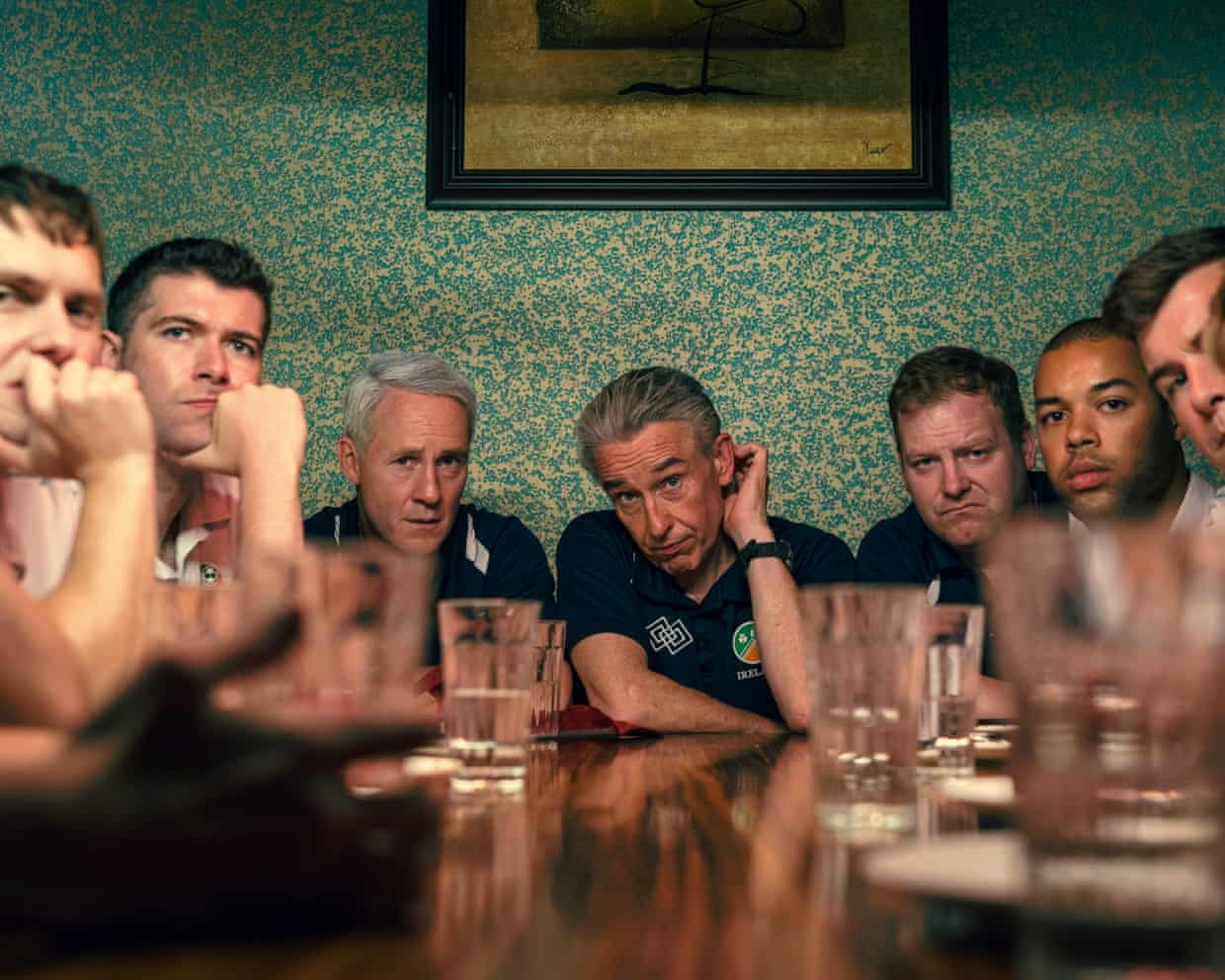
From Saipan to Take That: your complete entertainment guide to the week ahead
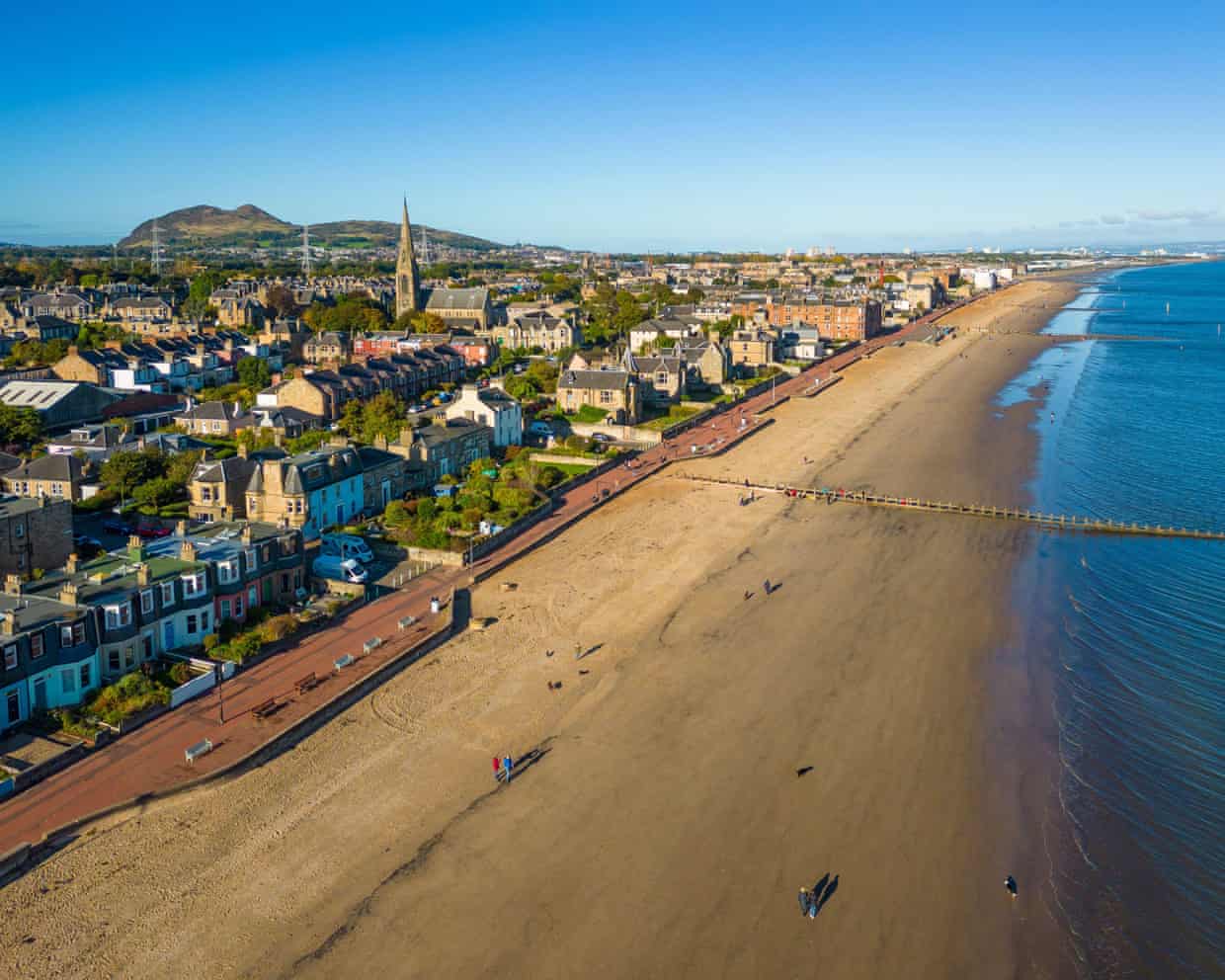
Tell us your UK town of culture nomination