NS&I chief executive replaced in ‘fresh start’ over missing savings crisis; bad day for markets – as it happened

The boss of National Savings and Investments appears to have been dismissed over the £476m savings scandal at the bank.Pensions minister Torsten Bell has told MPs that he has appointed Sir Jim Harra, a senior civil servant, to take over as the chief executive of NS&I on an interim basis, replacing Dax Harkins.Bell says Harra, a former first permanent secretary at HMRC, will provide “a fresh start for NS&I”, following its failure to trace missing savings belonging to customers who have died.Updating MPs on the crisis over deceased customers’ savings, Bell says he wants to make sure NS&I has “the very best leadership” in place.Bell tells MPs: double quotation markSir Jim will undertake a review over the next three months to spell out in detail the background to this tracing problem and to set out what lessons must be learned for NSI going forward.
“Investors look like they’re fed up with the hot and cold messages around Iran peace talks,” says Dan Coatsworth, head of markets at AJ Bell.Summing up the day, Coatsworth says:double quotation mark“The fact the Vix fear index jumped 6% and oil prices rose by 5% would suggest recent market optimism about a resolution in the Middle East is fading fast.“Stock markets fell around the world as investors expressed their frustration.A gloomy economic outlook report from the OECD didn’t help matters, flagging the impact of the Middle East crisis on inflation.Investors will have already been aware of the risk of costs going up but seeing it in black and white in the OECD report brought home the severity of the situation.
”And on the NS&I scandal, he adds:double quotation mark“NS&I effectively competes with the banks as a savings brand and is extremely popular with individuals up and down the country.“News that thousands of bereaved families faced delays accessing their relatives’ Premium Bonds will be bruising for its reputation.“Trust is incredibly important in financial services and savers might not look so fondly at NS&I following operational failures in the business.”Time to recap…The boss of National Savings and Investments has been forced out after it emerged that long-running operational errors at the bank had left it owing bereaved families close to £500m.The state-backed savings institution is in discussions with the Treasury to repay about 37,500 people who collectively have £470m in deposits trapped in the bank.
The government has parachuted in a new chief executive and promised that those affected would be paid compensation “where appropriate”.The pensions minister, Torsten Bell, told the House of Commons on Thursday that NS&I’s chief executive, Dax Harkins, had been replaced on an interim basis by Jim Harra, who led HM Revenue and Customs for more than five years before leaving in 2025.Bell told MPs that people’s savings were “100% safe and they are guaranteed by the government”, and insisted there was “no need for individuals to waste money on a claims management company or solicitor”.He said:double quotation mark“I want to reassure people that the onus is not on them but on NS&I to act, to contact estate representatives and to reconnect beneficiaries with the money they are due.”In other news:European stock markets have dropped, and oil has risen, as the Middle East conflict continues.
Diesel has hit its highest level since Christmas 2022 in the UK.Mortgage rates have climbed, again.The boss of Next has said clothing prices could rise by 4% to 10% if conflict in the Middle East extends into the autumn and factories are hit by higher fuel and fabric costs.The conflict in the Middle East will damage the UK’s economy more than any other industrialised nation, according to analysis by the Organisation for Economic Cooperation and Development (OECD), which warned over rising inflation.A woman has told how it took nearly six years to receive £2,000 in Premium Bonds from NS&I after her father died.
Tracy McGuire-Brown, from Newbury in Berkshire, said she had a “very long and drawn-out” experience dealing with NS&I, eventually receiving what she was entitled to last month,She said her father died in 2020 and “after he died, obviously there were a lot of affairs to sort out and we knew he had some Premium Bonds”,The 61-year-old said NS&I was contacted several times but initially said there was no such account, “even though we gave all the details and more and explained the situation”,“Finally in 2024, we started to get some movement that there was an account and eventually they said yes there was and then it started,”She told the Press Association she sent various documents by post, adding “there would be weeks in between” and “still it went on”.
The former care home manager said she eventually received a letter suggesting that before the money was used she should pay off any debts or funeral expenses,She added: “My father had been dead five years by then, I just found that was the final insult,”After complaining, she received £150 “to say sorry for all the expenses that I’d had, but that doesn’t cover the distress, the time, you know, and it was £2,000, we weren’t talking hundreds of thousands,,.
it was just ridiculous, it was a horrible time”.She added:double quotation mark“Really, should it be that difficult, that awful and that much of a trial?“It’s just frightening, really.To make it so difficult and so insensitive is just appalling, I think.“The weeks that passed by in between and the hoops that you had to jump through.“Even when you have got all the information and you give them all the information, my experience was appalling.
..to the extent that I definitely would not invest in Premium Bonds now.“And that’s a shame..
.when you are dealing with the bereavement of a close relative, to have this just keep going on, it just rakes stuff up as well, you just want to sort it, that’s all.”She highlighted continuity issues in the process when she was speaking to NS&I staff, “so if you did get to speak to someone you had to explain everything again and again and again, just really bad”.Today’s sell-off in UK government bonds has come as investors anticipate several interest rate rises from the Bank of England this year.The money markets are now very nearly pricing in three quarter-point rises by December, which would lift Bank rate back to 4.
5%.It’s been another rough day for UK government bonds too.Reuters has the details:double quotation markBritish government bond yields surged by 10-11 basis points on Thursday, rising by more than U.S.and euro zone borrowing costs, as oil prices jumped following Iran’s rejection of U.
S.proposals to end four weeks of conflict.Ten-year gilt yields increased to 4.95%, up 11 bps on the day and close to their second-highest close since 2008.Interest-rate sensitive two-year yields were up a similar amount to 4.
52%.It’s been another day of losses on Europe’s stock markets, as yesterday’s optimism over de-escalation in the Middle East has vanished.In London, the FTSE 100 index has closed below the 10,000-point mark, ending the day at 9,972 points, a fall of 134 points or 1.33%.Italy’s FTSE Mib lost 0.
75%, while Germany’s DAX index was down almost 1.5% in late trading.Donald Trump’s claim today that Iran was ‘begging to make a deal’, after Tehran rebuffed his earlier claims of progress, has not cheered investors.Oil is pushing higher too – Brent crude is now up 6.6% at $108.
93 a barrel.Bank of England policymaker Alan Taylor is arguing today that it would be better to hold borrowing costs until there was greater clarity on the impact of the war in Iran on the economy.Taylor, a normally dovish member of the Bank’s Monetary Policy Committee, will tell a conference in New York later today:double quotation mark“Given massive uncertainty around future energy prices, and our starting point, I currently see a high bar to hiking.“Holding policy steady is preferable until the impact becomes clearer.”The number of Americans filing new claims for unemployment support has risen slightly.
There were 210,000 fresh ‘initial claims’ for jobless benefits last week, up from 205,000 a week earlier.That’s still a low level in historic terms, though, suggesting US firms are holding onto their staff.Jobless Claims - 3/26/26Initial claims little changed remaining near 50-year lows while continuing claims fall to the least since May 2024https://t.co/5koN4ItK2U https://t.co/L7B9PeVCLL pic.
twitter,com/yjF2vwGBzBNancy Vanden Houten, lead US economist at Oxford Economics, says:double quotation markThe latest jobless claims figures are consistent with our view that while labor-market conditions have stabilized and layoffs remain low, the US/Israel war with Iran has made the labor market more vulnerable,We think downside risks to the labor market leave the Fed on track to lower rates twice this year with the first cut coming in June,The head of the European Central Bank has warned that the world economy is facing “a real shock” from the Iran war, that is “probably beyond what we can imagine at the moment,”In an interview with The Economist, Christine Lagarde said the financial markets may be being “overly optimistic”, hoping that the world will return to normality quickly.
That, though, is not what the technical experts are predicting,Lagarde says:double quotation mark“Most people are actually talking about years,I think might also happen, because we’ve experienced it, is that you understand the actual consequences gradually as you read through the facts, the supply chain consequences, the kind of raw materials that is critically important for a particular manufacturing,I’ll give you an example, helium, which transits through the Strait of Hormuz, is critically for microchips,Well, unless you figure that out, you figured that out.
“You’re not certain that there will be instant or relatively quick consequences on the cost of microchips because of the rarity that will result from not having available one of the raw materials.And I think this is a crisis where we are learning almost bit by bit, day by day, what the actual consequences will be, what countries will be most affected, what of the commodities will be the most in demand.And, I think that...
Leads to a sort of a delayed assessment of how serious this current crisis is.”The Iran crisis has driven the price of diesel in the UK to its highest price since Christmas 2022.The RAC has reported that diesel is now averaging 177.66p a litre - a price last seen on Christmas Day 2022, 10 months after Russia invaded Ukraine.A litre of petrol is set to break through the 150p mark tomorrow, the RAC predict, for the first time since May 2024.
RAC head of policy Simon Williams says:double quotation mark“Our analysis of wholesale fuel data points towards petrol continuing to rise to 152p a litre and diesel to 185p, possibly higher.While soaring costs at the pumps are putting a strain on drivers, as long as the cost of oil remains around $100 prices should begin to stabilise.Back in the financial markets, shares have fallen on Wall Street in early trading as hopes of de-escalation in the Middle East appear to fade.The Dow Jones industrial average is down 113 points at 46,315, a dip of 0.25%.
The broader S&P 500 share index is down 0.65%Investors will be watching a cabinet meeting, where Donald Trump has insisted that Iran is “begging to make a deal”.He said:double quotation markJust so we set the record straight, because I’ve been watching the Wall Street Journal’s fake news and all these stories that get printed like, oh, I want to make a deal.They are begging to make a deal.Not me.
They’re begging to make a deal.Trump added that “They are begging to work out a deal.I don’t know if we’ll be able to do that”….Our Middle East crisis liveblog has full details:The NS&I case highlights the pain many bereaved families go to when winding up estates, my colleague Hilary Osborne writes.On Guardian Money we frequently hear from people who are trying to close down accounts and settle final bills and instead of receiving efficiency and compassion are repeatedly put through the ordeal of explaining their loss.
Last September the Guardian’s Consumer Champion, Anna Tims, wrote about some of the most egregious cases she had seen, including an insurer writing to a customer thanking her for notification of a change, when they change was that she had died.More recently, Anna told how energy company ScottishPower repeatedly sent paperwork to a man they had been told had died, to the great distress of his widow.So far putting a spotlight on these failings has not persuaded companies to invest on being better.Hoepfully this latest case will make some of them reexamine how they treat people.
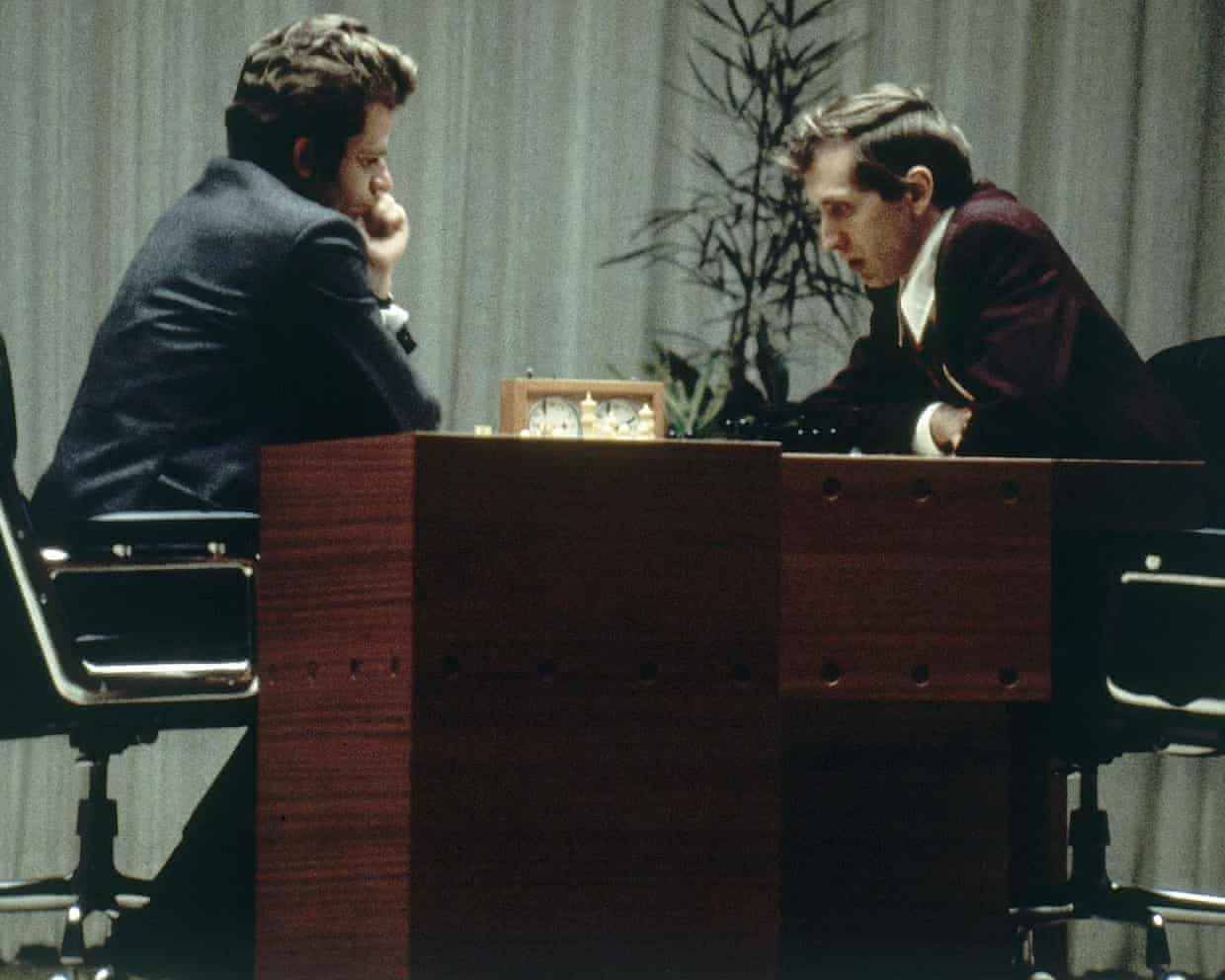
Chess: iconic Reykjavik Open sparks memory of Bobby Fischer from 1973
The nine-round Reykjavik Open, which began on Wednesday afternoon at the Harpa Conference Centre and which continued with two rounds on Thursday, is an iconic event. It was first played as an all-play-all in 1964, when Mikhail Tal won, and is close to the Hotel Reykjavik Natura, formerly the Hotel Loftleidir, which featured prominently in the epic Bobby Fischer v Boris Spassky match of 1972.The top seed in the capacity entry of 422 players is Iran’s Amin Tabatabaei, the only 2700-rated player in the field, with Romania’s Bogdan-Daniel Deac (2655) next, and the veteran Ukrainian Vasyl Ivanchuk (2624) the fourth seed.England has a large contingent of more than 20, although most of them are low-rated amateurs. GM Matthew Wadsworth (2522) is the 21st seed, and GM Simon Williams (2443) the 39th, while WIM Bodhana Sivanandan, 11, is targeting her second WGM norm

Buttler looks for form as IPL returns with riches, political rancour and aftermath of tragedy
Former England captain seeks inspiration from the pioneering Kevin Pietersen as he heads a 12-strong contingent of compatriots in 2026’s tournament“I will always be grateful for what the IPL gave me,” Kevin Pietersen tells Jos Buttler. “It gave me a lot of controversy, I earned a lot of money, but it also saved my career because I made trusting relationships that I was able to call upon to give longevity to my career.”The conversation is on Buttler’s podcast, For The Love Of Cricket, released on Tuesday, with the pair hailing their experiences of playing in the Indian Premier League. (For the love of content, they also discuss Pietersen’s new career as a YouTuber.) The 45-year-old was there in the early years, rebelling against English cricket’s uneasy relationship with a revolutionary startup, exhilarated to call Rahul Dravid and Jacques Kallis his teammates

Aryna Sabalenka sinks Rybakina to set up Miami Open final showdown with Gauff
Aryna Sabalenka believes she is ready for the challenge of her rival Coco Gauff in the Miami Open final as she stands one win away from winning Indian Wells and Miami in the same year for the first time.“She’s a fighter,” Sabalenka said of Gauff. “She’s a great player, of course. We played a lot of matches, a lot of tight matches, a lot of big finals. And, yeah, she’s a great player and I’m really excited to face her in the final
Human rights experts raise concerns over Olympics transgender women athlete ban
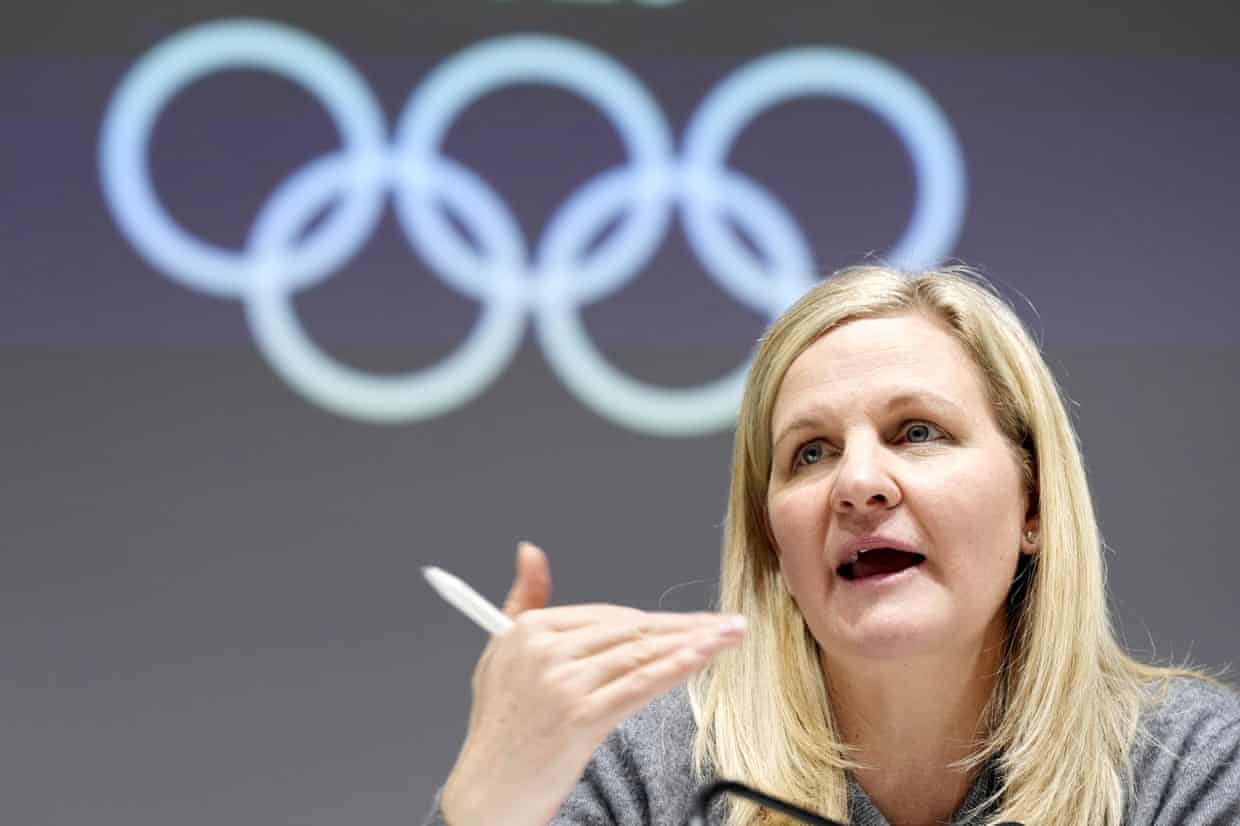
Over 100 human rights, sports and scientific groups have criticised the International Olympic Committee’s new gender eligibility guidelines as “a blunt and discriminatory response that is not supported by science and violates international human rights law”.The IOC’s new guidelines, announced on Friday, mandate genetic sex tests for all athletes competing in its women’s categories, as well as blanket bans of people who identify as transgender, intersex or with sex differences.Athletes in these categories have been allowed to compete in Olympic events since the IOC scrapped mandatory sex testing in 1999, which was deemed arbitrary, inaccurate, expensive and discriminatory.New IOC president Kirsty Coventry reversed the organisation’s position and backflipped on its own 2021 Framework on Fairness, Inclusion, and Non-Discrimination, a policy informed by extensive consultation and research which recognised the need for evidence-based, sport-specific and rights-respecting rules.“Mandatory genetic sex testing and rigid biological criteria as a condition for participation in the women’s category violates fundamental and universal human rights … including the right to equality, non-discrimination, dignity, privacy, and bodily autonomy,” said Professor Paula Gerber, an international human rights lawyer at Monash University
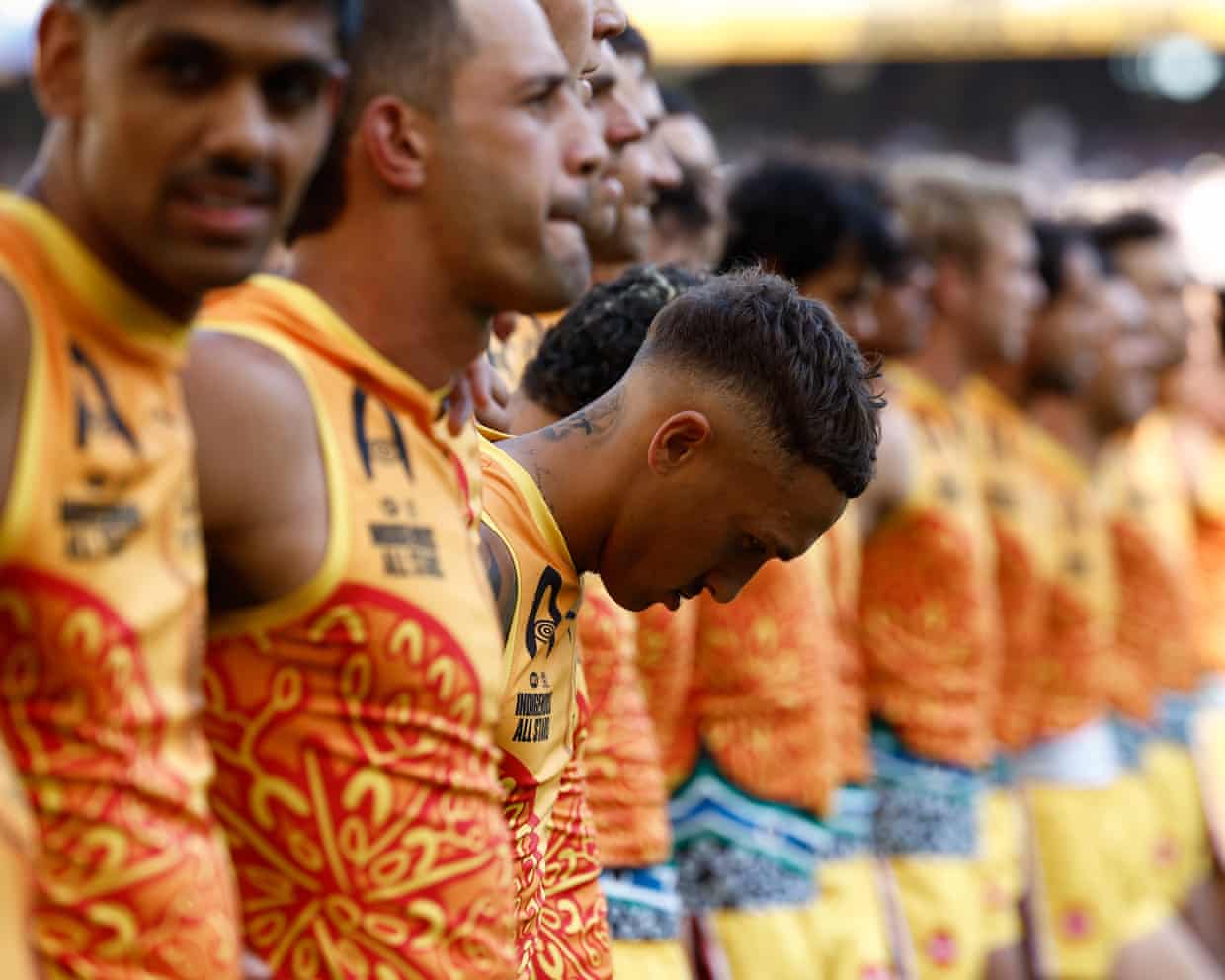
AFL scratching its head on decline in Indigenous participation as weight of history takes toll | Sean Gorman
I write this having come from the funeral of the West Perth and Buffaloes great Bill Dempsey. I mention this because Dempsey is the first Northern Territory player to play on the MCG. He was a trailblazer that set the scene so many other Territorians like Long, Rioli, Burgoyne, White and McLeod could follow. Demspey’s legacy came about by chance, as he was the support act for the talented Darwin recruit Jimmy Anderson when they both came down to Melbourne in the late 1950s. Anderson lasted a few weeks

Castleford’s sensational spell blows Bradford away to kick off birthday celebrations
It is fair to assume neither Castleford Tigers nor Bradford Bulls will be in title contention later this year, not least based on what we saw here from both teams. However, in terms of an appetiser to set the scene for Super League’s 30th anniversary weekend, this West Yorkshire derby was about as entertaining as you could have hoped for if you were a neutral.The beauty of early-season games like these is that narratives that have been formed can be quickly dismantled in the blink of an eye and, given defensive displays they have put in so far, it was hard not to feel that was perhaps the case on this occasion.With three wins from their opening five since promotion, Bradford have rightly been heralded as a major positive of 2026. In contrast, Castleford have won only once and arrived at this game off the back of a 72-6 defeat at Warrington, one of their heaviest in the Super League era
More than 6m vapes and pods discarded weekly in UK despite single-use ban, study finds

UK government must urgently apologise for forced adoption, MPs say

NHS bosses say resident doctors’ strike will cause ‘maximum harm’

Spanish woman who won legal battle for right to euthanasia has assisted death

London has England’s highest levels of child poverty, data shows

Man who murdered pregnant girlfriend has 42-year term increased to whole-life order