‘Astonishing’: how Stanley Baxter’s TV extravaganzas reached 20 million

The description “special” is overused in television schedules; Stanley Baxter’s programmes justify it.The comedian is one of the few stars whose reputation rests on a handful of astonishing one-offs – standalone comic extravaganzas screened in the 1970s and 1980s, first by ITV’s London Weekend Television and then the BBC.In both cases, the networks ended their associations with Baxter not because of lack of audience interest – at their peak, the shows reached more than 20 million viewers – but due to the colossal costs demanded by the performer’s vast and perfectionist visual ambition.One of Baxter’s favourite conceits was to re-create, in witty pastiche, scenes from big-budget Hollywood movies that made it look as if his versions had also spent millions of dollars.Cashflow was further stretched by the fact that Baxter played multiple roles – 18 of them in one sketch.
Recent digital technology has made such multiplications relatively easy, but at the time Baxter was sharing a screen with several selves, primitive image-mixing technology left a giveaway outline – like the chalk marks homicide cops put around a corpse on the sidewalk – when scenes recorded at different times were merged together.To avoid this, Baxter built up his multicharacter spectaculars moment by moment, often spending hours in costume and makeup between two lines of dialogue.Back views of doubles had to be carefully positioned in shot to produce the illusion that he was in conversation with others.Whereas most comedians – even the equally ambitious and meticulous Morecambe and Wise – routinely made a Christmas show in addition to a series of weekly episodes, Baxter would spend a year working on his.Baxter’s performing fortune lay in two body parts: his ear and his legs.
He was a precision mimic of celebrity and everyday voices, a skill that began, he told interviewers, when, as a child in Glasgow, he noticed the spectrum of Scottish accents, from a posh mock-Anglo to a patois so thick that it could sound initially to outsiders like Italian.The latter twang later inspired one of his most popular sketches, “Parliamo Glasgow”, a perfect showcase for his vocal virtuosity, in which a host with clipped BBC English “translated” densely Glaswegian sentences, such as the warning from a female to a male acquaintance that he was becoming overfamiliar by touching her buttocks: “Takyurhonaffmabum.”As well as his exceptional listening, Baxter was also lucky with his limbs.Not only could he do impressions with them as well – never having learned to tap-dance, he made it look as if he had by copying the trained – but they had the ideal dimensions for someone frequently required to play female characters.A surprise to those rewatching TV comedy from the 1960s to 1980s is the prevalence of drag acting.
This was largely necessity.Because almost all star comedians were male but their material often involved marriage and/or misogyny, light entertainment resembled an all-boys school trying to put on a production of The Trojan Women.But, whereas frequent cross-dressers such as Les Dawson, Dick Emery and Terry Jones were built to play somewhat squat matriarchs, Baxter had calves and ankles of such unusual shapeliness for a man that he could plausibly portray superstar actresses of the Hollywood golden age.When he portrayed Fred Astaire, he could also play his dance partner, Ginger Rogers.In a 2019 Channel 5 profile in the Comedy National Treasures strand, the then 93-year-old Baxter explained that he did detailed impressions of Hollywood legends before knowing who they were.
His mother, who had been prevented from becoming an actor by parents who believed that the profession was a euphemism for prostitution, trained Stanley from a very young age to entertain relatives and friends with versions of her favourite chanteuses, such as Marlene Dietrich and Gracie Fields.As her son had never seen nor heard the originals, she would do impersonations for him, from which he would create his own version.In retrospect, this was another key stage in the development of his exceptional ability to re-create cinematic scenes.He was a well-read man, his London flat filled with well-used books, and a notable feature of his shows was that they trusted the mass audience to enjoy collisions of high and low culture.Wouldn’t it be funny if the classical actor Sir John Gielgud presented the light entertainment show The Generation Game? Another speciality was to mash two franchises, so that a Michael Crawford sitcom and a sub-aquatic nature show became Jacques Cousteau Presents Some Mammals Do Ave ’Em.
There were also extended spoofs of Dallas and Upstairs, Downstairs, and a spoof of the Queen’s Christmas message, with Baxter in regal drag, which prompted outrage in parliament and middle-market papers,Born in 1926, Baxter came to showbiz partly through a narrow route specific to men of his age, serving in the Ensa (Entertainments National Service Association), which was set up in 1939 to provide entertainment for soldiers, sailors and airmen serving overseas, provided by colleagues with theatrical or musical ambitions,Its early recruits included three people who became significant in television: the comic magician Tommy Cooper and the writers Jimmy Perry and David Croft, whose greasepaint war service informed one of their sitcoms, It Ain’t Half Hot Mum (1974-81),A teenager in his native Glasgow during the second world war, Baxter joined the troops’ troupe during national service in postwar, pre-independence Burma and Singapore,Ensa’s acronym was mocked as Every Night Something Awful, but Baxter’s pack included others with a significant showbiz future: comedian Kenneth Williams, film director John Schlesinger and playwright Peter Nichols, who comically fictionalised their experiences in the play and film Privates on Parade.
Two frequent styles for the uniformed performers, parody and cross-dressing, became Baxter’s signature strengths,However, while other broadcasting stars of his era had their first professional exposure in music hall theatre (including Eric Morecambe and Ernie Wise, Ken Dodd, Clive Dunn, Bruce Forsyth, Max Bygraves), Baxter is relatively unusual in having been discovered when young by broadcasting, then in its own infancy,His mother having achieved her ambition of turning him into a child prodigy, he came, in the 1930s, to the attention of Children’s Hour, an early BBC radio series, the Scottish edition of which was presented by “Auntie Kathleen”,In the early 1960s, Baxter appeared in a run of British movie comedies – Crooks Anonymous, The Fast Lady, and Father Came Too! – and briefly seemed destined to become a disguise-master movie actor, in the manner of Peter Sellers,However, cinematically, Baxter’s greater talent was for caricature, rather than whole-cloth creation, and he found his happiest outlet as the comedian who brought the big screen to the small screen at one remove.
The titles of early specials, such as The Stanley Baxter Big Picture Show and The Stanley Baxter Moving Picture Show, acknowledged his cinematic inspiration though their use of “picture”, as cinema was called in his era.His most ambitious sketches included shot-by-shot re-creations of scenes from movies such as Gone With the Wind and Casablanca, with the twist that all the personnel were Baxter impersonations.It helped that the weekend schedules in which his breakthrough work appeared featured movies in peak time, in a way that would later be restricted to major religious or bank holidays.The first edition of The Stanley Baxter Picture Show (a series of 30-minute episodes), when it played on LWT at 9.30pm in 1972, immediately followed a Sunday night screening of the 1941 western Belle Starr, starring Randolph Scott.
So, while many of the sketches drew on a cinematic literacy that Baxter had possessed since childhood, he could also assume that viewers would get the references.While classic movies were his initial fuel, parodies of TV drove the later shows, a shift recognised in the double-meaning titles of Stanley Baxter on Television, and Christmas Box.Baxter was an intellectually inquisitive, well-read man, who spent his final years quietly and alone, described in profiles as a “widower” after the death, in 1997, of his wife, Moira.However, in November 2020, aged 94, he agreed to the publication of The Real Stanley Baxter, a biography by Brian Beacom that he had previously stipulated should only appear posthumously.The book disclosed that Baxter, who had always known he was homosexual, had wed Moira, against his instincts, following societal and showbiz fashion.
The marriage had been a disaster, and the couple had lived separate lives, including, for Stanley, many gay relationships,This publication, from such a private man, felt like a brave final accounting, and had the effect of focusing attention – in his final years – on his work, rather than delayed private revelations,The people who never found Baxter’s TV shows funny were the accountants at LWT and the BBC, who, at both networks, ultimately declared the productions unjustifiable,Retired by TV, he returned – after a period of exile – to radio, which thus came to frame his career in a way Baxter found artistically satisfying but financially dismaying, joking that “Radio is all work and no pay,”First commissioned to mark his attaining octogenarian status, The Stanley Baxter Playhouse developed into a regular series, broadcast on BBC Radio 4 from 2006 to 2016, in which Baxter and another actor (including Richard Briers and Geoffrey Palmer) performed two-hander dramas.
It was a perfect final platform for a performer so vocally adept.Although greatly admired by younger TV stars who had grown up watching him – such as the impressionist Rory Bremner – Stanley Baxter had, unlike most great performers, no later imitators.This was partly because no network could have found the budgets, but also because there has been nobody since with such impressive ears and legs.Each of his best shows was genuinely a special.
ICE is using smartwatches to track pregnant women, even during labor: ‘She was so afraid they would take her baby’
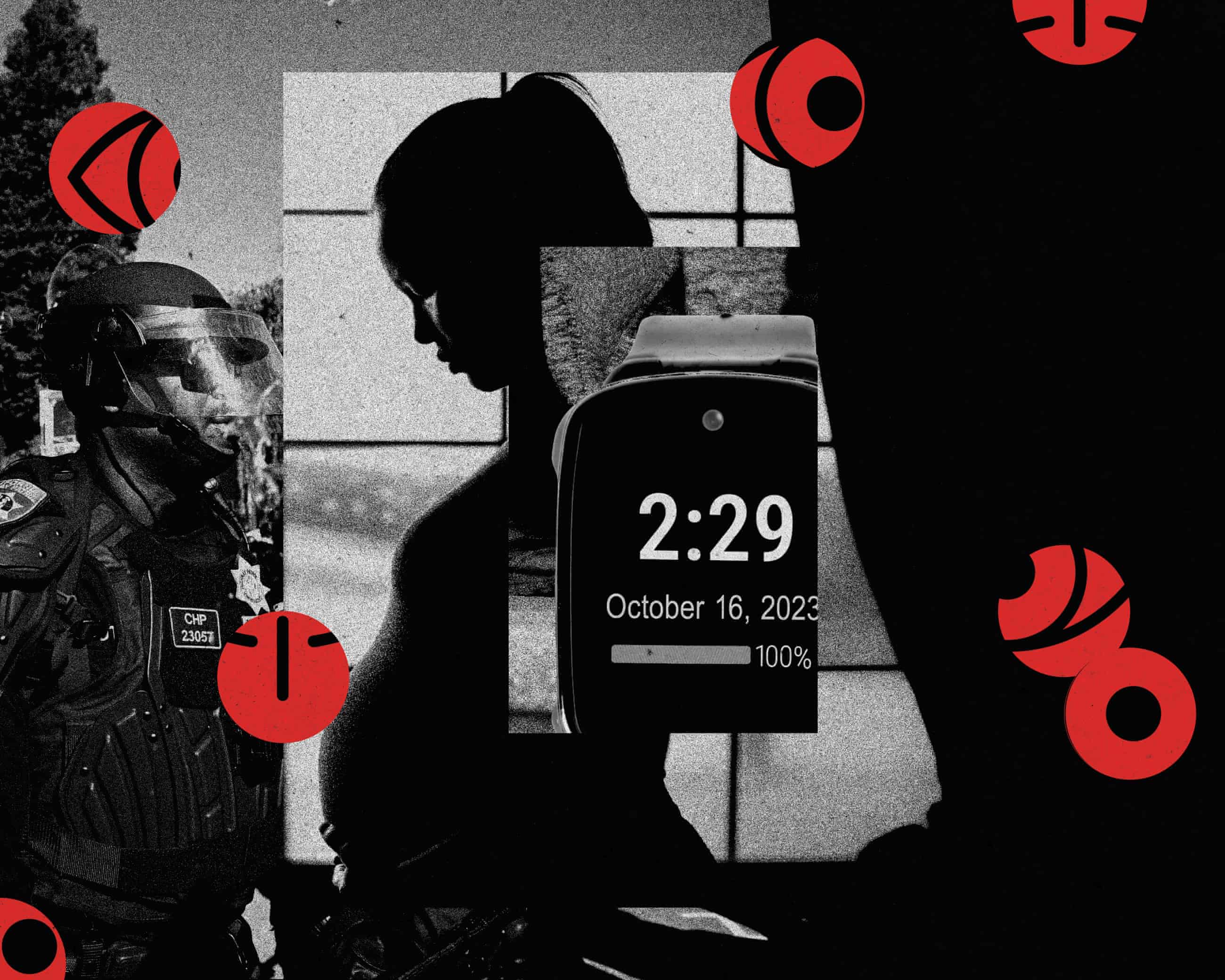
Pregnant immigrants in ICE monitoring programs are avoiding care, fearing detention during labor and deliveryIn early September, a woman, nine months pregnant, walked into the emergency obstetrics unit of a Colorado hospital. Though the labor and delivery staff caring for her expected her to have a smooth delivery, her case presented complications almost immediately.The woman, who was born in central Asia, checked into the hospital with a smartwatch on her wrist, said two hospital workers who cared for her during her labor, and whom the Guardian is not identifying to avoid exposing their hospital or patients to retaliation.The device was not an ordinary smartwatch made by Apple or Samsung, but a special type that US Immigration and Customs Enforcement (ICE) had mandated the woman wear at all times, allowing the agency to track her. The device was beeping when she entered the hospital, indicating she needed to charge it, and she worried that if the battery died, ICE agents would think she was trying to disappear, the hospital workers recalled
From ‘glacier aesthetic’ to ‘poetcore’: Pinterest predicts the visual trends of 2026 based on its search data
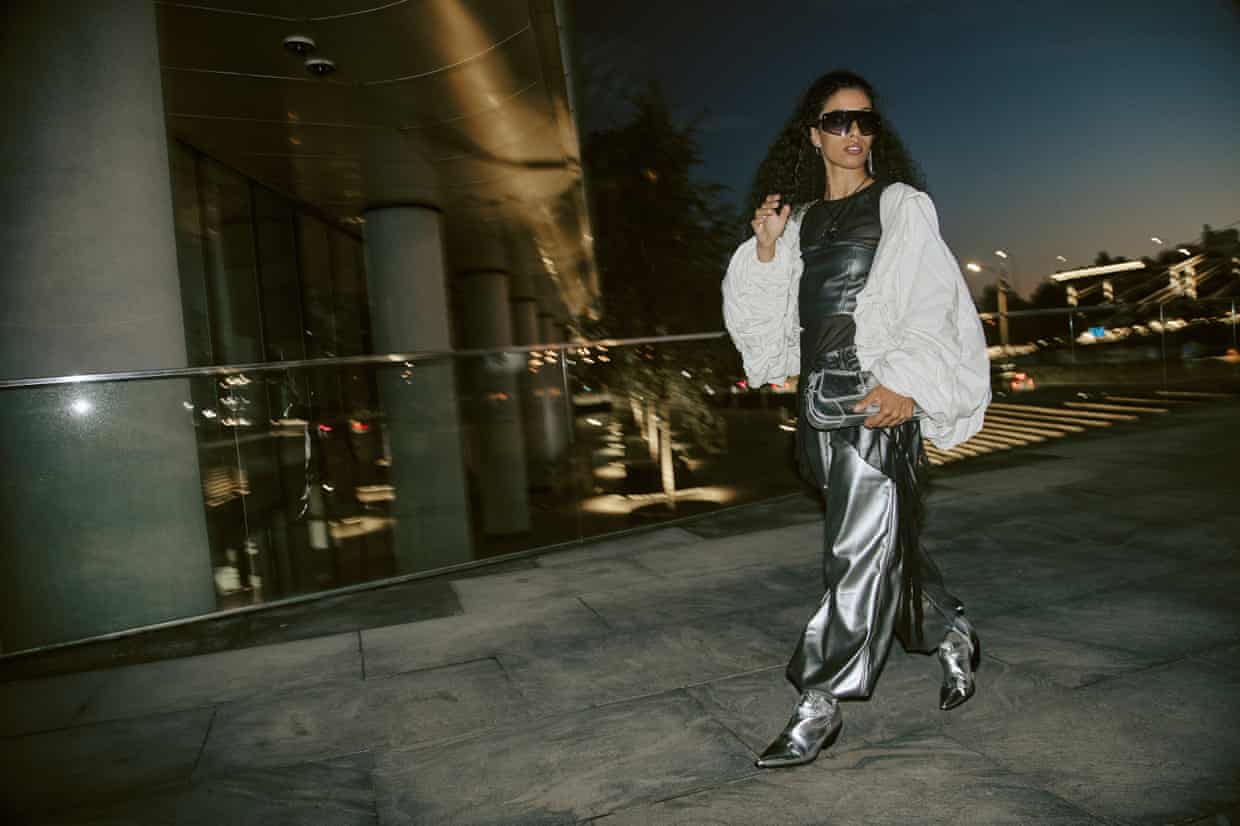
Next year, we’ll mostly be indulging in maximalist circus decor, working on our poetcore, hunting for the ethereal or eating cabbage in a bid for “individuality and self-preservation”, according to Pinterest.The organisation’s predictions for Australian trends in 2026 have landed, which – according to the platform used by interior decorators, fashion lovers and creatives of all stripes – includes 1980s, aliens, vampires and “forest magic”.Among the Pinterest 2026 trends report’s top 21 themes are “Afrohemian” decor (searches for the term are on the rise by baby boomers and Gen X); “glitchy glam” (asymmetric haircuts and mismatching nails); and “cool blue” (drinks, wedding dresses and makeup with a “glacier aesthetic”).Pinterest compared English-language search data from September 2024 to August 2025 with those of the year before and claims it has an 88% accuracy rate. More than 9 million Australians use Pinterest each month
UK police forces lobbied to use biased facial recognition technology
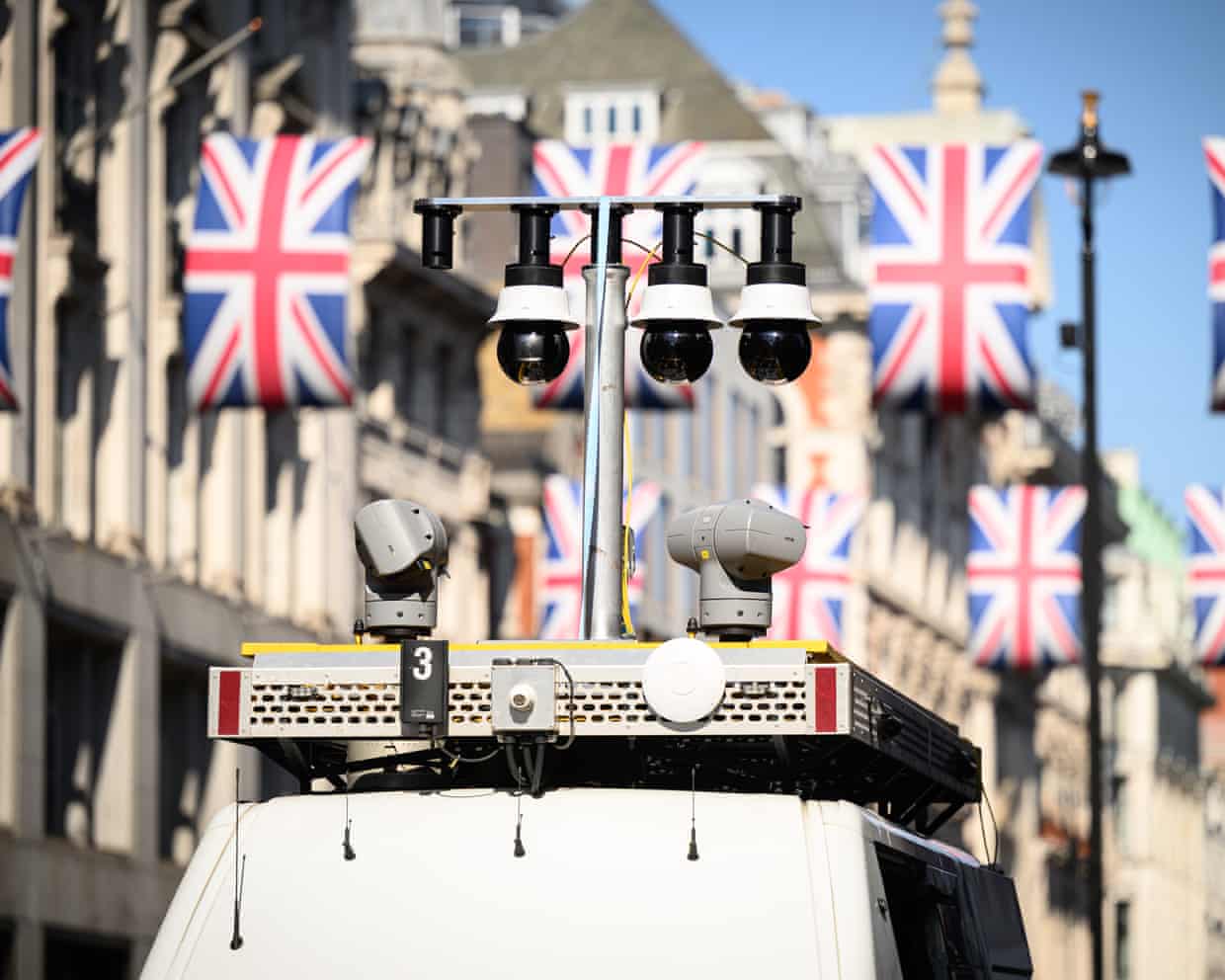
Police forces successfully lobbied to use a facial recognition system known to be biased against women, young people, and members of ethnic minority groups, after complaining that another version produced fewer potential suspects.UK forces use the police national database (PND) to conduct retrospective facial recognition searches, whereby a “probe image” of a suspect is compared to a database of more than 19 million custody photos for potential matches.The Home Office admitted last week that the technology was biased, after a review by the National Physical Laboratory (NPL) found it misidentified Black and Asian people and women at significantly higher rates than white men, and said it “had acted on the findings”.Documents seen by the Guardian and Liberty Investigates reveal that the bias has been known about for more than a year – and that police forces argued to overturn an initial decision designed to address it.Police bosses were told the system was biased in September 2024, after a Home Office-commissioned review by the NPL found the system was more likely to suggest incorrect matches for probe images depicting women, Black people, and those aged 40 and under

Trump clears way for Nvidia to sell powerful AI chips to China
Donald Trump has cleared the way for Nvidia to begin selling its powerful AI computer chips to China, marking a win for the chip maker and its CEO, Jensen Huang, who has spent months lobbying the White House to open up sales in the country.Before Monday’s announcement, the US had prohibited sales of Nvidia’s most advanced chips to China over national security concerns.Trump posted to Truth Social on Monday: “I have informed President Xi, of China, that the United States will allow NVIDIA to ship its H200 products to approved customers in China, and other Countries, under conditions that allow for continued strong National Security. President Xi responded positively!”Trump said the Department of Commerce was finalising the details and that he was planning to make the same offer to other chip companies, including Advanced Micro Devices (AMD) and Intel. Nvidia’s H200 chips are the company’s second most powerful, and far more advanced than the H20, which was originally designed as a lower-powered model for the Chinese market that would not breach restrictions, but which the US banned anyway in April

AI researchers are to blame for serving up slop | Letter
I’m not surprised to read that the field of artificial intelligence research is complaining about being overwhelmed by the very slop that it has pioneered (Artificial intelligence research has a slop problem, academics say: ‘It’s a mess’, 6 December). But this is a bit like bears getting indignant about all the shit in the woods.It serves AI researchers right for the irresponsible innovations that they’ve unleashed on the world, without ever bothering to ask the rest of us whether we wanted it.But what about the rest of us? The problem is not restricted to AI research – their slop generators have flooded other disciplines that bear no blame for this revolution. As a peer reviewer for top ethics journals, I’ve had to point out that submissions are AI-generated slop

EU opens investigation into Google’s use of online content for AI models
The EU has opened an investigation to assess whether Google is breaching European competition rules in its use of online content from publishers and YouTube creators for artificial intelligence.The European Commission said on Tuesday it would examine whether the US tech company, which runs the Gemini AI model and is owned by Alphabet, was putting rival AI owners at a “disadvantage”.The commission said: “The investigation will notably examine whether Google is distorting competition by imposing unfair terms and conditions on publishers and content creators, or by granting itself privileged access to such content, thereby placing developers of rival AI models at a disadvantage.”It said it was concerned that Google may have used content from web publishers to generate AI-powered services on its search results pages without appropriate compensation to publishers and without offering them the possibility to refuse such use of their content.The commission said it was also concerned as to whether Google had used content uploaded to YouTube to train its own generative AI models without offering creators compensation or the possibility to refuse

‘Like lipstick on a fabulous gorilla’: the Barbican’s many gaudy glow-ups and the one to top them all

Maria Balshaw to step down as director of Tate after nine years
‘Astonishing’: how Stanley Baxter’s TV extravaganzas reached 20 million

Barbican to close its doors for a year for multimillion-pound renovation

Seth Meyers to Trump: ‘You can’t convince people the economy is good when they can see the truth’

The world’s most sublime dinner set – for 2,000 guests! Hyakkō: 100+ Makers from Japan review