The world’s most sublime dinner set – for 2,000 guests! Hyakkō: 100+ Makers from Japan review
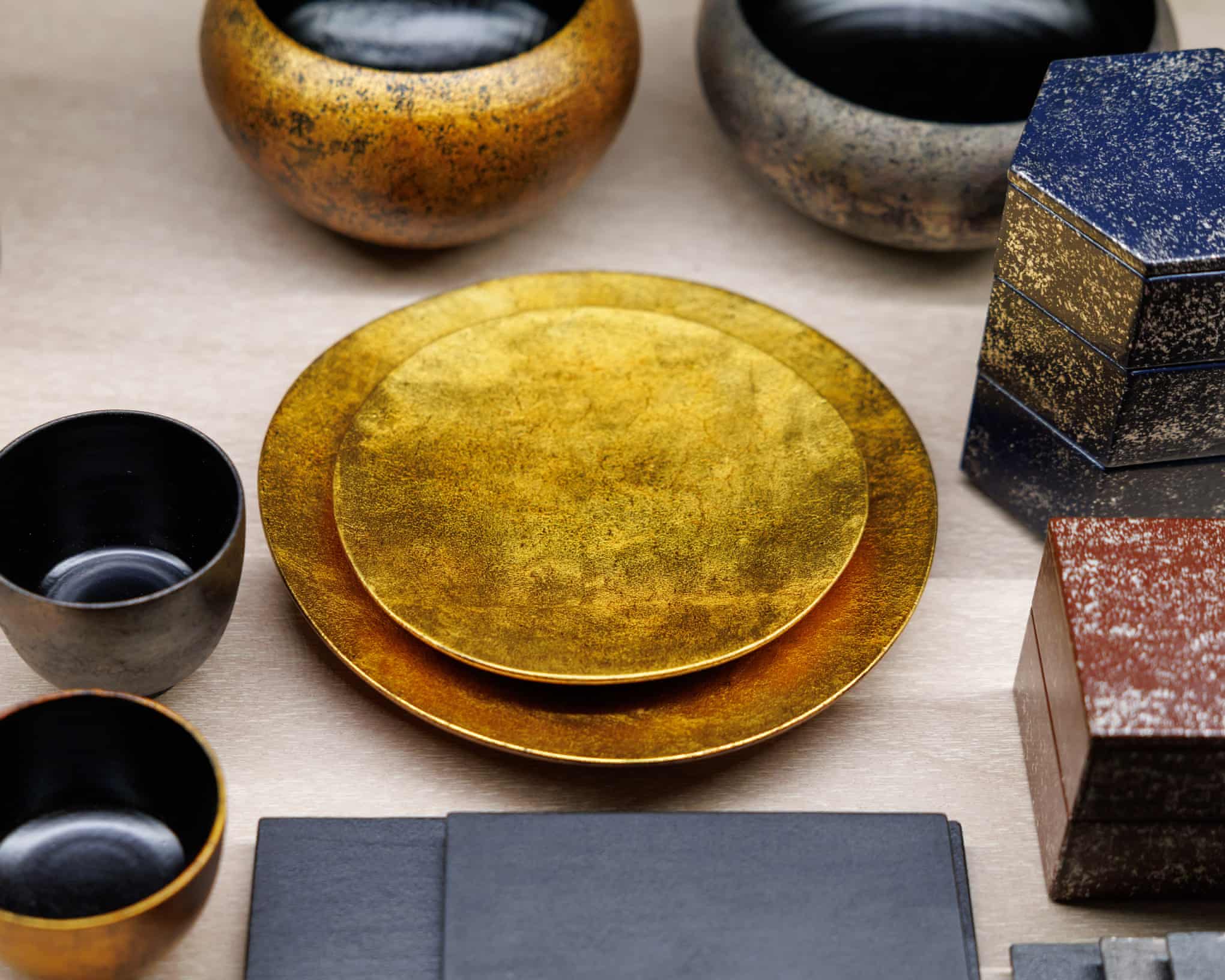
Japan House, LondonThe fruit of a two-year odyssey through the workshops of artisans using ancient techniques, this delightful show features rippling chestnut trays, exquisitely turned kettles and vessels crafted from petrified leatherAs a retort to the doom-mongering prognostications of AI’s dominance over human creativity, it is momentarily comforting to tally up the things it cannot do,It cannot throw a pot, blow glass, beat metal, weave bamboo or turn wood,Perhaps, when it has assumed absolute control of human consciousness and the machinery of mass production, it will be able to,But for now, throwing a vessel and weighing its heft in your hand, or carving a tray and sizing up its form with your eye are still the preserve of skilled craftspeople, using techniques their distant ancestors would recognise,On show at London’s Japan House is the work of more than 100 pairs of eyes and hands, constituting an overwhelming profusion of human creativity, corralled into an exhibition of laconic simplicity.
About 2,000 objects – bowls, trays, cups, metalwork, glassware and some perplexing bamboo cocoons – are grouped according to their makers on long, softly lit display tables.At first glance, you might think you have stumbled into an especially refined John Lewis homeware department, but then you notice the delicate black and red lacquer work, the gleaming gold on the inside of a perfectly shaped sake cup, the intricacy of the bamboo and some eccentrically shaped vessels, like alien seedpods, that look like ceramics but turn out be a kind of petrified leather.Craftsmanship that gives practical and beautiful shape to raw materials has been part of Japanese life for centuries.Yet historically, the products of formal crafts such as urushi (lacquerware) and metalwork were conceived as costly artefacts to be admired, well out of reach of ordinary people.It wasn’t until the 1920s that the folk craft movement, known as mingei, refocused attention on the unassuming beauty of hand-crafted utilitarian objects.
Today, despite the prevalence of industrial production, artisans across Japan continue to create everyday utensils and vessels, employing traditional methods that respond to the particular qualities of their chosen material.No two crafts are the same, and each artisan brings a unique imprimatur to the process of creation.In a two-year odyssey, the exhibition’s curator, Nagata Takahiro, travelled the length of Japan, seeking out craftspeople hunkered in country sheds and city flats, shaping clay, beating metal and working wood, quietly getting on with creating.The aim was to get a sense of the numbers and experiences of people involved in sustaining traditional Japanese crafts.It turned out to be an extensive and thriving network, with artisans using social media to showcase their wares and connect with buyers, galleries, craft fairs and other makers.
Shinichi Moriguchi spends his time crafting chestnut wood trays known as wagatabon, traditional utensils dating from the Edo period with distinctive chisel marks inscribed vertically across the wood grain.Chestnut wood is especially resistant to water and decay and the chiselled lines resemble rippling waves, conjuring a sense of beauty and strength.No two surfaces are alike.Moriguchi lives in Kyoto and runs an atelier in the surrounding mountains, teaching students the craft of wagatabon carving.“It only requires simple tools – a wooden mallet and chisels – so anyone can learn,” he says.
Before becoming a metalsmith, Yumi Nakamura worked in interior design, so her approach to craft is inflected by a strong awareness of space and how objects appear in settings.Her kettles and tea vessels are exquisitely sculptural, with slim, exaggeratedly curved handles.Although the process of hammering and shaping sheets of metal can be arduous, she marvels at how objects can be drawn out from inanimate matter.“Unlike ceramics or glass, metalwork lets you keep touching the form,” she says.“You can keep hammering for ever, so deciding when to stop is crucial.
” Reflecting different strengths and physiques, the hammer marks also embody the maker’s character,Amplifying the now cliched notion of wabi-sabi, which has come to be routinely applied to anything involving weathered natural materials, the exhibition features a glossary of terms that crystallise singularly Japanese concepts, such as anbai, meaning “balance” or “adjustment”,Originally it was used to describe the seasoning of food, but here it relates to how the quality of an object hinges on its form and colour,Shibui (literally “bitter”) means subtly elegant, while ibitsusa refers to “irregularity”, which is to be cherished as evidence of the human hand, imparting an expressive quality that cannot (yet) be reproduced by machines,Short films document some of the craftspeople at work, showing how base materials are effortfully transformed into elegant artefacts.
As with the potter’s wheel television intervals of yore, there is a seductively ASMR (autonomous sensory meridian response) quality to watching how a bowl or spoon is made, but the films also convey a wider sense of the artisans’ lives, their daily routines and their locales, since the nature of place also shapes approaches to design.Specialising in porcelain, ceramic artists Yamamoto Ryōhei and Hirakura Yuki share a home and studio in Arita, in western Kyushu, where porcelain was first produced in Japan more than 400 years ago.Near their home is the site of the oldest kiln in Arita.Discarded pottery shards are strewn around the ground, yet despite their age, the fragments retain a surprising freshness.The couple began to research and replicate historic pieces, refining their making techniques and gradually developing a style that became their own.
“The human eye is always searching for something,” says Ryōhei,“When you’re unsure whether you’re seeing a design or not, your imagination starts working,”What emerges is how intrinsically and intimately craft is part of human existence, passed down through generations, changing yet somehow unchanged,Programming director Simon Wright quotes a line from the 13th-century Japanese writer Kamo no Chōmei: “The flow of the river never ceases, and yet the water is never the same,” Hyakkō: 100+ Makers from Japan, Japan House, London, until 10 May
Toffee Crisp and Blue Riband no longer called ‘chocolate’ after recipe change
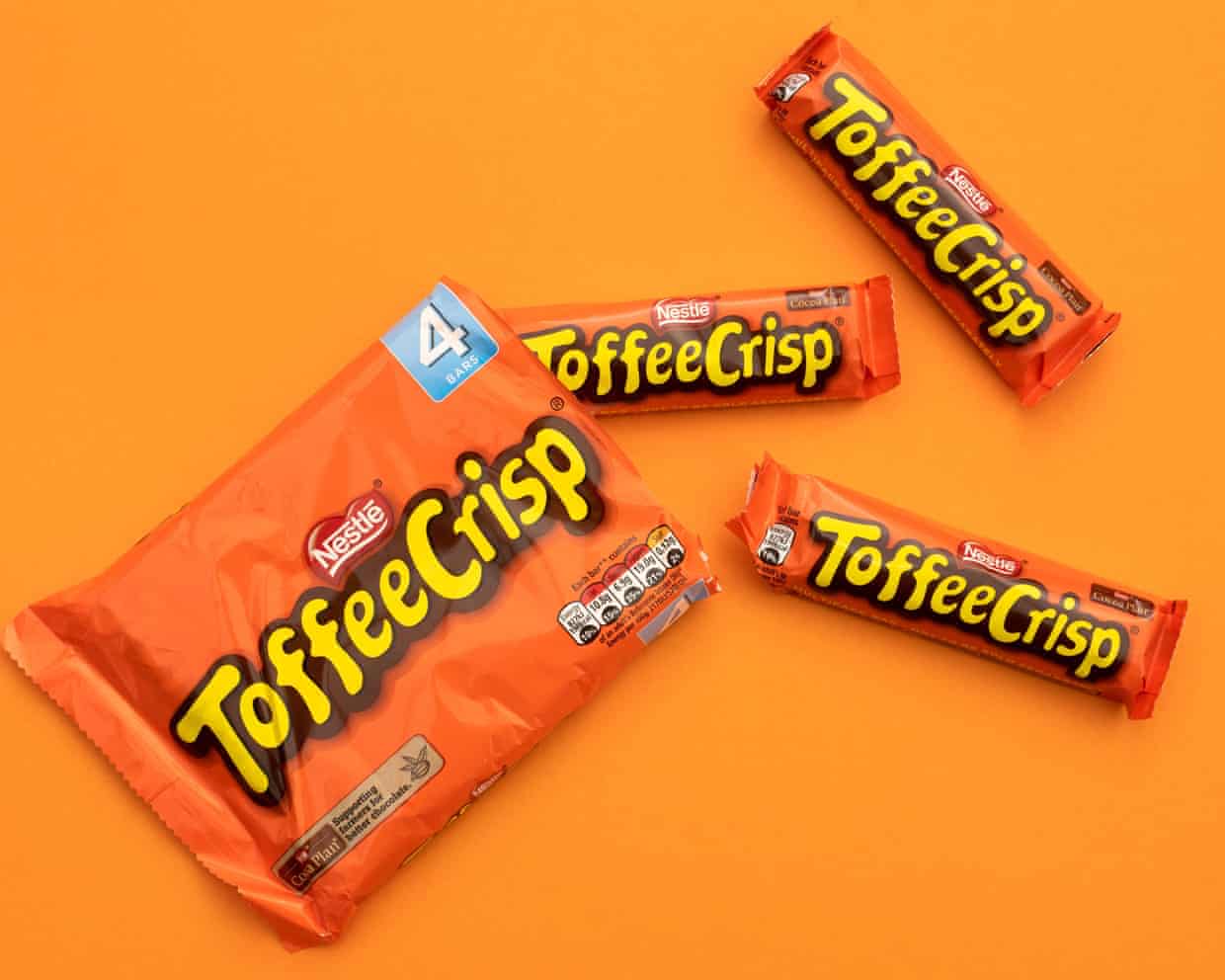
Toffee Crisp and Blue Riband bars can no longer be called chocolate after Nestlé reformulated their recipes due to the increasing cost of ingredients.The Swiss conglomerate now describes the treats as being “encased in a smooth milk chocolate flavour coating”, rather than being covered in milk chocolate.In the UK, a product needs to have at least 20% cocoa solids and 20% milk solids in order to be described as milk chocolate, a level each product fell below after a higher amount of cheaper vegetable fat was used.Nestlé said the changes were necessary due to higher input costs but were “carefully developed and sensory tested”, adding there were no plans to alter the recipes of other chocolate products.A spokesperson for Nestlé said it had seen “significant increases in the cost of cocoa over the past years, making it much more expensive to manufacture our products
How to use a spent tea bag to make a boozy, fruity treat – recipe | Waste not
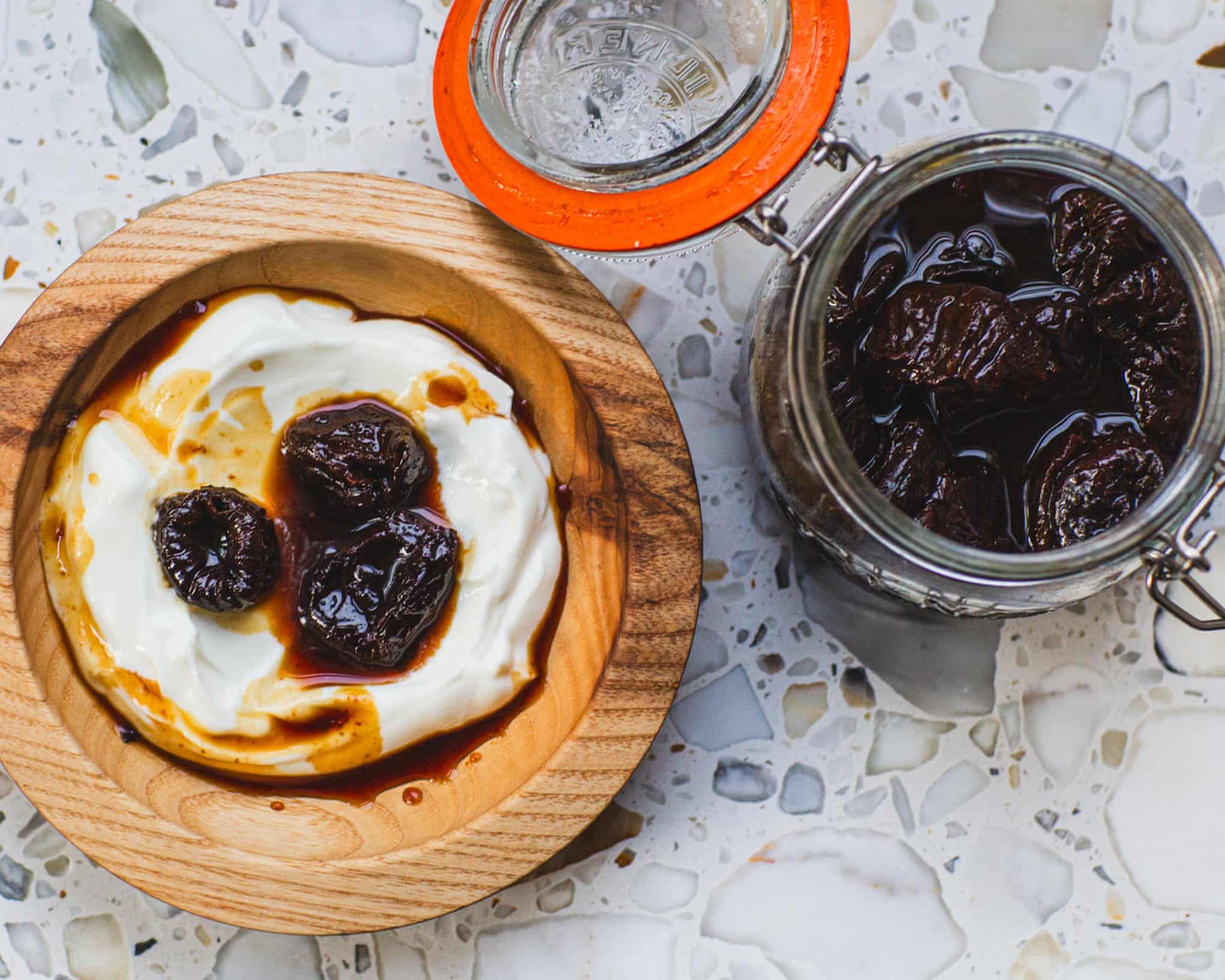
Save a used teabag to flavour dried fruit, then just add whisky for a boozy festive treatA jar of tea-soaked prunes with a cheeky splash of whisky is the gift you never knew you needed. Sticky, sweet and complex, these boozy treats are wonderful spooned over rice pudding, porridge, yoghurt, ice-cream or even panna cotta.Don’t waste a fresh tea bag, though – enjoy a cuppa first, then use the spent one to infuse the prunes overnight. Earl grey adds fragrant, citrus notes, builders’ tea gives a malty depth, lapsang souchong brings smokiness, and chamomile or rooibos offer softer, floral tones. It’s also worth experimenting with other dried fruits beyond prunes: apricots, figs and/or dates all work beautifully, too
Christmas food gifts: Gurdeep Loyal’s recipes for Mexican-spiced brittle and savoury pinwheels
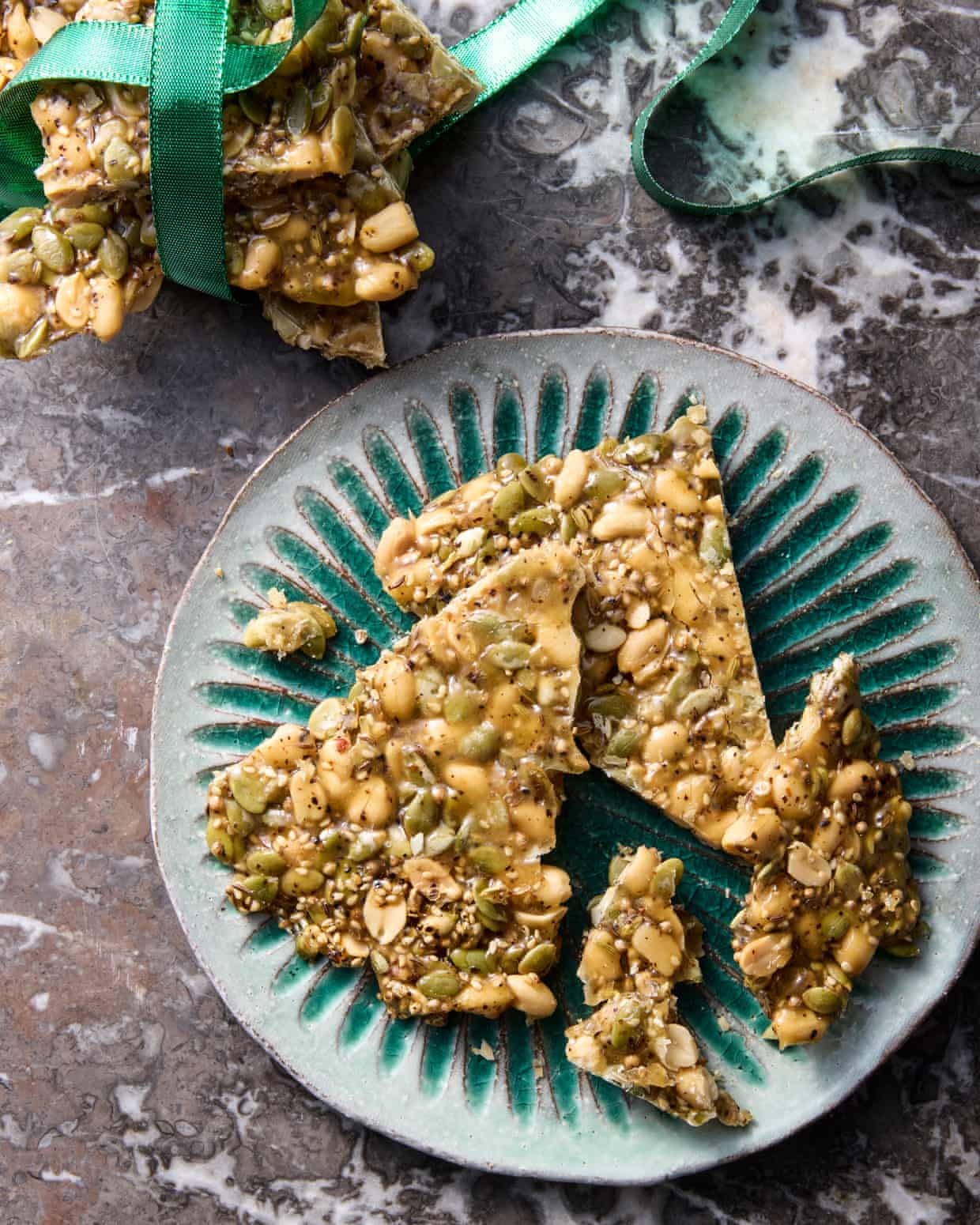
Edible Christmas gifts are a great excuse to get experimental with global flavours. For spice lovers, this moreish Mexican brittle, which is inspired by salsa macha (a delicious chilli-crunch), is sweet, salty, smoky, crunchy and has hints of anise. Then, for savoury lovers, some cheesy pinwheel cookies enlivened with XO sauce. XO is a deeply umami condiment from Hong Kong made from dried seafood, salty ham, chilli and spices. Paired with tangy manchego, it adds a funky kick to these crumbly biscuits

Festive treats: Adriann Ramirez’s recipes for pumpkin loaf and gingerbread cookies
As a self-proclaimed America’s sweetheart (Julia Roberts isn’t using that title any more, is she?) who moved to the UK nearly 10 years ago, there are a few British traditions and customs that I have adopted, especially around Christmas time. However, there are also a few American ones that I hold on to staunchly: one is the pronunciation of “aluminum”, and another is the importance and beauty of a soft cookie. In both of these easy but delicious bakes to share, I use spice and heat to balance the usual sweetness with which the season can often overload us.Prep 5 min Chill 1 hr Cook 50 min, plus cooling Makes 10-12520g plain flour, plus extra for dusting 8g cocoa powder 8g ground ginger 3g ground cloves 5g ground cinnamon 3g aleppo pepper 4g coarsely ground black pepper 7g table salt 3g bicarbonate of soda 225g soft unsalted butter 175g caster sugar 1 large egg (60g) 77g treacle 77g pomegranate molasses 40g golden syrupFor the icing120g icing sugar 30g waterWhisk the first nine ingredients in a bowl and set aside. Either in the bowl of a stand mixer or using a handheld mixer, beat the butter for a few minutes until light and creamy
Nutcracker stocking fillers: Brian Levy’s recipe for sugar plum and coffee cookies | The sweet spot
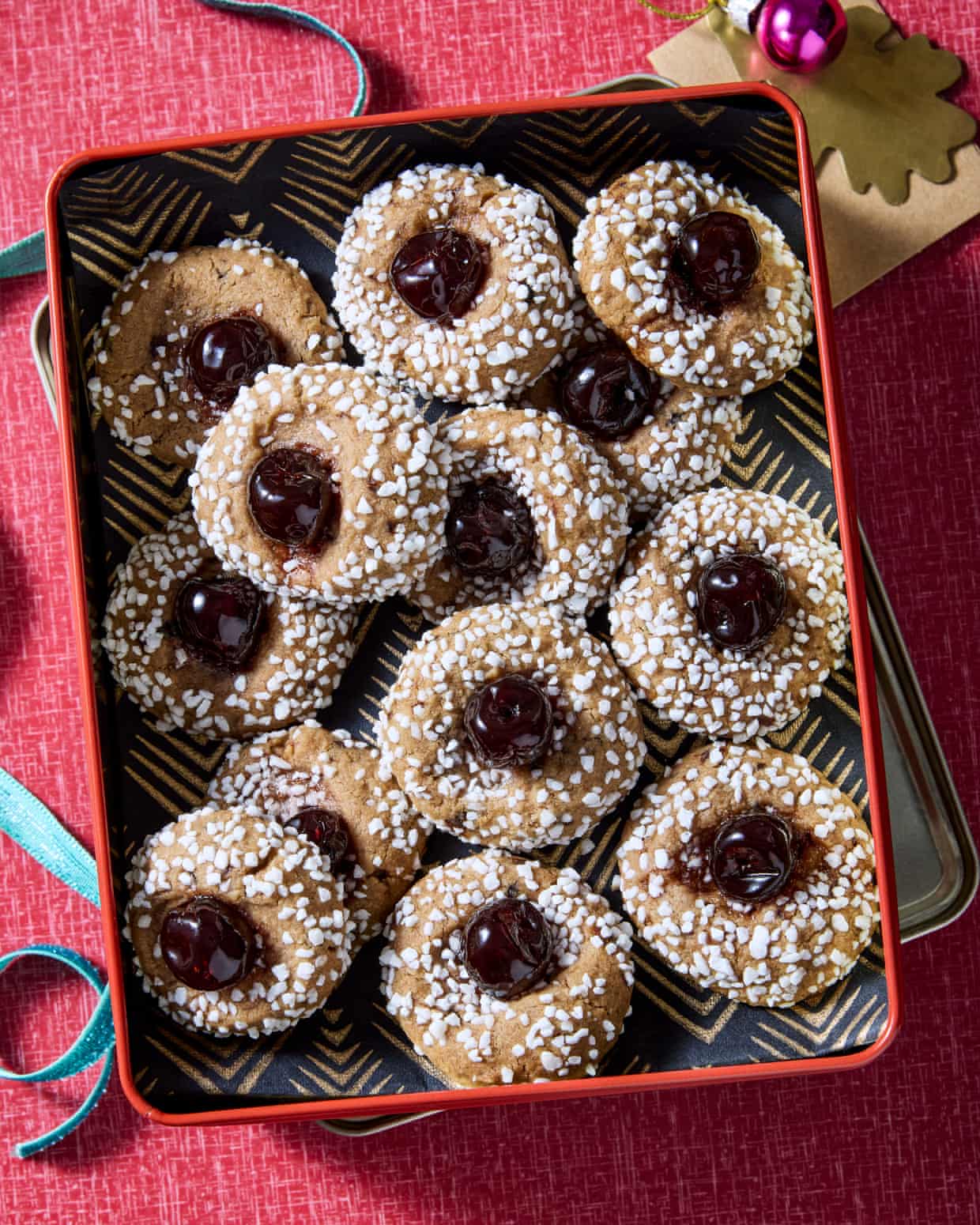
These festive cookies are inspired by The Nutcracker’s Land of Sweets sequence, in which coffee and sugar plums are two of the flavours used to conjure a fanciful world of decadent diversion. Anything from a hard candy to a candied fruit can qualify as a “sugar plum” and, in the case of these cookies, the sugar plum is represented by the amarena cherry. Coffee’s bitterness balances the sweetness of the fruit and the rich butteriness of the dough, while the oat flour adds a dash of shortbread-like delicateness.Prep 10 min Chill 30 min+ Cook 35 min, plus cooling Makes 36185g room-temperature butter75g sugar2 tsp instant coffee/espresso powder1 tsp unsweetened cocoa powderFinely grated zest of ½ lemon½ tsp vanilla extract⅛ tsp fine salt 180g plain flour 85g oat flour 36 amarena cherries in syrupTurbinado sugar, or pearl sugar or icing sugar, for dippingIn the bowl of a stand mixer fitted with the paddle attachment, beat the butter, sugar, coffee powder, cocoa, lemon zest, vanilla and salt, at first on low and then medium speed, until creamy and fluffy.Add both flours and beat just until combined with no dry flour remaining; don’t overbeat because this can toughen the texture
How to make the perfect Dubai chocolate bar - recipe | Felicity Cloake's How to make the perfect …
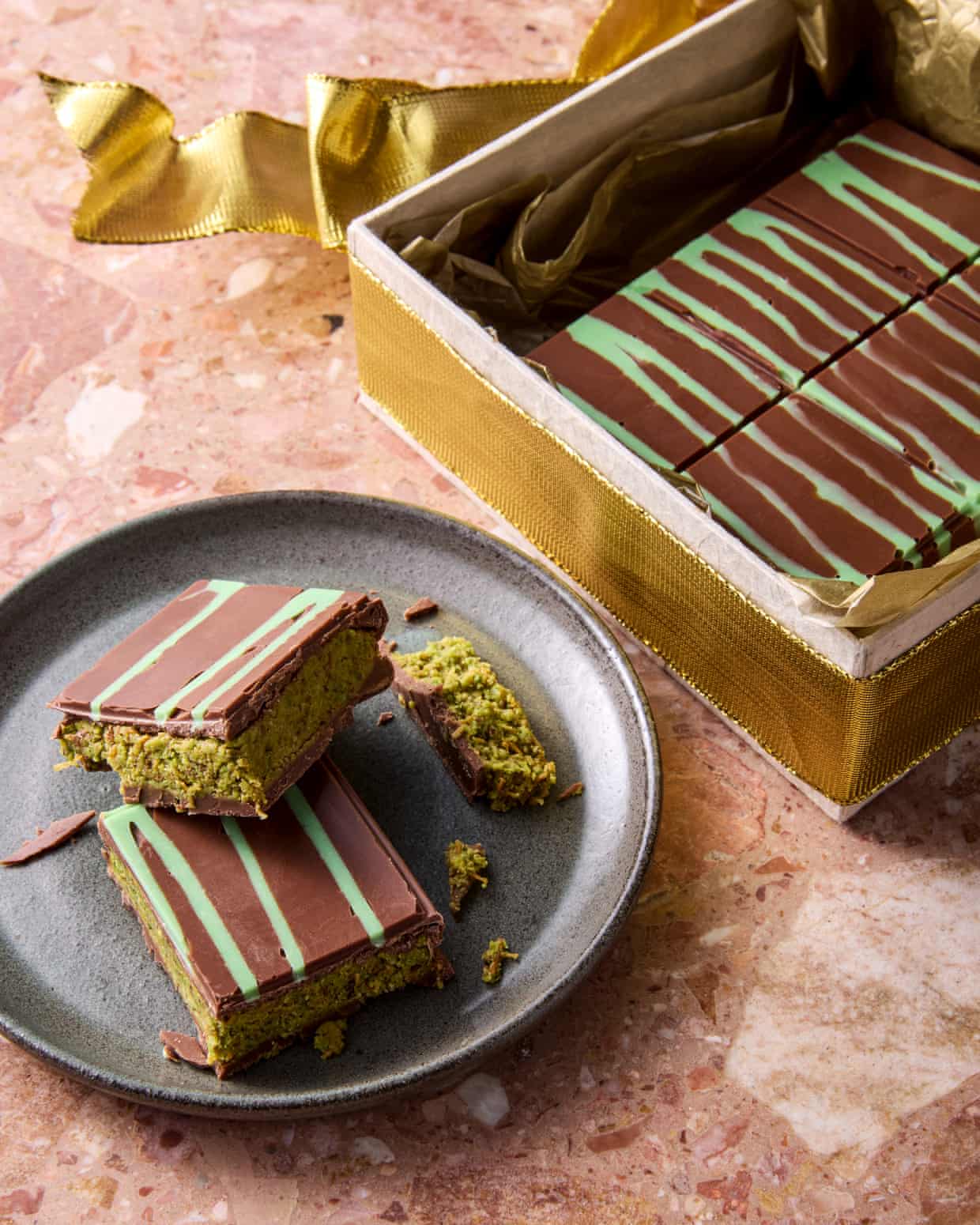
If you’re asking what on earth chocolate has to do with a city with an average annual temperature of 28C, then you must have been stuck in the desert for the past three years. Because, since its creation in the UAE in 2022, apparently to satisfy chocolatier Sarah Hamouda’s pregnancy cravings for pistachio and pastry, this bar has taken over the world. Though food (among those with the luxury of choice, at least) has never been immune to the absurdities of fashion, the internet has supercharged and globalised the process, so much so that pistachios, which back in January were dubbed “the new pumpkin spice” by this very newspaper, are now everywhere, from Starbucks lattes to Aldi mince pies.The thing is, however, that whatever your thoughts on green, sugary, coffee-adjacent beverages, Hamouda’s Dubai chocolate developed for Fix Dessert Chocolatier has triumphed, because it really does taste as good as it looks: crunchy pastry, sweet chocolate and rich, slightly savoury nut butter are an incredibly satisfying combination, so a big bar of it is guaranteed to impress under the Christmas tree. Experience demands that I suggest you wrap it in a pet-proof box, however – emergency vet bills are no one’s idea of a great present

Tory transport culture wars risked making roads less safe, says minister

Reform councillors accused of ‘rash promises’ as council tax rises loom

Dulwich college head responds to claims of teenage racism by Nigel Farage

House of Lords’ block on assisted dying bill is a big risk | Letter

UK politics: No 10 brushes off claims Streeting’s criticism of ‘technocratic approach’ refers to Starmer –as it happened

Trump wants to destabilise European democracy. Where on earth is parliament? | John Crace