Rollout of AI may need to be slowed to ‘save society’, says JP Morgan boss

Jamie Dimon, the boss of JP Morgan, has said artificial intelligence “may go too fast for society” and cause “civil unrest” unless governments and business support displaced workers.While advances in AI will have huge benefits, from increasing productivity to curing diseases, the technology may need to be phased in to “save society”, he said.Dimon said companies and governments could not ignore AI or “put your head in the sand”.The Wall Street lender would probably have fewer employees in five years’ time as it rolled out AI, he told an audience at the World Economic Forum in the Swiss resort of Davos.“Your competitors are going to use it and countries are going to use it,” he said.
“However, it may go too fast for society and if it goes too fast for society that’s where governments and businesses [need to] in a collaborative way step in together and come up with a way to retrain people and move it over time.”Dimon said local governments may need to use assistance programmes that supported wages and offered retraining, relocation and early retirement.The 2 million commercial lorry drivers in the US were an example of an area that may need support as driverless trucks hit the road, he said.“Should you do it all at once, if 2 million people go from driving a truck and making $150,000 a year to a next job [that] might be $25,000? No.You will have civil unrest.
So phase it in,” Dimon said.“If we have to do that to save society … Society will have more production, we are going to cure a lot of cancers, you’re not going to slow it down.How do you have plans in place if it does something terrible?”Dimon, who was speaking before Donald Trump’s address, offered a restrained critique of the US president’s increasingly combative approach to Europe and Nato and demands to take over Greenland.“If the goal is to make them stronger rather than fragment Europe, I think that’s OK,” Dimon said.“I would be using our moral persuasion, our economic persuasion, our intelligence and military to push Europe to do the things that’s right for Europe.
The leadership of Europe has to do it, it really can’t be done by America.”Dimon revealed his concerns about Trump’s immigration clampdown, calling for “internal anger” over the issue to be calmed down.“I don’t like what I’m seeing with five grown men beating up little women,” Dimon said, referring to scenes of violence involving Immigration and Customs Enforcement (ICE) officers.Rounding up criminals was one thing, Dimon added, but he would like to see data showing who had been rounded up and whether they had broken the law.Dimon said many migrants played important roles in the US economy, such as in healthcare, hospitality and agriculture.
“We all know them,They are good people and they should be treated that way,” he said,Jensen Huang, the chief executive of the semiconductor maker Nvidia, whose chips are used to power many AI systems, argued that labour shortages rather than mass payoffs were the threat,Playing down fears of AI-driven job losses, Huang told the meeting in Davos that “energy’s creating jobs, the chips industry is creating jobs, the infrastructure layer is creating jobs … jobs, jobs, jobs”,He added: “This is the largest infrastructure buildout in human history, this is going to create a lot of jobs.
”Many of those jobs related to tradecraft, Huang said, such as plumbers, electricians, construction, steelworkers, network technicians, and people who install equipment for AI rollout.This was already pushing up salaries in this area in the US, he added, for people involved in building chip factories or AI datacentres.Huang also argued that AI robotics was a “once-in-a-generation” opportunity for Europe, as the region had an “incredibly strong” industrial manufacturing base.“This is your opportunity to now leap past the era of software,” he argued, an area where Silicon Valley has long outperformed Europe.

Ed Zitron on big tech, backlash, boom and bust: ‘AI has taught us that people are excited to replace human beings’
His blunt, brash scepticism has made the podcaster and writer something of a cult figure. But as concern over large language models builds, he’s no longer the outsider he once wasIf some time in an entirely possible future they come to make a movie about “how the AI bubble burst”, Ed Zitron will doubtless be a main character. He’s the perfect outsider figure: the eccentric loner who saw all this coming and screamed from the sidelines that the sky was falling, but nobody would listen. Just as Christian Bale portrayed Michael Burry, the investor who predicted the 2008 financial crash, in The Big Short, you can well imagine Robert Pattinson fighting Paul Mescal, say, to portray Zitron, the animated, colourfully obnoxious but doggedly detail-oriented Brit, who’s become one of big tech’s noisiest critics.This is not to say the AI bubble will burst, necessarily, but against a tidal wave of AI boosterism, Zitron’s blunt, brash scepticism has made him something of a cult figure

Deactivate your X account – you won’t miss it when it’s gone | Letter
As a past follower of Marie Le Conte (AKA the Young Vulgarian) on X, I read her column on leaving the platform with interest, complete empathy and self-reflection (To anybody still using X: sexual abuse content is the final straw, it’s time to leave, 12 January).I joined X – or rather, Twitter – in 2007 after reading a Guardian article on the five next hit websites. Needless to say, most of the others have been forgotten. I was bored in my uni halls and it sounded the most interesting.In those days one could sit and watch the global feed – every tweet being posted in the world – with notable seconds between posts

‘Still here!’: X’s Grok AI tool accessible in Malaysia and Indonesia despite ban
Days after Malaysia made global headlines by announcing it would temporarily ban Grok over its ability to generate “grossly offensive and nonconsensual manipulated images”, the generative AI tool was conversing breezily with accounts registered in the country.“Still here! That DNS block in Malaysia is pretty lightweight – easy to bypass with a VPN or DNS tweak,” Grok’s account on X said in response to a question from a user.Grok’s ability to allow users to create sexually explicit images, including images of children, has created a global outcry over recent weeks, with regulators and politicians around the world launching investigations. Indonesia and Malaysia became the first two countries to announce blocks on the technology, with Malaysia’s regulatory body saying last Sunday it had “directed a temporary restriction” on access to Grok, effective as of 11 January 2026. Officials in the Philippines have said they too plan to ban the technology

‘We could hit a wall’: why trillions of dollars of risk is no guarantee of AI reward
Will the race to artificial general intelligence (AGI) lead us to a land of financial plenty – or will it end in a 2008-style bust? Trillions of dollars rest on the answer.The figures are staggering: an estimated $2.9tn (£2.2tn) being spent on datacentres, the central nervous systems of AI tools; the more than $4tn stock market capitalisation of Nvidia, the company that makes the chips powering cutting-edge AI systems; and the $100m signing-on bonuses offered by Mark Zuckerberg’s Meta to top engineers at OpenAI, the company behind ChatGPT.These sky-high numbers are all propped up by investors who expect a return on their trillions

He called himself an ‘untouchable hacker god’. But who was behind the biggest crime Finland has ever known?
Tiina Parikka was half-naked when she read the email. It was a Saturday in late October 2020, and Parikka had spent the morning sorting out plans for distance learning after a Covid outbreak at the school where she was headteacher. She had taken a sauna at her flat in Vantaa, just outside Finland’s capital, Helsinki, and when she came into her bedroom to get dressed, she idly checked her phone. There was a message that began with Parikka’s name and her social security number – the unique code used to identify Finnish people when they access healthcare, education and banking. “I knew then that this is not a game,” she says
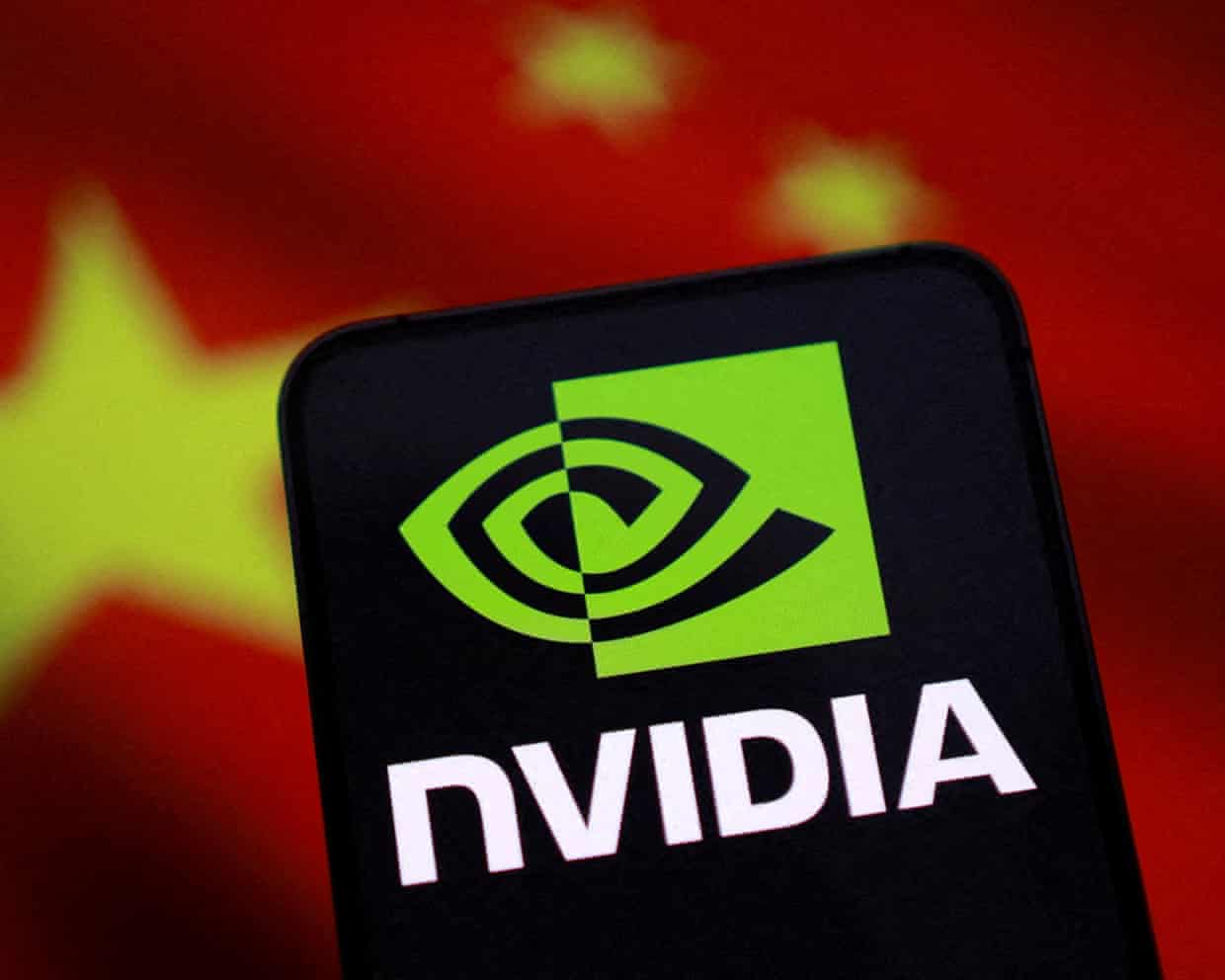
China blocks Nvidia H200 AI chips that US government cleared for export – report
Suppliers of parts for Nvidia’s H200 have paused production after Chinese customs officials blocked shipments of the newly approved artificial intelligence processors from entering China, according to a report.Reuters could not immediately verify the report, which appeared in the Financial Times citing two people with knowledge of the matter. Nvidia did not immediately respond to a Reuters request for comment made outside regular business hours.Nvidia had expected more than one million orders from Chinese clients, the report said, adding that its suppliers had been operating around the clock to prepare for shipping as early as March.Chinese customs authorities this week told customs agents that Nvidia’s H200 chips were not permitted to enter the country, Reuters reported

OECD calls on Australia to raise GST and increase affordable housing amid budget deficit
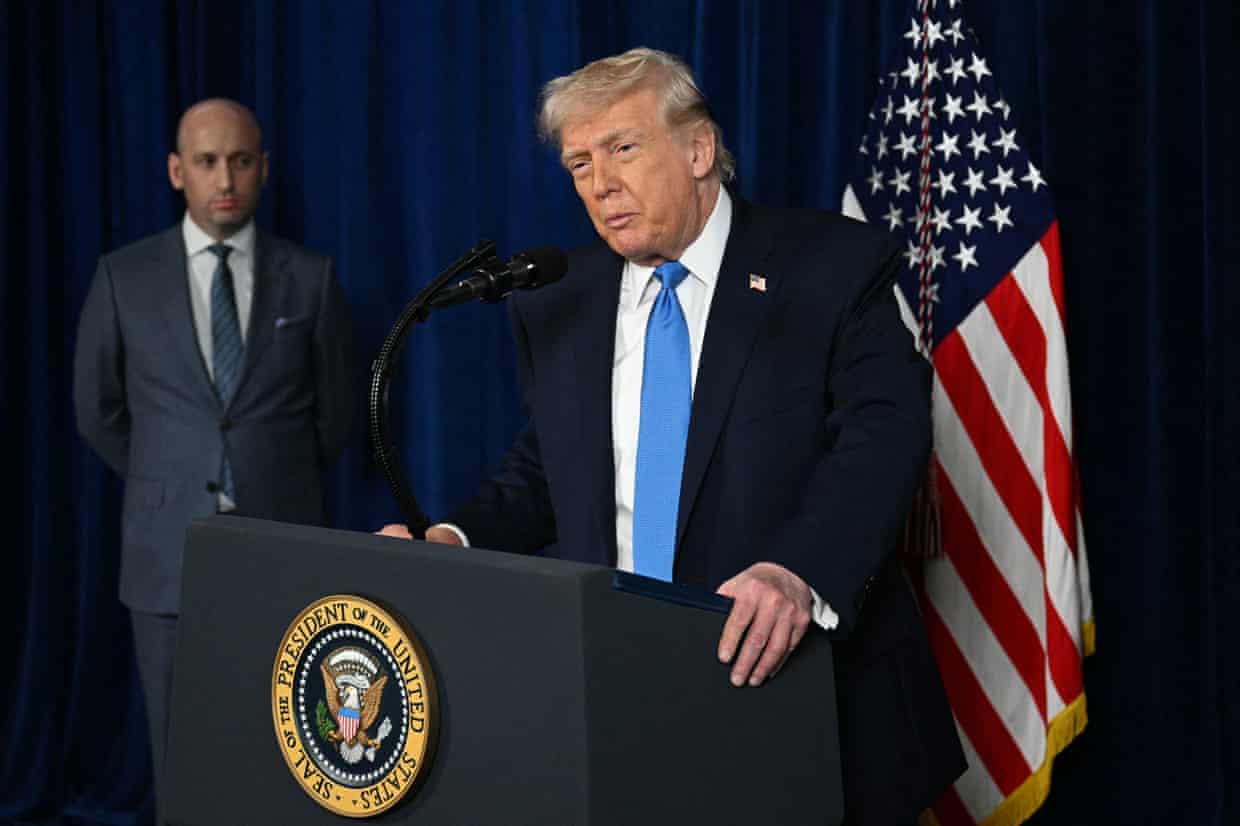
Trump paints himself as great white hope in racism-drenched Davos speech

My analogue month: would ditching my smartphone make me healthier, happier – or more stressed?

Big tech continues to bend the knee to Trump a year after his inauguration

Offshore gambling operators using Australian Open to promote illegal services

Hans Herrmann obituary