‘We could hit a wall’: why trillions of dollars of risk is no guarantee of AI reward
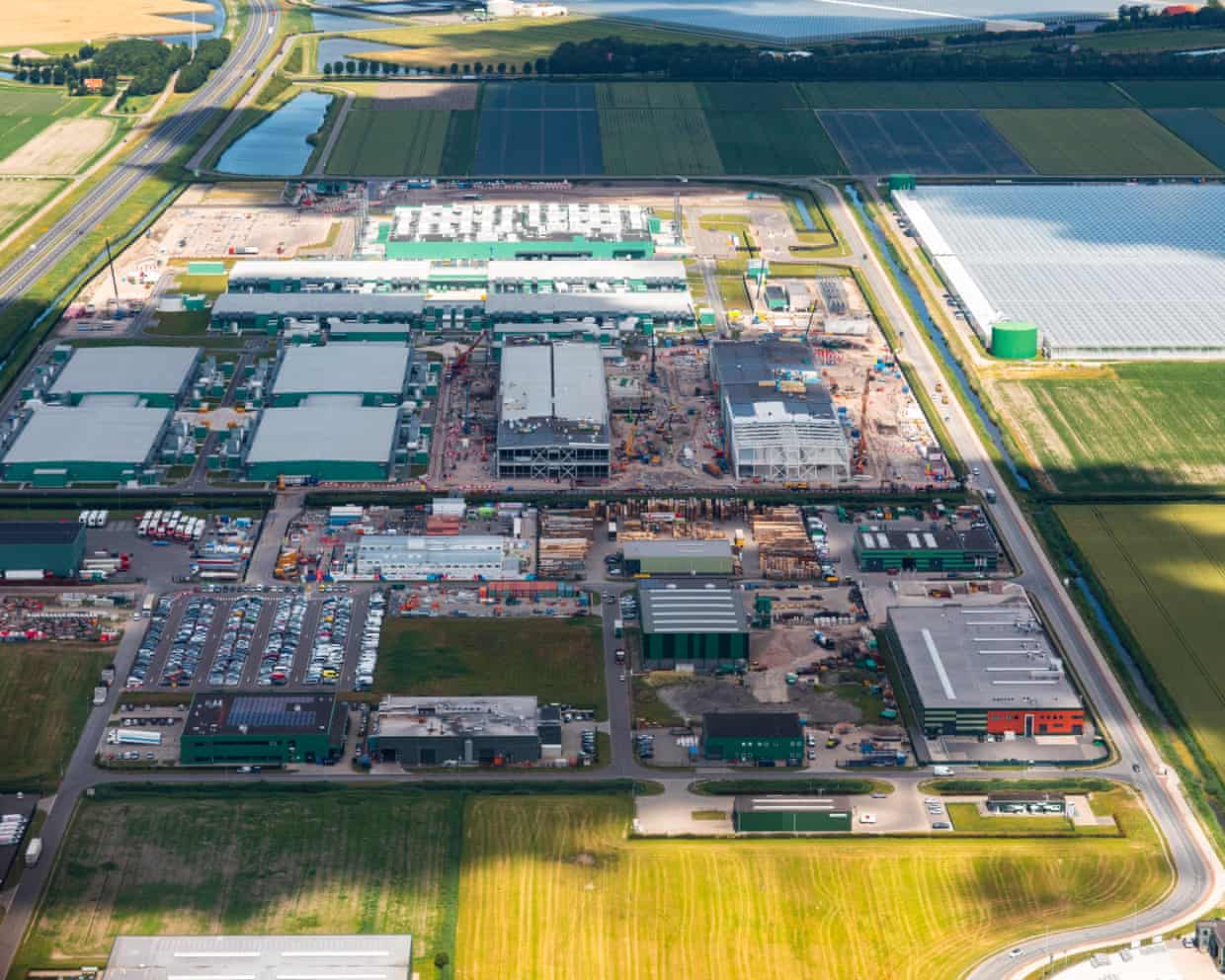
Will the race to artificial general intelligence (AGI) lead us to a land of financial plenty – or will it end in a 2008-style bust? Trillions of dollars rest on the answer.The figures are staggering: an estimated $2.9tn (£2.2tn) being spent on datacentres, the central nervous systems of AI tools; the more than $4tn stock market capitalisation of Nvidia, the company that makes the chips powering cutting-edge AI systems; and the $100m signing-on bonuses offered by Mark Zuckerberg’s Meta to top engineers at OpenAI, the company behind ChatGPT.These sky-high numbers are all propped up by investors who expect a return on their trillions.
AGI, a theoretical state of AI where systems gain human levels of intelligence across an array of tasks and are able to replace humans in white-collar jobs such as accountancy and law, is a keystone of this financial promise.It offers the prospect of computer systems carrying out profitable work without the associated cost of human labour – a hugely lucrative scenario for companies developing the technology and the customers who deploy it.There will be consequences if AI companies fall short: US stock markets, boosted heavily by the performance of tech stocks, could fall and cause damage to people’s personal wealth; debt markets wrapped up in the datacentre boom could suffer a jolt that ripples elsewhere; GDP growth in the US, which has benefited from the AI infrastructure, could falter, which would have knock-on effects for interlinked economies.David Cahn, a partner at one leading Silicon Valley investment firm, Sequoia Capital, says tech companies now have to deliver on AGI.“Nothing short of AGI will be enough to justify the investments now being proposed for the coming decade,” he wrote in a blog published in October.
It means there is a lot hanging on progress towards advanced AI, and the trillions being poured into infrastructure and R&D to achieve it.One of the “godfathers” of modern AI, Yoshua Bengio, says the progress of AGI could stall and the outcome would be bad for investors.“There is a clear possibility that we will hit a wall, that there’s some difficulty that we don’t foresee right now, and we don’t find any solution quickly,” he says.“And that could be a real [financial] crash.A lot of the people who are putting trillions right now into AI are also expecting the advances to continue fairly regularly at the current pace.
”But Bengio, a prominent voice on the safety implications of AGI, is clear that continued progress towards a highly advanced state of AI is the more likely endgame.“Advances stalling is a minority scenario, like it’s an unlikely scenario.The more likely scenario is we continue to move forward,” he says.The pessimistic view is that investors are backing an unrealistic outcome – that AGI will not happen without further breakthroughs.David Bader, the director of the institute for data science at the New Jersey Institute of Technology, says trillions of dollars are being spent on scaling up – tech jargon for growing something quickly – the underlying technology for chatbots, known as transformers, in the expectation that increasing the amount of computing power behind current AI systems, by building more datacentres, will suffice.
“If AGI requires a fundamentally different approach, perhaps something we haven’t yet conceived, then we’re optimising an architecture that can’t get us there no matter how large we make it.It’s like trying to reach the moon by building taller ladders,” he says.Nonetheless, big US tech companies such as Google’s parent Alphabet, Amazon and Microsoft are ploughing ahead with datacentre plans with the financial cushion of being able to fund their AGI ambitions through the cash generated by their hugely profitable day-to-day businesses.This at least gives them some protection if the wall outlined by Bengio and Bader comes into view.But there are other more worrying aspects to the boom.
Analysts at Morgan Stanley, the US investment bank, estimate that $2.9tn will be spent on datacentres between now and 2028, with half of that covered by the cashflow from “hyperscalers” such as Alphabet and Microsoft.The rest will have to be covered by alternative sources such as private credit, a corner of the shadow banking sector that is activating alarm bells at the Bank of England and elsewhere.Meta, the owner of Facebook and Instagram, has borrowed $29bn from the private credit market to finance a datacentre in Louisiana.AI-related sectors account for approximately 15% of investment grade debt in the US, which is even bigger than the banking sector, according to the investment bank JP Morgan.
Oracle, which has signed a $300bn datacentre deal with OpenAI, has had an increase in credit default swaps, which are a form of insurance on a company defaulting on its debts.High-yield, or “junk debt”, which represents the higher-risk end of the borrowing market, is also appearing in the AI sector via datacentre operators CoreWeave and TeraWulf.Growth is also being funded by asset-backed securities – a form of debt underpinned by assets such as loans or credit card debt, but in this case rent paid by tech companies to datacentre owners – in a form of financing that has risen sharply in recent years.It is no wonder that JP Morgan says the AI infrastructure boom will require a contribution from all corners of the credit market.Bader says: “If AGI doesn’t materialise on expected timelines, we could see contagion across multiple debt markets simultaneously – investment-grade bonds, high-yield junk debt, private credit and securitised products – all of which are being tapped to fund this buildout.
”Share prices linked to AI and tech are also playing an outsized role in US stock markets,The so-called “magnificent 7” of US tech stocks – Alphabet, Amazon, Apple, Tesla, Meta, Microsoft, and Nvidia – account for more than a third of the value of the S&P 500 index, the biggest stock market index in the US, compared with 20% at the start of the decade,In October the Bank of England warned of “the risk of a sharp correction” in US and UK markets due to giddy valuations of AI-linked tech companies,Central bankers are concerned stock markets could slump if AI fails to reach the transformative heights investors are hoping for,At the same time the International Monetary Fund said valuations were heading towards dotcom bubble-levels.
Even tech execs whose companies are benefiting from the boom are acknowledging the speculative nature of the frenzy,In November Sundar Pichai, the chief executive of Alphabet, said there are “elements of irrationality” in the boom and that “no company is going to be immune” if the bubble bursts, while Amazon’s founder, Jeff Bezos, has said the AI industry is in a “kind of industrial bubble”, and OpenAI’s chief executive, Sam Altman, has said “there are many parts of AI that I think are kind of bubbly right now,”All three, to be clear, are AI optimists and expect the technology to keep improving and benefit society,But when the numbers get this big there are obvious risks in a bubble bursting, as Pichai admits,Pension funds and anyone invested in the stock market will be affected by a share price collapse, while the debt markets will also take a hit.
There is also a web of “circular” deals, such as OpenAI paying Nvidia in cash for chips, and Nvidia will invest in OpenAI for non-controlling shares.If these transactions unravel due to a lack of take-up of AI, or that wall being hit, then it could be messy.There are also optimists who argue that generative AI, the catch-all term for tools such as chatbots and video generators, will transform whole industries and justify the expenditure.Benedict Evans, a technology analyst, says the expenditure numbers are not outrageous in the context of other industries, such as oil and gas extraction which runs at $600bn a year.“These AI capex figures are a lot of money but it’s not an impossible amount of money,” he says.
Evans adds: “You don’t have to believe in AGI to believe that generative AI is a big thing.And most of what is happening here is not, ‘oh wow they’re going to create God’.It’s ‘this is going to completely change how advertising, search, software and social networks – and everything else our business is based on – is going to work’.It’s going to be a huge opportunity.”Nonetheless, there is a multitrillion dollar expectation that AGI will be achieved.
For many experts, the consequences of getting there are alarming.The cost of not getting there could also be significant.
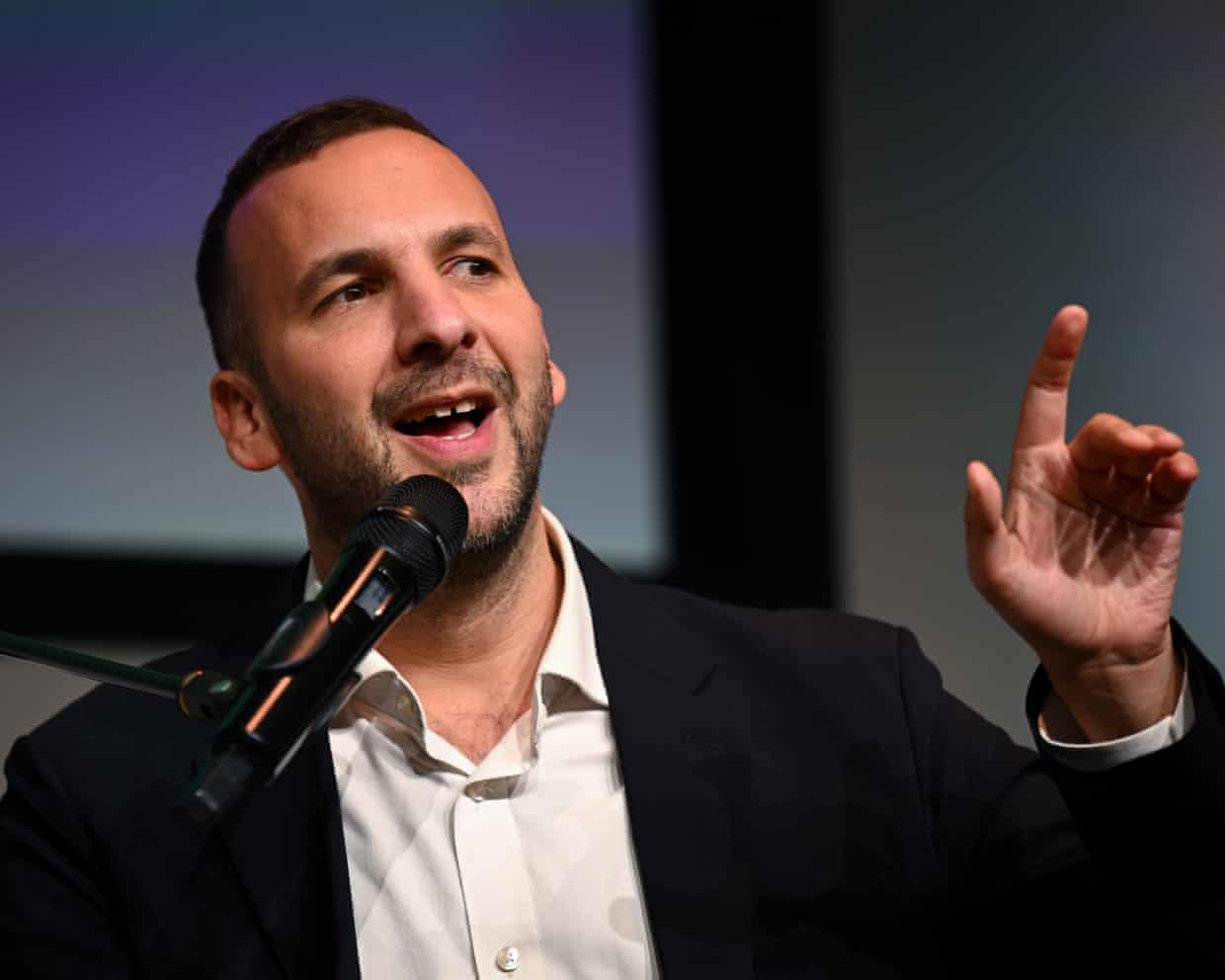
UK should consider expelling US forces from British bases, says Zack Polanski
The UK should consider expelling the US from British military bases, the leader of the Green party has said, as he advocated leaving Nato and spending less on American weapons as part of a wider dismantling of the two countries’ defence alliance.Zack Polanski told the Guardian he believed Britain should wean itself off its reliance on American military cooperation, though would not say whether he supported spending more money to replace that capability.His comments come as the prime minister, Keir Starmer, attempts to placate the US president and dissuade him from his threats to invade Greenland and to impose tariffs on European countries who oppose him.Polanski told the Guardian’s Politics Weekly podcast: “I think it’s pretty worrying that we’ve allowed ourselves to become so reliant on American interests, and that a lot of this depends on if Donald Trump is in a good mood or not.”He added: “We should be reviewing US bases on UK soil, and actually looking at a genuine strategic defence review
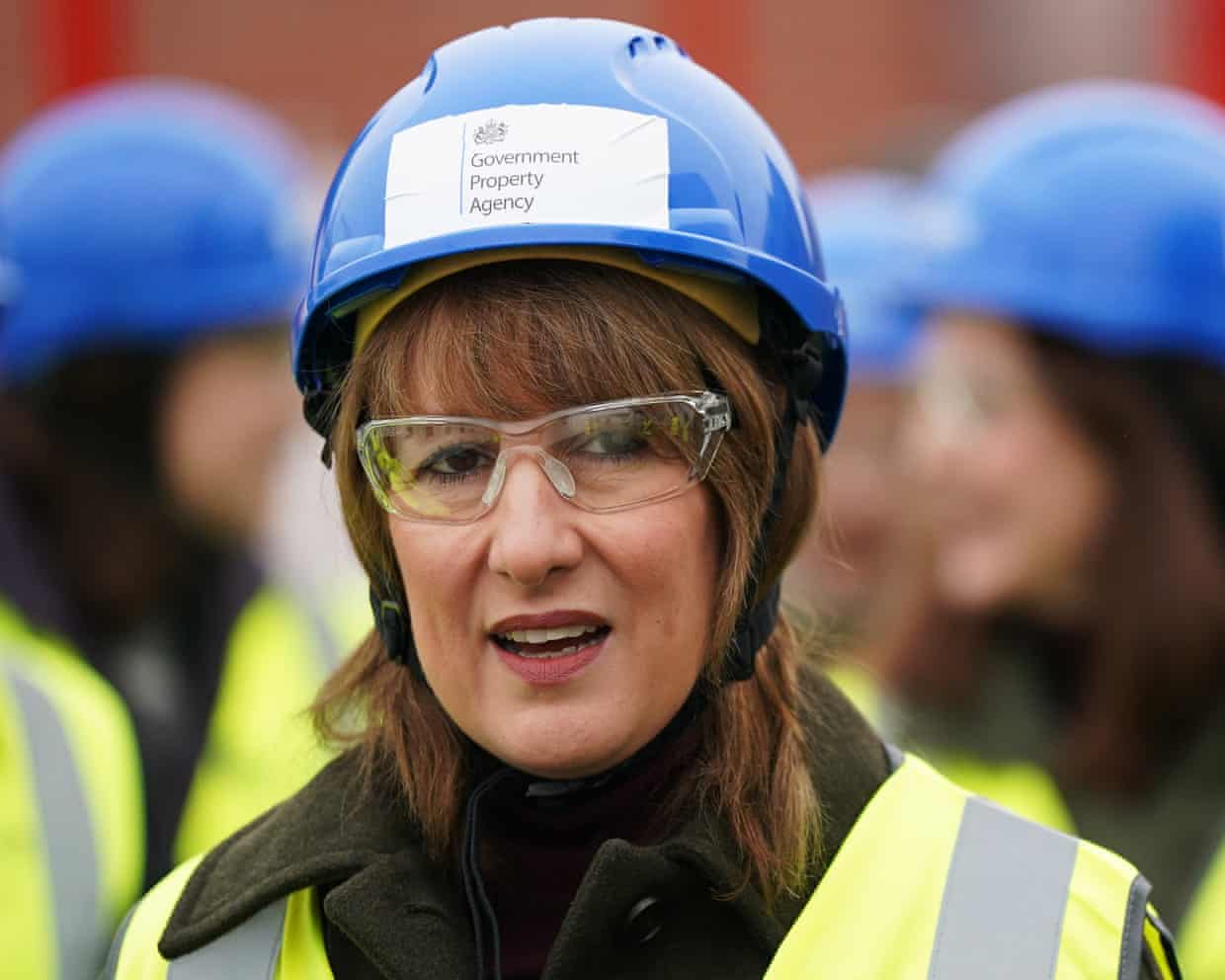
Reeves plans to refund some visa fees in effort to attract ‘trailblazer’ investment to UK
Rachel Reeves will pledge to refund visa fees for some global businesses on Tuesday, as she flies to the World Economic Forum in Davos aiming to showcase the UK as a haven of stability, despite Donald Trump’s latest tariff threats.The chancellor, who will be accompanied by the business secretary, Peter Kyle, will hold a series of meetings with business leaders at the annual gathering of the global elite in the Swiss mountain resort.She will announce tweaks to the visa regime aimed at encouraging “trailblazer” businesses to bring highly skilled staff to the UK – including refunding fees – and speeding up the time it takes to qualify as a sponsor of migrant workers.“Some countries give you a platform, but Britain gives you momentum. My message at Davos this week is clear: choose Britain – it’s the best place in the world to invest,” the chancellor said in pre-released remarks

UK ministers scrap foreign students target in shift to overseas hubs strategy
Ministers are scrapping target numbers for international students in the UK and will instead focus on encouraging universities to open hubs abroad, as part of a plan to bring British education to people “on their own doorsteps”.The government’s new international education strategy will set a target of increasing global “education exports” to £40bn a year by 2030, replacing the previous target – set in 2019 – of recruiting 600,000 international students a year to study in the UK.The Department for Education said it would also bring in “toughened compliance standards” to ensure people coming to the UK to study were genuine students, and that universities would face recruitment caps and licence revocations if they failed to meet those standards.“This approach removes targets on international student numbers in the UK and shifts the focus towards growing education exports overseas by backing UK providers to expand internationally, build partnerships abroad and deliver UK education in new markets,” the DfE said.The education secretary, Bridget Phillipson, said: “By expanding overseas, our universities, colleges and education providers can diversify income, strengthen global partnerships and give millions more access to a world-class UK education on their doorstep, all whilst boosting growth at home

Starmer plays down prospect of retaliatory tariffs against US over Greenland
Keir Starmer has played down the prospect of retaliatory tariffs on the US, after Donald Trump threatened to impose fresh levies against Nato allies if a deal over Greenland is not reached.The prime minister said US tariffs would damage the British economy and were “in no one’s interests”, despite growing pressure domestically to take a more forceful response. The UK would prefer a “calm discussion” with allies, he added.However, Downing Street sources suggested Starmer was not yet at the stage of ruling out tariffs completely, and would assess the situation as it developed.The UK government is preparing for the possibility of a taxpayer-funded support package to try to shield British businesses in the event that the US pushes ahead with its threats next month
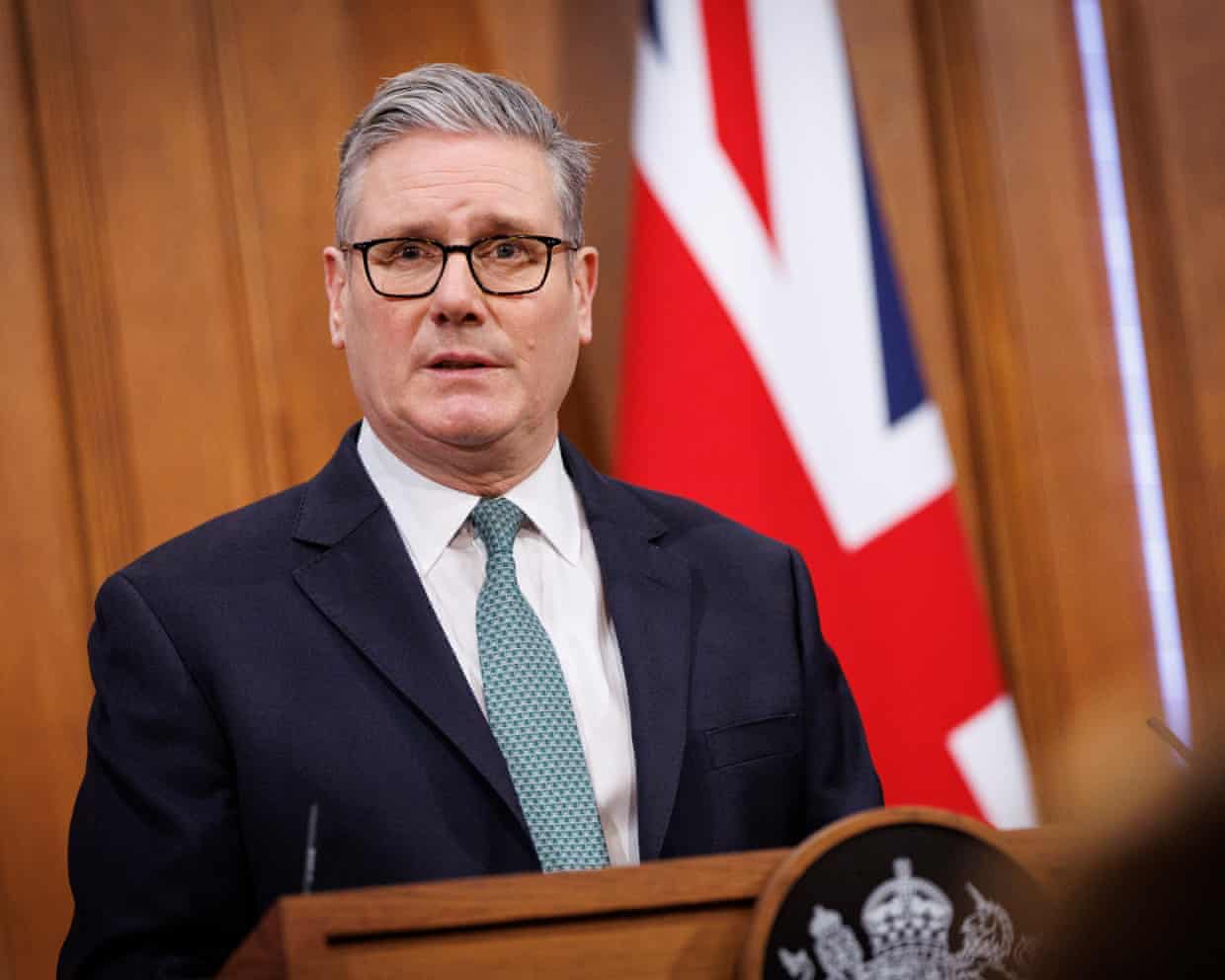
Minister defends UK’s decision not to hit back at Trump tariffs threat, saying ‘aim is to de-escalate’ – as it happened
Nigel Farage, the Reform UK leader, is normally proud of his friendship with Donald Trump, and he rarely criticises him in public. But on Saturday, after Trump announced tariffs on eight Nato countries not supporting his proposed purchase of Greenland, Farage said he did not support the move, which he said would “hurt” the UK.Today, speaking to journalists as he unveiled his latest defector (see 12.56pm), Farage said that Trump’s proposal was “wrong” and that he would be said he would be “having some words with the American administration” about it in Davos.Keir Starmer has played down the prospect of retaliatory tariffs on the US, saying they would be the “wrong thing to do”, after Donald Trump threatened them against Nato allies to try to secure Greenland

Badenoch warns Tory MPs about people trying to ‘undermine party from within’
Robert Jenrick’s defection does not mean the Conservatives are moving towards the centre ground, Kemi Badenoch has told her MPs in a letter that warned about people seeking to “undermine the party from within”.In a lengthy message to the MPs, seen by the Guardian, Badenoch said the party must avoid “psychodrama”, “intrigue” and damaging splits, saying a small number of Tory staffers were briefing against the party while claiming to be Conservative sources.“I ask everyone to satisfy themselves that their staff are acting in line with our strategy and values,” she wrote. “Undermining the party from within, whether by MPs or by staff, is unacceptable.”Badenoch was due to meet groups of MPs on Monday and speak to the entire parliamentary party on Wednesday, in the wake of three defections in a week, two involving sitting MPs
The government’s retreat from Carillion audit reforms is feeble | Nils Pratley
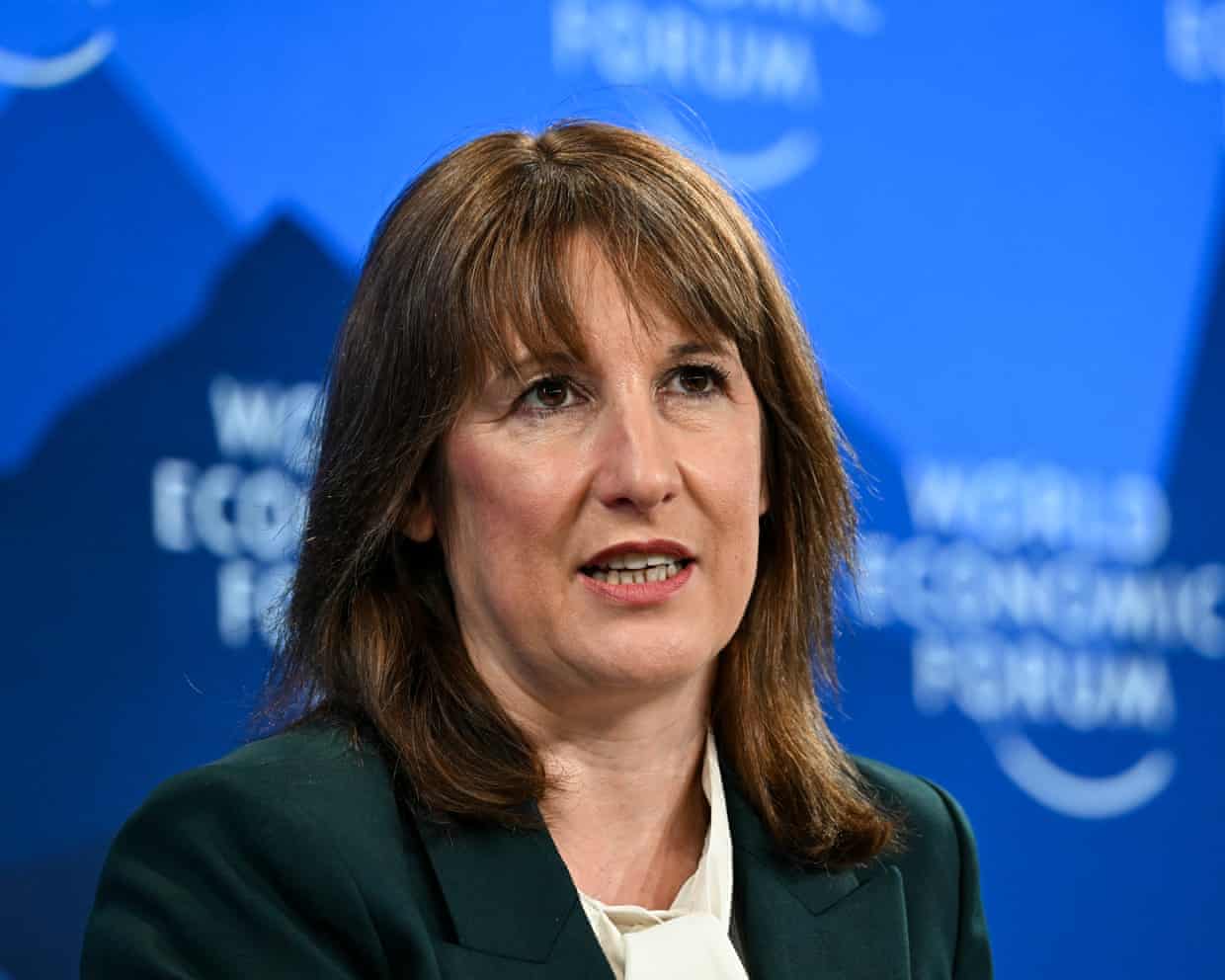
Davos: Reeves urges leaders to keep cool heads over tariff threat in free trade call – business live

Tell us: has a chatbot helped you out of a difficult time in your life?

Ed Zitron on big tech, backlash, boom and bust: ‘AI has taught us that people are excited to replace human beings’

Kasatkina frustrated after defeat on day of mixed fortunes for Australian players

Rob Key likely to survive but T20 World Cup crucial to Brendon McCullum’s fate