If you’re not Thames, the water looks lovely for investors | Nils Pratley
Thames Water, with occasional cameos by ugly little siblings Southern Water and South East Water, grabs most of the attention in the sector for obvious reasons.So it’s easy to overlook what’s happening further north.Short answer: the new era of higher bills and higher spending on water infrastructure will feel splendid if you’re United Utilities, licence-holder in north-west England, or Severn Trent, operating in the Midlands.The former’s share price surged 11% on Thursday, the sort of thing that shouldn’t happen at a utility where success is meant to be defined in terms of dull predictability.And it’s definitely unusual to see a one-day valuation jump of that size when the company is issuing £800m-worth of new shares.
Indeed, there was a mini-stampede for UU’s equity after Australia’s sovereign wealth fund, Future Fund, and the global infrastructure investor Atlas grabbed half the allocation in the placing as “cornerstone” investors.Why the rush? Well, it is because Ofwat’s regulatory settlement a year ago on prices – the one that shoved up water bills across England and Wales – looks more generous than imagined back then.Or, at least, it looks more attractive for a certain subset of firms: those that aren’t clocking up huge fines for pollution year after year, notwithstanding UU’s woes at Windermere.There were two critical numbers in UU’s strategic update that accompanied the placing and full-year results.First, the company is targeting a return of equity of 10-11% in the current five-year period, a full percentage point above previous guidance.
The difference may sound modest, but double-digit returns ain’t bad at all, especially when they are underpinned by bills that rise with inflation,Some City analysts had been forecasting a return rate of 8,5%,Second – and this was the more surprising bit – UU thinks it can go back to Ofwat and be allowed to spend another £2,5bn, on top of an agreed £9bn until 2030, because the regulator’s last assumptions did not take account of all the houses and datacentres the government wants to build around Manchester.
The first £1.4bn slug of spending would mean bills going up by another £10 per household if Ofwat says yes.And, for UU, the overall £2.5bn would mean its asset base growing at 10% a year to 2030, instead of at 7%.Those recast growth numbers also explain the share price rise: for utilities, the pure size of the assets is the first entry in the valuation box.
UU’s shares have now improved 30% in a year, outpacing the FTSE 100 index.Severn Trent was pulled 7% higher in sympathy on Thursday, probably on the thought that it, too, will be able to pitch some “reopeners” to Ofwat.Amid the crisis in the water sector, both companies’ shares stand at all-time highs.Outrageous in the context of the wider crisis in the sector? Well, before damning Ofwat too severely for over-generosity to companies, one should probably concede that the regulator produced roughly what the Labour government, opposed to nationalisation, wanted: a more investor-friendly set-up to ensure infrastructure gets built.That was the implicit bargain, even if ministers sometimes struggle to admit it as they launch ineffectual “clampdowns” on bonuses.
Note, too, that five other water companies still reckoned Ofwat had been too mean to them on bills and appealed to the Competitionand Markets Authority.Most secured small upwards adjustments to bills, which was close to an endorsement of Ofwat’s original arithmetic.But one can still say that the crisis at Thames seems to have worked to the advantage of the likes of UU and Severn Trent, the two standout financial outperformers of recent years (and two of the only three that are still on the stock market).In the regulatory and political panic over Thames, the regulatory dial was turned further than it appeared a year ago.Not everyone benefits, but, for the relative winners, the financial rewards look relatively bigger.
There is also a lesson for the government, still (like Ofwat) navel-gazing over what to do about Thames,If the corporate calamity is tipped into special administration, shareholders won’t flee en masse from the water sector,Rather, international investors seem keen to throw capital at the right firms,
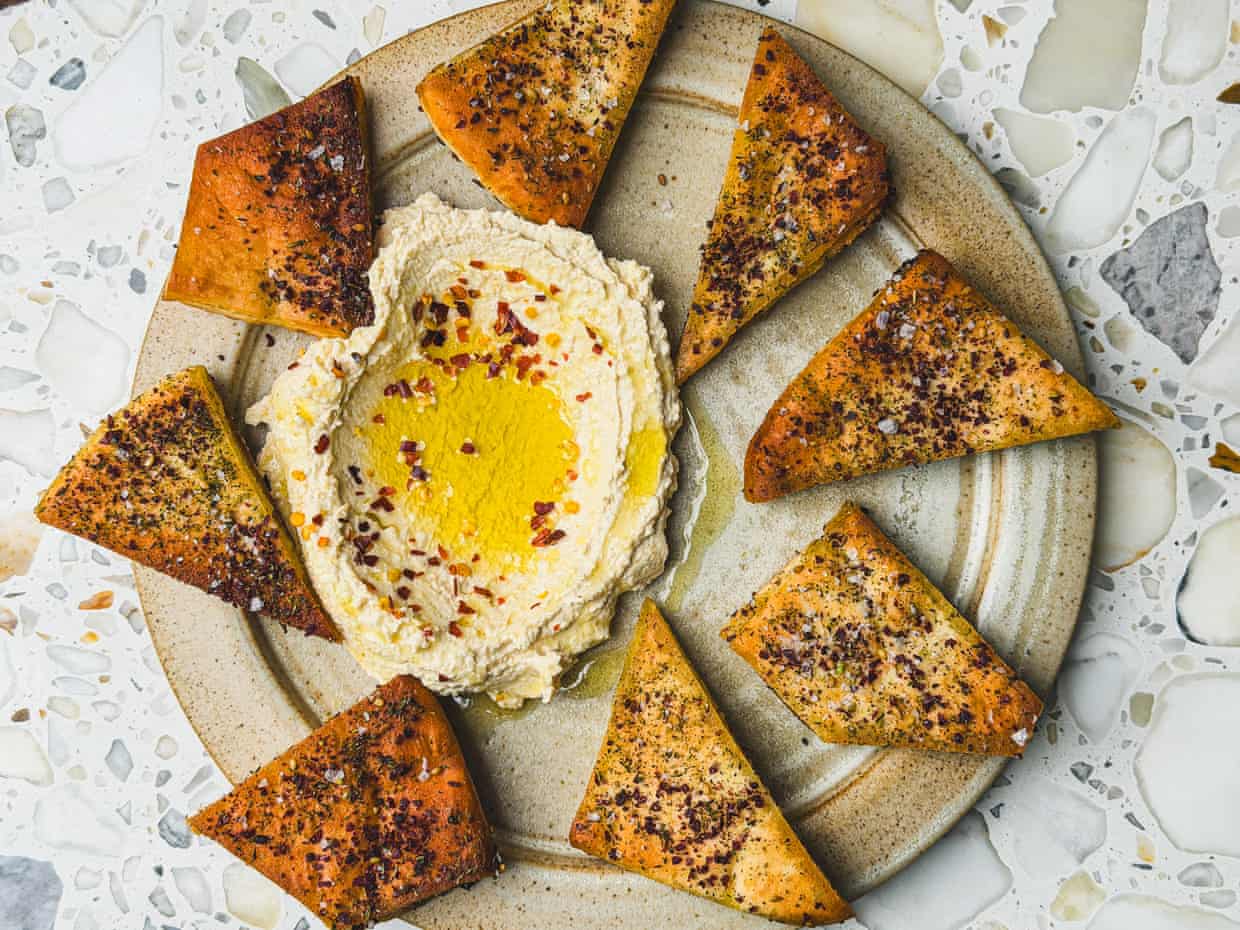
How to turn old pitta into spiced chips – recipe | Waste not
Three years ago, I helped my friend, the chef Sam Webb, set up Babette, a street food stall at Newquay Boathouse. Webb and his team make everything from scratch and, wherever possible, using only local Cornish produce, from their hot honey (sourced from the Rescued Bee) to pitta with freshly milled flour from Cornish Golden Grains; he also grows his own produce with fellow restaurateur Matt Comley at Gannel Valley Gardens.As you might expect, saving food waste is at the top of Webb’s agenda, which is how he came to create waste-saving pitta chips to serve with hummus. It’s a recipe I couldn’t resist, not least because they take minutes to cook. What makes Webb’s pitta chips unique is their wonderful seasoning of sumac, za’atar and sea salt just before serving

Why sweet, chewy dates go perfectly with chocolate – and the best ones to try
I first cemented the allure of the “chew” aged 14, working illegally as a chambermaid (I lied about my age) and finding a guest’s Gummy Bears laid open – a breach I heavily exploited. Recently this chew need has been sated by dates and their use in chocolate as a healthy caramel. Dates do have nutritional benefits over mere sugar: fibre, minerals, antioxidants and make a great pre-workout boost.The Guardian’s journalism is independent. We will earn a commission if you buy something through an affiliate link

The perfect birthday cake: tips for the best blow-out
What’s the best birthday cake?Katie, by email“My mum once made a cake with mini rolls made to look like cats with googly eyes and strawberry lace tails,” says Nicola Lamb, author of Sift and the Kitchen Projects newsletter. And that’s the whole point of a birthday cake, right? It should align with the recipient’s favourite thing: “That could even be a lasagne,” Lamb says. “I’m not at all prescriptive about what you stick a candle into.”Of course, some cakes are a safer choice than others. Take the Victoria sponge: “I don’t think anyone is going to have a problem with a plush vanilla sponge, jam and cream job,” Lamb says

Rukmini Iyer’s quick and easy recipe for green chilli eggs with coriander and coconut | Quick and easy
This might look like a shakshuka, but with lemongrass, ginger and lime, you couldn’t really get away with calling it one – particularly because the noodles make this an easy, flavour-packed one-pan dinner. The crunch of the peanuts is particularly good against the lime-spiked coconut milk – a perfect transitional “is it spring yet?” dinner.Prep 15 min Cook 15 min Serves 21½ tbsp neutral oil 2 garlic cloves, peeled and grated½ stick lemongrass, finely chopped½-1 green chilli, finely chopped (remove the pith and seeds first if you want less heat)5cm piece fresh ginger, peeled and finely gratedJuice and zest of 1 lime 2 large echalion shallots (or small onions), peeled and finely sliced1 tsp freshly ground coriander seeds 1 tsp flaky sea salt 320g baby spinach400ml tin coconut milk, whisked smooth150g packet straight-to-wok medium noodles2 eggsTo serve 15g coriander, roughly chopped 50g salted peanuts, finely chopped½ green chilli, finely sliced (remove the pith and seeds first if you want less heat)Heat the oil in a large, deep frying pan on a medium heat, then add the garlic, lemongrass, chilli, ginger, lime zest and shallots. Stir-fry for four to five minutes, until the shallots are soft and the mixture is aromatic and starting to brown lightly, then turn down the heat and add the ground coriander and salt. Stir-fry for 30 seconds, add the spinach and cook for two minutes, until it is just wilting
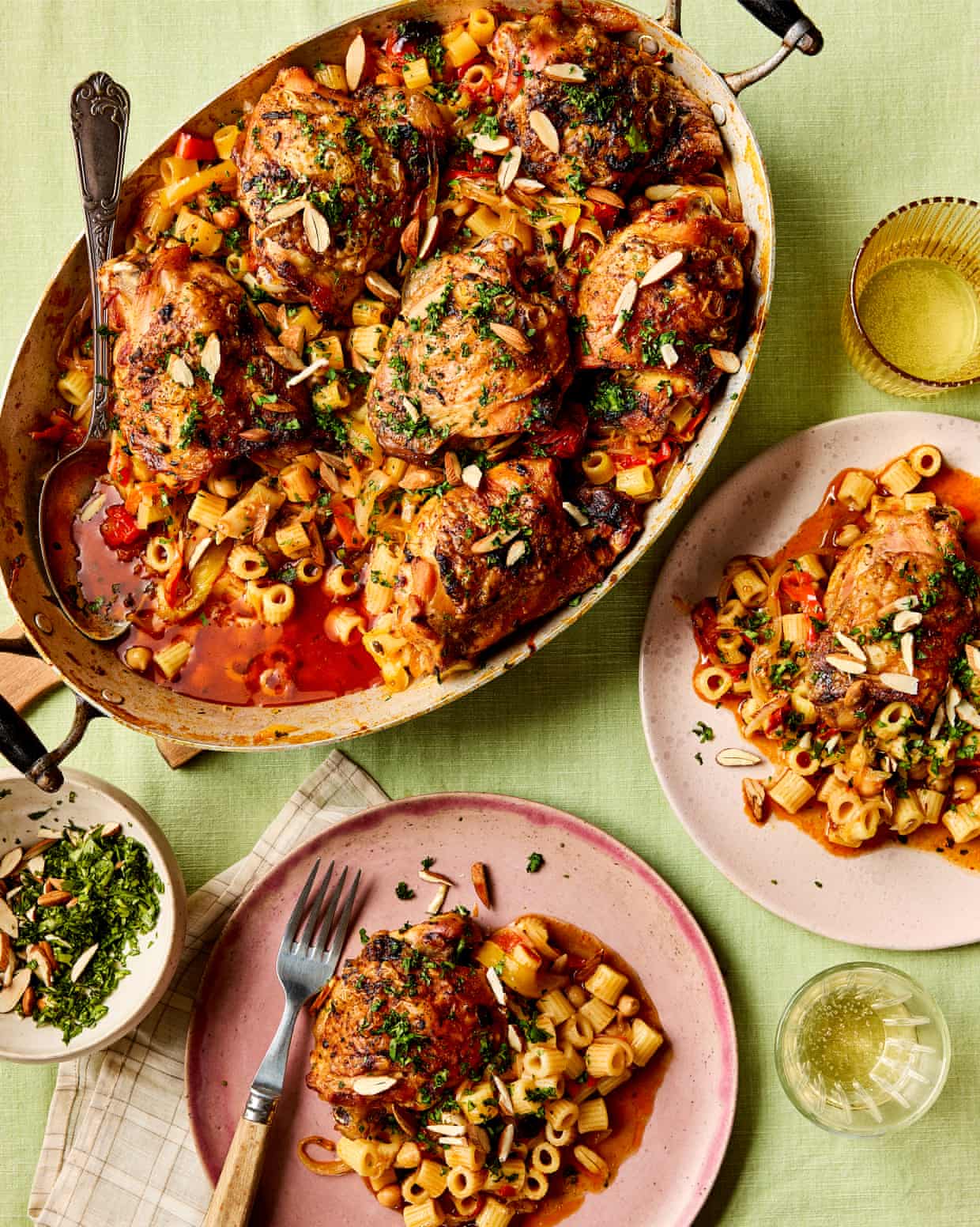
A pasta bake and a sumac salad: Sami Tamimi’s prep-ahead sharing recipes
My ideal way of entertaining is completely fuss-free, with everything prepared ahead of time so I can enjoy being with my guests rather than worrying about cooking. I like to put big, generous dishes in the middle of the table, such as this one-tray chicken, pasta and chickpea bake, alongside a fresh salad, so everyone can serve themselves and share a simple, delicious meal.This is a comforting and flavourful dish that brings together tender chicken, hearty chickpeas and perfectly cooked pasta in a rich, pungent sauce. It’s a simple yet satisfying meal that’s ideal for busy weeknights or casual family meals. Everything cooks together in the oven, and the flavours blend beautifully while keeping prep and washing-up to a minimum

The truth about cooking oils: 14 essential facts for healthier, cheaper meals
From avocado to hemp, extra virgin olive and rapeseed, the shops are packed with various oils. But what is worth spending money on? And are any of them actually better for you? The world of cooking oils is confusing. I keep spotting new ones on supermarket shelves, trumpeting their health claims. Cold-pressed avocado oil, extra virgin macadamia oil, organic coconut oil, premium hemp seed oil … Even familiar oils are mired in controversy. Is it OK to cook with olive oil? Should you avoid seed oils? Meanwhile, prices keep rising – earlier this month, Walter Zanre, the CEO of Filippo Berio UK, said supermarkets were “taking the mickey” out of customers over olive oil pricing

Why routine cancer tests have age limits | Brief letters

UK researchers develop tool to identify people most at risk of obesity-related diseases

Raise tax on alcohol and junk food to cut deaths from liver disease, experts say

Trial of non-invasive endometriosis scan boosts hopes for quicker diagnosis

Leasehold ban in England and Wales unlikely before next general election, minister says

The use of advanced practitioners in the NHS is no reason to fear for patient safety | Letters