Davos 2026: the last-chance saloon to save the old world order?

“A Spirit of Dialogue”: the theme for this year’s World Economic Forum, the gathering of the global elite in the sparkling Alpine air of Davos, seems a heroic stretch, when star guest Donald Trump has spent the past year smashing up the world order.The president will touch down alongside the snowcapped Swiss mountains with the largest US delegation ever seen at the WEF, including the secretary of state, Marco Rubio, the treasury secretary, Scott Bessent, the commerce secretary, Howard Lutnick, and the special envoy Steve Witkoff.Last year, just days after his second inauguration, Trump was beamed in to Davos on screen to deliver a punchy speech, in which he threatened across-the-board tariffs, urged Nato countries to raise defence spending, and called on the Federal Reserve to slash interest rates “immediately” – setting the tone, as it turned out, for a chaotic 12 months.A year on, what was left of the fraying rules-based global order, already jeopardised by Russia’s invasion of Ukraine and the rising power of the autocratic regime in Beijing, is rapidly unravelling, and the “spirit of dialogue” has been distinctly hard to find.This year’s meeting is taking place at a time of extraordinary geopolitical tumult.
War continues to rage in Ukraine, whose president, Volodymyr Zelenskyy, is making the trip to Davos as he continues to rally support.Just days before heading to the WEF, Trump stunned European leaders by threatening to slap punitive tariffs on allies, including the UK, if they fail to back his plan to annex Greenland.EU ambassadors were holding emergency talks on Sunday, as their leaders prepare to join Trump in the Alps.When WEF asked more than 1,300 politicians, business leaders and academics about their fears for the future, they identified “geo-economic confrontation” as the most pressing risk for the next two years – the clash for economic dominance between the big powers.The second most popular choice was outright war between nations.
In recent weeks alone, Trump has sent troops to seize the president of Venezuela, Nicolás Maduro; claimed Ukraine is more reluctant to embrace peace than Russia; and threatened to attack Iran if protests continue to be repressed,Yet with the kind of multilateralism WEF was founded to foster apparently on its last legs, there is a fightback under way, too,It was clearly evident in the decision of usually reticent central bankers this week to wade into the row over the independence of the Federal Reserve chair, Jerome Powell, by publishing an unprecedented joint letter,And while Trump is coming mob-handed, other leaders will be flying in to Davos intent on making the argument for free trade, transatlantic cooperation and the staunch defence of Ukraine in the face of Russian aggression,They include The Nato chief, Mark Rutte, the French president, and the European Commission president, Ursula von der Leyen.
Another attender will be António Guterres, the UN secretary general,On Thursday, as he reviewed his priorities for 2026, he said that “when leaders run roughshod over international law – when they pick and choose which rules to follow – they are not only undermining global order, they are setting a perilous precedent,”Russia may have begun that process with the invasion of Ukraine, while the conflict in the Middle East has raised acute concerns about war crimes, particularly from the near total bombing of Gaza by Israel, but it is US behaviour that has brought the postwar international order closer to the brink,“The erosion of international law is not happening in the shadows,” Guterres added,Global military spending now amounts to $2.
7tn (£2tn), an annual increase of 9.4%, the steepest rise since the end of the cold war.Countries around the world racing to increase war spending either in response to perceived threats from Russia, China and the US and the events of 2026 alone are likely to persuade leaders from democracies and dictatorships of the need to spend more.But for all the projection of US military power into countries such as Venezuela, senior diplomats also quietly believe it could prompt a growing resistance among populations around the world.Though American power is significant, China and other developing countries continue to grow as a share of the global economy, meaning the long-term balance is slowly tipping away from the US.
So far Trump’s efforts to force a pro-Russian peace on Ukraine have failed amid a concerted European pushback.The US president pulled back from an attack on Iran, partly after intensive lobbying from Saudi Arabia and other Gulf countries concerned about the risk of a regional war, but also because it was not obvious there was a credible external military response to the Iranian regime’s crackdown.Multinational cooperation continues, but it gains fewer headlines.This year the UN will launch an independent scientific panel on artificial intelligence: a 40-strong expert group to try to temper the commercially driven AI models dominated by the US companies that will be showing their wares along Davos main street, the Promenade.More than 50 years after its founding, the pulling power of the WEF for the rich and powerful is undimmed: more than 60 heads of state or government are expected, as well as 55 economy and finance ministers, and more than 800 chief executives or chairs of big corporations.
Companies pay 27,000 Swiss francs (£25,000) for each member of their delegation, in addition to a chunky annual membership fee.In a gesture at inclusivity, WEF uses some of that income to subsidise participants from civil society groups.Stomping between conference venues in ski boots and fur hats, participants join public discussions and debates; hold thousands of private meetings across the sprawling conference site; and swap gossip at champagne-fuelled late-night parties in the resort’s hotels and après-ski spots, many taken over by private sector sponsors for the duration.Corporate movers and shakers due to attend include Nvidia’s president, Jensen Huang, the Microsoft chief executive, Satya Nadella, and the Anthropic founder and chief executive, Dario Amodei – all key figures in the AI boom that has buoyed Wall Street and further enriched a cohort of US billionaires over the past 12 months.Analysis commissioned by environmental charity Greenpeace before the meeting found the number of private jet flights associated with Davos more than tripled between the 2023 and 2025 meetings, highlighting the climate impact of the annual shindig.
The WEF president, Børge Brende, a former Norwegian minister, hopefully told Time magazine in a pre-Davos interview “we know that President Trump [and his] secretaries are very much into deal making, and to make deals, you have to have a dialogue”.But he conceded the meeting was taking place against “the most complicated geopolitical backdrop since the WEF was founded”.Winnie Byanyima, the executive director of UNAids, who co-chaired Davos in 2015, using the platform to press for action on global inequality, says Trump’s presence is hard to reconcile with WEF’s stated purpose.“It’s such a contradiction, in my view.A world where the WEF would contribute is a rules-based world, where there’s predictability, where business works with governments – business to achieve their profits but governments to meet the needs of their people.
But him, he represents might is right.”This year’s gathering is the first of a new era, without the looming presence of “Mr Davos” – the WEF’s founder, Klaus Schwab.The 87-year-old, who hosted the first Davos summit in 1971, stepped down from the organisation’s board last year, after whistleblowers raised allegations, including unauthorised spending, against Schwab and his wife, Hilde.He publicly contested the claims, insisting “throughout this journey, Hilde and I never used the forum for personal enrichment”.After an investigation by the Swiss law firm Homburger, WEF’s board of trustees cleared him of “material wrongdoing” last August.
“Minor irregularities, stemming from blurred lines between personal contributions and forum operations, reflect deep commitment rather than intent of misconduct,” a WEF statement said at the time.Schwab is not expected to be present at this year’s gathering; but in a hint that he may be missing the limelight, is publishing a new book – one of a series – to coincide with Davos.Titled Restoring Truth and Trust, the 110-page volume is peppered with phrases such as “having devoted my life to public service” and “for someone who spent years in diplomatic circles”.Danny Sriskandarajah, the director of the New Economics Foundation thinktank in the UK, was once one of WEF’s Young Global Leaders, who bring the perspectives of civil society and business into Davos discussions.He is not attending this year, and argues that the WEF no longer serves the purpose for which Schwab founded it more than half a century ago.
“My view is, it was ahead of its time, but now it’s a relic of the past,” he says,“He [Schwab] was ahead of the game, in that he said, ‘we’re only going to tackle the world’s problems if we do a multi-stakeholder approach and we think about the global dimensions of these problems’”,But with any semblance of a “rules-based global order” now gone, he argues, “it’s problematic for lots of reasons, mostly because it is just unaccountable and there’s no real legitimacy to it,”Jamie Drummond, another Young Global Leader, who co-founded the One charity with the U2 lead singer Bono, says that in the late 1990s and early 2000s, before the global financial crisis, discussions in Davos helped to shape the diplomatic year ahead,In 2000, it was the venue for the launch of Gavi, the public-private alliance that has since vaccinated more than 1 billion children.
“I turned up with Bono a few times,” he says.“It was useful to get the vaccines initiative going; it was useful to advance debt cancellation in the millennium and the years after that, and I think its peak was when we helped launch Make Poverty History there in 2005.”He argues that such optimism has long evaporated – but he will still be there this year, not as a formal delegate, but in the hope of influencing some of the world’s most powerful people.“This is not Davos’s heyday, it is on the decline – but it’s not dead yet,” he says.

Trump tariff threats are bad, but the uncertainty they instil is much worse
Donald Trump’s latest tariff threat, in pursuit of his goal of seizing Greenland, is a political nightmare for European leaders, but it could create a severe economic headache too.As the International Monetary Fund (IMF) has repeatedly pointed out since Trump’s trade war began in earnest last year, whatever the ultimate level of tariffs, uncertainty takes its own toll.And as the IMF managing director, Kristalina Georgieva, put it in October, in the Trump era “uncertainty is the new normal”.Businesses tend to hold back from new investment when they are unsure what the policy landscape will eventually look like – as the UK learned to its cost during several years of Brexit wrangling after the 2016 referendum.And this latest threat comes just as businesses in the UK and the EU believed they could plan with certainty, after much-vaunted trade deals with the US were struck and signed with ceremony last summer

Why Rachel Reeves should give bankers more of the cold shoulder at Davos 2026 | Heather Stewart
Back-slapping bankers will be thick on the ground in the Swiss ski resort of Davos this week as Rachel Reeves flies in to mix with the global elite. But she might be wise to treat the finance bros with a certain froideur.That has not been Labour’s approach thus far: Reeves spared the banks from a windfall tax in her 26 November budget, and the UK’s regulators have just loosened capital rules for the first time since the financial crisis.Back in the summer, bank share prices ticked down after the Labour-leaning Institute for Public Policy Research (IPPR) recommended an £8bn levy on the windfall profits made as a result of quantitative easing (QE).Insiders at other thinktanks said at the time that it was made clear to them by the Treasury that publishing such forthright policy proposals was not a welcome contribution to the debate
‘We could hit a wall’: why trillions of dollars of risk is no guarantee of AI reward
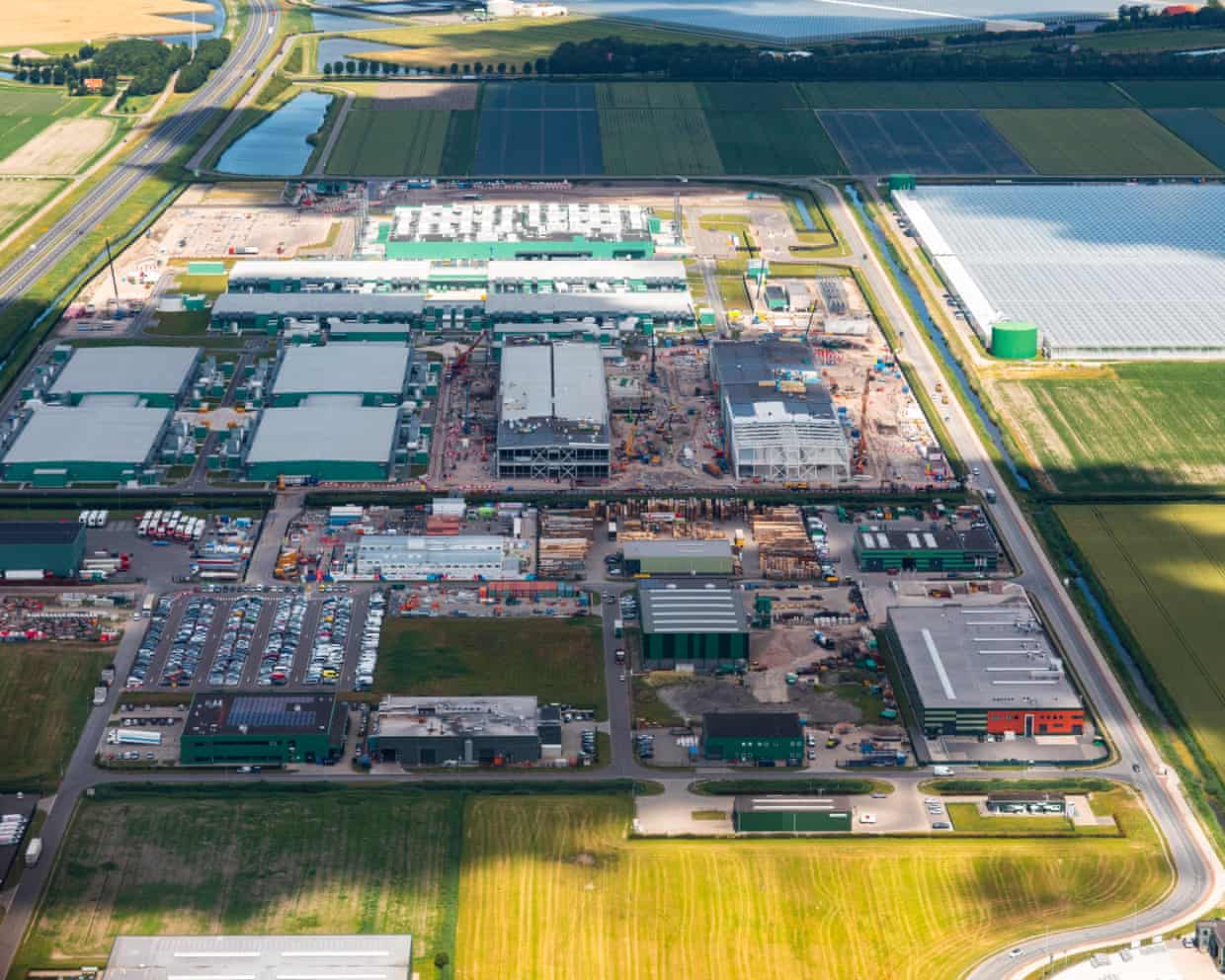
Will the race to artificial general intelligence (AGI) lead us to a land of financial plenty – or will it end in a 2008-style bust? Trillions of dollars rest on the answer.The figures are staggering: an estimated $2.9tn (£2.2tn) being spent on datacentres, the central nervous systems of AI tools; the more than $4tn stock market capitalisation of Nvidia, the company that makes the chips powering cutting-edge AI systems; and the $100m signing-on bonuses offered by Mark Zuckerberg’s Meta to top engineers at OpenAI, the company behind ChatGPT.These sky-high numbers are all propped up by investors who expect a return on their trillions
He called himself an ‘untouchable hacker god’. But who was behind the biggest crime Finland has ever known?
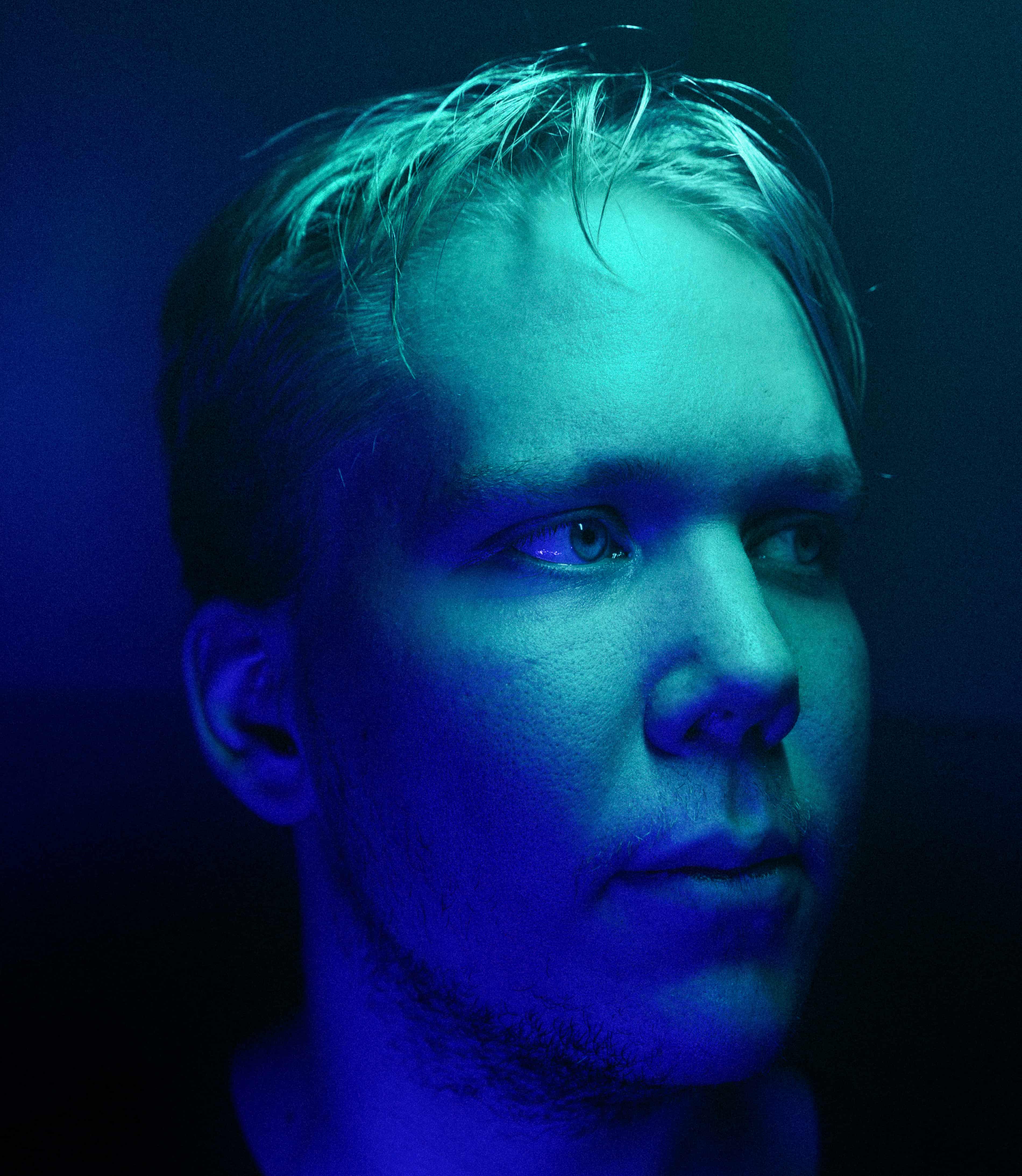
Tiina Parikka was half-naked when she read the email. It was a Saturday in late October 2020, and Parikka had spent the morning sorting out plans for distance learning after a Covid outbreak at the school where she was headteacher. She had taken a sauna at her flat in Vantaa, just outside Finland’s capital, Helsinki, and when she came into her bedroom to get dressed, she idly checked her phone. There was a message that began with Parikka’s name and her social security number – the unique code used to identify Finnish people when they access healthcare, education and banking. “I knew then that this is not a game,” she says

Bielle-Biarrey hat-trick fires holders Bordeaux to Champions Cup victory at Bristol
The odds on Bordeaux Bègles successfully defending their Champions Cup crown shortened considerably on a damp, grey Sunday lunchtime in Bristol. Good sides can adapt their game to suit awkward conditions and, for the second weekend in a row, French class outflanked English energy and optimism with a hat-trick of tries from the spectacularly prolific French winger Louis Bielle-Biarrey.The Bears, seeking to play billionaire rugby on a day crying out for more prudent housekeeping, made far too many unforced errors and duly paid the price against opponents who are now perfectly placed in this year’s tournament. They will have the luxury of playing all their subsequent knockout games either on French soil or, if they reach the final, just across the Spanish border in Bilbao, and at this rate it will require something special to prevent them claiming back-to-back titles.Even when their side are not quite at their best the sparkling Bielle‑Biarrey, along with the artful Matthieu Jalibert, give Bordeaux crucial extra stardust

Australian Open 2026: Sabalenka, Alcaraz and Raducanu in action on day one – as it happened
Righto, that’s us done for today. Thanks for your company and we’ll see you again tomorrow – but in the meantime, we’ve plenty else for you, in the shape of Wolves v Newcastle and Villa v Everton in the Prem, followed by Senegal v Morocco in the Afcon final, then Patriots v Texans in the NFL playoffs. Not bad, eh?But otherwise, peace out and see you tomorrow.So what’s going on tomorrow? In the day sesh, Arnaldi v Rublev looks decent, likewise Medvedev v De Jong, while Gauff faces Rakhimova and Anisimova meets Waltert, while Jacob Fearnley gets under way against Kamil Majchrzak.We’ll be with you for evening dig, featuring Yuan v Swiatek, Martinez v Djokovic, Vekic v Andreeva and Bellucci v Ruud

Woolworths online delivery platforms tested: which is cheapest and how do they compare with in-store shopping?

World stock markets brace for turbulence after Trump’s latest tariff shock

Deactivate your X account – you won’t miss it when it’s gone | Letter

‘Still here!’: X’s Grok AI tool accessible in Malaysia and Indonesia despite ban

Houston Texans v New England Patriots: AFC Divisional Round NFL playoff – live

Not bowled over by male sports chat | Brief letters