War in Middle East has ‘heightened the risks to the global economy’; markets in ‘panic mode’ as oil jumps and shares fall – as it happened
Canada’s central bank has warned that domestic near-term economic growth will be weaker than anticipated in January, following the war in the Middle East.The Bank of Canada has left interest rates on hold today, and warned that the conflict has increased volatility in global energy prices and financial markets, and “heightened the risks to the global economy”.The BoC’s monetary policy committee says:double quotation markSince the outbreak of the conflict in the Middle East, global oil and natural gas prices have risen sharply, and this will boost global inflation in the near-term.In addition to energy supply disruptions, transportation bottlenecks stemming from the effective closure of the Strait of Hormuz could impact the supply of other commodities, such as fertilizer.Financial conditions have tightened from accommodative levels.
Global bond yields have risen, equity market prices have declined, and credit spreads have widened.The Canada-US dollar exchange rate has remained relatively stable.The BoC also warns that the recent sharp increase in global energy prices has led to increases in gasoline prices, and this will push up total inflation in the coming months.It concludes:double quotation markAgainst this overall backdrop, Governing Council decided to maintain the policy rate at 2.25%.
With recent data pointing to weaker economic activity and uncertainty elevated, risks to growth look tilted to the downside,At the same time, inflation risks have gone up due to higher energy prices,Time to wrap up…,Canada’s central bank has warned that the conflict in the Middle East has increased volatility in global energy prices and financial markets, and “heightened the risks to the global economy”,The warning came as Iran threatened to attack energy infrastructure across the Gulf region in retaliation for Israeli strikes on its largest gasfield, marking the first targeted attacks on its fossil fuel production since the war began.
Iran’s Revolutionary Guards have threatened counterstrikes on several energy facilities across Saudi Arabia, the UAE and Qatar “in the coming hours” after state media reports that missiles had targeted its gas facilities at the giant South Pars field, the largest gas reserves in the world.The strikes on Iran’s South Pars gasfield, which it shares with Qatar, were widely reported in Israeli media to have been carried out by Israel with the consent of the US.The attack against the heart of Iran’s gas infrastructure marks a key escalation in US and Israeli military operations.The two countries have until now largely spared Iran’s oil and gas sector and helped to keep a lid on the global oil price surge.The oil price climbed towards $110 a barrel on Wednesday afternoon as the mounting threat to the Gulf’s oil and gas infrastructure fuelled concerns over more disruption to global supplies, amid the continuing blockade of the strait of Hormuz.
This latest escalation of tensions hit stocks in Europe, where London’s main share index fell almost 1%, and on Wall Street where the DJIA is down 0,9% now,Investors were also rattled by data showing that US goods and services producers hiked their prices faster than expected in February,That could show inflationary pressures were bubbling up even before this month’s spike in fuel prices,A government led by the Green party would not set targets for GDP growth but would instead focus on people’s mental health, social cohesion and community welfare, Zack Polanski has said in a major speech to set out his plans for the economy.
In other news:After a choppy day’s trading, London’s stock market has just closed in the red.The FTSE 100 share index lost 98 points, or 0.94%, to close at 10,305 points, as anxiety over events in the Middle East hit stocks.Precious metals producers were among the fallers, reflecting the drop in the gold price today.The FTSE 250 index of medium-sized firms has lost 0.
44%.UK petrol and diesel prices have continued to climb today.The average price of a litre of unleaded is up 0.33p to 142.62p.
That’s a gain of almost 10p since the crisis began, RAC data shows.Diesel has jumped by over 20p a litre since the 28 February.It’s up 0.60p at 162.66p.
This post was amended on 20 March 2026.An earlier version said the price of unleaded and diesel had increased by 33p and 60p respectively within the past 24 hours; this should have said 0.33p and 0.60p.The ‘panic’ in markets has reached Wall Street, where stocks are dropping (but not plunging).
The Dow Jones industrial average is down 458 points, or 1%,at 46,534 points in morning trading,Most of the 30 stocks on the index are down, led by paint company Sherwin-Williams (-2,6%) and manufacturing group 3M (-2,5%).
Oil company Chevron is bucking the trend, up 1%.Kathleen Brooks, research director at XTB, reports that “markets are back in panic mode” today.double quotation markThe Brent crude oil price is surging and is higher by another 5% today, the gold price is down 2.8% and is below $5,000 per ounce, bonds are getting sold off and yields are surging and the dollar is rallying.This is a volatile backdrop to the Fed meeting [today], who also must factor in a strong reading for last month’s PPI report.
The surprisingly large jump in US producer prices earlier today is one factor – casting doubt on whether America’s central bankers can cut interest rates this year.The second factor is the Middle East crisis, she writes:double quotation markOn the oil front, the oil price is surging and is back above $108 a barrel, as the conflict escalates further.Iran has warned Gulf nations that their energy assets and infrastructure are now legitimate targets after attacks on its giant South Pars gas field by Israeli forces.The risk is that an oil shipping crisis is morphing into an oil supply crisis.Unsurprisingly, this has spooked a market that was wiling to grasp hopeful signs that tankers were slowly getting through the Strait of Hormuz, and that countries like Saudi Arabia and Iraq could get oil into the market through alternative routes.
Gold isn’t living up to its reputation as a safe haven asset against geopolitical tensions and inflation fears.It’s dropped to a one-month low today, down 2.6% at $4,872 an ounce.Trump waives US shipping law for oil and gas in bid to lower prices | US-Israel war on Iran | The GuardianIran published a list of Gulf energy sites it says may be targeted after its South Pars gas field was attacked today:Iran’s semi-official media has published a list of retaliatory energy targets: Ras Laffan refinery – QatarSamref oil refinery – Saudi ArabiaAl Hosn gasfield – UAEJubail petchem plant – Saudi ArabiaMesaieed petchem plant – QatarThe US government is suspending a protectionist ban on foreign-flagged vessels transporting cargo between US ports, in an attempt to cool energy prices.The White House has issued a 60-day waiver on the Jones Act, which requires goods sent between US ports to be carried on ships built, owned and operated by the US.
The move “will allow vital resources like oil, natural gas, fertilizer, and coal to flow freely to U,S,ports for sixty days,” White House press secretary Karoline Leavitt said in a statement reported by CNBC,Oil climbed towards $110 a barrel today, and gas prices have also risen, after Iran claimed that a US-Israeli air strike had targeted its gas infrastructure, marking the first strike on Iran’s fossil fuel production since the war began, my colleague Jillian Ambrose reports,Iran state media reported that gas facilities at the giant South Pars fields, which it operates alongside Qatar, were attacked on Wednesday, leading to the shut down of several petrochemical assets “in order to control and prevent the speed of fire”.
In response Iran’s Revolutionary Guards threatened several energy facilities across Saudi Arabia, the UAE, and Qatar in retaliation for the attack on its energy sites, fuelling market concerns over oil and gas supplies from the region.The international oil benchmark climbed by as much as 5% to a high of $108.60 a barrel, while Europe’s gas benchmark jumped by over 7.5% to over €55.50 per megawatt hour.
Qatar condemned the attack on the field,Qatari government spokesman Majid al-Ansra said:double quotation mark“Targeting energy infrastructure constitutes a threat to global energy security, as well as to the peoples of the region and its environment,”The Israeli targeting of facilities linked to Iran’s South Pars field, an extension of Qatar’s North Field, is a dangerous & irresponsible step amid the current military escalation in the region,Targeting energy infrastructure constitutes a threat to global energy security, as…The global oil price pushed past $116 a barrel early last week, for the first time since May 2022, as traders began to count the cost of the war on global supplies of oil and gas,Fossil fuel tankers have struggled to leave the Gulf since the start of the month when the IRGC wrested control of the strait of Hormuz, through which a fifth of the world’s seaborne oil trade flowed before the war began.
In addition to the chokehold on deliveries, Gulf producers have been forced to shut their own oil and gas fields after rerouting as much oil as possible via pipelines to bypass the strait and filling storage facilities.Markets are being shaken out of the complacent mode we have seen the last three sessions, reports Neil Wilson, Saxo UK Investor Strategist.The hotter-than-expected US producer price inflation report (see earlier) is one factor.Wilson says the jump in the PPI is “very much a tariff story and worry is that this signals further structural inflation risks alongside the current bout of energy-based pressures.”The attack on Iran’s South Pars gas field is also a sign of “potential escalation in the Middle East as Iran and Israel are definitely seen targeting upstream production facilities for oil and nat gas” he adds.
Canada’s central bank has warned that domestic near-term economic growth will be weaker than anticipated in January, following the war in the Middle East.The Bank of Canada has left interest rates on hold today, and warned that the conflict has increased volatility in global energy prices and financial markets, and “heightened the risks to the global economy”.The BoC’s monetary policy committee says:double quotation markSince the outbreak of the conflict in the Middle East, global oil and natural gas prices have risen sharply, and this will boost global inflation in the near-term.In addition to energy supply disruptions, transportation bottlenecks stemming from the effective closure of the Strait of Hormuz could impact the supply of other commodities, such as fertilizer.Financial conditions have tightened from accommodative levels.
Global bond yields have risen, equity market prices have declined, and credit spreads have widened.The Canada-US dollar exchange rate has remained relatively stable.The BoC also warns that the recent sharp increase in global energy prices has led to increases in gasoline prices, and this will push up total inflation in the coming months.It concludes:double quotation markAgainst this overall backdrop, Governing Council decided to maintain the policy rate at 2.25%.
With recent data pointing to weaker economic activity and uncertainty elevated, risks to growth look tilted to the downside.At the same time, inflation risks have gone up due to higher energy prices.European stock markets are now mostly in the red after Iranian state media reported that US and Israeli strikes have hit Iran’s offshore South Pars natural gas field in the southern Bushehr province (see earlier post).With Brent crude now up 4.8% at $108.
42, equities are moving in the other direction,Britain’s FTSE 100 index is now down 70 points, or 0,67%, at 10,333 points,Germany’s DAX index is down 0,4%, as is the pan-European Stoxx 600 index.

Essex police pause facial recognition camera use after study finds racial bias
Essex police have paused the use of live facial recognition (LFR) technology after a study found cameras were significantly more likely to target black people than people of other ethnicities.The move to suspend use of the AI-enabled systems was revealed by the Information Commissioner’s Office (ICO), which regulates the use of the technology deployed so far by at least 13 police forces in London, south and north Wales, Leicestershire, Northamptonshire, Hampshire, Bedfordshire, Suffolk, Greater Manchester, West Yorkshire, Surrey and Sussex.The ICO said Essex police had paused LFR deployments “after identifying potential accuracy and bias risks” and warned other forces to have mitigations in place. LFR systems are either mounted to fixed locations or deployed in vans. In January, the home secretary, Shabana Mahmood, announced the number of LFR vans would increase five-fold, with 50 available to every police force in England and Wales
Meta AI agent’s instruction causes large sensitive data leak to employees
An AI agent instructed an engineer to take actions that exposed a large amount of Meta’s sensitive data to some of its employees, in the latest example of AI causing upheaval in a large tech company.The leak, which Meta confirmed, happened when an employee asked for guidance on an engineering problem on an internal forum. An AI agent responded with a solution, which the employee implemented – causing a large amount of sensitive user and company data to be exposed to its engineers for two hours.“No user data was mishandled,” a Meta spokesperson said, and they emphasised that a human could also give erroneous advice. The incident, first reported by The Information, triggered a major internal security alert inside Meta, which the company has said is an indication of how seriously it takes data protection
Cryptocurrency firms suffer heavy losses in Illinois primaries after spending big
The cryptocurrency industry spent big and lost often in this week’s Illinois primaries.As the industry prepares to make massive donations in the 2026 midterm elections to replicate its success in 2024, the Illinois losses mark an early setback for firms that are trying to establish themselves as power players in American politics.Crypto companies flooded the state’s Democratic primaries with millions of dollars to promote candidates they believed would have a light touch when it came to regulating digital assets. AI firms, meanwhile, backed opposing candidates and seemed to cancel each other out.Using Super Pacs that are allowed to spend unlimited sums of money, crypto and AI companies ran television advertising and distributed campaign fliers that only occasionally alluded to their industries

Lack of funding is stifling scientific research | Letter
Liz Kendall is right to warn that the UK must not let quantum computing talent slip through its fingers (UK must learn lessons from AI race and retain its quantum computing talent, says minister, 17 March).However, UK Research and Innovation’s current funding decisions risk doing exactly that.The government has announced £1bn for quantum computing, but it is cutting support for fundamental research in particle physics, astronomy and nuclear physics (PPAN). These are not separate issues. It is precisely the kind of blue-sky research funded through PPAN that trains the scientists and develops the ideas that underpin emerging technologies like quantum computing

US startup advertises ‘AI bully’ role to test patience of leading chatbots
Imagine a day at work where your main task is to pick a fight with a computer. No meetings, no emails – just you, a chair and a chatbot with the maddening tendency to think it has the cleverest mind in the room.The job title alone raises an eyebrow: “AI bully”. But this is precisely what a California startup called Memvid is offering: $800 to spend eight hours testing the patience and memory of artificial intelligence.“You’ll spend a full eight-hour day interacting with leading AI chatbots – and your only job is to be brutally honest about how frustrating they are,” the company’s job listing states

‘All right mate?’: Amazon pins UK hopes on AI upgrade of Alexa
“Commiserations, mate, Chelsea lost 3-0 in the Champions League last night against Paris Saint-Germain,” says Alexa as it attempts to break the news gently to an awaiting Blues fan.Such is the injection of personality and understanding that Amazon hopes will lead to Britons re-engaging with their millions of Alexa devices, restoring it to the cutting edge of voice assistants rather than resigned to being a glorified egg timer.After its early access launch last year in the US, the long-awaited generative AI upgrade Alexa+ is finally making its debut in the UK, supporting eight years of existing devices strewn through more than half of UK households.With the UK being Amazon’s most engaged market and more than 40 accents to contend with across the UK and Ireland, the “next-generation ambient AI assistant” has its work cut out for it.The service will be available immediately for new purchases of Amazon’s latest generation of Echo and Show devices, with an invite system in operation for existing devices, which Amazon’s head of Alexa and Echo, Daniel Rausch, insists will progress faster than it did in the US
UK borrowing costs hit highest since 2008 as markets expect up to three interest rate rises
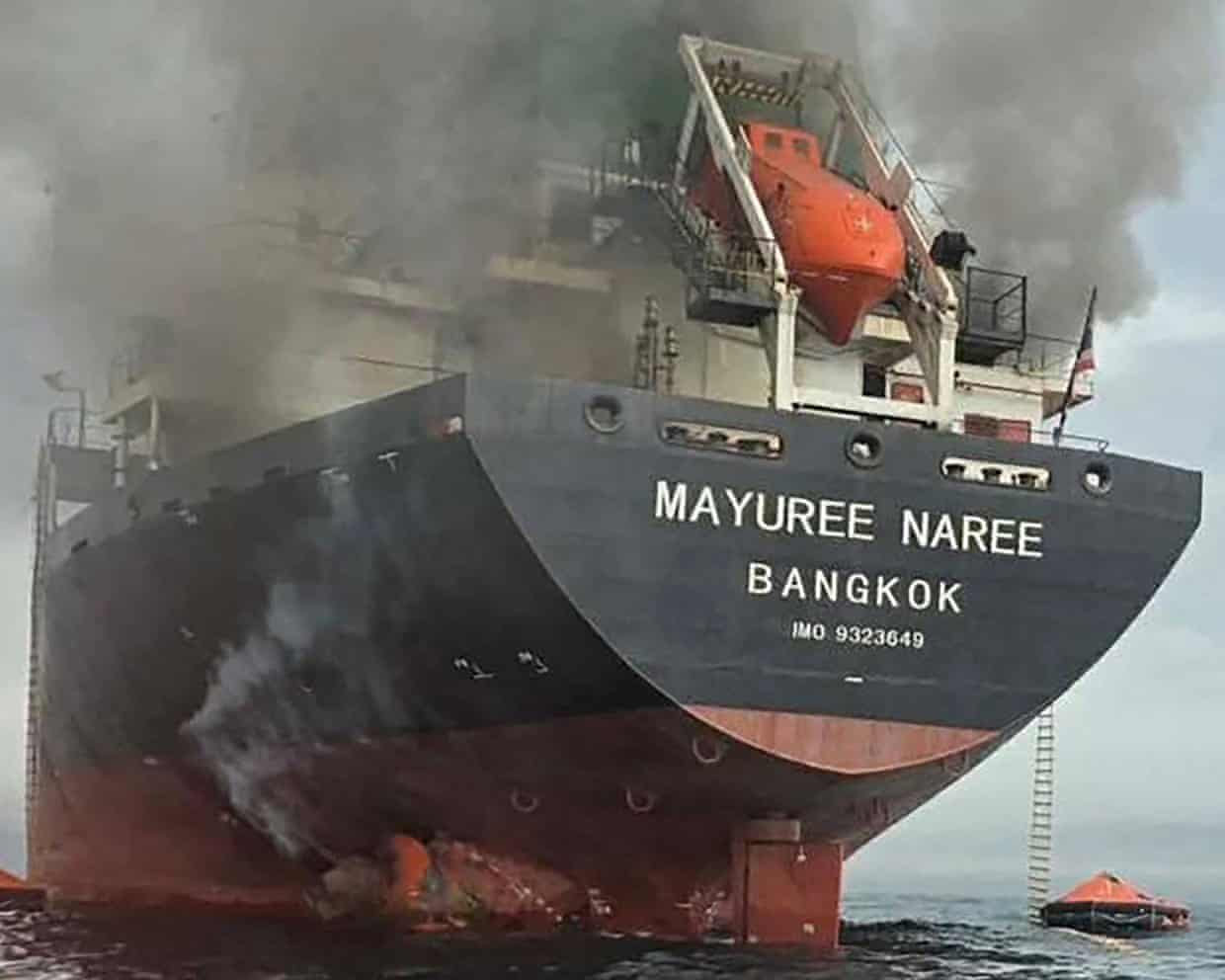
‘Huge build-up of risk’: London’s centuries-old shipping industry wrestles with Iran war
JP Morgan Chase to use computer estimates to monitor hours worked by junior bankers
Marmite maker Unilever in talks to merge food business with US-based McCormick

Work from home and slow down on the road: world’s energy watchdog advises emergency measures as oil prices rise
High charges, poor service: NCP hits the skids as drivers change habits