Davos: Trump launches his ‘board of peace’ as Kushner presents Gaza ‘master plan’ – as it happened
Trump’s son-in-law, Jared Kushner, is now on stage, outlining plans for the redevelopment of Gaza.Kushner says the “master plan” will be conducted in phases, including a push on workforce housing, where he suggests could also be a lot of industry, 100% employment and opportunity for everyone.He’s now showing Davos a property development map of Gaza, and a computer-generated picture of ‘New Gaza’, with coastal tourism.Here’s the timeline as Kushner showed on screen to delegates.Time to wrap up….
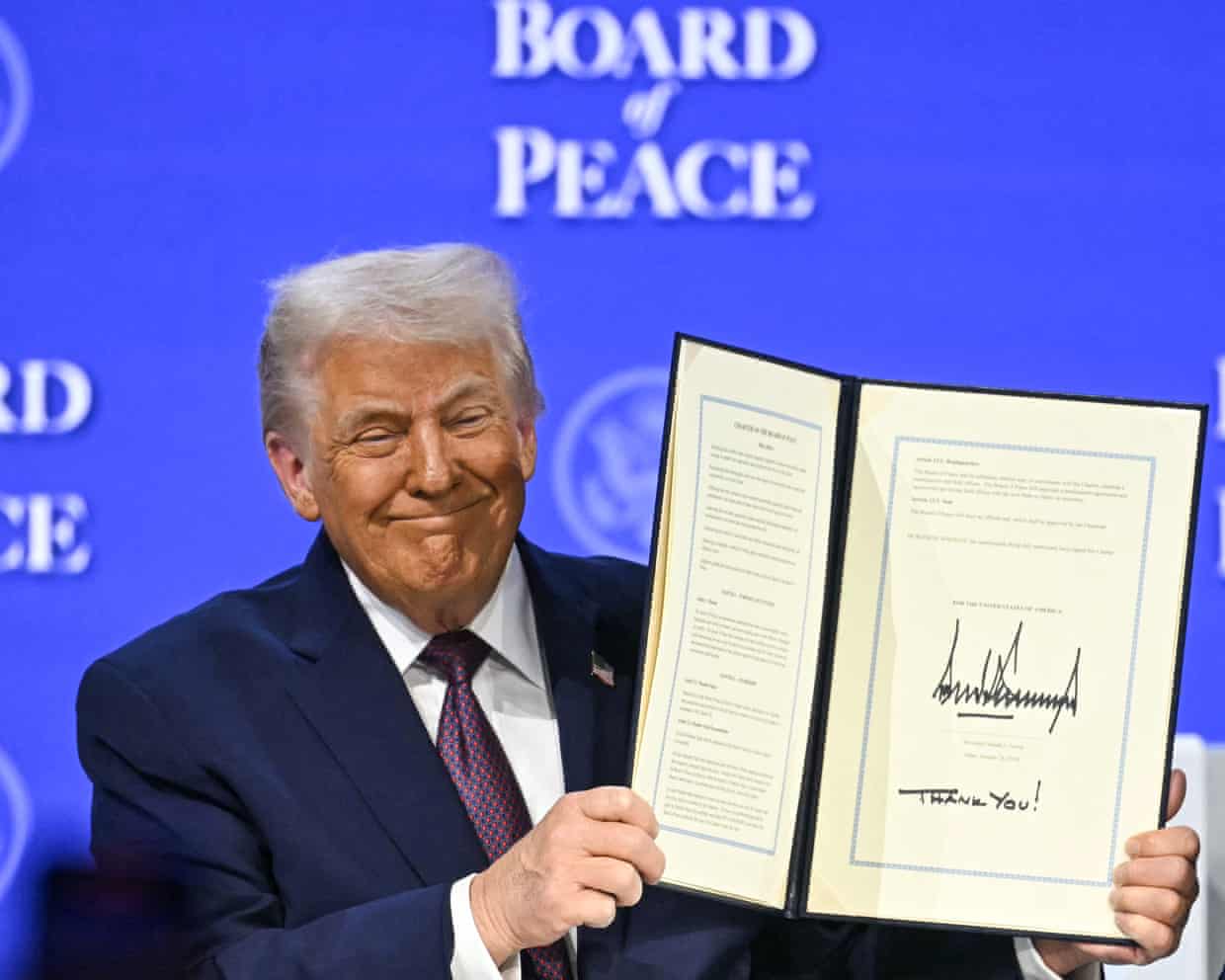
Donald Trump has claimed the world is “richer, safer and much more peaceful than it was just one year ago” as he hosted a launch event for his “board of peace” initiative at the World Economic Forum in Davos.At a signing ceremony for the new organisation, the US president said it would be “one of the most consequential bodies ever created in the history of the world”.US and Palestinian officials also used the ceremony to lay out a blueprint for the next steps in implementing a ceasefire in Gaza, and putting the territory under the day-to-day control of a Palestinian-run technocratic administration, which has been assembled in Cairo.The president’s son-in-law Jared Kushner outlined a plan for the next 100 days, including a significant increase in aid deliveries, the rehabilitation of essential infrastructure, such as water, electricity and sewage systems, and the reconstruction of hospitals and bakeries.Kushner also presented an aspirational map of a future Gaza in which the territory had a buffer zone around the border with Israel but was unified, rather than partitioned as it is now.
My colleague Jakub Krupa is covering the latest developments on Greenland, and Ukraine, here:We’ll be back tomorrow for the final day of the World Economic Forum.One more heave….Sir Tony Blair’s presence at the launch of Donald Trump’s “Board of Peace” has prompted criticism in London, the Financial Times reports.As we blogged this morning, the former Labour prime minister was hailed by the US president at the World Economic Forum in Davos on Thursday, “Thank you, Tony, for being here, we appreciate it,” Trump said.However, Trump’s decision to invite Russian President Vladimir Putin to join the Board of Peace has caused unease in Sir Keir Starmer’s Labour government.
“Putin’s possible involvement puts Tony in a really difficult position,” said one senior minister.“Presumably, he didn’t know about Putin when he agreed to sign up.”We spotted Blair chatting with a group including Jared Kushner at the end of the board of peace signing ceremony.On a personal note, Musk says he was inspired by reading books about the future.He adde he wants to make science fiction “not fiction forever”, talking about a Star Trek-style future of massive space ships zipping around the place.
Larry Fink, on the stage with Musk, likes the sound of this – he’d like to be beamed back to New York at the end of Davos [could I possibly be beamed back to the UK right now, Scotty?]Q: Do you think you’ll go to Mars in your lifetime?Musk suggests he does, rolling out an old joke about how he’s like to die on Mars “but not on impact”.And he wraps up with another gag about how it’s better for your quality of life to be “an optimist who’s wrong rather than a pessimist who’s right.”This goes down well with the Davos crowd, who give him a cheery sendoff from the stage.Musk tells Davos that some insurance companies have said that Tesla’s full-self driving is so safe that they’re offering half-price insurance if drivers use it.Self-driving cars is “essentially a solved problem at this point”, he declares.
[Essentially is doing a lot of work.Last October, US automobile safety regulators opened an investigation into Tesla vehicles equipped with its full self-driving (FSD) technology over traffic-safety violations after a series of crashes.Musk then predicts that Tesla will be selling humanoid robots to the public by the end of next year.[We shall see! Musk has made some optimistic forecasts for robot deployment before; three years ago, he said the goal is to make a useful humanoid robot “as quickly as possible”].Unfortunately, the US tariff barriers for solar are extremely high, as most of production is in China, WEF hears.
The limiting factor for AI deployment is fundamentally electrical power, Musk continues (rather than production of chips, or the rollout of fabrication plans).He then talks about China’s ‘tremendous’ growth in electricity output, and tells Davos that a 100 mile by 100 mile area of solar would be enough to power the entire US.More blue-sky thinking from Musk: he suggests aging is a solvable problem (although isn’t clear how it will be solved), suggesting its highly likely that ways to “extend and maybe even reverse” life will be found.There would be an “explosion” in the global economy, and unprecedented growth, if the world reaches a point of ubiquitous, essentially free, artificial intelligence and ubiquitous robots, Musk continues.He’s outlining a future where all human needs are saturated, with everyone on earth having a robot of their own, to watch over their children, pet or elderly parents.
I think we will have those things.I’m very optimistic about the future.I think we’re heading to a future of amazing abundance.Musk says the goal of his companies is about maximising the possibility that civilisation has a great future, and to expand consciousness beyond Earth.SpaceX, for example, is developing rocket technology that can extend life and consciousness beyond Earth to the moon, Mars and “eventually to other star systems”.
Musk jokes (I think!) that he’s often asked ‘are their aliens?’,He replies “I am one, but they don’t believe me”,[he’s made this joke, before, so he’s a consistent alien if so]Musk suggest he may deliver five newsworthy quotes…And then he suggests that Donald Trump’s new initiative might actually be called the “Piece summit”,He jokes about getting “a little piece of Greenland”… before insisting “What we want is peace”,

Experts warn of threat to democracy from ‘AI bot swarms’ infesting social media
Political leaders could soon launch swarms of human-imitating AI agents to reshape public opinion in a way that threatens to undermine democracy, a high profile group of experts in AI and online misinformation has warned.The Nobel peace prize-winning free-speech activist Maria Ressa, and leading AI and social science researchers from Berkeley, Harvard, Oxford, Cambridge and Yale are among a global consortium flagging the new “disruptive threat” posed by hard-to-detect, malicious “AI swarms” infesting social media and messaging channels.A would-be autocrat could use such swarms to persuade populations to accept cancelled elections or overturn results, they said, amid predictions the technology could be deployed at scale by the time of the US presidential election in 2028.The warnings, published today in Science, come alongside calls for coordinated global action to counter the risk, including “swarm scanners” and watermarked content to counter AI-run misinformation campaigns. Early versions of AI-powered influence operations have been used in the 2024 elections in Taiwan, India and Indonesia
Grok AI generated about 3m sexualised images in 11 days, study finds
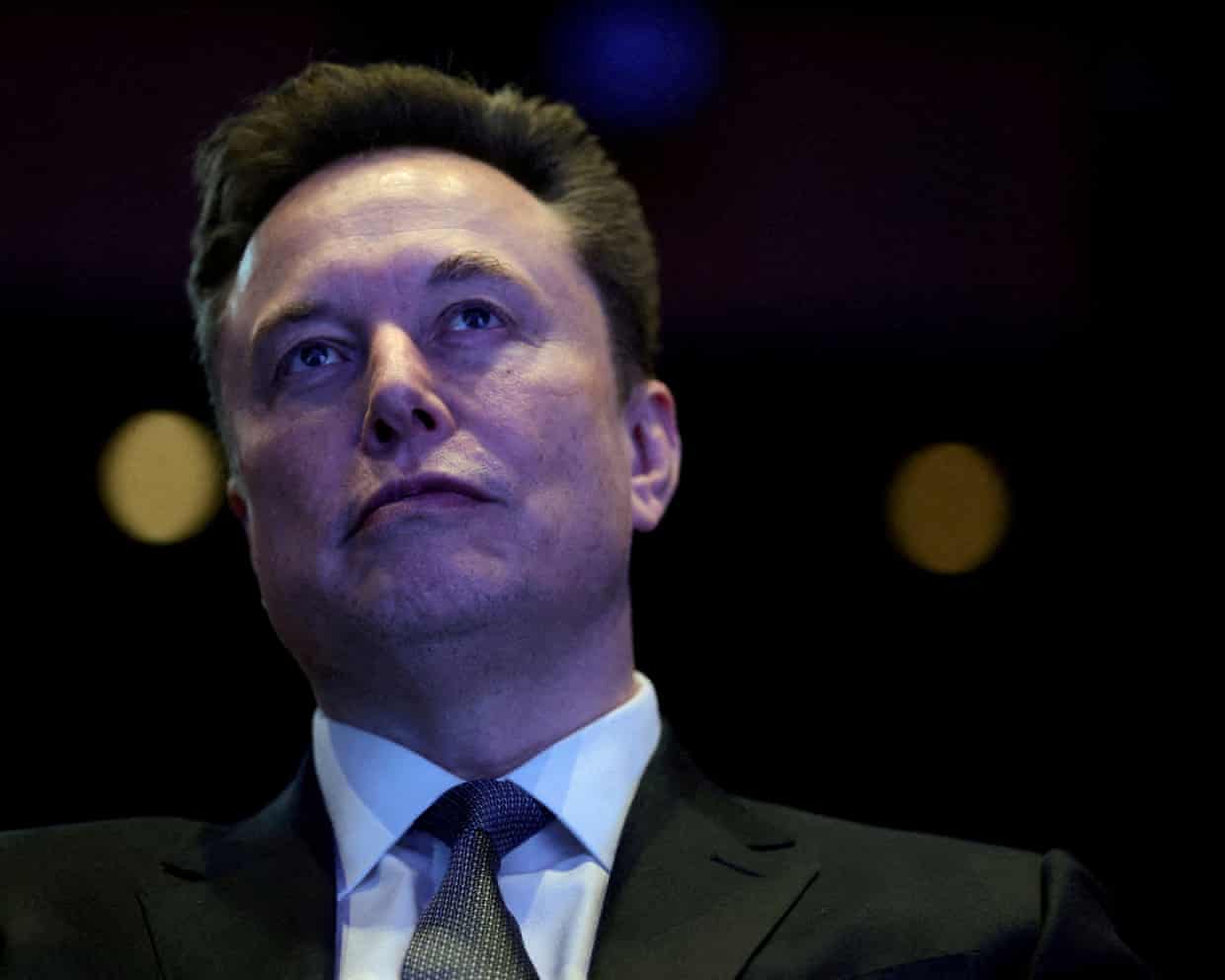
Grok AI generated about 3m sexualised images in less than two weeks, including 23,000 that appear to depict children, according to researchers who said it “became an industrial-scale machine for the production of sexual abuse material”.The estimate has been made by the Center for Countering Digital Hate (CCDH) after Elon Musk’s AI image generation tool sparked international outrage when it allowed users to upload photographs of strangers and celebrities, digitally strip them to their underwear or into bikinis, put them in provocative poses and post the images on X.The trend went viral over the new year, peaking on 2 January with 199,612 individual requests, according to analysis conducted by Peryton Intelligence, a digital intelligence company specialising in online hate.A fuller assessment of the output from the feature, from its launch on 29 December 2025 until 8 January 2026, has now been made by the CCDH. It suggests the impact of the technology may have been broader than previously thought
Scarlett Johansson and Cate Blanchett back campaign accusing AI firms of theft
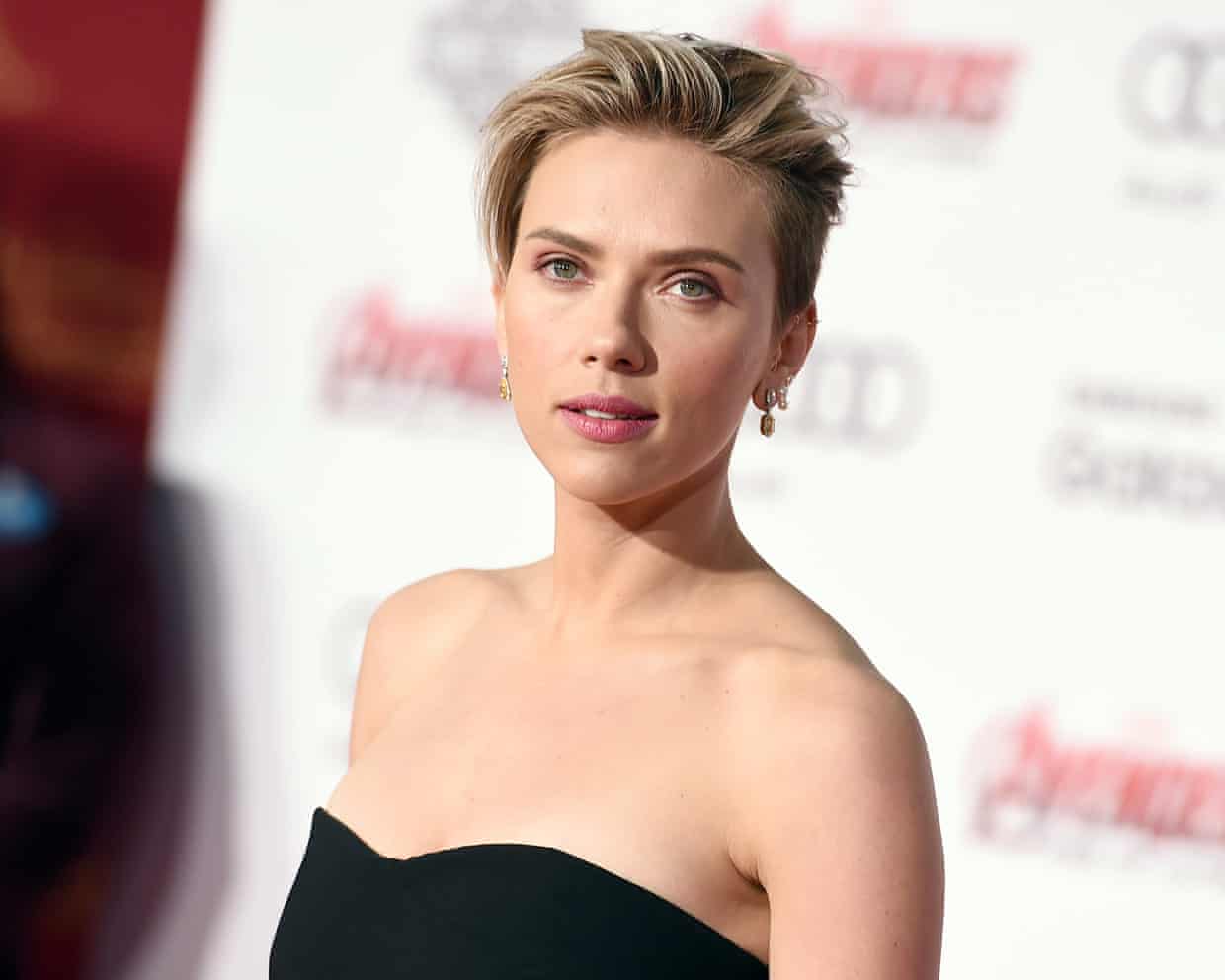
Scarlett Johansson, Cate Blanchett, REM and Jodi Picoult are among hundreds of Hollywood stars, musicians and authors backing a new campaign accusing AI companies of “theft” of their work.The “Stealing Isn’t Innovation” drive launched on Thursday with the support of approximately 800 creative professionals and bands. The campaign includes a statement accusing tech firms of using American creators’ work to “build AI platforms without authorisation or regard for copyright law”.It adds: “Artists, writers, and creators of all kinds are banding together with a simple message: Stealing our work is not innovation. It’s not progress
Why Trump is worried datacenters might cost his party an election
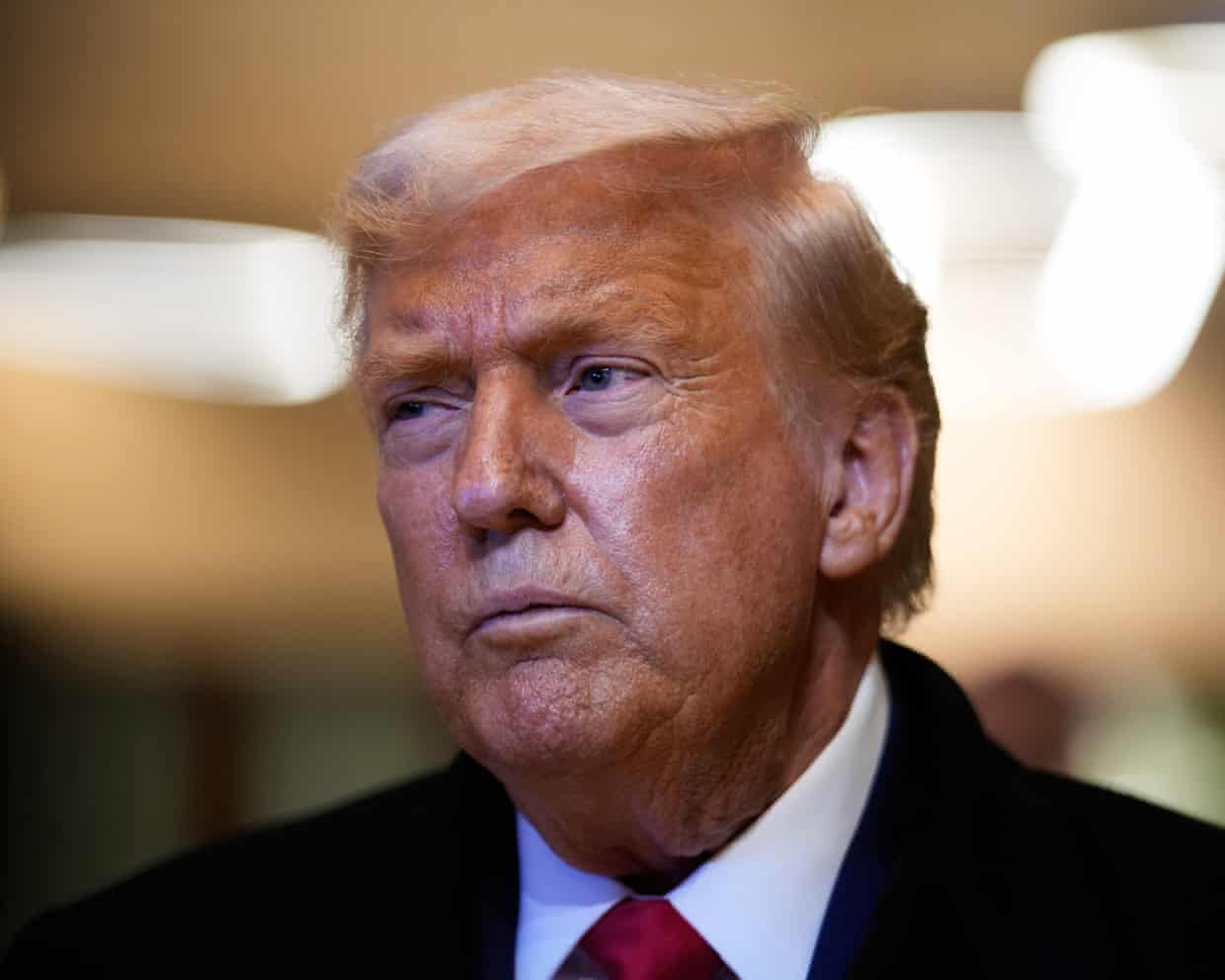
Donald Trump is worried about datacenters. Specifically, he is concerned about their effects on an already expensive electricity market in the United States. Will Americans’ resentment of sharply rising energy costs scuttle his party’s November election ambitions?The US president’s anxiety is evident in two actions in recent weeks. On 13 January, Trump and Microsoft’s president jointly announced that the tech giant would pay more for its datacenters, paying full property taxes and accepting neither tax reductions nor electricity rate discounts in towns where it operates datacenters.“We are the ‘HOTTEST’ Country in the World, and Number One in AI
My analogue month: would ditching my smartphone make me healthier, happier – or more stressed?
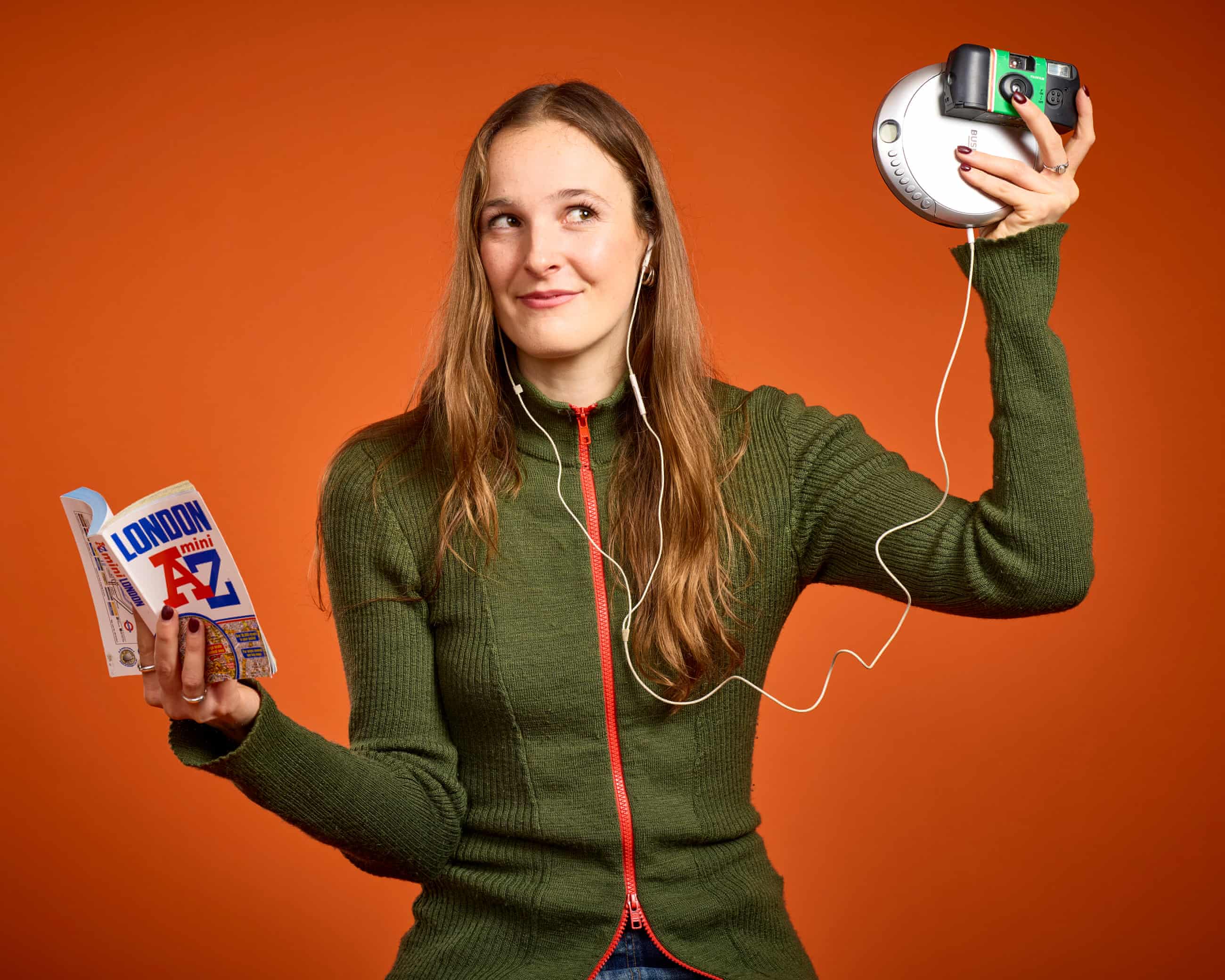
When I swapped my iPhone for a Nokia, Walkman, film camera and physical map, I wasn’t sure what to expect. But my life soon started to changeWhen two balaclava-clad men on a motorbike mounted the pavement to rob me, recently, I remained oblivious. My eyes were pinned to a text message on my phone, and my hands were so clawed around it that they didn’t even bother to grab it. It wasn’t until an elderly woman shrieked and I felt the whoosh of air as the bike launched back on to the road that I looked up at all. They might have been unsuccessful but it did make me think: what else am I missing from the real world around me?Before I’ve poured my first morning coffee I’ve already watched the lives of strangers unfold on Instagram, checked the headlines, responded to texts, swiped through some matches on a dating app, and refreshed my emails, twice
Big tech continues to bend the knee to Trump a year after his inauguration
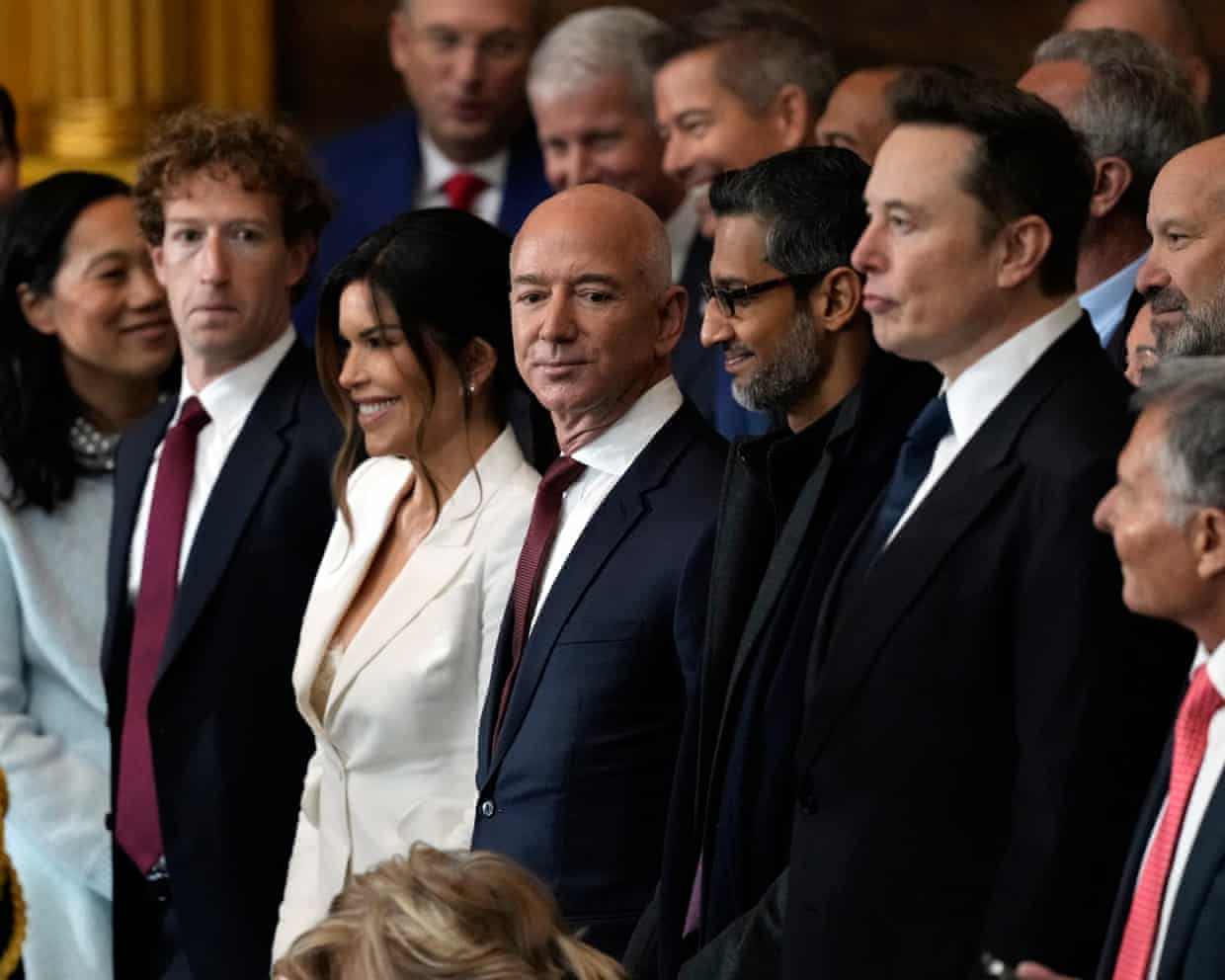
Hello, and welcome to TechScape. I’m your host, Blake Montgomery, the Guardian’s US tech editor.One year ago today, Donald Trump was inaugurated as president of the United States. Standing alongside him that day were the leaders of the tech industry’s most powerful companies, who had donated to him in an unprecedented bending of the knee. In the ensuing year, the companies have reaped enormous rewards from their alliance with Trump, which my colleague Nick Robins-Early and I wrote about last month after Trump signed an executive order prohibiting states from passing laws regulating AI
Harry Constable obituary
British retail sales jump as online jewellery firms offer surprise Christmas sparkle
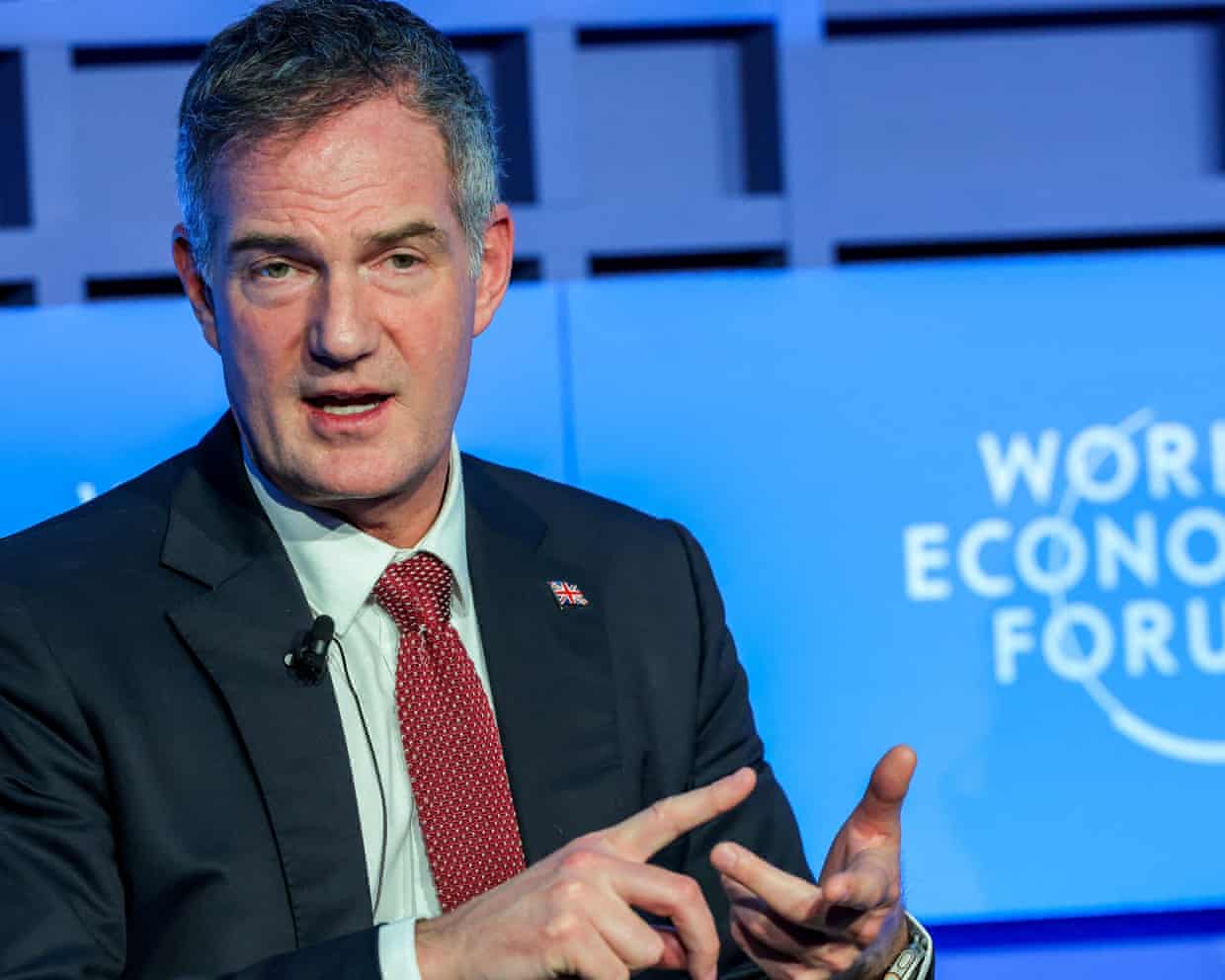
‘I’m picking winners’: UK business secretary takes activist approach to economic growth
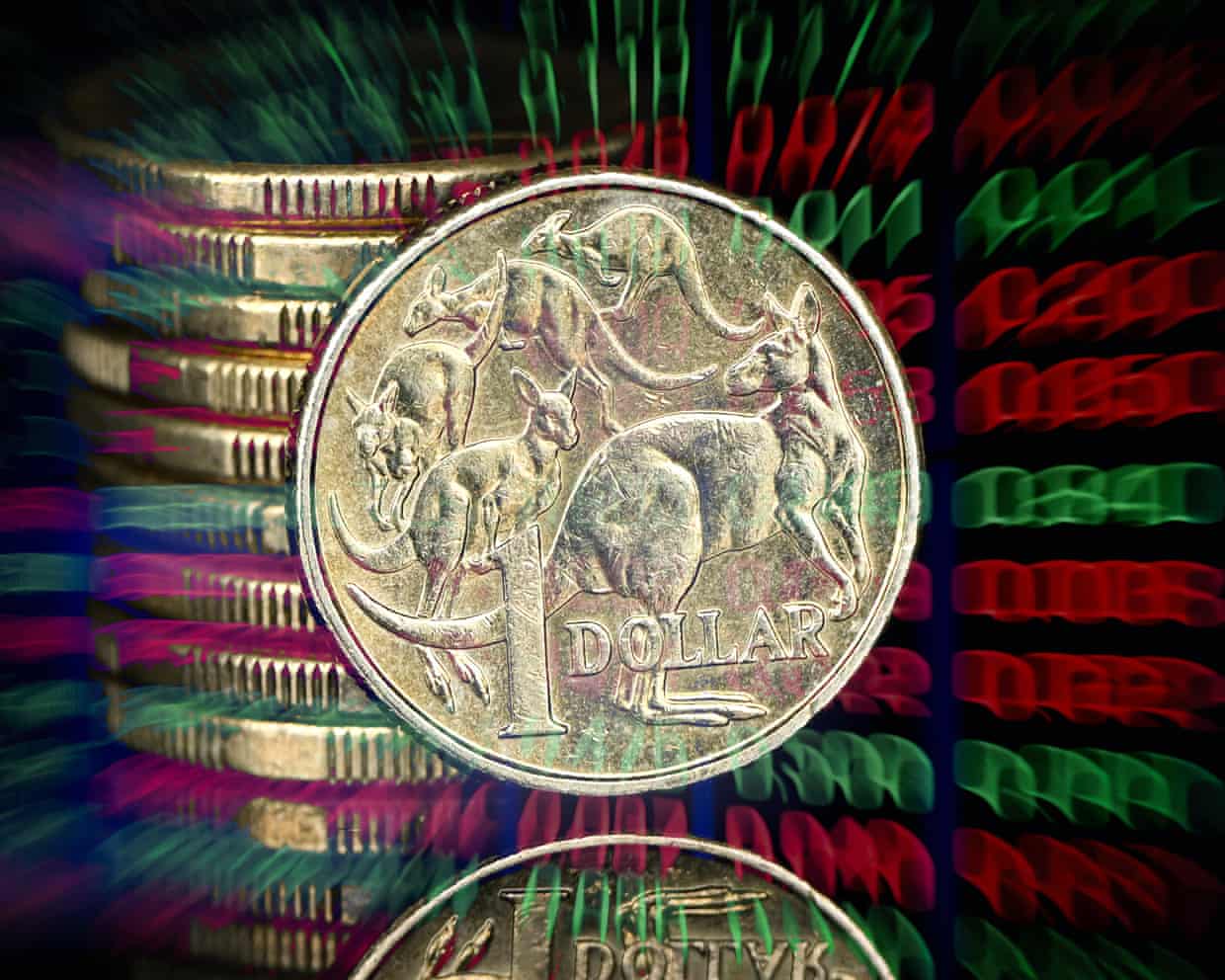
The Australian dollar is (oddly) rising – what does ‘sell America’ sentiment have to do with it?
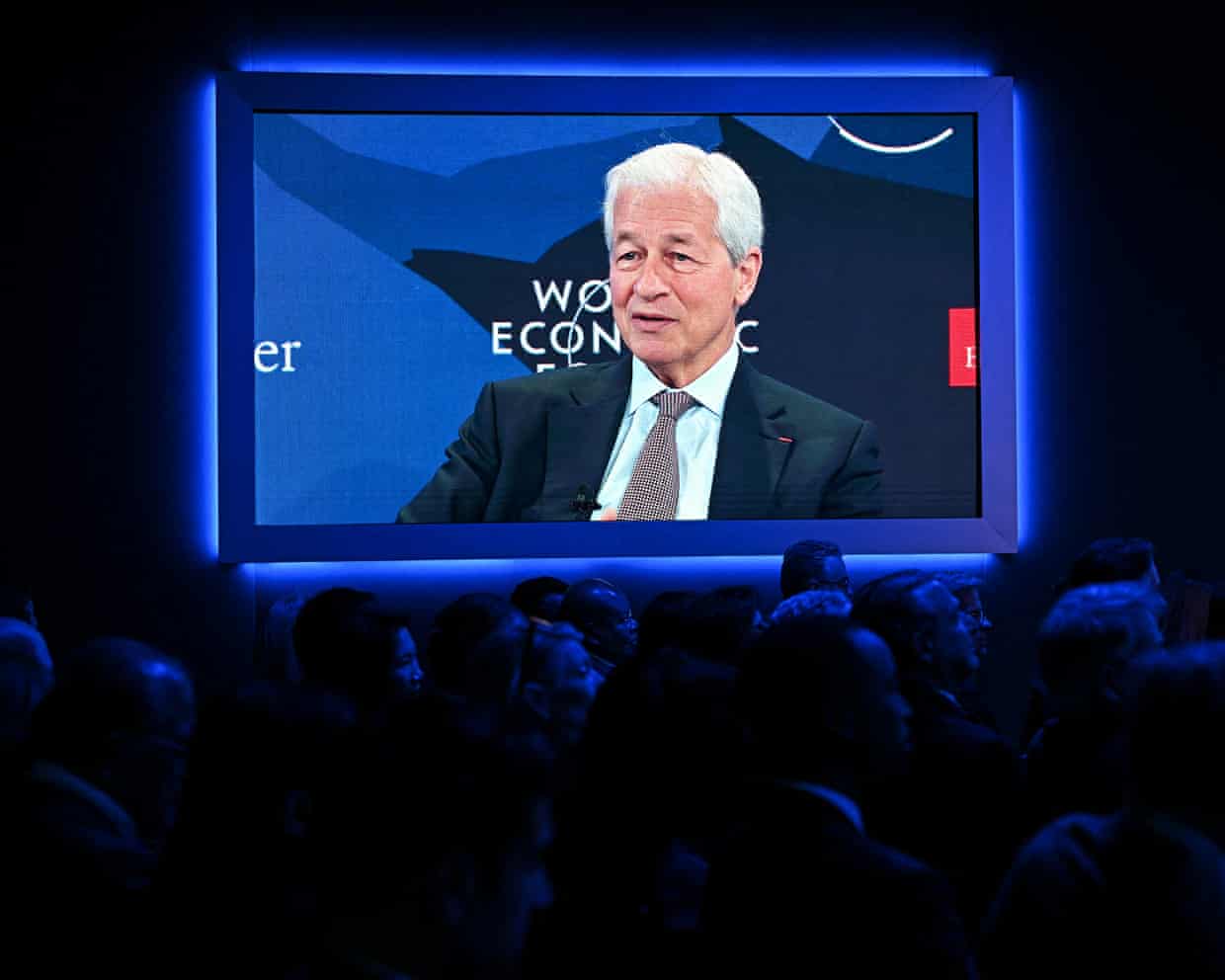
JP Morgan chief Jamie Dimon took home $43m pay last year

‘We have to stand together’: Minnesota economic blackout organizers push to take demonstrations nationwide