Falling inflation this year should smooth way for more interest rate cuts, says Bank of England policymaker - as it happened
Time to wrap up…The UK handed out record offshore windfarm contracts today, in what has been hailed as a breakthrough moment for the government’s ambition to get clean power by 2030.12 new offshore projects were awarded contracts after ministers increased the amount of funding available to developers to help them deliver their plans without raising bills for consumers.The funding was awarded to 8.4 gigawatts (GW) of offshore windfarm capacity, or enough to generate clean electricity for more than 12m British homes before the end of the decade.They were awarded a contract price of between £89.
49 and £91.20 a megawatt-hour (MWh) in 2024 prices.Meanwhile BP has said it expects to write down the value of its struggling green energy business by as much as $5bn (£3.7bn), as it refocuses on fossil fuels under its new chair, Albert Manifold.The FTSE 100 energy company said the multi-billion dollar charges were “primarily attributable to the gas and low carbon energy segment” of its business.
It comes as BP scales back its clean energy projects as part of a “fundamental rest” of its strategy, first announced by its former chief executive Murray Auchincloss last year.Coca-Cola has reportedly abandoned its Costa Coffee sale, after bids from potential suitors came in lower than expected, according to the Financial Times.It reported that Coca-Cola ended talks with bidders for Costa in December, ending an auction process that had attracted a range of private equity investors and lasted several months.The S&P 500 index has slipped at the open in the US, as investors digest quarterly earnings from the likes of Bank of America, Citigroup and Wells Fargo.The blue-chip index is down 0.
3%, while the Dow Jones Industrial Average has dropped 0,18%,The Nasdaq Composite is also down by about 0,6%Big US banks have started to report their earnings before the market opens on Wall Street,Bank of America shares up by about 1% in pre-market trading, and Citigroup shares are poised to rise by 0.
6%, after both banks beat profit estimates for their fourth quarters.Meanwhile Wells Fargo has slipped 2.5% in pre-market, after it missed estimates in its fourth quarter.Its net interest income (the difference between what it earns on loans and pays on deposits) rose 4% year-on-year to $12.33bn, below expectations of $12.
46bn.That was partly because the bank spent $612m on severance as part of a plan to cut back costs, with thousands of people losing their jobs.It took the bank’s total expenses to $13.7bn.Last month chief executive Charlie Scharf said he expected more job cuts in the fourth quarter as the bank lowered its cost base.
The bank had about 211,000 employees at the end of September, but ended the year with about 205,000.The FTSE 100 touched another record today, rising to as high as 10,177.8, as a rally in the metals market buoys London’s listed miners.The blue chip index is now trading a bit lower at 10,176.05, but is still up 0.
38% so far today.Endeavour Mining is leading the pack with its shares up by more than 4%.Miners Glencore, Fresnillo, Rio Tinto and Antofagasta are all in the top 10 risers so far.Susannah Streeter, a strategist at the investment service Wealth Club, said the FTSE has had another “power surge”.Mining stocks are again topping the leader board as precious metals prices hit fresh records.
Gold’s allure seems to have no bounds as it climbed to new heights.It surpassed $4,630 an ounce, partly lifted by expectations the US Federal Reserve will opt for more rate cuts as underlying inflation appeared to be a little more in control.There is no doubt that safe-haven demand is still a big driver, with investors still hugely sensitive to fractious geopolitics and the independence of the Fed coming under threat.Silver has also hit record levels amid ongoing industrial demand around the world and as a safe-haven asset.Silver, which started 2025 below $30, is now trading at above $90 per ounce.
Investors have flocked to precious metals such as gold and silver, viewed as relatively safe assets, after attacks on the Federal Reserve by Donald Trump, his capture of Venezuela’s leader, his threats to take Greenland, as well as violent protests in Iran,Industrial metals have also performed strongly, including copper, a crucial metal for the renewable energy industry,Kathleen Brooks, research director at XTB, said:A more interventionist Donald Trump who is pressuring the Fed, demanding corporations do as he wishes and plans to take Greenland are all driving flows into the relative safety of gold, however, zinc, copper, tin and aluminium have now joined the party,This is a sign that the market considers global growth to be solid, even with the geopolitical waves caused by the Trump administration,US inflation remains stable, and retail sales are expected to come in on the strong side later today.
Metal trading volumes have been particularly strong in China, where speculative traders have piled into commodities such as nickel, tin and lithium.Guinness drinkers will see the cost of their pint rise soon after Diageo announced an increase in prices.The drinks giant announced that the wholesale price of Guinness will increase by 4p per pint from April 1, blaming the rising cost of its supply chain.Diageo also announced that a 70cl bottle of Smirnoff will go up by 13p.Some products have escaped price changes, including Guinness 0.
0, Guinness Microdraught, Guinness Draught in a can and Baileys.The average price of a pint of Guinness in the UK is £5.21, according to Diageo.It will be up to publicans to decide on how the new wholesale price rise will affect the price that drinkers pay at the bar.A Diageo spokesperson said:Like all businesses, Diageo must carefully manage the rising cost of doing business through regular pricing review of our products.
We have kept today’s cost price increase to a minimum, reflecting the rising costs in our supply chain.This increase allows Diageo to continue investing in our brands to bring high-quality stout and spirits to market, and to support investment in initiatives to drive mutual growth for our customers across the hospitality sector.”This week it was reported that Diageo’s new boss, Dave Lewis, is considering selling off its Chinese assets to trim down its portfolio.The company is struggling with the impact of Donald Trump’s tariffs, high debt levels and consumer shifts, as many younger people choose to drink little or no alcohol.In November, it flagged a double-digit sales decline in China.
Economic conflicts between major powers are the greatest risk facing the world over the next two years, according to experts polled ahead of next week’s Davos summit.Among 1,300 business leaders, academics and civil society figures surveyed by the World Economic Forum (WEF), “geoeconomic confrontation” was identified as the most pressing threat.These clashes were cited by 18% of respondents.With war still raging in Ukraine, “state-based armed conflict” was the second most-common risk identified at 14%.Extreme weather events was third, chosen by 8% of respondents.
The warning came after a year marked by Donald Trump’s aggressive tariff policy, and follows US military action in Venezuela, which the president acknowledged was aimed at securing the country’s oil resources,You can read the full story by Heather Stewart here:Netflix is reportedly preparing to switch to an all-cash offer to seal its takeover of the studios and streaming businesses of Warner Bros Discovery (WBD), as it tries to speed up the deal and fend off a rival hostile bid from Paramount Skydance,The changes to Netflix’s $83bn (£62bn) offer, first reported by Bloomberg, are designed to accelerate the acquisition, which is expected to take months to conclude, and make it more palatable for WBD shareholders,You can read the full story by my colleague Joanna Partridge here:Shares in WBD rose by about 1,6% on Tuesday after the initial report by Bloomberg.
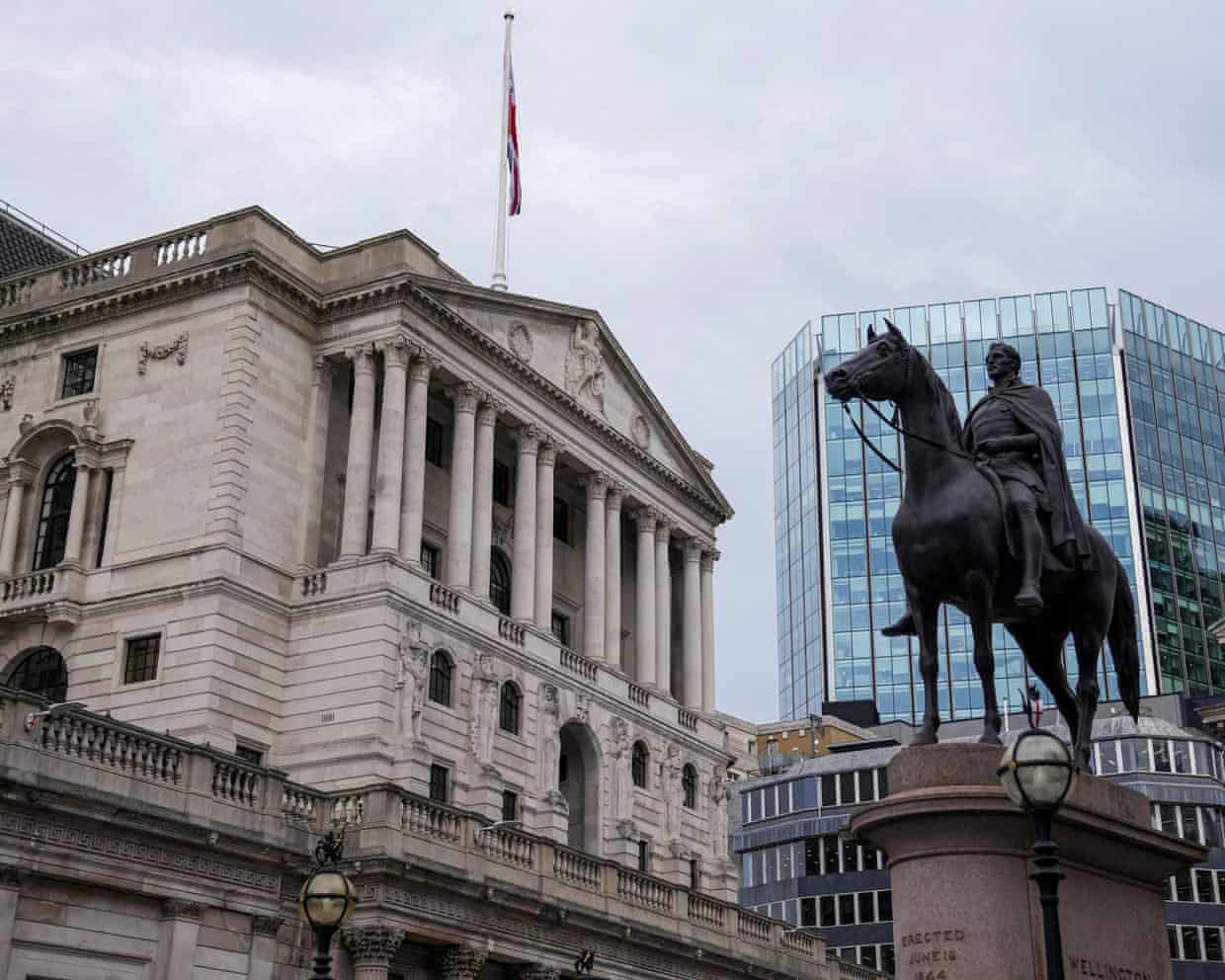
Interest rates in the UK should be cut further this year amid predictions for a sharp slowdown in inflation, a senior Bank of England policymaker has said.According to Alan Taylor, an external member of the Bank’s monetary policy committee, cooling energy prices and measures to cut living costs in Rachel Reeves’s autumn budget should help to get inflation back to its 2% target by mid 2026.As a result, the rate-setter thinks borrowing costs could be cut.He said:Interest rates should continue on a downward path, that is if my outlook continues to match up with the data, as it has done over the past year.In a speech in Singapore this morning, Taylor focused on the risks to global trade from Donald Trump’s tariff wars and mounting geopolitical tensions - but gave an unusually upbeat assessment.
Over the long arc of history, he says, the tendency is for trade barriers to be broken down.And despite current tensions, there is still capacity for global trade to accelerate; powered by AI technologies and the ascent of developing nations.This should help to keep inflation low over the long-term, including in Britain, he says.Taylor suggests the UK has seen a significant influx of cheaper goods as tariff policies lead to the diversion of trade, helping to lower inflationary pressures.This is a subject we wrote about recently here, amid a flood of Chinese imports to the UK.
As well as this, Taylor says headline UK inflation should fall sharply from the current rate of 3.2% close to 2% by mid-2026.He said:Tax and administered price hikes will fall away in April, new Budget measures will then lower inflation by an estimated 0.5 percent, food inflation has fallen materially, and energy prices have stabilised at lower levels.Taylor has been a prominent dove on the MPC as a consistent advocate of rate cuts.
He reckons all this is enough to justify further reductions in Bank rate from the current level of 3.75%.He said:I see this as sustainable, given cooling wage growth, and I now therefore expect monetary policy to normalise at neutral sooner rather than later.City investors agree - with markets currently pricing in at least one more quarter-point cut this year.Chancellor Rachel Reeves has said pubs will receive “more temporary support” , after backlash over the impact of an upcoming rise in business rates.
She told BBC Breakfast:There’s a number of things happening with business rates.There’s been a revaluation of the value of properties.This is the first one since the pandemic.So rateable values were going to go up.And there’s a gradual withdrawal of some of the temporary support that went in during Covid.
Now we’ve put in another £4,3 billion of additional support to phase that transition, but we do recognise that for some pubs there is still a big increase, and so we’re working pretty intensely at the moment,Again, I want to make sure that we get this right,”An announcement will come “in the next few days and weeks”, she added,The potential U-turn comes as the chancellor faces immense pressure from the hospitality industry over the rise in business rates.
The sector has faced several challenges in recent years, including higher employer national insurance contributions, rises in the minimum wage, energy costs and inflation.Pubs also face an inflation-linked rise in alcohol duty from next month.The Times reported yesterday that Reeves could announce a support package for pubs this week, although ministers are still consulting lobby groups and the details of the policy have likely not been finalised.But it reported that the policy, which is focused on supporting pubs, could be worth roughly £300m.However, the focus on pubs could trigger backlash from hotels, leisure and other retail firms who will still be affected by the business rate change.
Prudential has named Sir Douglas Flint, the former chair of HSBC, as its new chair, as it deepens its focus in markets in Asia and Africa.Flint will succeed Shriti Vadera, a former investment banker and Labour business minister, who has been in the role for six years.Flint, 70, spent more than two decades at HSBC as group finance director from 1995 to 2010 and then as group chair from 2010 until 2017.He will join the board of the insurer as a non-executive director and chair designate in March.He said:Being able to help shape the next stage of Prudential’s development is a great privilege and I look forward to working together with the board, Anil, and the whole team to deliver great experience to customers, and real value to shareholders and wider stakeholders.
This is such an exciting time to be joining.The business is well placed to meet the needs of our customers and to expand the provision of protection, health and savings solutions to currently under-served markets.”Prudential, which is listed in both London and Hong Kong, is one of the oldest insurers in Britain, although its presence in the UK became much smaller after it spun off M&G in 2019.Some of its biggest markets now include Hong Kong and mainland China, and it has a presence in smaller emerging markets in other parts of Asia and Africa.Flint’s appointment places him on a parallel track with his HSBC successor Mark Tucker, who was named non-executive chair at Prudential’s rival AIA last year