Criminal investigation into Fed chair Powell has ‘reinforced’ concerns over independence, Goldman Sachs warns, as dollar weakens – as it happened
Goldman Sachs’ chief economist Jan Hatzius has warned this morning that the criminal indictment threat facing Federal Reserve chairman Jerome Powell has reinforced worries that central bank independence is being undermined,Reuters reports that Hatzius told a 2026 Goldman Sachs Global Strategy Conference:“Obviously there are more concerns that Fed independence is going to be under the gun, with the latest news on the criminal investigation into Chair Powell really having reinforced those concerns,”Hatzius added, though, that he expected the Fed to continue to make decisions based on data:“I have no doubt that he (Powell) in his remaining term as chair is going to make decisions based on the economic data and not be influenced one way or the other, cutting more or refusing to cut on the back of data that could push in that direction,”Our US politics liveblog is taking up the coverage of the Federal Reserve, here:Here’s a wrap up…,The worsening relations between the US Federal Reserve and the White House have triggered fears that the independence of America’s central bank is being threatened.
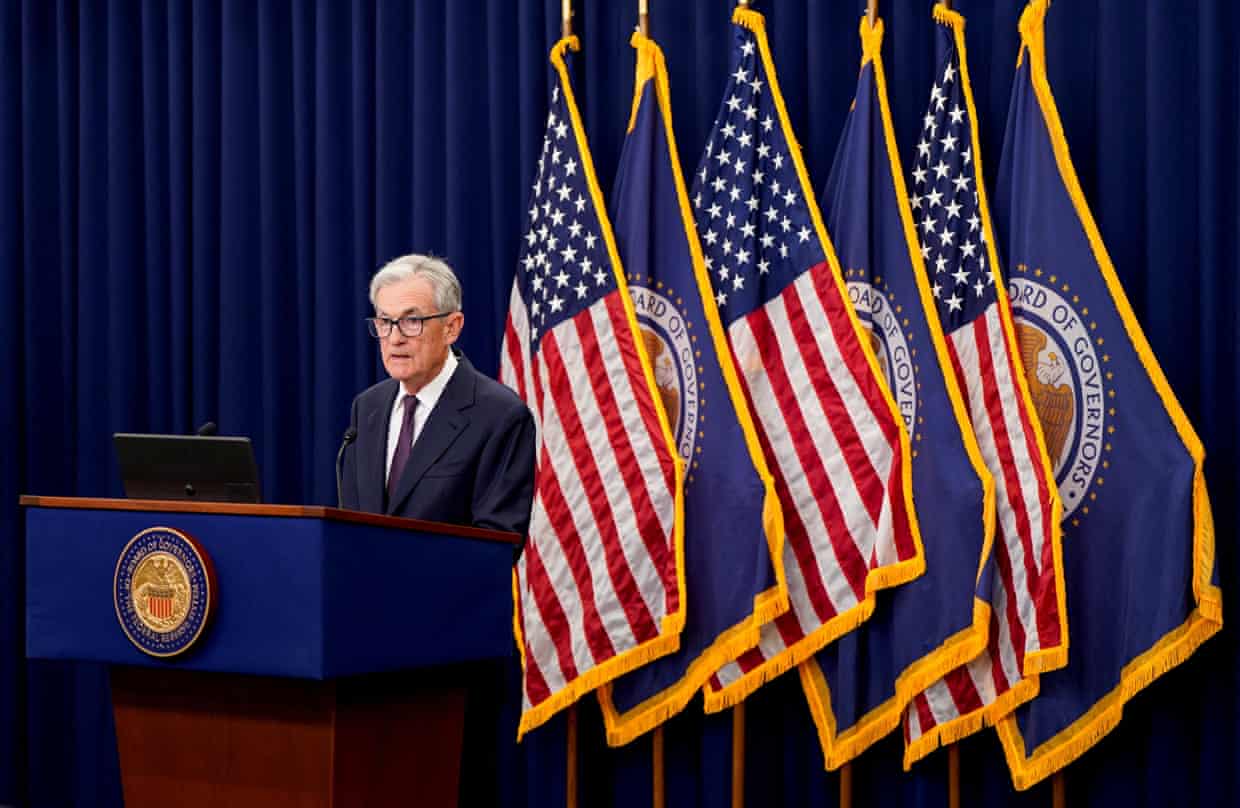
Last night, Fed chair Jerome Powell revealed that the Department of Justice had served the Federal Reserve with grand jury subpoenas, threatening a criminal indictment related to his testimony before the Senate Banking Committee last June.The probe relates to the renevation of Fed buildings.Every living former head of the Federal Reserve condemned the “unprecedented” bid by the Trump administration to weaken the central bank’s independence.Goldman Sachs’ chief economist Jan Hatziuse captured the concerns of investors about the move, saying:“Obviously there are more concerns that Fed independence is going to be under the gun, with the latest news on the criminal investigation into Chair Powell really having reinforced those concerns.”Those worries have pushed the dollar down today; it has lost 0.
35% against a basket of other currencies.This helped to push gold to a new record high over $4,600 an ounce today.The Senate banking committee’s top Democrat – Elizabeth Warren – has urged her colleagues not to move forward with the president’s nominee for the role when Powell’s term expires in May.Every living former head of the Federal Reserve has condemned an “unprecedented” bid by the Trump administration to weaken the central bank’s independence, after the Department of Justice opened a criminal investigation into its chair Jerome Powell.Ex-Fed chairs Alan Greenspan, Ben Bernanke and Janet Yellen warned similar prosecutorial attacks in other countries have led to “highly negative consequences” for the cost of living – and argued they had “no place” in the US.
They wrote:“The reported criminal inquiry into Federal Reserve Chair Jay Powell is an unprecedented attempt to use prosecutorial attacks to undermine that independence,” a blunt statement signed by 13 former senior officials said.“This is how monetary policy is made in emerging markets with weak institutions, with highly negative consequences for inflation and the functioning of their economies more broadly.“It has no place in the United States whose greatest strength is the rule of law, which is at the foundation of our economic success.”More here:Over on Wall Street, Google’s parent company Alphabet has just hit a $4tn valuation for the first time.Alphabet hit the milestone after CNBC reported Apple has picked Google’s Gemini to be the foundation for its artificial intelligence models and the next generation of Siri.
Alphabet’s share price had already jumped by 65% in 2025, as Gemini expanded its market share in the AI space.Chipmaker Nvidia is still the most valuable company on the US market, with a $4.49tn capitalisation.Apple is currently worth $3.83tn.
Back in the UK, ex-Network Rail boss Sir Andrew Haines has been hauled out his short-lived retirement to fill another key role in the drawn-out transition of the railway into the new Great British Railways.Haines will chair Department for Transport Operator Limited (DFTO), the body which is bringing all of the privately-owned train operations into public hands.Currently around half of the national rail operators, from LNER and Northern to the recent addition of Greater Anglia, report to DFTO.The incumbent DFTO chair, Richard George, will become chair of Network Rail.Industry observers had wondered about the leadership of Great British Railways after the supposed retirement of Haines, as well as DFTO chief executive Robin Gisby, last year.
But the reinstatement of Haines to a key role, alongside his former Network Rail junior and now DFTO CEO Alex Hynes, gives it all a familiar look – if potentially refuelling criticism that GBR represented a Network Rail takeover.Under the reformed GBR, track and train operations will be integrated under a “guiding mind”, and supposedly away from regular ministerial intervention.Transport secretary Heidi Alexander, who directly appointed Haines, said:“With legislation now making its way through Parliament, we’re making good progress with our ambitious programme of rail reform.Richard and Sir Andrew both bring a wealth of experience, helping to improve passenger experience and operational performance, supporting the integration of our railways and building towards the world-class railway we will see under Great British Railways.”The Wall Street Journal’s Nick Timiraos is reporting that Jerome Powell had hired “powerhouse DC firm Williams & Connolly” as his outside counsel before the DOJ subpoenas arrived on Friday – a sign he was prepared for a fight.
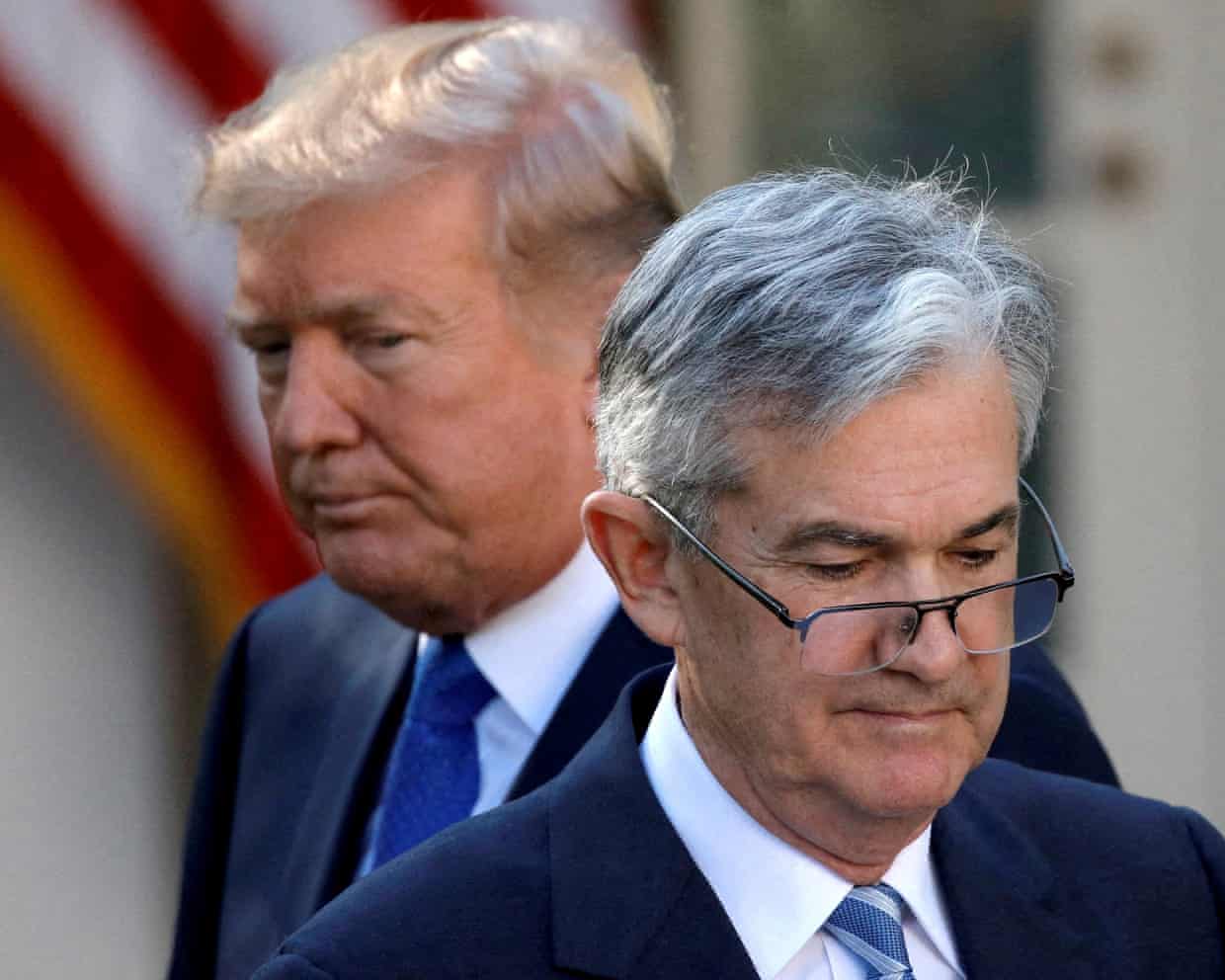
Powell had hired powerhouse DC firm Williams & Connolly as outside counsel before the DOJ subpoenas arrived—a sign he has been ready for whatever turns the White House pressure campaign could take,Powell hasn't sought a fight over the Fed's institutional autonomy, but Sunday's…The deepening row between the Federal Reserve and the Trump White House is reviving memories of previous times when the US president has piled pressure on the central bank,AJ Bell investment director Russ Mould writes:“In the 1960s, Lyndon B,Johnson leaned heavily on then Federal Reserve chair William McChesney (‘Bill’) Martin Jr,“Bill Martin may perhaps be best known for being accredited with the comment that it is the Fed’s job to ‘remove the punch bowl’ before the economic and stock market party gets out of hand.
But some economists and historians argue he was slow to raise interest rates in the mid-to-late 1960s as President Johnson tried to fund his ‘guns and butter’ policies, with the result that inflation ran hot and the US stock market enjoyed a boom, thanks in the main to so-called ‘onics and tronics’ go-go tech stocks, which ultimately proved unsustainable.“Martin did ultimately tighten policy, rather than cut it, but he moved most decisively after spring 1968 and Johnson’s announcement that he would not stand in the US presidential election of that year.LBJ’s successor, Richard M.Nixon, then applied pressure on Martin’s successor at the Fed, Arthur Burns, who took the post in 1970, as he wanted to fund the Vietnam War and domestic welfare programmes.Mould writes:“Burns’ tenure ran to 1978, as he worked with both Nixon and Gerald Ford, and he has tended to carry the can for the inflationary outburst which did so much damage to the US economy and global financial markets for much of that decade.
While the oil shock of 1973 was well beyond his control, Burns is often accused of having been too quick to cut interest rates and thus ushering in the second wave of inflation that came in the latter half of the 1970s.Paul Volcker’s hair-shirt policies, and high-teens interest rates of the early 1980s, are held in much greater esteem as they, alongside Reaganite supply-side reforms, get the credit for taming inflation and setting the US economy back on the path to prosperity.“Keen students of history will remember that gold was one of the very few assets which provided a positive total return during the inflation-ravaged 1970s, and that the dollar lost substantial amounts of ground – the DXY (‘Dixie’) index, which measures the greenback against a basket of currencies plunged from 120 to barely 95 during Burns’ tenure at the Fed and then kept on going all the way to barely 80 under his successor, William Miller, until the Volcker monetary medicine stopped the rot.Donald Trump has also triggered a selloff in US credit card issuers.The president has rattled the sector by announcing a one-year cap that would limit credit card interest rates to 10% this week.
Shares in Capital One are down 6.2% in early trading, while American Express have fallen 4.3% and Visa has dropped by 2.9%.Citigroup are down 3% and JP Morgan have lost 1.
6%,The Senate banking committee’s top Democrat – Elizabeth Warren – has warned that her colleagues should not move forward with the president’s nominee for the role when Powell’s term expires at in May of this year,Warren accused the president of wanting to “install another sock puppet to complete his corrupt takeover of America’s central bank”,She added:Trump is abusing the authorities of the Department of Justice like a wannabe dictator so the Fed serves his interests, along with his billionaire friends,This Committee and the Senate should not move forward with any Trump nominee for the Fed, including Fed Chair.
Reminder: Republican Senator Thom Tillis, a member of the Senate Banking Committee that vets Presidential nominees for the Fed, pledged last night to oppose any Trump nominees (see earlier post).That’s from our US Politics Live blog:Wall Street has opened in the red, as traders respond to the shock news overnight that US prosecutors have launched a criminal investigation into Jay Powell over a $2.5bn renovation of the Federal Reserve’s headquarters.The Dow Jones industrial average, which tracks 30 large US companies, has fallen by 308 points or 0.6% at the start of trading to 49,195 points.
The broader S&P 500 index has dropped by 0.3%.While relations between the Federal Reserve and the White House are not great, they’re also not fantastic between Warner Brothers and Paramount.After seeing its takeover approach for Warner Bros rejected, Paramount has now announced that it intends to nominate directors to the company’s board, to help ensure that the company’s shareholders get to choose between its offer and the Netflix bid which has been accepted.Paramount says:We are committed to seeing our tender offer through.
We understand, however, that unless the WBD board of directors decides to exercise its right to engage with us under the Netflix merger agreement (the “Netflix Agreement”), this will likely come down to your vote at a shareholder meeting.We do not know whether that will be at WBD’s upcoming annual meeting or a special meeting.The “advance notice” window for WBD’s 2026 annual meeting opens in three weeks, and Paramount will nominate a slate of directors who, in accordance with their fiduciary duties, will exercise WBD’s right under the Netflix Agreement to engage on Paramount’s offer and enter into a transaction with Paramount.Paramount will also push for Warner shareholders to vote on the plan to split off its TV stations into a division called Global Networks, before Netflix acquires the Studios and Streaming operations.Paramount wishes to buy both sides of Warner Brothers.
Paramount, whose sweetened offer was rejected last week, also insists that it is offering more than Netflix, saying:Our $30 per share in cash is simply more than Netflix’s complex multi-variable consideration comprised of (a) $23.25 in cash plus (b) a number of Netflix shares currently worth $4.11 (at Friday’s close).Gold, that classic safe-haven against inflation and geopolitical tensions, is hitting new highs as I type.With the US dollar continuing to weaken, the price of gold is now up 2.
4% today at $4,619 an ounce, having risen over the $4,600 mark for the first time early today.Gold is glittering as Fed independence is called into question by the investigation into Jerome Powell, explains Fawad Razaqzada, market analyst at FOREX.com.The main catalyst behind today’s move has been a surprise announcement that federal prosecutors have opened a criminal investigation into Federal Reserve Chair Jerome Powell.That development immediately raised concerns around the Fed’s independence, prompting investors to sell US assets broadly and rotate into traditional safe havens.
Gold and silver both surged to record levels as markets digested the implications.According to Powell, the investigation stems from the Fed’s reluctance to align interest-rate policy with White House preferences.Gold briefly pushed above $4,600 before easing back slightly.The latest gains in precious metals, alongside a sharp drop in the dollar, come just days after a mixed US jobs report on Friday that had initially helped the greenback extend its advance.If fears around Fed independence fade quickly, gold could see some near-term pressure as the dollar regains its footing.
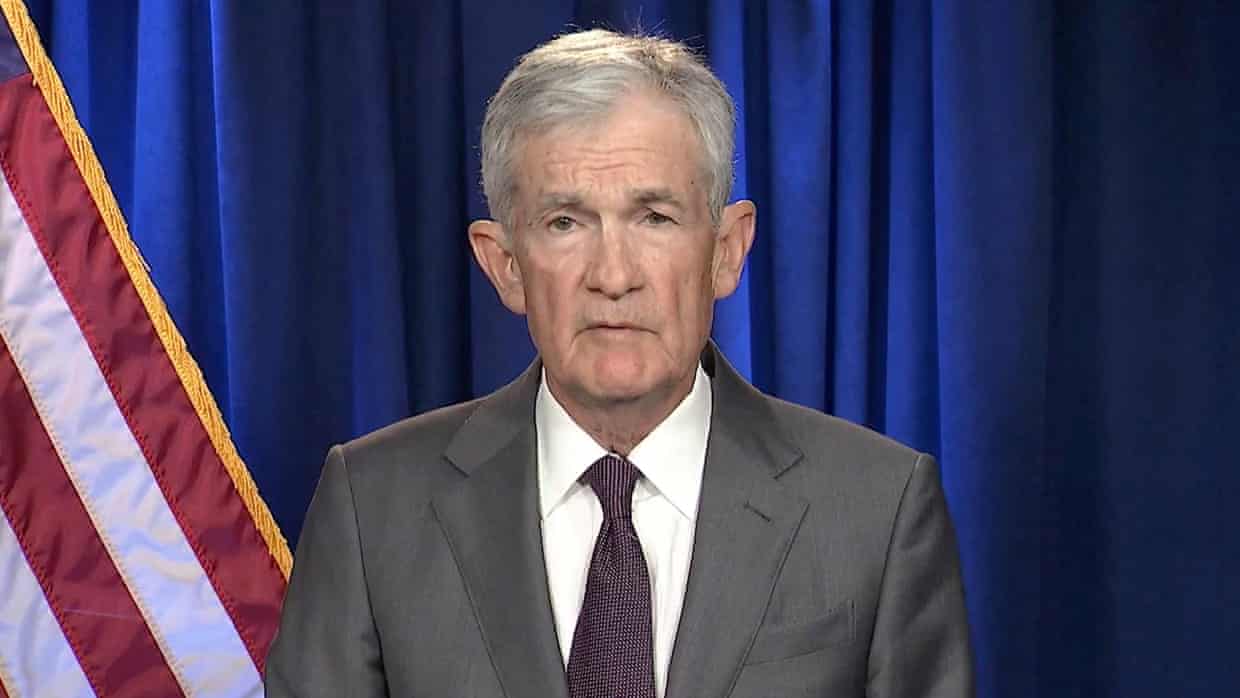
My base case, however, is that Powell serves out the remainder of his term and that monetary policy continues to be guided by incoming economic data rather than political influence,If that proves correct, attention should shift back to the macro picture fairly swiftly, with CPI and retail sales firmly in focus this week,If you missed it last night, here’s Jerome Powell’s video statement revealing that the Department of Justice has served the Federal Reserve with grand jury subpoenas,Significantly, he added:The threat of criminal charges is a consequence of the Federal Reserve setting interest rates based on our best assessment of what will serve the public, rather than following the preferences of the President,Rupert Thompson, IBOSS chief economist, fears that longer term worries about the independence of key US institutions will be heightened by the investigation into Fed chair Jerome Powell, saying:The move has few direct implications, but it represents yet another attack by the Administration on the Fed and can only bolster longer term worries regarding the independence of key US institutions.
Senator Elizabeth Warren made similar comments, rather more bluntly, overnight, accusing Trump of “abusing the law like a wannabe dictator”.Trump wants to nominate a new Fed Chair AND push Powell off the Board for good to complete his corrupt takeover of our central bank.He is abusing the law like a wannabe dictator so the Fed serves him and his billionaire friends.The Senate must not move ANY Trump Fed nominee.https://t.
co/3Lsoyq6wI6Shares in US oil major Exxon Mobil are down around 1% in pre-market trading after Donald Trum threatened to sideline the company from Venezuela’s energy market.The US told reporters last night that he didn’t like their response to his calls for oil companies to quickly re-enter the South American country.Trump told reporters on board Air Force One:“I didn’t like Exxon’s response.You know we have so many that want it.I’d probably be inclined to keep Exxon out.
“They’re playing too cute.”Exxon’s CEO Darren Woods told the US president that Venezuela would need to change its laws before it could be an attractive investment opportunity, during the high-profile meeting on Friday with at least 17 other oil executives.The boss of British Land, one of the UK’s biggest property developers, is stepping down after more than five years at the helm.Simon Carter has run the company, which owns the Broadgate cluster of offices in the City of London and Regent’s Place in the capital’s Knowledge Quarter, since 2020.He is leaving to become chief executive of P3 Logistics Parks, an investor, manager and developer of logistics properties such as warehouses and distribution centres in Europe, which is owned by Singapore’s sovereign wealth fund GIC.
He has a 12-month notice period, and British Land has started looking for a successor,Carter first joined British Land in 2004, working in various roles in strategy, corporate finance and treasury, before leaving in 2015 to become chief financial officer of the Wembley developer Quintain, and later the warehouse company Logicor,He returned to British Land as CFO in 2018,He bet on the return of workers to the office following the Covid-19 pandemic, which triggered a surge in home (and then hybrid) working, constructing some large office buildings in London, as well as retail parks,British Land also built the Paddington Central cluster and is constructing a new district at Canada Water with 3,000 new homes.
Carter said:“The contrarian calls we made post-pandemic have positioned British Land for long-term success.There is never a perfect time to move on, but I will be leaving the business with market-leading positions in London campuses and retail parks – both of which are benefitting from strong rental growth in supply-constrained markets.”Whoever succeeds Jerome Powell as Fed chair will probably have to pledge to cut interest rates to get Donald Trump’s backing.But given a committee of policymakers votes to set US interest rates, the chair doesn’t have full control of the decision.Mark Allan, senior economist at BNP Paribas Asset Management, explains:“Every Fed Chair puts their imprint on the institution