Slashing jury trials could clear courts backlog within a decade, says Lammy

The backlog of nearly 80,000 trials clogging up the court system could be cleared within a decade if parliament agrees to slash the number of jury trials, David Lammy, the lord chancellor, has claimed.In an interview with the Guardian, the deputy prime minister, who is facing a backbench rebellion over the proposals, has urged Labour MPs and the public to back a version of Canada’s judge-only trials in thousands of criminal cases in England and Wales.Dozens of Labour MPs have expressed concerns about the proposals, which they say could make it harder for defendants from working-class and minority ethnic backgrounds to challenge a prosecution.One rebel Labour MP, the former shadow attorney general Karl Turner, has said he could stand down and trigger a byelection unless the government scraps plans to restrict jury trials.Speaking from Toronto, where he witnessed criminal cases in which the defendants faced a possible sentence of up to three years after their cases were heard by a single judge, Lammy said: “It has been happening in Canada for decades.
It is very normal.In this jurisdiction, often defendants are preferring to be in front of a single judge rather than a jury.”Lammy announced last month that defendants who were likely to receive a sentence of three years or less would no longer get a jury trial under new proposals.Defendants would no longer be able to choose a jury trial and the ability to appeal to a crown court against a magistrates court verdict would also be limited.Magistrates’ powers would be extended from dealing with maximum sentences of one year to at least 18 months and a judge-only “swift” court would be established to hear cases without a jury.
Ministers have argued the move is necessary to halve the number of jury trials from 15,000 a year and to tackle the backlog of court cases that built up over the Covid pandemic,Ontario’s lowest level court – the rough equivalent of the magistrate court - is led by a single judge and handles most lower-level offences,The province’s superior court of justice – equivalent to a crown court – handles murder, manslaughter and offences against the state,Defendants have a right to a jury trial only if they are on trial for a crime that could receive a maximum penalty of five years or more,Lammy said Canadian-style reforms should be considered in England and Wales because the backlog of cases was due to continue to rise.
“The arrest rate [for police officers] has gone up by 10%,There are more cases coming into the criminal justice system because of an expansion in technology, forensic science, and particularly CCTV evidence,The increasing complexity of cases means the trials are also going on for longer … And the backlog, if we did nothing about it, will go beyond 100,000,” he said,Asked when he expected the backlog to be cleared if his reforms were passed, Lammy said: “I’d like to see the backlog coming down by 2029 and the next general election,”Asked if he would expect the backlog to be cleared by the mid 2030s, Lammy answered “yes”.
MPs and lawyers have urged the government to introduce a “sunset clause” on the reforms so that the changes could be reversed once the backlog has been reduced.Lammy declined on two occasions to rule out inserting such a clause.“I’m keen to listen and speak to parliamentarians.I’ve been doing that, and so has [the justice minister] Sarah Sackman,” Lammy said.“But I do think reform is necessary if we want to save the criminal justice system and make it fit for purpose.
”Responding to Lammy’s comments, Richard Atkinson, the immediate past president of the Law Society, said focusing on introducing judge-led courts ignores other practical solutions to the backlog such as repairing existing but unused courts, investing in legal aid and earlier mediation.“In Canada the situation is very different.They have time limits on how long a case can wait to come to trial, and have decriminalised a number of offences as well as significantly increasing financial resources.To jump to a single-judge court is to go too far from our established criminal justice system,” he said.Last week, Turner, the MP for Kingston upon Hull East, broke the party whip for the first time since his election in 2010 to vote against the proposals.
He was the only Labour MP to oppose the government and back a Conservative motion.Turner said Lammy’s claims that the proposals would cut the backlog were “dishonest”.“David Lammy’s insistence that the proposals to curtail jury trials will cut the backlog and enhance justice is dishonest because the bill is not retrospective, it’s going to take two years to get it on to the statute books and it is going to take years to recruit and train judges,” said Turner.“He has been persuaded to save some money for the Treasury, and has swallowed an old idea which has been peddled for years by civil servants.But any savings will be outweighed by the costs of finding judges and setting up these new courts.
”

People put off giving CPR by unrealistic TV depictions, researchers say
Cardiopulmonary resuscitation (CPR) is a dramatic intervention, but researchers say TV portrayals are often misleading – potentially influencing whether viewers feel able to carry it out themselves.According to the British Heart Foundation (BHF) there are more than 30,000 out-of-hospital cardiac arrests every year in the UK.But while CPR by bystanders can help save lives, the American Heart Association (AHA) notes the percentage of people in need who receive it is only about 35-45% globally.The AHA has since 2008 attempted to increase such rates by stressing that people who are not trained, and hence might not feel comfortable giving breaths or searching for a pulse, should only perform chest compressions on adults – a position shared by the NHS.Now researchers say TV shows often depict lay people carrying out additional steps, potentially perpetuating barriers to viewers carrying out the life-saving intervention

Guardian Hope appeal raises £950,000 for charities tackling racism and division
Generous Guardian readers have so far raised more than £950,000 as our Hope appeal supporting charities tackling social division, racism and hatred enters its final few days.The 2025 appeal, which closes at midnight on Wednesday evening, is aiming to raise £1m for grassroots voluntary organisations campaigning against extremism, anti-migrant rhetoric, and the re-emergence of “1970s-style racism”.Our five partner charities are: Citizens UK, the Linking Network, Locality, Hope Unlimited Charitable Trust and Who is Your Neighbour?Thousands of Guardian readers have so far given to the appeal, with many telling us via the email button on the donations page why they were delighted to donate.One said: “I’m pretty broke, and my charitable giving is mostly reserved for those suffering in war zones. But brokeness is relative, and I was inspired to make a small donation by the Saturday article by Zoe Williams
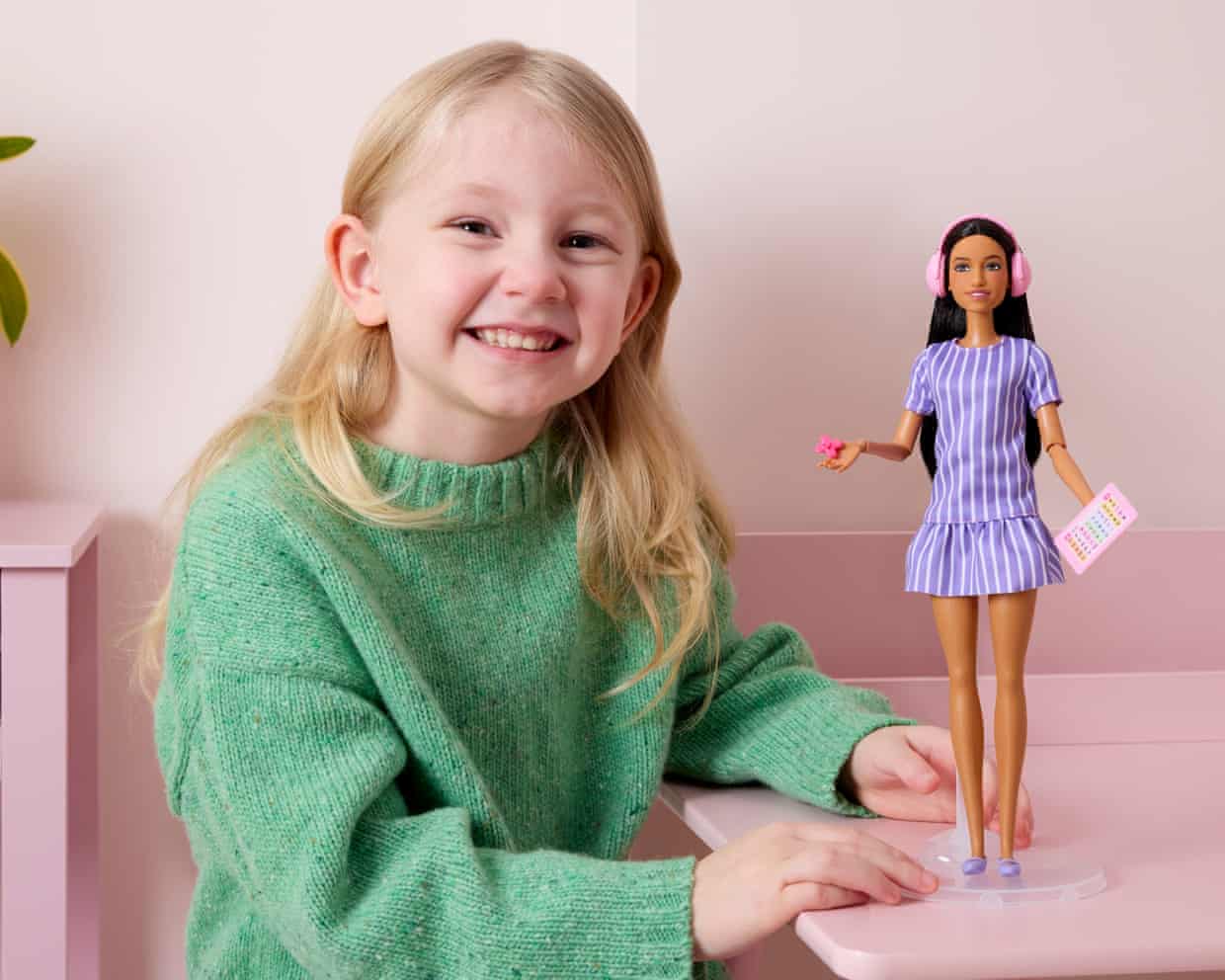
Mattel launches its first autistic Barbie
With an animated Barbie film in development, following the success of Greta Gerwig’s 2023 blockbuster movie, Mattel Studios will certainly have a diverse range of characters to bring to life.On Monday, Mattel launches its first autistic Barbie. Coming barely six months after its first doll with type 1 diabetes, this newest addition to Barbie’s Fashionistas range is designed so that more children “see themselves in Barbie” and to encourage all children to play with dolls that reflect the world around them.Autism is a form of neurodivergence that influences how people experience and interact with society. While characteristics of autism vary according to the individual, more than one child in a hundred is believed to be autistic, according to the World Health Organization

Finding a home is the care leaver’s greatest problem | Letter
At Become, the national charity for children in care and young care leavers, we agree with your editorial that the government’s recent offer of free eye tests and prescriptions for care leavers is a welcome step in strengthening support for those leaving care (The Guardian view on care leavers: responsibility for looked-after children does not end at 18, 2 January). However, this measure does little to address the far more urgent crisis facing care leavers: a third will experience homelessness within two years of leaving care.Every year, thousands of young people are forced out of care before they are ready, often on their 18th birthday or even younger, with vital support vanishing overnight. Many are pushed into unsuitable housing, such as B&Bs and hostels where they don’t feel safe. They then face the challenge of managing household bills while trying to continue education or find work

‘There’s a dark side to floristry’: are pesticides making workers seriously ill – or worse?
Unlike in food, there is no upper limit on the amount of pesticide residue levels in flowers. But after French officials linked the death of a florist’s child to exposure in pregnancy, many in the industry are now raising the alarmOn a cold morning in December 2024, florist Madeline King was on a buying trip to her local wholesaler when a wave of dizziness nearly knocked her over. As rows of roses seemed to rush past her, she tried to focus. She quickly picked the blooms she needed and left.I’m not doing this any more, she thought

Excessive screen time limits vocabulary of toddlers, experts warn
Excessive screen time is damaging toddlers’ ability to speak, the UK government has warned as it prepares to issue advice to parents for the first time on how to manage screen use in under-fives.Research has found that children aged two with the highest screen use – about five hours a day – could say significantly fewer words than those with screen use of about 44 minutes a day.Screen use is now near-universal in early childhood, with 98% of two-year-olds watching screens daily, the research also found.The education secretary, Bridget Phillipson, said parents and teachers had warned that “too much passive screen time can start to crowd out the talking, play and reading that are so important for children’s language and development in the early years”.“Screens are part of family life now

Ex-Fed chairs condemn Trump’s bid to weaken central bank’s independence

Trump’s attempts to influence Fed risk 1970s-style inflation and global backlash’

Malaysia blocks Elon Musk’s Grok AI over fake, sexualised images

UK threatens action against X over sexualised AI images of women and children

Australian Open is drawing record crowds before the tournament has even begun

‘It’s embarrassing’: riders say time is up for fossil fuel sponsorship of heat-affected Tour Down Under