Unemployment rises in US and UK, adding to pressure to cut interest rates – as it happened
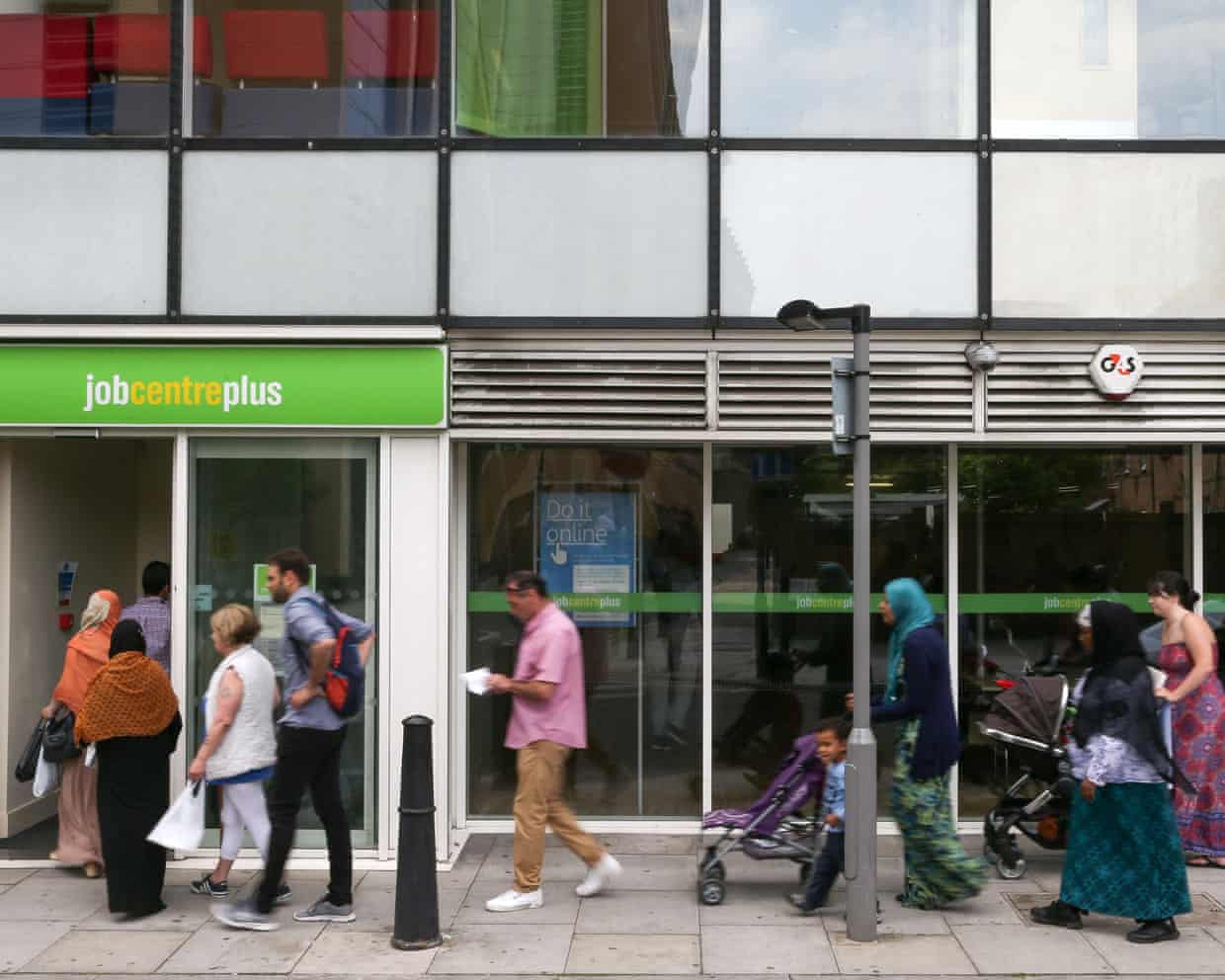
Time to wrap up…,on a day in which unemployment has risen on both sides of the Atlantic…,The US labor market grew by more than expected last month, recovering some of the damage inflicted by the federal government shutdown, according to official data,An estimated 105,000 jobs were lost in October, and 64,000 were added in November, a highly-anticipated report showed on Tuesday,Jobs growth was higher in November than anticipated by many economists, with a consensus forecast of some 40,000 jobs added.
But the headline unemployment rate continued to climb – and hit 4.6%, a four-year high, last month – amid apprehension around the strength of the US economy.Several economists forecast that the weakness of the jobs market could prompt the Federal Reserve to cut interest rates more rapidly than it expects next year.The rate of UK unemployment rose to a four-year high of 5.1% in the three months to October, as the labour market showed signs of further weakening before last month’s budget.
The Office for National Statistics said the jobless rate was the highest since January 2021 – but with the pandemic era stripped out, it was the highest since early 2016.Analysts said the rise in the jobless rate made it almost certain that the Bank of England would cut interest rates when policymakers meet on Thursday.The central bank has said it wanted wages growth to fall further before reducing the cost of borrowing again this year.The latest figures showed wage growth excluding bonuses fell to 4.6% in October, from 4.
7% the previous month, the lowest since early 2022.Young people in the UK have been hit particularly hard: the number of 18- to 24-year-olds out of work, at 546,000, is the highest since 2015 and up 85,000 on the quarter.“Young people again find themselves at the heart of this downturn, just as they were in the wake of the financial crisis and Covid.Policymakers and employers need to redouble efforts to support them,” said Nye Cominetti, the principal economist at the Resolution Foundation thinktank.The EU has confirmed it will water down its landmark 2035 ban on the sale of new petrol or diesel cars, yielding to heavy pressure from the car industry and leaders from several EU member states including Germany and Italy.
Under current legislation manufacturers were obliged to ensure that 100% of production of cars and vans had zero emissions up to 2035.The European Commission confirmed on Tuesday that this will now be reduced to 90%, enabling the continued manufacture of a portion of plug-in hybrid electric cars, or even combustion engines beyond 2035.However, in a carrot-and-stick approach, the remaining 10% of assembly line output that is not carbon neutral will need to be compensated by other green measures on the factory floor, including the use of green steel made in Europe or use of biofuels in non-electric vehicles.Time to wrap up….on a day in which unemployment has risen on both sides of the Atlantic….
The US labor market grew by more than expected last month, recovering some of the damage inflicted by the federal government shutdown, according to official data.An estimated 105,000 jobs were lost in October, and 64,000 were added in November, a highly-anticipated report showed on Tuesday.Jobs growth was higher in November than anticipated by many economists, with a consensus forecast of some 40,000 jobs added.But the headline unemployment rate continued to climb – and hit 4.6%, a four-year high, last month – amid apprehension around the strength of the US economy.
Several economists forecast that the weakness of the jobs market could prompt the Federal Reserve to cut interest rates more rapidly than it expects next year.The rate of UK unemployment rose to a four-year high of 5.1% in the three months to October, as the labour market showed signs of further weakening before last month’s budget.The Office for National Statistics said the jobless rate was the highest since January 2021 – but with the pandemic era stripped out, it was the highest since early 2016.Analysts said the rise in the jobless rate made it almost certain that the Bank of England would cut interest rates when policymakers meet on Thursday.
The central bank has said it wanted wages growth to fall further before reducing the cost of borrowing again this year.The latest figures showed wage growth excluding bonuses fell to 4.6% in October, from 4.7% the previous month, the lowest since early 2022.Young people in the UK have been hit particularly hard: the number of 18- to 24-year-olds out of work, at 546,000, is the highest since 2015 and up 85,000 on the quarter.
“Young people again find themselves at the heart of this downturn, just as they were in the wake of the financial crisis and Covid.Policymakers and employers need to redouble efforts to support them,” said Nye Cominetti, the principal economist at the Resolution Foundation thinktank.Stocks have opened lower on Wall Street, where the Dow Jones industrial average is down 116 points or 0.24% at 48,300.James Knightley, chief international economist at ING, says the continuing US job slowdown is keeping pressure on the Federal Reserve to make more interest rates cuts.
Knightley says:The point that we have repeatedly made is that over the past three years more than 90% of all the jobs the US have created have come in just three sectors – government, private education & healthcare and leisure & hospitality.Government is now becoming a drag while all other private sectors continue to struggle with net job losses in five of the past seven months in aggregate.The signs of weakness in the US jobs market could encourage the Federal Reserve to cut interest rates more often in 2026 than expected.Eaarlier this month the Fed released a dot plot of individual forecasts, showing the median prediction of its policymakers is just one further rate cut in 2026.Seema Shah, chief global strategist at Principal Asset Management, suggests that the Fed may make more cuts than that!“Powell is likely to view today’s jobs data with a fair degree of scepticism.
Not only are there likely to be some data distortions, but tighter immigration policies mean the headline November payroll figure should not be taken at face value – the labor market is not as weak as those numbers might initially suggest.That said, the larger-than-expected rise in the unemployment rate will still trigger some creeping concern within the Fed.The labour market is cooling – probably not sharply, but enough to warrant some additional monetary easing and, at the very least, a move towards neutral policy rates.The Fed may prefer to see further evidence of economic weakness before its next cut, but based on today’s data, more rate reductions are likely next year than the single cut currently pencilled into the dot plot.”Lindsay James, investment strategist at Quilter, warns that today’s US jobs report is distorted by some seasonal factors:“This week marks the beginning of a pre-Christmas US economic ‘data dump’ that is the hangover from the earlier government shutdown.
Today’s jobs data comes at a crucial juncture after investors and rate setters were denied the ability to take the temperature of the US economy as they digested tariffs, sweeping changes to immigration policy and emerging signs of a slowdown in the labour market,Today we get not one but two months of labour market data, but even this will continue to raise questions with both months impacted by various distortions,October data reflects the first month of the US government’s fiscal year, with a sharp decline in federal employment (162,000) coinciding with workers officially leaving government employment under a deferred-resignation arrangement made earlier in the year,This put a huge dent in the overall monthly figures, which saw payroll employment down by 105,000, significantly worse than expected,Whilst jobs did bounce back more than expected in November – up 64,000 compared to forecasts of 50,000 – these numbers remain very subdued compared to the levels typically seen in the post-pandemic years.
“However, it is not clear that this is reflective of a cyclical slowdown.As well as being impacted by the distortions of the shutdown and immigration policy, the US labour market is returning to a more normal footing after a post-pandemic boom in job openings that saw the ratio of openings to unemployed workers rise from around 1.2 to 2.It has now returned to a relatively healthy level of one opening per unemployed worker, a level which is still much higher than the decade prior to the pandemic and one which means we are likely to see wage inflation continuing to ease, reducing pressure on wider inflation metrics but possibly introducing an added headwind to growth.Newsflash: The US economy lost 105,000 jobs in October, today’s non-farm payroll report shows.
That’s a sizeable loss of employment, partly caused by jobs being shed across the federal government, helping to push the jobless rate up to 4.6% in November.Daniela Hathorn, senior market analyst at capital.com, says:Today’s long-awaited Nonfarm Payrolls report finally delivered data covering both October and November, following delays from the government shutdown.The figures confirm that job growth remains modest and the labour market continues to slow, with 64,000 payrolls added in November after a dip in October, a clear deceleration from prior months.
The unemployment rate rose slightly higher than expected at 4.6%, further softening from earlier in the year, and wage growth continues to ease modestly compared with previous months.All told, this is consistent with a labour market that is losing steam rather than overheating.Many of the new jobs added across America were in healthcare and construction.The Bureau for Labor Statistics reports thatIn November, health care added 46,000 jobs with job gains in ambulatory health care services (+24,000), hospitals (+11,000), and nursing and residential care facilities (+11,000).
Construction employment grew by 28,000 in November, as nonresidential specialty trade contractors added 19,000 jobs.But on the downside…employment edged down in transportation and warehousing (-18,000), reflecting a job loss in couriers and messengers (-18,000).Federal government employment continued to decrease in November (-6,000).Today’s US jobs report also shows that more jobs were lost across the US in August than previously realised.It says:The change in total nonfarm payroll employment for August was revised down by 22,000, from -4,000 to -26,000, and the change for September was revised down by 11,000, from +119,000 to +108,000.
With these revisions, employment in August and September combined is 33,000 lower than previously reported.Due to the recent federal government shutdown, this is the first publication of October data and thus there are no revisions for October this month.Newsflash: The US economy added 64,000 jobs in November, according to the latest jobs report, just released.November’s non-farm payroll report, which has been delayed by the recent US government shutdown, shows that the US unemployment rate rose to 4.6% from 4.
4% in September.Employment rose in health care and construction in November, while federal government continued to lose jobs.Intriguingly, the jobs report also shows there was a spike in layoffs among government staff in October (probably the effect of the Doge programme).The Bureau of Labor Statistics reports:Federal government employment continued to decrease in November (-6,000).This follows a sharp decline of 162,000 in October, as some federal employees who accepted a deferred resignation offer came off federal payrolls.
Federal government employment is down by 271,000 since reaching a peak in January.The pound has touched a two-month high against the US dollar today, as the greenback weakens generally.Sterling traded as high as $1.3439, its highest level since 20 October.The dollar has also slipped to a two-month low against the euro, as traders position themselves ahead of the US jobs report in 12 minutes time….

UK politics: Employment rights bill set to become law after Lords backing – as it happened
The House of Lords has passed the employment rights bill. Last week Tory and cross-bench peers defeated the government over one aspect of the bill – a last-minute addition lifting the cap on compensation paid to people who win a case for unfair dismissal – but that defeat was overturned on Monday and this afternoon peers debated the bill again. This time the Tories and cross-benchers dropped their opposition to the measure, and the bill as agreed by the Commons was approved without a division.That means it will now get royal assent very shortly.Lord Sharpe of Epsom, the Conservative spokesperson, told peers that a letter from business groups released by the government yesterday, in which the business groups urged peers to pass the bill, showed that ministers had “misrepresented” the compromise deal unveiled last month
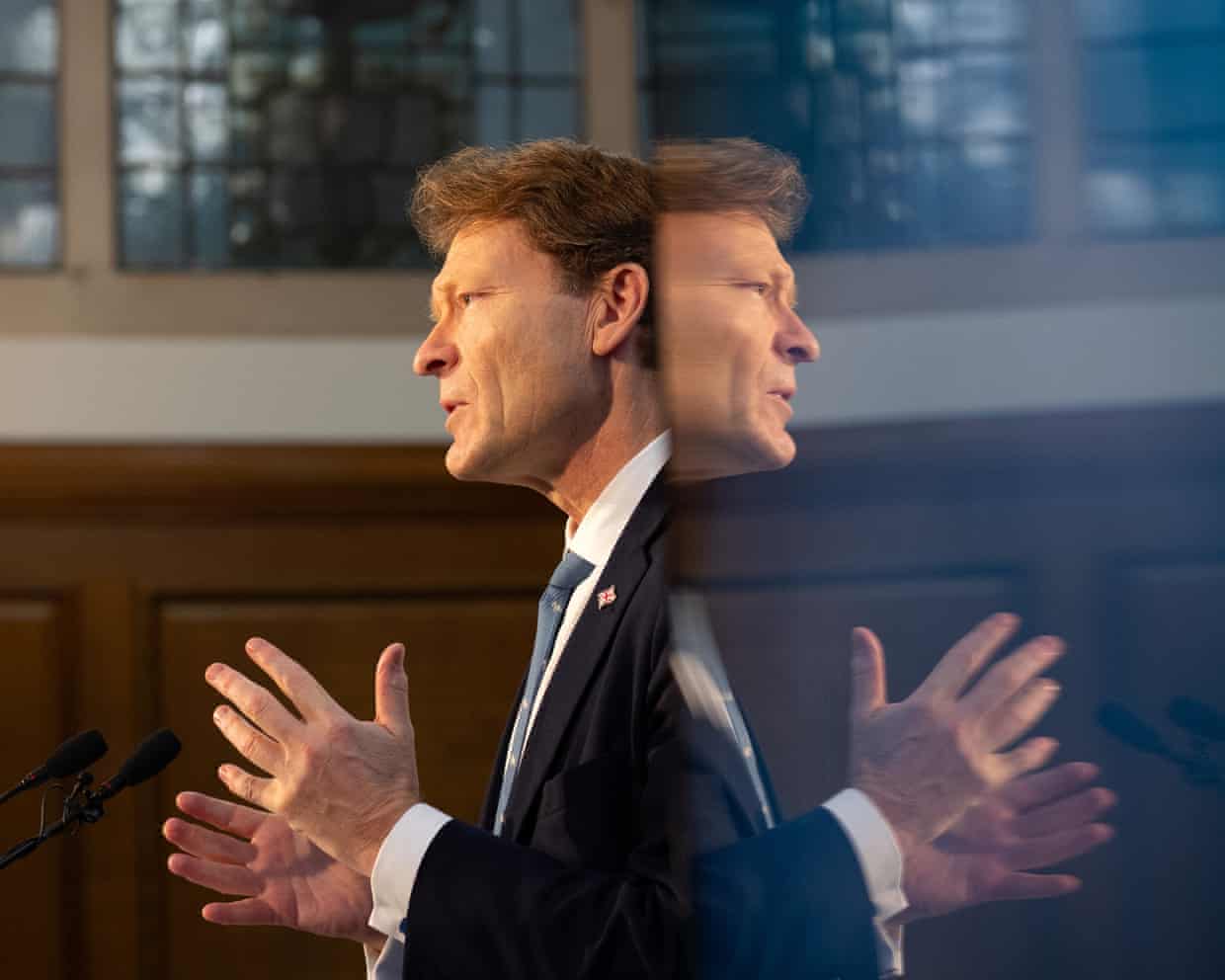
Penitent Tice tussles with The Unbearable Lightness of His Being | John Crace
Call it a Christmas miracle. For this was the day when Richard Tice sent in his application to become a fully paid-up member of Woke. The day the Reform deputy leader tried to break free from his role as the perennial sidekick. An insignificant blot on the Nigel Farage landscape. When he tried to show he was able to think his own thoughts

How far must UK go to fend off threat of foreign interference in its elections?
Russia has been attempting to meddle with western democracy for years, but successive governments led by Boris Johnson and others have insisted that the UK’s electoral system can withstand its influence.That argument was recently blown apart by the conviction of former Reform politician Nathan Gill, jailed for 10 years for accepting bribes to advance Russian arguments.And now Steve Reed, the cabinet minister responsible for elections, has admitted there are worries that the UK’s “firewall” against foreign interference may not be strong enough as he ordered an independent review.The decision is clearly partly motivated by the chance to score political points against Reform UK over its links to the Russian bribe case. And yet there is no doubting the reality of the threat, even if it has until recently been ignored

Richard Tice refuses to condemn Reform mayoral candidate’s comments about David Lammy
Reform UK’s deputy leader has refused to condemn a mayoral candidate for the party who said David Lammy should “go home to the Caribbean”.Richard Tice said it was the role of the party to “challenge” the justice secretary. Answering questions after a press conference, he also refused to say whether he still thought the 25-plus former school contemporaries of Nigel Farage who have accused the Reform leader of racism and other offensive behaviour were making up their claims, calling it “old news”.Reform has repeatedly declined to condemn comments on X by Chris Parry, a retired naval rear admiral who has been picked to contest the now-postponed Hampshire and the Solent mayoral election for the party.In a post in February, referring to a news story about the UK government supposedly considering talks about reparations for slavery – which ministers have in fact rejected – Parry is said to have written: “Lammy must go home to the Caribbean where his loyalty lies

Starmer’s communications chief to address cabinet on media strategy overhaul
Keir Starmer’s Whitehall communications chief will address the cabinet on overhauling the government’s media strategy on Tuesday as ministers increasingly try to combat far-right rhetoric online.David Dinsmore, a former editor of the Sun who was appointed permanent secretary for government communications in November, will speak to ministers about modernising the way they reach voters.The government is concerned about the proliferation of false and inflammatory far-right content on social media and is stepping up efforts to communicate on those platforms.A New Media Unit (NMU) was set up inside the Cabinet Office by Starmer’s aides soon after Labour came to power to coordinate those efforts.The work is led on the ministerial side by Darren Jones, who was tasked by Starmer on his appointment as chief secretary to the prime minister in September to develop and modernise the government’s communications
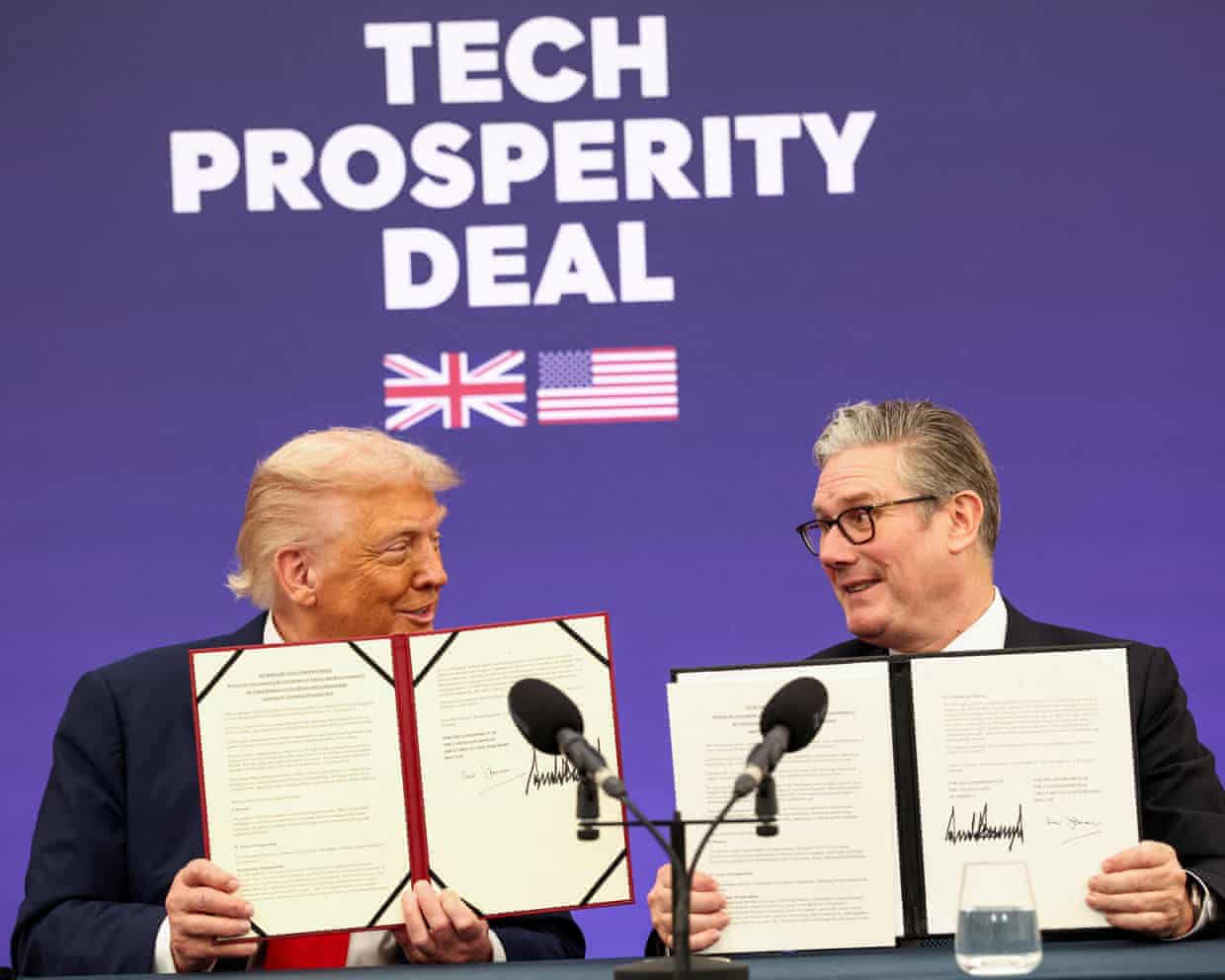
US puts £31bn tech ‘prosperity deal’ with Britain on ice
The US has paused its promised multi-billion-pound investment into British tech over trade disagreements, marking a serious setback in US-UK relations.The £31bn “tech prosperity deal”, hailed by Keir Starmer as “a generational stepchange in our relationship with the US” when it was announced during Donald Trump’s state visit, has been put on ice by Washington.As part of the deal, US tech companies pledged to spend billions in the UK, including a £22bn investment from Microsoft and £5bn from Google. But Washington has paused the implementation of the agreement, citing a lack of progress from the UK in lowering trade barriers in other areas.British officials sought to downplay the development, which was first reported by the New York Times

Christmas Test a window to the world as Australia reels in wake of Bondi atrocity | Barney Ronay

Harlequins coach refuses to rule out move for Northampton back George Furbank

The Breakdown | Storming ahead means increasingly little in era of rugby’s comeback kings

Joshua v Paul makes Joe Louis’ ‘Bum of the Month’ look like the Rumble in the Jungle | Sean Ingle

At Square One: inside the big barn that offers English cricket a brighter future

Pat Cummins says Bondi terror attack ‘hit home pretty hard’ as tributes flow before third Ashes Test