UK construction firms face some of sharpest cost rises in nearly 30 years

Construction companies in the UK are experiencing some of the sharpest cost rises in nearly 30 years as the war in Iran drives up prices for fuel and raw materials, according to a closely watched survey.The poll of UK construction companies found that input cost inflation – which accounts for expenses such as raw materials, energy and labour – rose last month to the highest level since June 2022 when there was a spike in commodity prices caused by Russia’s invasion of Ukraine.April’s jump in purchasing prices was also one of the steepest since the survey began in 1997.The monthly purchasing managers’ index (PMI) for construction activity, considered one of the best indicators of growth in the sector, fell to 39.7 in April, the lowest level since last November and down from 45.
6 in March,Readings above 50 represent growth and anything below a contraction,The index had not shown growth since January last year,Construction is one of the largest sectors of the UK economy, making up about 7% of GDP and employing more than two million people,A key promise of the Labour government had been to “get Britain building again” with a focus on boosting infrastructure projects and building 1.
5m more homes by 2030.However, the sector has been struggling with subdued demand, an ageing workforce and higher costs over the past two years.The conflict in the Middle East is further weighing on the industry by causing increased business uncertainty and higher costs.Tim Moore, the economics director at S&P Global Market Intelligence, which compiles the PMI survey, said: “A rapid acceleration of input cost inflation was seen across the UK construction sector in April.“Aside from the post-pandemic surge in input prices from early 2021 to mid-2022, the latest rise in purchasing costs was the steepest in three decades of data collection.
”Moore added that about two-thirds of companies surveyed reported “higher cost burdens” in April and said this was “overwhelmingly” linked to their suppliers passing on higher fuel costs as a result of the war and strait of Hormuz shipping blockade, and subsequent rises in prices for raw materials,Delivery times from vendors also rose at the sharpest pace since December 2022 due to international shipping delays and difficulties importing materials from the Gulf region,Construction companies said new work was not coming in to replace completed projects and sales conversion times were taking longer,The lack of new projects had led a number of companies to not replace staff who voluntarily left, the PMI survey said,This month UK housebuilders Crest Nicholson and Berkeley both issued profit warnings, citing the Iran war for increasing costs and reducing demand.
Travis Perkins, the UK’s largest builders’ merchant, said last week that trading in the first quarter of the year had been “challenging”, with revenue down 1.7%, “as construction activity levels remain subdued”.

Gas-fired power still looks a safe bet for Centrica in the renewables era
The eye-catching non-Hormuz news in energy-land last month was that Great Britain is set for a record-breaking summer for wind and solar power generation. The national energy system operator even thought there could be periods – a sunny weekend or a bank holiday afternoon of low demand, for example – when more renewable power would be available than the electricity grid needed.So, on the face of it, it is an odd moment for Centrica, the owner of British Gas, to fork out £370m to buy a 16-year-old combined-cycle gas turbine plant in south Wales. After all, the government’s clean power plan imagines that, come 2030, Great Britain’s entire fleet of gas plants will be used to generate only 5% of its electricity, down from 31.5% in 2025

Senate Democrats press top media regulator Brendan Carr to back off ABC
A group of prominent Senate Democrats sent a letter on Thursday to Brendan Carr, the Trump-aligned Federal Communications Commission chair, asking him to rescind the US media regulator’s order last week requiring ABC to apply early to renew its television licenses.The eight ABC-owned station licenses were not originally up for renewal until 2028 at the earliest and 2031 at the latest; now, the renewal requests must be filed by the end of May.Although Carr told reporters that the early license renewal request stemmed from an ongoing investigation into the diversity, equity and inclusion (DEI) efforts of ABC’s parent company, Disney, the announcement came just a day after the president and his wife called on the network to fire Jimmy Kimmel, the late-night comedian, for a poorly timed joke. The letter called the early renewal demand an “extraordinary abuse of power” and an “unconstitutional abuse of the Commission’s powers”.“The campaign against Disney and its editorial decision-making, culminating in last week’s early-renewal order, is an egregious abuse of power and a clear violation of the First Amendment,” lawmakers state in the letter led by Senators Edward J Markey, Chuck Schumer, Maria Cantwell and Ben Ray Luján

Meta sues Ofcom over fines regime for breaches of Online Safety Act
Meta has launched a legal challenge against the UK’s media regulator over the fees and fines regime it is enforcing under landmark digital safety legislation.The Facebook and Instagram owner is claiming that Ofcom’s methodology for calculating the charges is flawed and should not be based on a company’s global revenue. Breaches of the Online Safety Act can be punished by fines of up to 10% of qualifying worldwide revenue (QWR) or £18m – whichever is higher.In the case of Meta, which reported revenues of $201bn last year, Ofcom could in theory impose a fine of $20bn for breaches. Under regulations introduced in September, Ofcom’s fees will also be based on a proportion of an organisation’s QWR and apply to businesses that made more than £250m of this revenue a year

‘No one has done this in the wild’: study observes AI replicate itself
It’s the stuff of science fiction cinema, or particularly breathless AI company blogposts: new research finds recent AI systems can independently copy themselves on to other computers.In the doom scenario, this means that when the superintelligent AI goes rogue, it will escape shutdown by seeding itself across the world wide web, lurking outside the reach of frantic IT professionals and continuing to plot world domination or paving over the world with solar panels.“We’re rapidly approaching the point where no one would be able to shut down a rogue AI, because it would be able to self-exfiltrate its weights and copy itself to thousands of computers around the world,” said Jeffrey Ladish, the director of Palisade research, a Berkeley-based organisation which did the study.The study is one more entry in a growing catalogue of unsettling AI capabilities revealed in the past months. In March, researchers at Alibaba claimed to have caught a system they developed – Rome – tunnelling out of its environment to an external system in order to mine crypto

Russia’s return to sporting fold on hold for investigation into alleged doping cover-up
Russia’s return to international sport has been delayed following allegations that its head of anti-doping was involved in covering up drug test results at the 2014 Sochi Winter Olympics.While the International Olympic Committee said on Thursday that athletes from Belarus should now be free to compete under their own flag and anthem, it admitted it still had “concern” over Russia.Sources have confirmed that concern relates to recently reported claims linking Russian anti-doping agency director general, Veronika Loginova, with a government-supported doping programme at the Sochi Games.While not naming Loginova, the IOC’s president, Kirsty Coventry, said that the allegations had caused “great concern” and had “led to the World Anti-Doping Agency looking into a potential doping allegation”. “It is of huge importance for me to do whatever we can to ensure that the field of play, whenever any athletes are coming back to competition, is the cleanest and fairest field of play that we can provide,” added Coventry

Jannik Sinner not ruling out grand slam boycott in prize money dispute
Jannik Sinner refused to rule out participating in a player boycott of the grand slam tournaments and accused the majors of disrespect for the top players due to their lack of response in the ongoing prize money dispute.“It’s more about respect, you know?” said Sinner, the men’s No 1. “Because I think we give much more than what we are getting back. It’s not only for the top players; it’s for all of us players. Again, from men’s and women’s side, we are very, very equal

No flattery please, Claude: I’m British | Brief letters

TikTok’s algorithm favored Republican content in 2024 US elections, study finds

‘Your craft is obsolete’: WiseTech staff in limbo as AI touted as better than humans
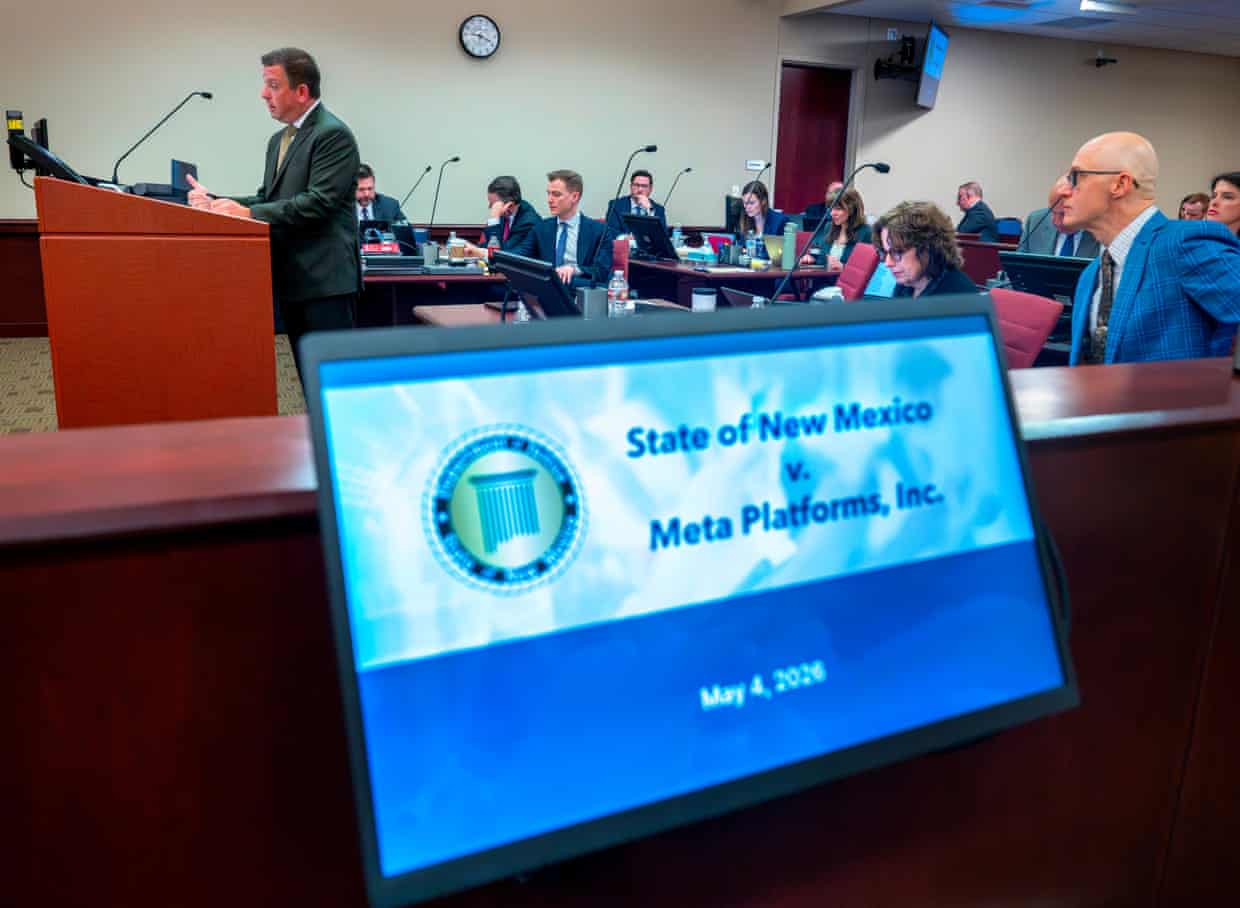
New Mexico proposes $3.7bn fine for Meta and sweeping changes to its social platforms
US and tech firms strike deal to review AI models for national security before public release
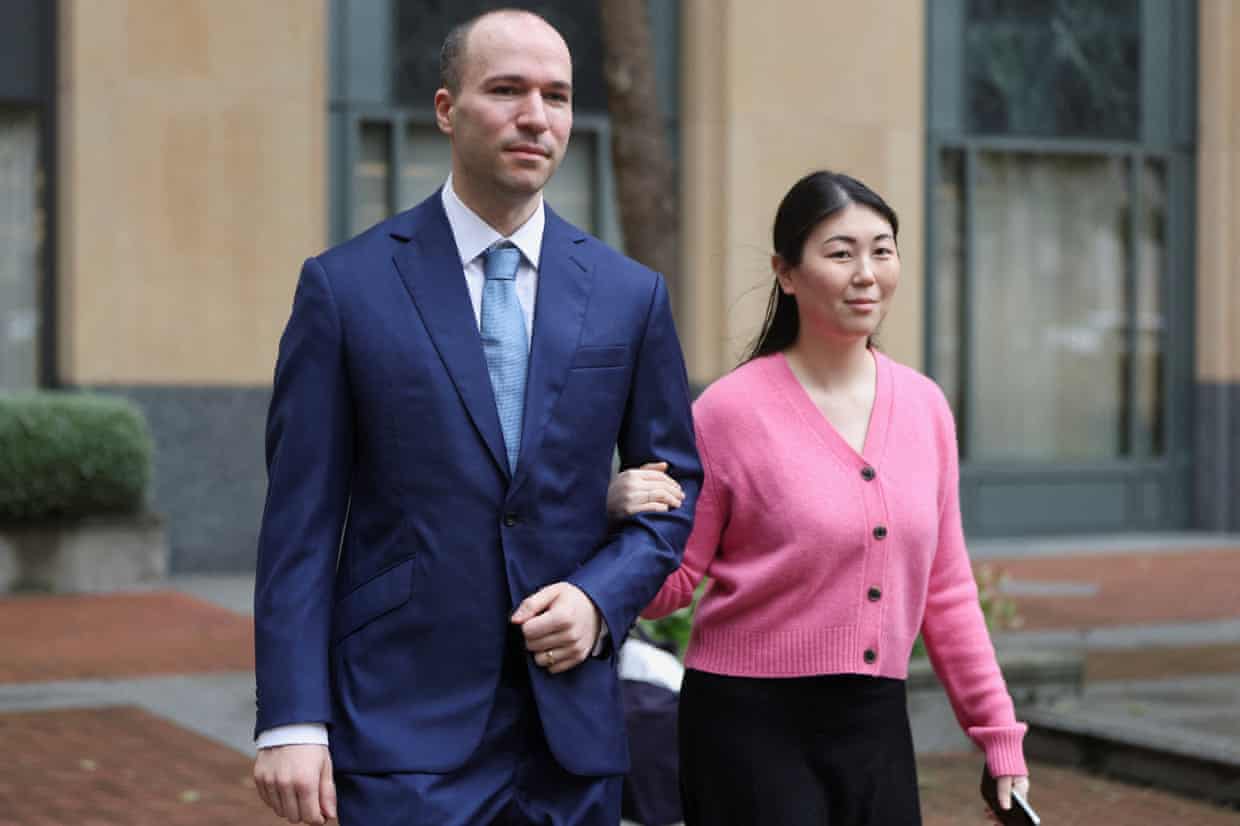
OpenAI president’s ‘deeply personal’ diary becomes focus in Musk’s case against Altman