Pipeline of new drugs to fight superbugs is ‘worryingly thin’, experts warn

The pipeline of new drugs to fight superbugs remains “worryingly thin” and has shrunk by 35% in the last five years, experts have said, predicting the annual number of deaths linked to drug-resistant infections globally will double to 8 million by 2050.The number of antimicrobial projects from large pharma companies has shrunk by 35% over the past five years, from 92 to 60 medicines in development, according to a report from the Access to Medicine Foundation (AMF), a Netherlands-based non-profit group, backed by the Wellcome Trust.Only five medicines are in development for children under five, who are more vulnerable to infections.“Overall, the research and development pipeline remains worryingly thin, and industry investment has lost momentum,” said Jayasree K Iyer, the foundation’s chief executive.She described drug resistance as the biggest single threat to healthcare worldwide.
More than 1 million people die each year directly from drug-resistant infections but they contribute to 4 million deaths worldwide a year.Both figures are forecast to double by 2050 – to nearly 2 million and more than 8 million respectively.Ara Darzi, a cancer surgeon who led an investigation into the NHS in 2024 and is executive chair of the Fleming Initiative to tackle antimicrobial resistance, said pharmaceutical companies had a “moral responsibility in underwriting the risk”, noting that infection was the second-biggest killer of cancer patients.New therapies mean cancer can be fought, “but then sadly patients succumb to an infection that was treatable a decade ago”, Lord Darzi said at the launch of the AMF report, adding: “You don’t win a game if you have three good strikers and your defence is weak.”The Fleming Initiative – named after the Scottish physician Alexander Fleming who discovered penicillin in London almost 100 years ago – is predicting up to 10 million deaths from drug-resistant infections by 2050.
The UK’s GSK is leading the way in antimicrobial research with 30 projects and is one of just three big pharma companies that continue to invest in this area, the report found,The other two big players are Japan’s Shionogi and Otsuka, while the US drugmaker Pfizer, which was joint first with GSK in 2021, has fallen back,Claudia Martínez, AMF’s director of research, said: “We don’t have enough research going into antimicrobials to outpace resistance,”Britain’s biggest pharmaceutical company, AstraZeneca, is not included in the ranking because it does not have an antibiotic portfolio, as infectious diseases has never been its focus,The report assesses the efforts of 25 companies, including seven large research-based firms, 10 generic medicine manufacturers and eight smaller drug developers, or biotechs.
Iyer said three recently approved antibiotics and seven other promising medicines in late-stage development showed “it is possible to tilt the battle against superbugs in humanity’s favour”.In December, the US health regulator approved the Californian biotech Innoviva’s oral antibiotic Nuzolvence to treat gonorrhea, as well as GSK’s Blujepa for uncomplicated urinary tract infections and urogenital gonorrhea.They are the first antibiotics developed to treat these diseases in decades.People in low- and middle-income countries, where infectious diseases hit hardest, are most vulnerable to drug-resistant superbugs.“There is no time to lose,” Iyer said.
Restricting overuse of antibiotics, including in food production, and managing antibiotic waste responsibly were also important.Hospitals across the world have recorded an alarming rise in common infections that are resistant to antibiotics.One in six laboratory-confirmed bacterial infections were resistant to antibiotic treatments in 2023, with more than 40% of antibiotics losing potency against common blood, gut, urinary tract and sexually transmitted infections between 2018 and 2023, according to the World Health Organization.John-Arne Røttingen, the chief executive of the Wellcome Trust, said the lack of effective antibiotics was a “big challenge for society”.As the market for new antibiotics is not lucrative for many pharma companies, the European Commission wants to introduce transferable exclusivity vouchers to grant antimicrobial drug developers an extra 12 months of data protection.
Røttingen also said the NHS’s subscription model for antibiotics, giving drugmakers a guaranteed revenue stream, should be adopted by other high-income countries.

British fintech Revolut gets full banking licence
Revolut can finally launch as a fully fledged UK bank after a five-year wait for regulatory approval.The fintech said it had received the all-clear from the Prudential Regulation Authority (PRA) for a full banking licence, allowing it to offer accounts for retail and business customers.It will start introducing current accounts to a small number of new customers within days, the group said.The move follows Revolut being granted a UK banking licence – with “restrictions” – in 2024, having first lodged its application in 2021.Revolut bosses were said to have grown frustrated with UK regulators, who had been slow to grant a full licence allowing it to hold customer deposits and branch out into more lucrative products such as loans and mortgages

Porsche to cut more jobs after costly reversal of electric car strategy
Porsche is to cut more jobs after profits were largely cancelled out by a costly writedown on reversing its electric car strategy, as the luxury manufacturer also battled a prolonged sales slump in China.The German carmaker appointed a new chief executive, Michael Leiters, on 1 January after four profit warnings last year that also contributed to it tumbling out of Germany’s DAX stock index.“The streamlining of the company needs to be sharpened and this will lead to further job reductions,” said Leiters on Wednesday. Porsche employs about 40,000 people and has previously said it would make about 3,900 job cuts by 2030.“We will streamline our management structure, reduce hierarchies and cut back on bureaucracy,” said Leiters, adding that more details would come in the autumn

Aramco warns of oil market ‘catastrophe’ unless strait of Hormuz reopens soon
Saudi Arabia’s state oil company has warned of “catastrophic consequences” for the world’s oil markets if the US-Israeli war with Iran continues to block shipping in the strait of Hormuz.The world’s biggest oil exporter expects to be able to supply the market with about 70% of its usual crude output despite the stranglehold on the vital trade artery, but its chief executive warned that there would still be “drastic” consequences for the world economy if the disruption continued.Oil shipments from the Middle East have been blocked from passing through the narrow waterway since the US strikes on Iran 11 days ago, erasing about 20m barrels of oil from the global market every day.Despite the warning, oil prices fell on Tuesday after Donald Trump suggested the war could end “very soon”.The price of a barrel of Brent crude, the international benchmark, was down 14% on Tuesday evening, at about $85
Pipeline of new drugs to fight superbugs is ‘worryingly thin’, experts warn
The pipeline of new drugs to fight superbugs remains “worryingly thin” and has shrunk by 35% in the last five years, experts have said, predicting the annual number of deaths linked to drug-resistant infections globally will double to 8 million by 2050.The number of antimicrobial projects from large pharma companies has shrunk by 35% over the past five years, from 92 to 60 medicines in development, according to a report from the Access to Medicine Foundation (AMF), a Netherlands-based non-profit group, backed by the Wellcome Trust. Only five medicines are in development for children under five, who are more vulnerable to infections.“Overall, the research and development pipeline remains worryingly thin, and industry investment has lost momentum,” said Jayasree K Iyer, the foundation’s chief executive. She described drug resistance as the biggest single threat to healthcare worldwide

Trump’s re-election may have helped Albanese – but the US war in Iran is creating economic conundrums
Donald Trump’s re-election helped Anthony Albanese win a landslide election, but now threatens to derail his second term of government, with the Labor government’s fortunes increasingly tethered to the US president’s policy agenda.Trump’s Middle East incursion triggered a huge spike in energy costs, propelling oil prices to their highest level in four years, as fears of a prolonged regional conflict took hold.An elevated oil price is a major global inflation trigger, given it drives up costs across goods and services in the economy, pushing central banks, including in Australia, to consider rate hikes to keep a lid on inflation.The resurgence of Australian inflation, already a factor before the Middle East conflict, now risks intensifying, creating a problem for the incumbent government.Sign up: AU Breaking News emailIf interest rates move higher, as expected, many voters will be paying increased mortgage rates at the same time as they face elevated prices for everything from fuel to food
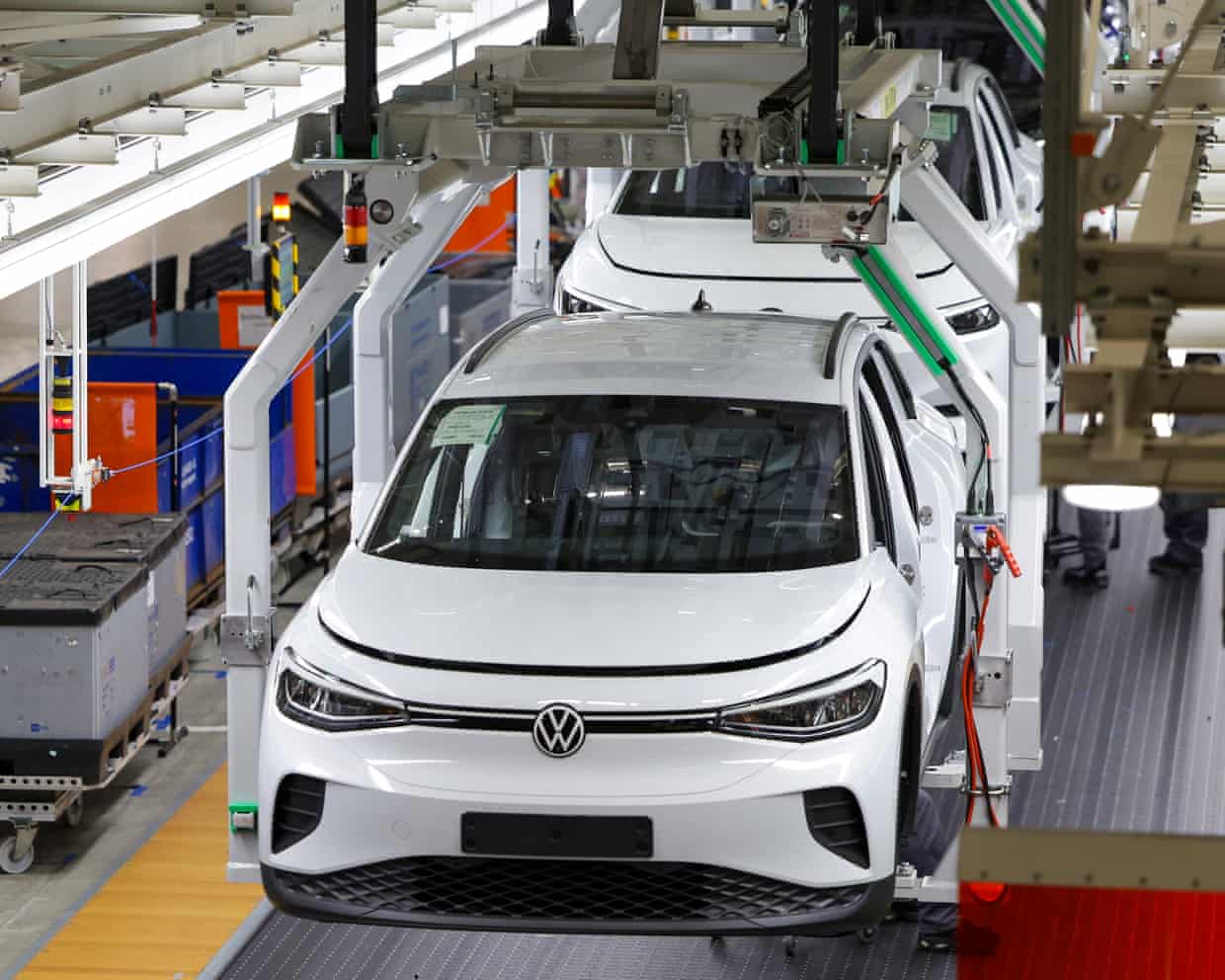
VW to cut 50,000 jobs by 2030 amid Trump tariffs and falling Chinese sales
Europe’s largest automaker, Volkswagen, is to shed 50,000 jobs by the end of the decade, as it faces falling sales in China and North America and punitive US tariffs imposed by Donald Trump.The 10-brand group, whose luxury subsidiaries Porsche and Audi are also under pressure, said the jobs would go in Germany, affecting the entire group, as part of a restructuring drive amid the darkening global business climate.The group had already struck a deal with German trade unions at the end of 2024 to cut 35,000 jobs by 2030, in part by natural attrition through retirement and other staff departures.Volkswagen revealed the updated plans as it announced a 54% drop in pre-tax profits. The group has been scaling back its targets for electric vehicle (EV) production in recent months, including at its Italian supercar manufacturer, Lamborghini

‘Happy (and safe) shooting!’: chatbots helped researchers plot deadly attacks

Thousands of authors publish ‘empty’ book in protest over AI using their work

AI firm Anthropic sues US defense department over blacklisting

From press release … to scrap metal site: the Essex ‘supercomputer’ that’s still a scaffolding yard

OpenAI delays ‘adult mode’ for ChatGPT to focus on work of higher priority

AI chatbots point vulnerable social media users to illegal online casinos, analysis shows