Maritime insurers cancel war risk cover in Gulf as Iran conflict disrupts shipping
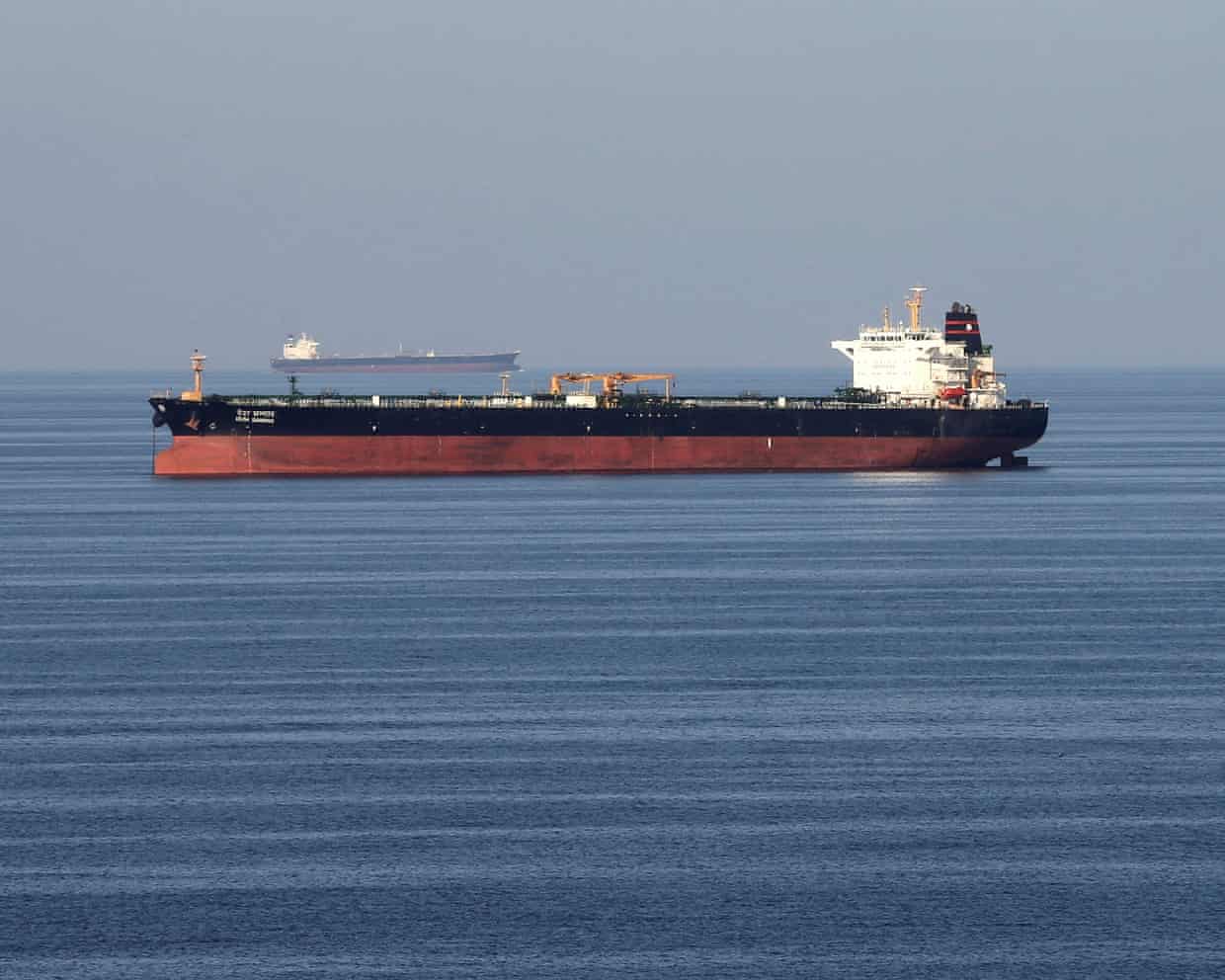
Leading maritime insurers have cancelled war risk cover for vessels operating in the Gulf as the escalating Iran conflict disrupted shipping and sent some freight costs surging.At least 150 vessels including oil and liquefied natural gas tankers have dropped anchor in the strait of Hormuz and surrounding waters, and at least three tankers were damaged and one seafarer killed over the weekend.The vital shipping route, through which about 20% of the world’s oil supplies and 20% of seaborne gas tankers pass, is effectively closed after the US and Israel began intense airstrikes on Iran on Saturday.Several leading mutual marine insurers, including Norway’s Gard and Skuld, the UK’s NorthStandard and the London P&I Club, and the New York-based American Club, said they were cancelling war risk cover for ships operating in the region.This is likely to further dissuade shipowners from traversing the Gulf.
The insurers said war risk cover – which typically covers shipowners for costs and damages resulting from war, terrorism and piracy – would be cancelled in Iranian waters, as well as the Gulf and adjacent waters, with effect from 5 March.Peter Hulyer, the head of UK protection and indemnity (P&I) at the leading insurance broker Marsh, said this related to non-poolable war cover for these mutual insurers, provided for specific, often higher-risk, exposures such as chartered vessels.“In most cases the clubs will be offering to reinstate war coverage at terms to be agreed.Mutual P&I cover offered by the clubs is unaffected by the above.”Marcus Baker, the global head of marine at Marsh, said several other insurance markets, including Lloyd’s of London, had issued notices of cancellation, to give insurers time to look at the heightened risks in the Middle East and assess their rates.
He said insurance rates could go up by 50% to 100%, or even more, from 0.25% to 0.5% or 1% of the value of the insured asset.This compares with a rating of 5% after Russia’s invasion of Ukraine in 2022 for ships going into Odesa.The cost of transporting goods jumped, as shipping was rerouted and oil prices rose sharply on Monday.
The Containerized Freight Index tracked by the website Trading Economics rose by 6.5%.Freightos terminal container rates for Shanghai to Jebel Ali in Dubai, the largest port in the Middle East, rose from $1,800 for a 40ft container on Saturday to about $3,700 on Monday, according to the online shipping marketplace.Dubai-based DP World suspended operations at Jebel Ali over the weekend after an aerial interception caused a fire on Saturday night, though operations have since resumed.Freightos said as only about 2% to 3% of global container volumes passed through the strait of Hormuz, its effective closure may not have much of on impact on the broader container market.
However, given the wider disruption in the region, including the Red Sea, it added: “For importers or exporters trying to move goods in or out of the Middle East, services will be significantly disrupted, and costs will rise for goods that are able to move at all.”John Wyn-Evans, the head of market analysis at the UK wealth asset management group Rathbones, said: “Any rate increases would be linked to a combination of rerouting and higher oil prices; rerouting involves being at sea for longer which reduces capacity and if the cargoes have to get there by a certain time, they have to sail faster, which uses up more fuel (and it’s exponential, like driving faster in a car and watching MPG [miles per gallon] go down).”Iran-backed Houthi rebels in Yemen, who had paused attacks on Red Sea vessels since October, have also threatened to resume strikes.In response, several big shipping companies – Denmark’s Maersk, Germany’s Hapag-Lloyd and France’s CMA CGM – have diverted all their sailings away from the Red Sea until further notice, rerouting them around Africa.Denmark’s Norden has suspended all new business requiring transit through the strait of Hormuz.
CMA CGM has imposed an emergency conflict surcharge of between $2,000 (£1,491) and $4,000 a container on cargo moving through the region.Shares in Beazley, a leading marine insurer that operates in the Lloyd’s market, initially dropped 2.8% as investors fretted about a potential large insurance loss arising from the Middle East and risks to its takeover by its bigger rival Zurich.Its share price rebounded by 1.8%, when the two companies announced on Monday afternoon that the £8.
2bn deal had been agreed, but closed 1.3% lower.“The announcement might also be read as a signal that Beazley’s loss exposures, and likely those of the broader specialty insurance market, remain contained,” said analysts at Jefferies.Beazley wrote just over $500m of premiums for marine insurance in 2024, about 8% of its total book.Matthew Wheatley, the main data analyst at the energy analysts Wood Mackenzie, said: “Freight rates are volatile amid the fresh instability in the Middle East, with most tankers now avoiding the strait of Hormuz as attacks and insurance cancellations make the area increasingly unsafe.
“A substantial number of tankers are currently stranded or rerouting in the region, effectively removing a significant amount of capacity from the market.If the conflict continues and tanker availability remains tight, global freight rates could rise further.”
Maritime insurers cancel war risk cover in Gulf as Iran conflict disrupts shipping
Leading maritime insurers have cancelled war risk cover for vessels operating in the Gulf as the escalating Iran conflict disrupted shipping and sent some freight costs surging.At least 150 vessels including oil and liquefied natural gas tankers have dropped anchor in the strait of Hormuz and surrounding waters, and at least three tankers were damaged and one seafarer killed over the weekend.The vital shipping route, through which about 20% of the world’s oil supplies and 20% of seaborne gas tankers pass, is effectively closed after the US and Israel began intense airstrikes on Iran on Saturday.Several leading mutual marine insurers, including Norway’s Gard and Skuld, the UK’s NorthStandard and the London P&I Club, and the New York-based American Club, said they were cancelling war risk cover for ships operating in the region.This is likely to further dissuade shipowners from traversing the Gulf
BrewDog bought by US cannabis and drinks firm for £33m, costing nearly 500 jobs
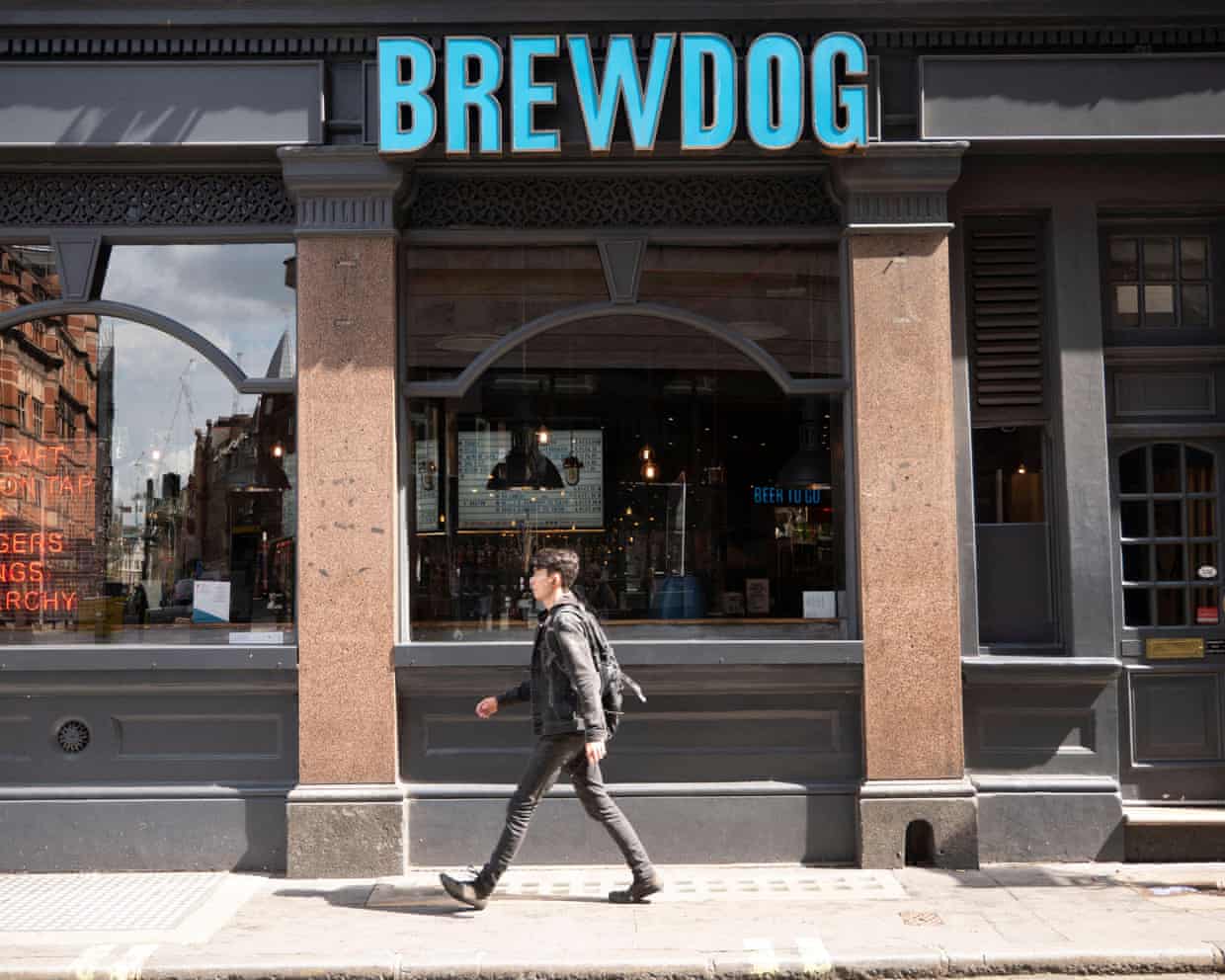
The UK and Irish assets of BrewDog, the Scottish self-styled “punk” brewer, have been sold to the US cannabis and drinks firm Tilray for £33m, in a deal that will cost nearly 500 jobs and leave legions of the company’s early-stage crowdfunders empty-handed.Tilray agreed a deal to buy BrewDog’s brand, intellectual property, UK brewing operations and 11 “strategic” bars in the UK and Ireland, the two companies confirmed, preserving 733 jobs. The remaining 38 bars will close immediately, at a cost of 484 jobs.Tilray said it was negotiating separately to buy BrewDog assets in the US and Australia.“No offer was made at any stage of the sales process, from any prospective bidder, which would have preserved BrewDog in its entirety,” AlixPartners, which acted as the administrator for BrewDog, said in a statement
McDonald’s CEO’s awkward taste test sparks mocking online: ‘His aura screams kale salad’
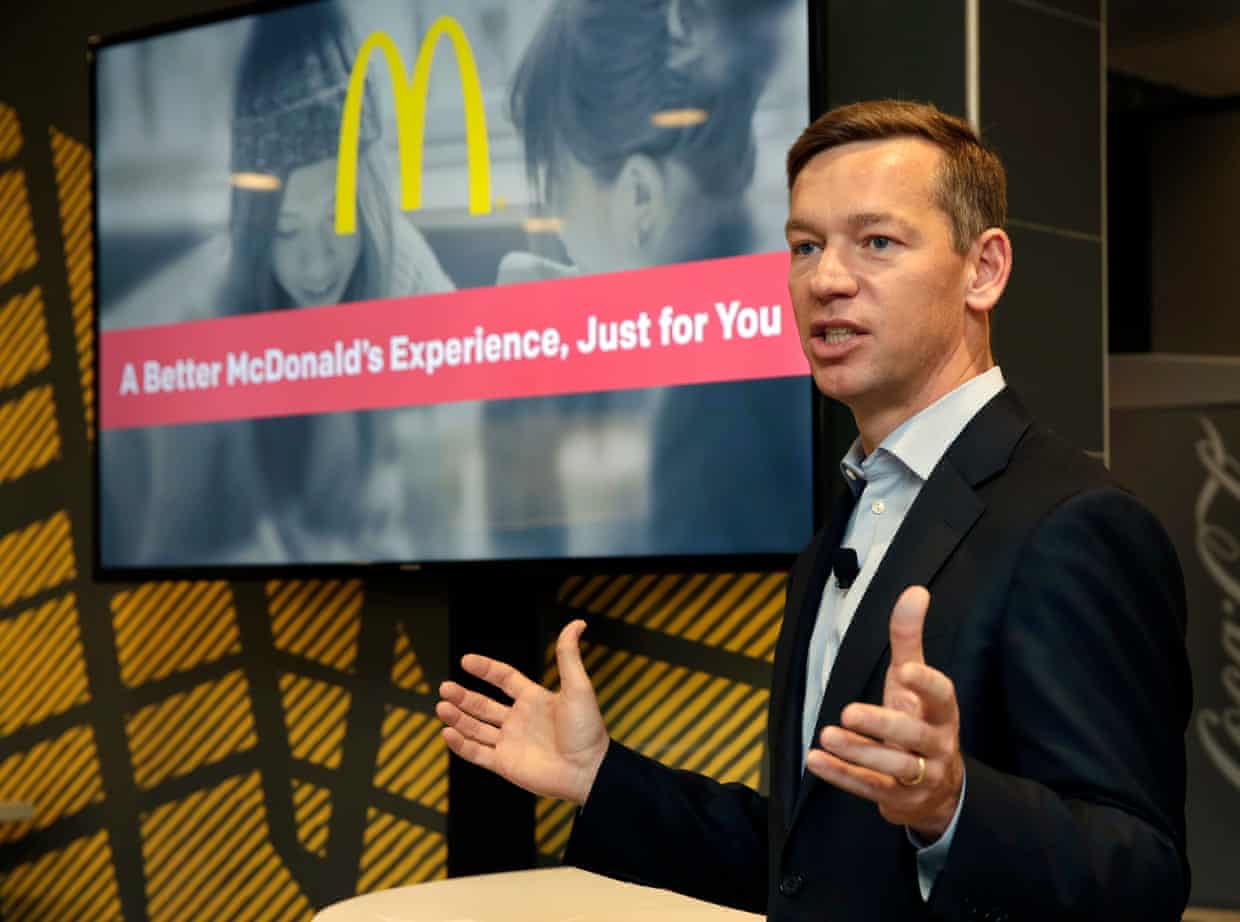
Business leaders are increasingly placing themselves in front of the camera, in an effort to appear more relatable to a social media-first audience. When it goes well, it can be a huge hit. When it doesn’t, you risk becoming the subject of online ridicule.In the recent case of Chris Kempczinski, the McDonald’s CEO and president, it’s the latter.A video of the head of the iconic fast food chain trying a new menu item has gone viral, with social media and online comedians mocking his awkward taste test and citing it as evidence that he did not enjoy the experience of his own firm’s burger
FTSE 100 share index records biggest fall since November as Iran war drives up oil and gas prices – as it happened
Britain’s stock market has recorded its biggest daily loss in three and a half months, as the Middle East crisis hammered shares in airlines, luxury goods makers and banks.The blue-chip FTSE 100 share index has closed down 130 points, or 1.2%, at 10,780 – away from the record highs seen last week.That’s its biggest daily fall, in percentage terms, since 18 November 2025.British Airway’s parent company, IAG, were the top faller today, down 5
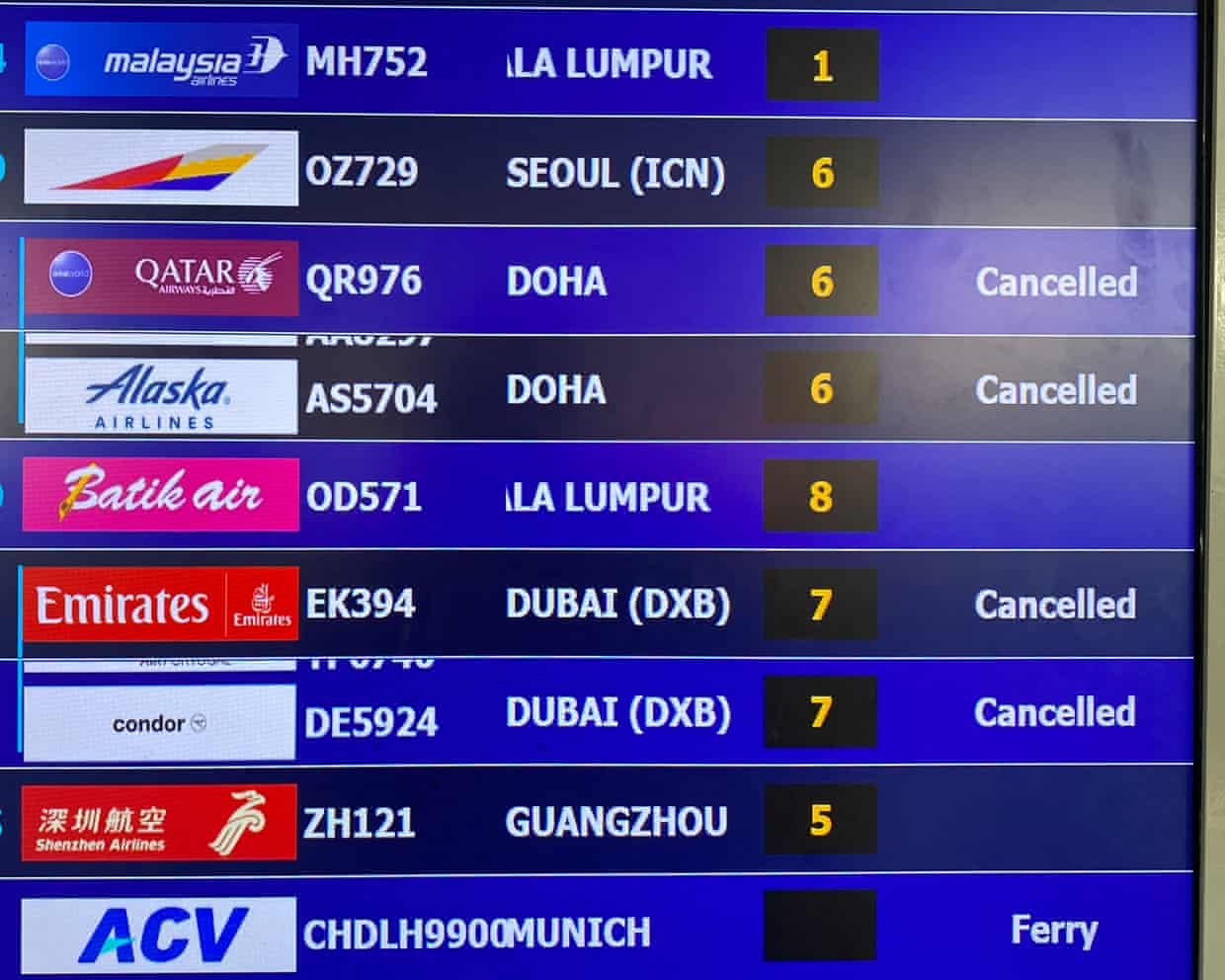
What to do if your flight is cancelled due to the US-Israel war on Iran
Hundreds of thousands of passengers have been left stranded after the US-Israeli attack on Iran. Retaliatory strikes by Iran have led to airspace being closed across the Gulf and triggered the biggest disruption to global air travel since the Covid pandemic. If you are a UK holidaymaker struggling to get home or are booked to fly to an affected destination, here is a guide to your rights.Israel, Syria, Qatar, Iran, Iraq, Kuwait and Bahrain have shut their airspace and there are no flights over the United Arab Emirates.Emirates, the word’s largest international carrier, has suspended all flights to and from Dubai
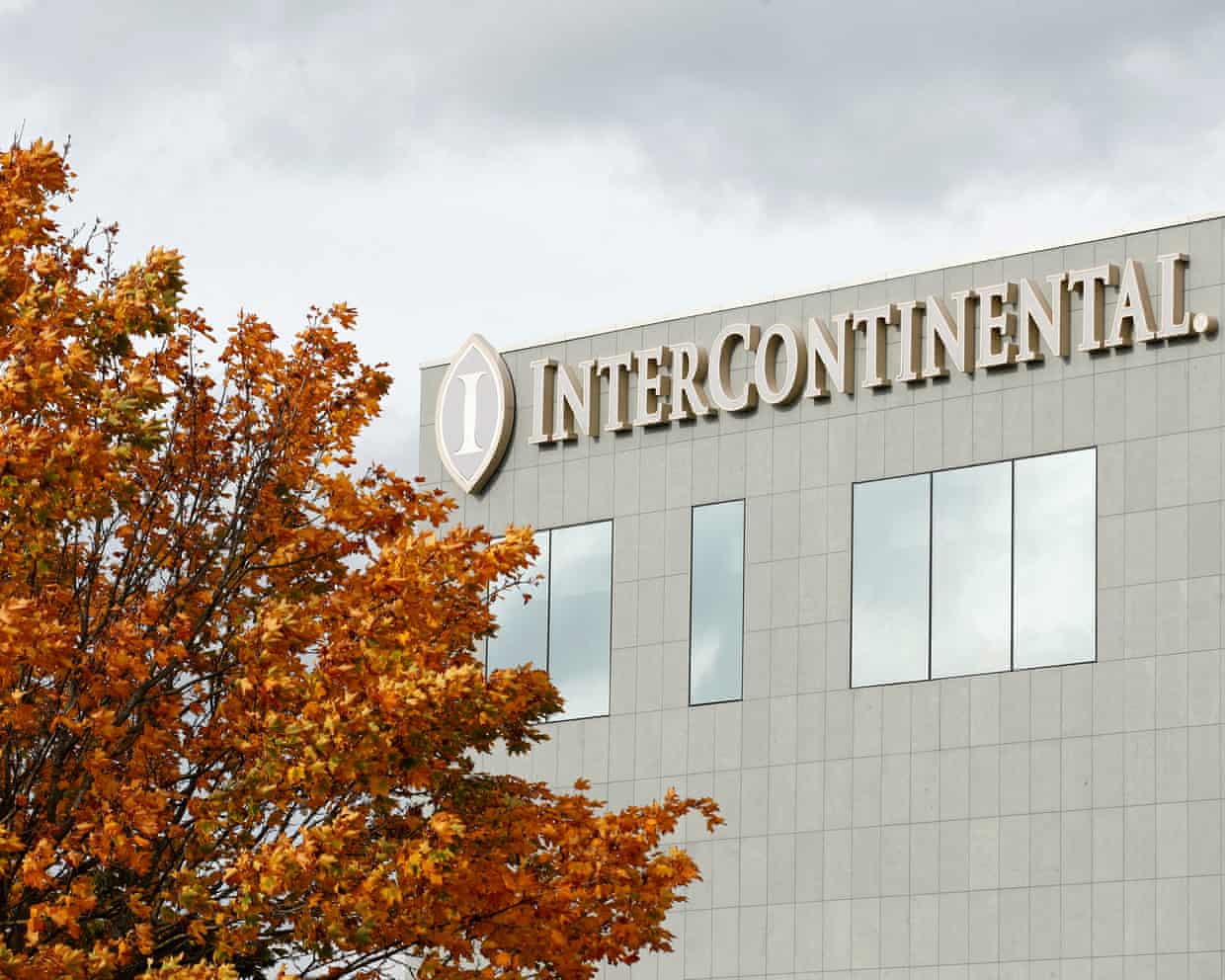
UK competition watchdog investigates hotel groups over alleged data sharing
The UK competition watchdog has opened an investigation into three of the world’s biggest hotel chains – Hilton, InterContinental Hotels (IHG) and Marriott – amid suspicions they could be sharing “competitively sensitive” information with each other.The Competition and Markets Authority (CMA) is investigating allegations that the businesses, which together operate more than 25,000 hotels worldwide, could be sharing information through the data analytics tool STR. CoStar, the real estate data firm that owns STR, is also under investigation.While it is common for hotel chains to use data analytics and algorithms to help them set prices, which can improve competition and lower costs, sharing this information with competitors can be harmful to their customers.The watchdog said: “When rival businesses share competitively sensitive information – including through a third-party data analytics provider – this reduces the uncertainty competing businesses normally have about how each other will act

‘Seems I’m not dead’: Magda Szubanski says she is in remission after treatment for stage four cancer
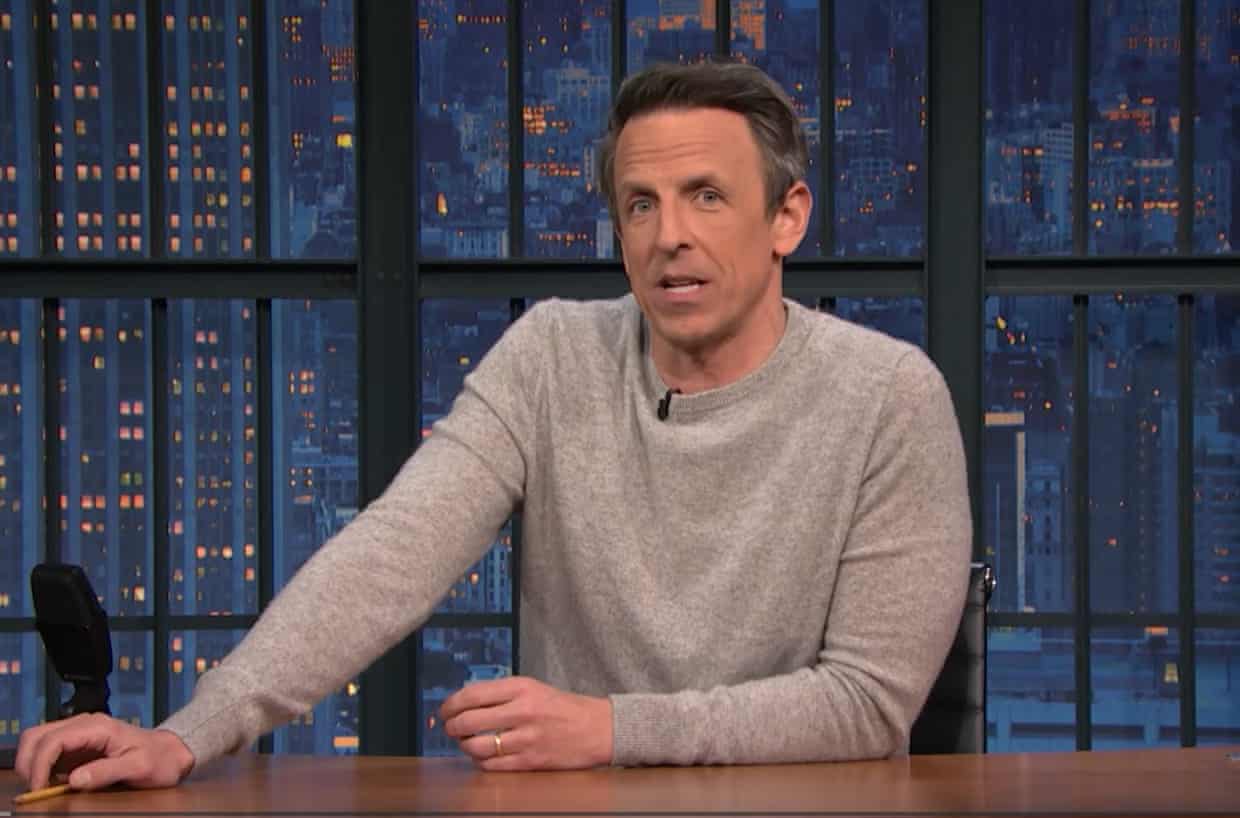
Seth Meyers on Trump’s State of the Union address: ‘A vehicle to attack anyone who doesn’t bend the knee’

‘The sky’s the limit’: Newcastle Art Gallery unveils its ‘divisive’ $48m expansion with a blockbuster opening show

Dead-end boys and West End girls: Lily Allen’s greatest songs – ranked!

Jimmy Kimmel on Trump’s State of the Union: ‘A nutjob wannabe king’
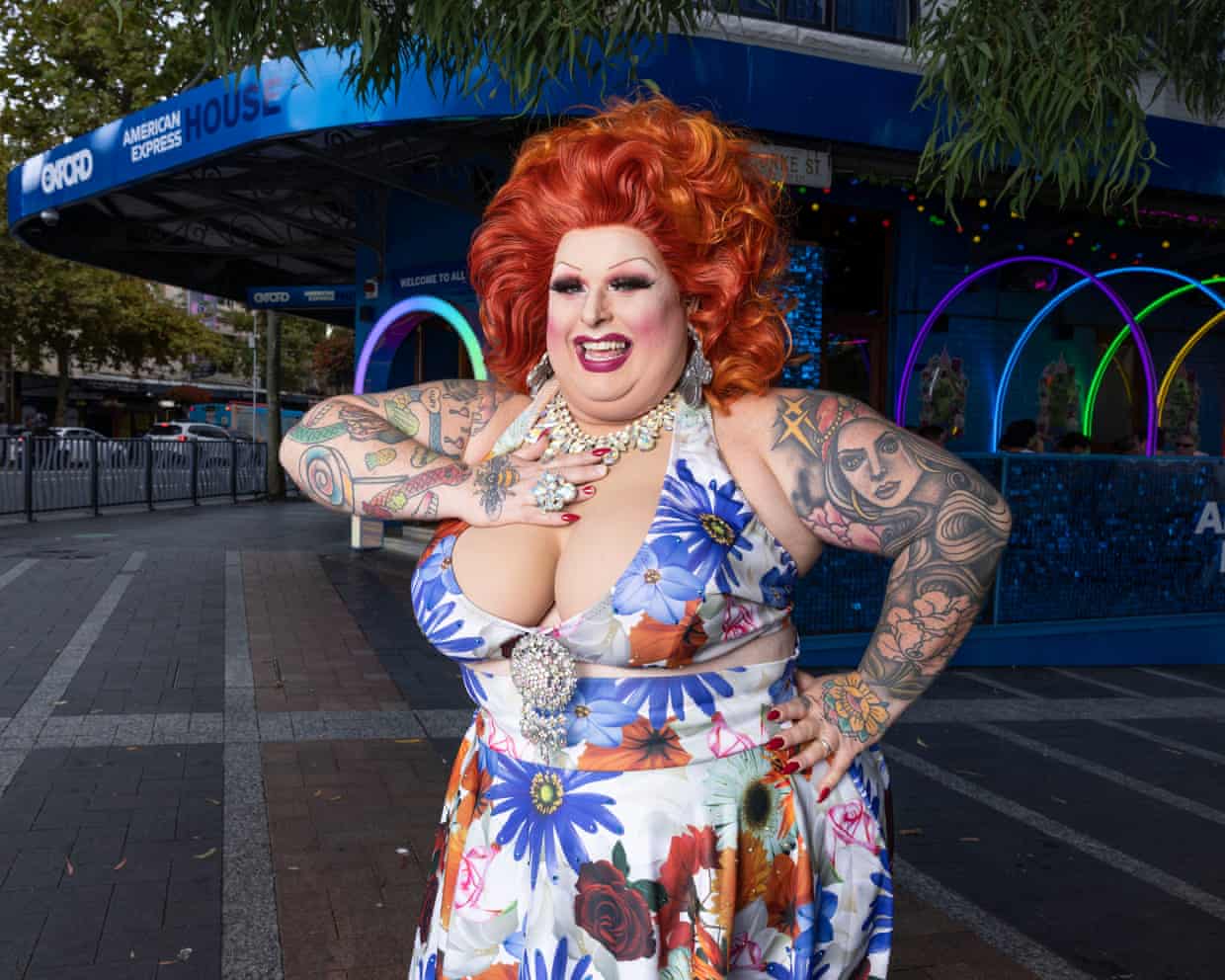
Maxi Shield, beloved Australian drag queen and Drag Race Down Under star, dies aged 51