‘Small mercies’: north London cafe evictions paused after legal challenge

A couple who run three cafes at north London beauty spots including Hampstead Heath and Queen’s Park have claimed a small victory in their battle to overturn the decision by their landlord, the City of London Corporation, to evict them.Patrick Matthews and Emma Fernandez have run the cafes at Parliament Hill Lido, Queen’s Park and Highgate Wood for several years, but were told just before Christmas they had been unsuccessful in a retendering process.The corporation, the governing body that runs London’s Square Mile, has responsibility for managing green spaces such as Hampstead Heath, which it runs as a registered charity.It awarded the lease for two of the couple’s sites as well as two other cafes to Australian-inspired chain Daisy Green, while the lease for the couple’s third site was handed to another operator.Matthews, Fernandez and the other tenants were told to vacate their premises by Monday 2 February.
Matthews and Fernandez, through their company Hoxton Beach, are pursuing legal action against the corporation over its decision,They accuse the authority of unfairness and a lack of transparency in the retendering process, which they believe was run as a commercial exercise in a bid to raise money,They have now been informed through their lawyers they do not need to vacate the cafes next week,However, the corporation has said it may try to obtain a court order to repossess the premises,“We are grateful for small mercies,” said Matthews.
“We are very relieved we don’t have to get out in a few days’ time, which would have been impractical and probably would have destroyed our business,”The corporation has faced a backlash at its decision to bring in a new cafe operator among the local community and the customers of the cafes, and actors Benedict Cumberbatch and James McAvoy have backed the campaign,More than 22,000 people have signed a petition calling for the corporation to retain the current cafe operators, while Matthews and Fernandez have raised more than £9,000 through a crowdfunding campaign to fund their legal action,A spokesperson for the City of London Corporation said the authority had “followed a legitimate and open process in awarding the new cafe leases” and it rejected any suggestion “that the process was in any way unlawful”,They added: “Hoxton Beach have refused to leave the cafes they occupy despite their tenancies having been terminated.
The City Corporation may if appropriate seek an order for possession in the county court.“We want the approved operators to move in as soon as possible.”Daisy Green brings “relaxed and buzzing Australian food and coffee culture to London”, according to its website, and it operates 21 sites across the capital, ranging from the National Portrait Gallery to a barge moored on the Thames at Richmond.The corporation said Daisy Green had committed to retaining existing staff and paying them the London living wage, while also pledging to purchase equipment from the current operators where possible.

‘Menopause gold rush’? Boom in hi-tech products as stigma starts to recede
For any bodily function you want to measure these days there is a gadget – a wristband for step-counting, a watch to track your heart rate or a ring for measuring sleep.Now the march of wearable tech is coming to the aid of what some say is a long underserved market: menopausal women.One startup has recently launched a high-end cooling bracelet that kicks into action during a menopausal hot flush. The device is one of a growing number of lifestyle products being launched in this area, which some experts say is growing as stigma around menopause recedes. Companies are developing everything from apps offering dietary advice to devices that track symptoms, hormones and body temperature
Paying kidney donors won’t solve the problem | Letters
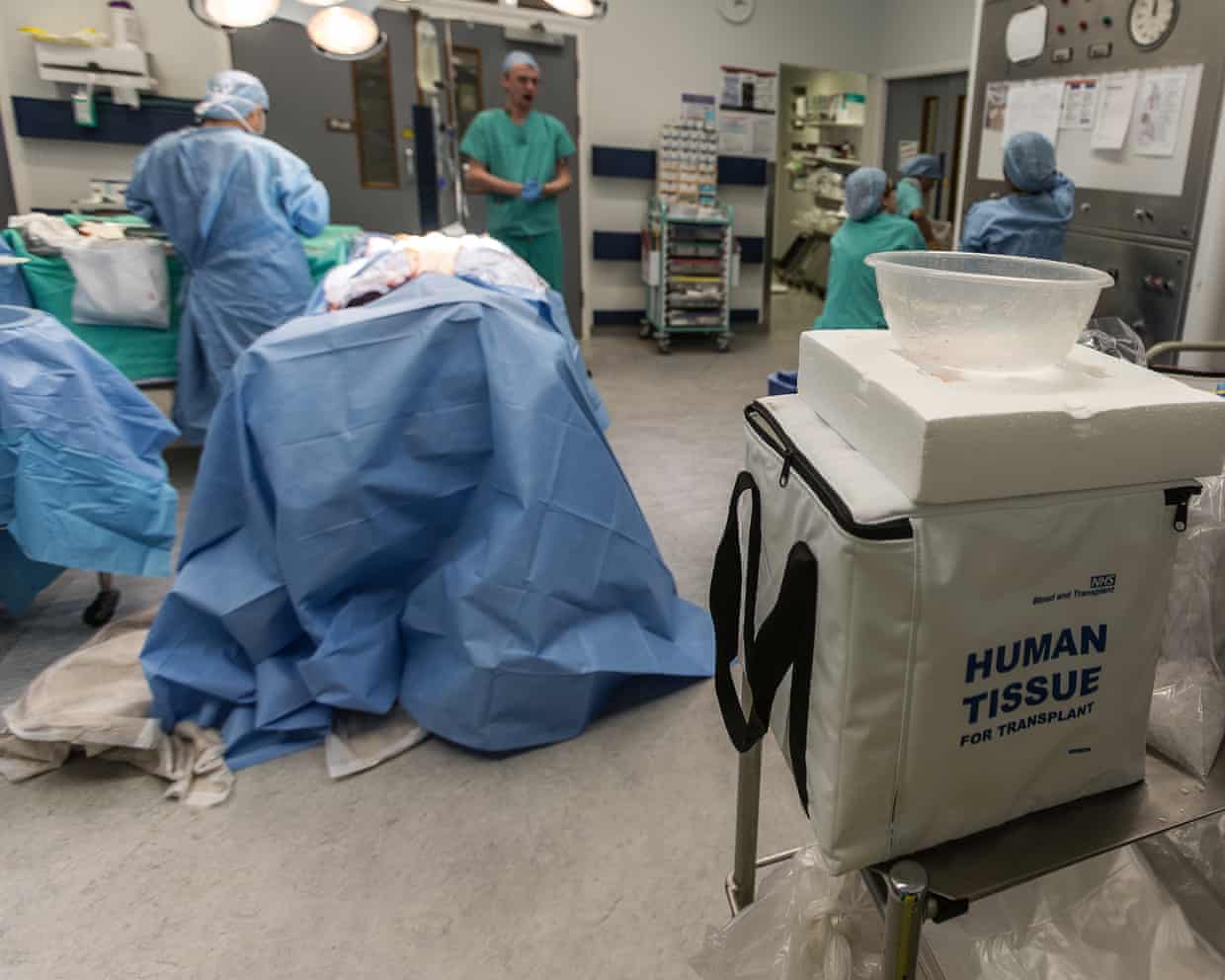
It is hard not to feel a certain sadness reading arguments for legalising the sale of kidneys that rely more on provocation than on engagement with how healthcare systems actually work in the UK (The big idea: Should we sell our kidneys?, 25 January).Kidney failure is devastating, and the shortage of donor organs costs lives. About 7,000 people in the UK are currently waiting for a kidney transplant, and six people die every week while waiting. It is therefore concerning to read an argument that implicitly accepts continued late diagnosis of kidney disease and progression to kidney failure as an inevitability, rather than recognising the urgent need to raise awareness of kidney disease and prioritise its prevention before lives reach crisis point.Furthermore, the notion that altruism in the UK has reached its limits, justifying a legal market for human organs, is not supported by public attitudes, social evidence or ethics

On Polymarket, ‘privileged’ users made millions betting on war strikes and diplomatic strategy. What did they know beforehand?
In the early hours of 13 June, more than 200 Israeli fighter jets began pummeling Iran with bombs, lighting up the Tehran skyline and initiating a 12-day war that would leave hundreds dead.But for one user of the prediction market Polymarket, it was their lucky day. In the 24 hours before the strike occurred, they had bet tens of thousands of dollars on “yes” on the market “Israel military action against Iran by Friday?” when the prospect still seemed unlikely and odds were hovering at about 10%. After the strike, Polymarket declared that military action had been taken, and paid the user $128,000 for their lucky wager.But was it just luck?Polymarket is an online platform where people can bet on just about anything, from what the most-streamed song on Spotify will be to how many times Donald Trump will say “terrible” that day

Abusers using AI and digital tech to attack and control women, charity warns
Domestic abusers are increasingly using AI, smartwatches and other technology to attack and control their victims, a domestic abuse charity says.Record numbers of women who were abused and controlled through technology were referred to Refuge’s specialist services during the last three months of 2025, including a 62% increase in the most complex cases to total 829 women. There was also a 24% increase in referrals of under-30s.Recent cases included perpetrators using wearable tech such as smartwatches, Oura rings and Fitbits to track and stalk women, disrupting their lives through smart home devices that control lights and heating, and using AI spoofing apps to impersonate people.Emma Pickering, head of the tech-facilitated abuse team at Refuge, said: “Time and again, we see what happens when devices go to market without proper consideration of how they might be used to harm women and girls

‘Chilling’ hacking network is targeting vulnerable children, charity warns
A leading UK online safety charity has issued a “public warning” about a hacking community that is targeting vulnerable children for sexual abuse, self-harm and suicide.The Molly Rose Foundation (MRF) said online networks linked to a global ecosystem labelled the Com were carrying out extreme exploitation, cyberbullying, violence and abuse – and called for a coordinated global response from governments, regulators, law enforcement and tech companies.The warning follows the publication of a report by the online risk consultancy Resolver in partnership with the MRF, which was founded by the family of Molly Russell, a British teenager who killed herself in 2017 after viewing harmful content online.“The growing threat posed by Com networks is the most chilling and urgent threat to children online today and it requires a swift and comprehensive response,” said Andy Burrows, MRF’s chief executive, who described the report as a “public warning”.“These groups prey on children’s vulnerabilities to coerce and groom girls on gaming and messaging platforms, inflicting appalling harm and cruelty including acts of self-harm, livestreamed abuse or even suicide

Great Ormond Street surgeon harmed 94 children, review finds
Nearly 100 children were harmed by a Great Ormond Street surgeon, according to an independent review.Great Ormond Street hospital (Gosh) conducted an independent review of nearly 800 patients treated by the consultant orthopaedic surgeon Yaser Jabbar between 2017 and 2022, who specialised in limb lengthening and reconstruction.Of the 789 children under his care, the study concluded that 94 were specifically harmed as a result of his actions, of whom 91 had been operated on by Jabbar.Announcing the findings, Matthew Shaw, the chief executive of Gosh, said everyone at the hospital was “profoundly sorry” for all those affected and promised the trust had learned lessons.“We have made significant changes to both the orthopaedic service itself and across the hospital to minimise the chance of something like this happening again

Elon Musk had more extensive ties to Epstein than previously known, emails show

What good is a social media ban when screens are rife in classrooms? | Letters

AI-generated news should carry ‘nutrition’ labels, thinktank says

Apple reports massive spike in iPhone revenue, particularly in China

US regulators open inquiry into Waymo self-driving car that struck child in California
UK-based pair behind messaging app accused of giving data to Iranian regime