Customer complaints over water bills surge by 50% in England and Wales
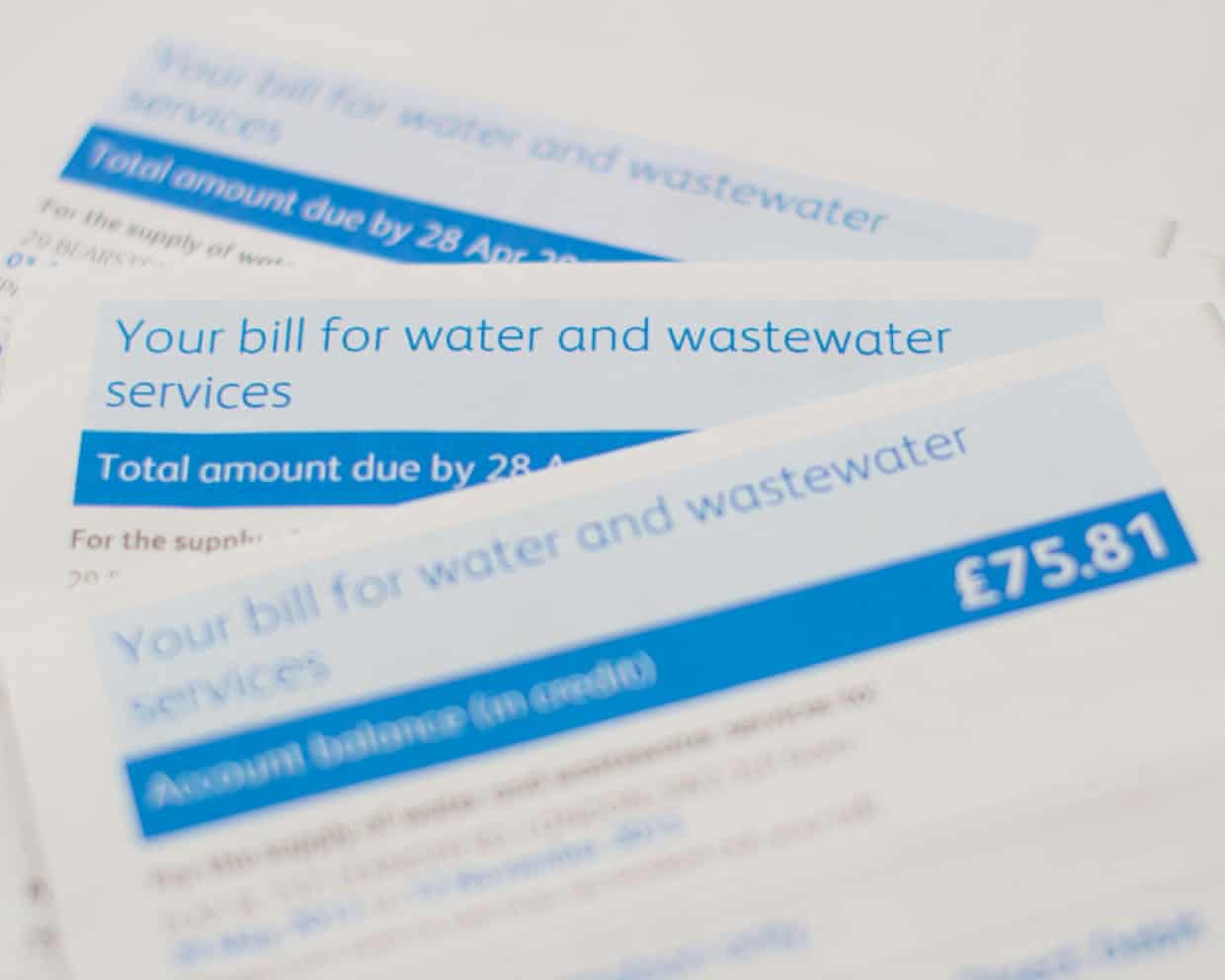
Complaints about water companies in England and Wales to an independent monitor surged by more than 50% last year, as customers bristled at steep bill increases,More than 16,000 complaints were lodged in 2025 with the Consumer Council for Water (CCW), a government-sponsored body that represents customers’ interests,That was up from 10,600 in 2024, with the flow of objections well above the level of the prior year in every month from March onwards,Water companies have faced huge public anger in recent years over the amount of sewage flowing into Britain’s rivers and seas,However, the extent of the outrage increased sharply last year when water companies were allowed to increase bills to pay for upgrades after decades of underinvestment.
Ofwat, the regulator in England and Wales, said water companies could increase bills by 36% between 2025 and 2030.Most of that increase came last April – prompting the surge of complaints.Water companies are braced for a further backlash this week when the next bill increases – including extra to account for inflation – are announced as part of that five-year plan.Complaints increased about every large water provider, according to the CCW, which handles issues that have not been resolved by the companies themselves.Southern Water had the most per customer, followed by Severn Trent and Thames Water, according to analysis of utilities with more than 1 million customers.
Mike Keil, the CCW’s chief executive, said: “The sustained rise in complaints to CCW reflects not only people’s worries about being able to afford increases in their water bill, but also confusion and concern around what they are getting in return for their money.Customers need to see evidence their money is improving services in the here and now, as well as dealing with the longer-term challenges.”By far the biggest reason for complaints during 2025 was the lack of affordability of bills, according to the CCW’s data.The body said such concerns added to the evidence in favour of introducing a lower “social tariff” across England and Wales to help poorer customers.“The postcode lottery created by existing water company social tariff schemes needs to be replaced by fairer and better targeted support,” Keil said.
A spokesperson for the industry body Water UK said: “We understand that bill increases are never welcome and recognise they are difficult for many households.That’s why water companies are more than doubling the help available, with £4.1bn in financial support available over the next five years for those customers that need it.”Public anger over bill increase has also been fuelled by the perception that water companies have paid out billions of pounds in dividends to investors, while also awarding large pay packets to bosses despite bans on bonuses at some firms.MPs on the public accounts committee on Thursday grilled executives from Ofwat and the government’s environment department about pay for water bosses, after the Guardian revealed that bosses at Yorkshire Water and Wessex Water had received previously undisclosed pay from other companies in the same group.
Anna Dixon, the Labour MP for Shipley, said the regulators should “crack down” on what she described as “water companies evading the bonus ban”.Lloyd Hatton, the Labour MP for South Dorset, criticised Ofwat and other water regulators for not policing water companies’ pay disclosures.Hatton asked the Ofwat bosses: “Why is it we wait for a report in the Guardian newspaper to understand exactly how water companies are operating and how they use those complex corporate structures to put extra pay behind their bosses?”England is the only country in the world with a fully privatised water system.The government controls water supply in Scotland and Northern Ireland, while much of Wales is supplied by the not-for-profit Dŵr Cymru.The best public interest journalism relies on first-hand accounts from people in the know.
If you have something to share on this subject you can contact the Business team confidentially using the following methods.Secure Messaging in the Guardian appThe Guardian app has a tool to send tips about stories.Messages are end to end encrypted and concealed within the routine activity that every Guardian mobile app performs.This prevents an observer from knowing that you are communicating with us at all, let alone what is being said.If you don't already have the Guardian app, download it (iOS/Android) and go to the menu.
Scroll down and click on Secure Messaging.When asked who you wish to contact please select the Business (UK & Global) team.SecureDrop, instant messengers, email, telephone and postIf you can safely use the tor network without being observed or monitored you can send messages and documents to the Guardian via our SecureDrop platform.Finally, our guide at theguardian.com/tips lists several ways to contact us securely, and discusses the pros and cons of each.

US small businesses are doing fine. Don’t believe me? Look at the numbers
Regardless of all the challenges they face, small businesses have been doing pretty well in this country across the board. Don’t believe me? Take a look at some of the latest numbers.For more than 50 years, the National Federation of Independent Businesses (NFIB) has published a monthly report of small-business economic trends, based on a random sample of the organization’s approximately 300,000 member firms. This survey is one of the longest and most consistent of any I follow, using the same questionnaire since 1973. So where do things stand?Last year ended with a second consecutive monthly uptick in small-business optimism, with small-business owners anticipating that economic conditions would remain generally favorable going into 2026

More than a quarter of Britons say they fear losing jobs to AI in next five years
More than a quarter (27%) of UK workers are worried their jobs could disappear in the next five years as a result of AI, according to a survey of thousands of employees.Two-thirds (66%) of UK employers reported having invested in AI in the past 12 months, according to the international recruitment company Randstad’s annual review of the world of work, while more than half (56%) of workers said more companies were encouraging the use of AI tools in the workplace.This was leading to “mismatched AI expectations” between the views of employees and their employers over the impact of AI on jobs, according to Randstad’s poll of 27,000 workers and 1,225 organisations across 35 countries. Just under half (45%) of UK office workers surveyed believed AI would benefit companies more than employees.Younger workers, particularly those belonging to gen Z – born between 1997 and 2012 – were the most concerned about the impact of AI and their ability to adapt, while baby boomers – born in the postwar years between 1946 and 1964 and nearing the end of their careers – showed greater self-assurance

Sam Altman’s make-or-break year: can the OpenAI CEO cash in his bet on the future?
Sam Altman has claimed over the years that the advancement of AI could solve climate change, cure cancer, create a benevolent superintelligence beyond human comprehension, provide a tutor for every student, take over nearly half of the tasks in the economy and create what he calls “universal extreme wealth”.In order to bring about his utopian future, Altman is demanding enormous resources from the present. As CEO of OpenAI, the world’s most valuable privately owned company, he has in recent months announced plans for $1tn of investment into datacenters and struck multibillion-dollar deals with several chipmakers. If completed, the datacenters are expected to use more power than entire European nations. OpenAI is pushing an aggressive expansion – encroaching on industries like e-commerce, healthcare and entertainment – while increasingly integrating its products into government, universities, and the US military and making a play to turn ChatGPT into the new default homepage for millions

AI needs to augment rather than replace humans or the workplace is doomed | Heather Stewart
“Who wouldn’t want a robot to watch over your kids?” Elon Musk asked Davos delegates last week, as he looked forward with enthusiasm to a world with “more robots than people”.Not me, thanks: children need the human connection – the love – that gives life meaning.As he works towards launching SpaceX on to the stock market, in perhaps the biggest ever such share sale, the world’s richest man has every incentive to talk big.Yet as Musk waxed eccentrically about this robotic utopia, it was a reminder that major decisions about the direction of technological progress are being taken by a small number of very powerful men – and they are mainly men.In the cosy onstage chat, the World Economic Forum’s interim co-chair, Larry Fink, failed to ask Musk about whichever tweak of internal plumbing allowed his Grok chatbot to produce and broadcast what a New York Times investigation estimated was 1

Iva Jovic walking in Venus Williams’ footsteps with Melbourne quarter-final date
Iva Jovic became the youngest American woman to reach the quarter-finals of the Australian Open since Venus Williams in 1998, by dismantling the Kazakhstani veteran Yulia Putintseva 6-0, 6-1 on Sunday.At 18 years old, Jovic arrived in Melbourne as the youngest player inside the top 100 and the 27th seed has dominated all opposition, rolling through her four matches without dropping a set. Jovic’s third-round win against the No 7 seed Jasmine Paolini was the first top 20 win of her career. Still, Jovic rejected the notion that she is swinging freely with nothing to lose.“I don’t really feel like there is a lot of house money or underdog mentality that I’m feeling, because I don’t feel like I have been playing anything outside of my comfort zone or outside of my normal level,” Jovic said

Home hope De Minaur destroys Bublik at Australian Open to set up Alcaraz showdown
Fuelled by revenge, dismissing doubters and upturning narratives, Alex de Minaur is within reach of somewhere he has never been. The home hope blitzed his bogeyman Alexander Bublik in just 92 minutes on Sunday night to book a place in his seventh grand slam quarter-final, and a tantalising showdown with the top seed Carlos Alcaraz.Sunday’s match finished in a blink, 6-4, 6-1, 6-1, before the sun went down over a surprisingly chilly Rod Laver Arena that left the Kazakhstani cussing to his coach about the conditions.De Minaur said he “wanted my revenge” against an opponent who had come back to beat him twice in 2025 and who is already a tournament winner in 2026. “I was very pleased with getting over the line and not getting into trouble,” the No 6 seed said

Latest ChatGPT model uses Elon Musk’s Grokipedia as source, tests reveal

Young will suffer most when AI ‘tsunami’ hits jobs, says head of IMF

TikTok announces it has finalized deal to establish US entity, sidestepping ban

Campaigner launches £1.5bn legal action in UK against Apple over wallet’s ‘hidden fees’

Former FTX crypto executive Caroline Ellison released from federal custody

Experts warn of threat to democracy from ‘AI bot swarms’ infesting social media