Number of employed people in UK falls again as wage growth slows
The number of employed people in the UK has fallen, particularly in shops, restaurants, bars and hotels, reflecting weak hiring, while private sector wages grew at the slowest rate in five years, official figures show.Figures from the Office for National Statistics (ONS) showed the number of employees on payrolls fell by 43,000 in December from the previous month, to 30.2 million – the biggest monthly drop since November 2020.The rate of unemployment remained at a four-year high of 5.1% in the three months to the end of November, but this was up from 4.
4% a year earlier.November’s single-month rate jumped to 5.4% from 5.1% in October, the joint highest in more than five years.The chancellor, Rachel Reeves, has been criticised for creating uncertainty for employers in the run-up to her budget in late November, announcing £26bn of tax-raising measures in an effort to cut the cost of living and plugging a shortfall in the public finances.
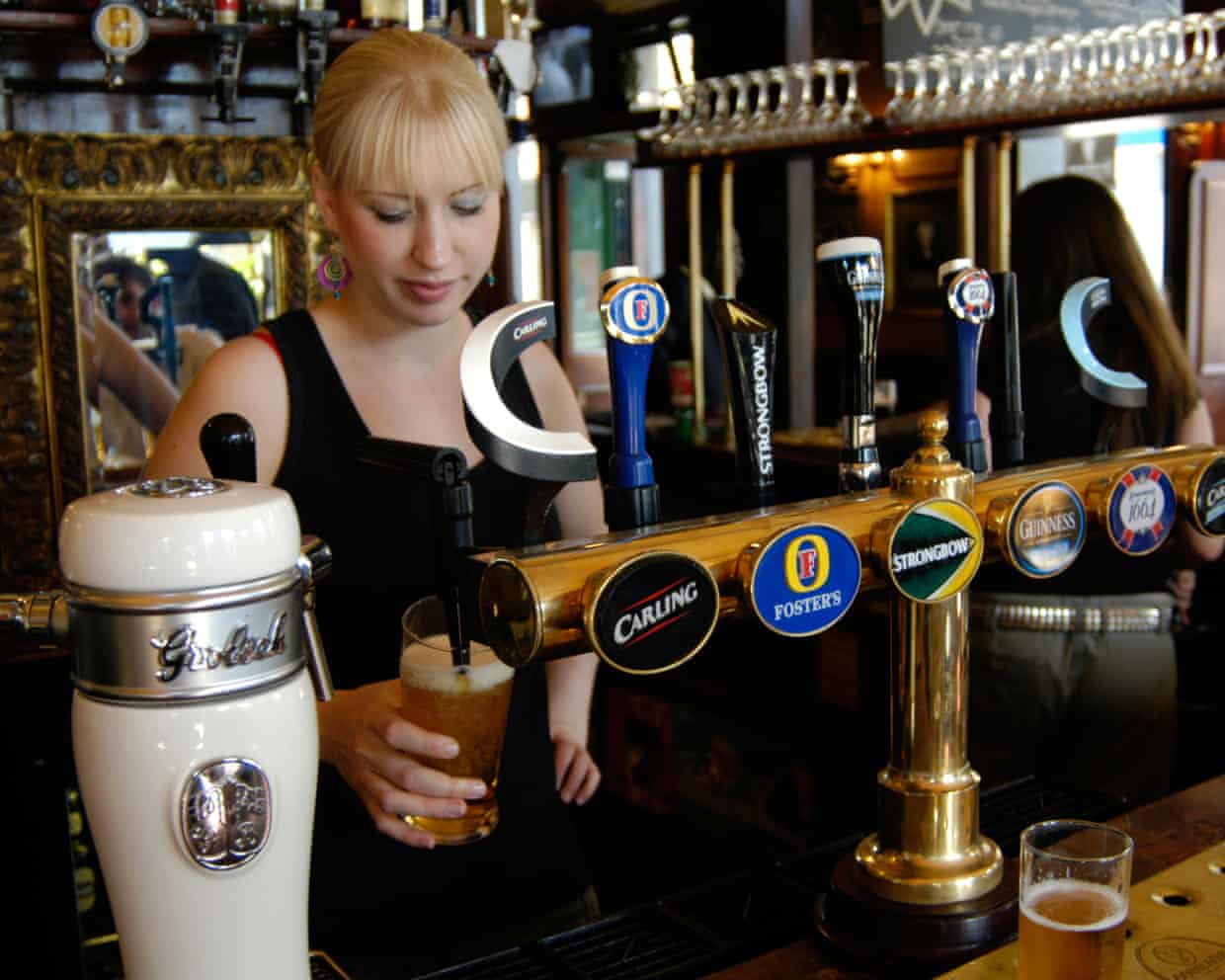
Retail and hospitality companies have been among the most vocal in criticising the budget measures, including changes to business rates, with pubs among the hardest hit,The chancellor is thought to be finalising a support package that would include reductions to business rates for pubs, which otherwise face a 76% rise on average over the next three years,Responding to the latest employment figures, Allen Simpson, chief executive of the lobby group UK Hospitality, said: “Hospitality is being hit by costs at every angle and it is the cumulative effect of this growing tax burden that is resulting in the number of people employed in hospitality continuing to fall,“Looming business rates increases are only making things worse and the government needs to act urgently to bring forward a hospitality-wide solution that averts those hikes,If it doesn’t, we will only see job losses and business closures accelerate.
”UK wage growth excluding bonuses weakened to 4.5% from 4.6% in the previous quarter, while including bonuses, it slipped to 4.7% from 4.8%, the ONS said.
The figures were in line with what economists had predicted.Liz McKeown, the director of economic statistics at the ONS, said: “The number of employees on payroll has fallen again, with reductions over the last year concentrated in retail and hospitality, and reflecting ongoing weak hiring activity.“Wage growth in the private sector has slowed to its lowest rate in five years, while public sector wage growth remains elevated reflecting the continued impact of some pay rises being awarded earlier than they were last year.”Private regular earnings growth, a leading indicator for the Bank of England, fell to 3.6% in the three months to November.
While there was a slight increase in vacancies, the overall number has remained broadly flat over the past six months, after a long decline, McKeown said.Economists noted that more people were joining the workforce.“Despite sickness-related inactivity remaining at historically high levels, the overall share of working-age adults classed as inactive was close to a near six-year low, a positive sign for the economy’s supply side,” said Martin Beck, the chief economist at WPI Strategy.There were 155,000 working days lost because of labour disputes across the UK in November, the highest number since January 2024, with more than half lost in the health and social work sector because of strikes by resident doctors in England.The labour market has weakened significantly over the past year.
Unemployment has jumped to 1.8 million, and the number of vacancies has fallen to below the average before the Covid pandemic.Employers have become more reluctant to retain staff and advertise for new workers after Reeves pushed up employers’ national insurance and the minimum wage last year.Jake Finney, a senior economist at PwC UK, said: “The labour market is weakening as elevated policy uncertainty and weaker hiring start to bite.As is often the case when the labour market slows, young people are at the sharp end of the rise in unemployment.
”City economists expect the Bank of England to cut interest rates at least twice this year, from 3.75% to 3.25%, in response to the weaker outlook for jobs and inflation.Finney said Tuesday’s employment figures were “unlikely to move the dial” on the decision over a rate cut next month, and a cut in March appeared more likely.The work and pensions secretary, Pat McFadden, said: “Today’s figures show there are 513,000 more people in work compared to this time last year, but also highlights why we must go further, especially for our young people.
”The ONS, the UK’s official statistics body, is trying to improve the quality of its data, after a scathing review found “deep-seated issues” and called for an overhaul of the organisation,
The inside track on curbing UK prison violence | Letters
Alex South’s harrowing account of violence in prisons (Death on the inside: as a prison officer, I saw how the system perpetuates violence, 13 January) deserves more than our sympathy – it demands we recognise these murders and assaults not as symptoms of a broken system, but as a foghorn blaring warnings about fundamental failures.I work in prisoner rehabilitation. I see what South describes from the other side: men whose “scaffolding” is indeed flimsy, who have accumulated trauma before and during incarceration. But I also see what happens when that changes. Our service users work in cafes, bakeries and bike shops, not because we believe in the redemptive power of bread or bicycles, but because meaningful work and purposeful activity are the foundations of desistance
She’s just autistic Barbie – let children play | Letters
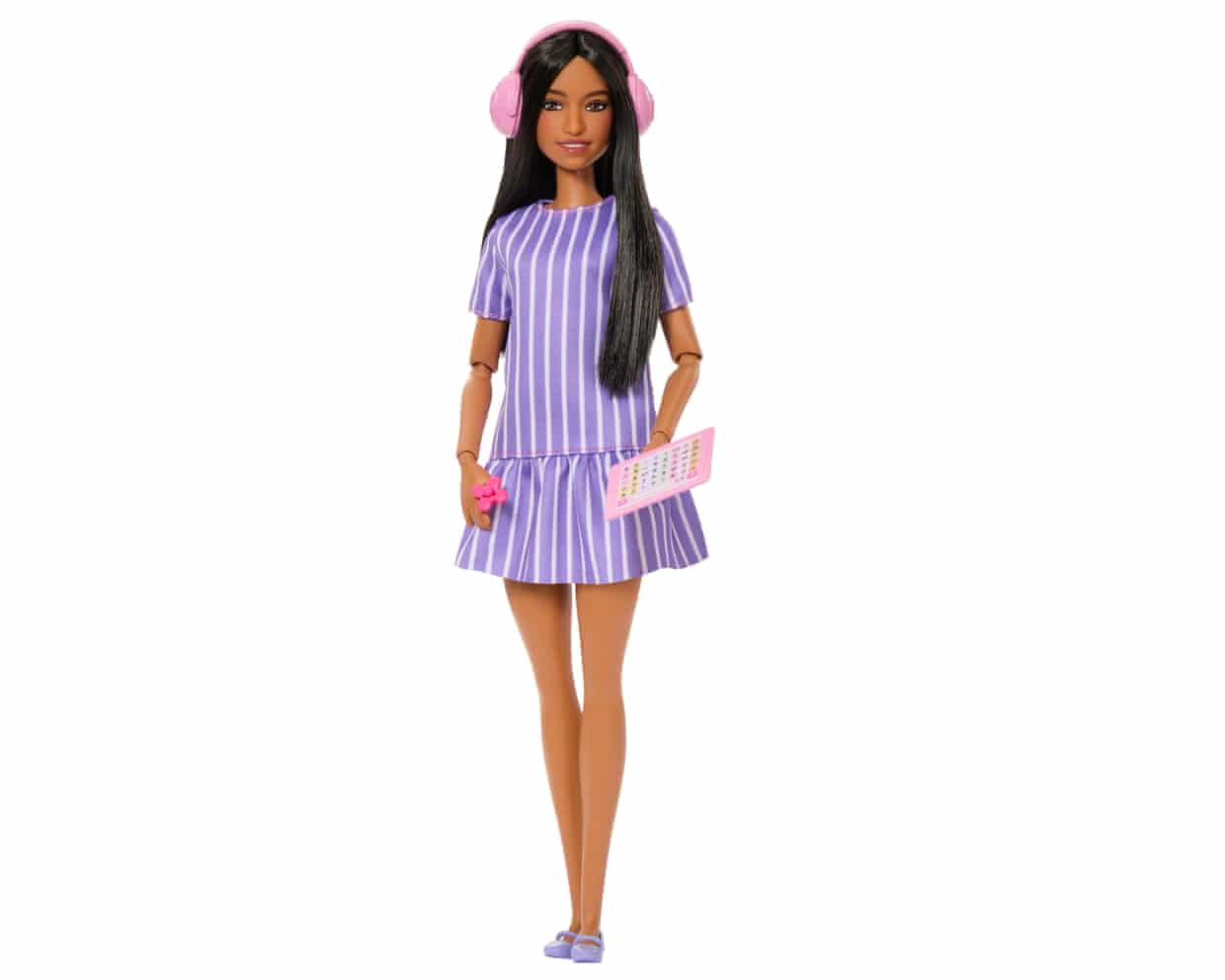
As the parent/carer of autistic children, I’m pleased that my kids have more visibility in mainstream culture with the launch of the “autistic Barbie” doll (Mattel launches its first autistic Barbie, 12 January). For the kids, they’re interested, but, given my youngest’s penchant for graffiti, “autistic Barbie” will be drawn all over and resemble “weird Barbie” in no time.I’ve found it hard to share this pleasure, having seen my academic and activist colleagues slam the doll. I completely understand their reasoning. Of course it lacks nuance to use visible accessories to represent a hidden disability

Private investigators must be trained to spot signs of domestic abuse and stalking | Letter
I was grateful to read the Guardian investigation revealing how perpetrators of abuse are using private investigators to further harm by proxy, exposing the unseen threat faced by victims and their supporters (You feel violated’: how stalkers outsource abuse to private investigators, 11 January).As the manager of a sexual and domestic abuse service, I see the impact of stalking on a monthly basis, not as an adjacent concern but as one of the clearest predictors of intimate partner homicide we have. Victim-survivors who disclose stalking and associated behaviours are rarely paranoid; they are often correctly identifying imminent danger.Extraordinary measures are taken by victim-survivors to stay safe: changing names, abandoning jobs or study, moving across the country, and fleeing into refuges or new areas to live anonymously. Yet even these steps can prove redundant if an unregulated investigator is paid to track them

Positive thinking could boost immune response to vaccines, say scientists
Positive thoughts may boost the immune system according to research that points to a connection between the mind and our body’s natural defences.Scientists have found people who used positive thinking to boost activity in the brain’s reward system responded better to vaccination, with their immune systems producing more antibodies than others after having the shot.The work does not mean being hopeful can rid people of disease, but hints at the potential for mental strategies to help the immune system fight infections and even attack tumours to keep them at bay.“It’s the first demonstration in humans, in what seems to be a causal manner, that if you learn how to recruit your reward system in the brain, the effectiveness of immunisation increases,” said Talma Hendler, a professor of psychiatry and neuroscience at Tel Aviv University.Previous work has shown that positive expectations can benefit patients with some medical problems, as seen in the placebo effect

Pepper spray use at young offender institutions in England ruled legal
An attempt to halt the use of pepper spray on children held in young offender institutions (YOIs) has failed after the high court ruled on Monday that the weapon’s rollout was lawful.The Howard League for Penal Reform challenged the Labour government’s decision to authorise the use of Pava, a synthetic form of pepper spray, in three prisons in England holding boys as young as 15.Risks such as the physical and psychological harm posed by Pava, the likely disproportionate use of the spray against disabled children and black and minority ethnic prisoners, and propensity to increase violence overall, had not been considered, the charity said.But in a judgment on Monday, Mr Justice Calver said that the then justice secretary, Shabana Mahmood, had sought to ensure that its use was only as a “last resort”.“It is plain that the secretary of state was closely involved in the formation of the Pava policy and was insistent upon thorough safeguards being introduced concerning its use, as well as constant ‘live’ monitoring and oversight of the limited use of Pava which she expected to be extremely rare in view of the limitations upon its use: viz, as a last resort, and only where there is an immediate threat of life-changing or life-ending violence,” the judgment said

‘Jess’s rule’ posters remind GPs in England to re-examine patients’ symptoms
Millions of patients in England will this week be urged to ask their GP to think again if they have not had a diagnosis for their symptoms after three appointments.From Monday, GP practices across the country will use posters to promote Jess’s rule, a new system aimed at preventing serious illnesses from being missed and needless deaths. It is named after Jessica Brady, a 27-year-old who contacted her surgery 20 times before dying of cancer in 2020.Jess’s rule urges family doctors to consider a second opinion, conduct a face-to-face physical examination or order more tests if a patient has had three appointments for their symptoms but no diagnosis.Posters advertising Jess’s rule have been sent to all 6,170 GP practices in England

Mercedes lead designer John Owen to leave team during upcoming F1 season

Australian Open 2026: Osaka opens ‘jellyfish season’ with win, Tsitsipas battles through – as it happened

Bencic delivers statement Australian Open performance to outclass Boulter

One phone call and John Roberts had the full story – there was an air of amazement in the room

Luke Donald to hold talks with Ryder Cup executives as he eyes third tilt at captaincy

The Breakdown | England prepare to reveal Six Nations hand with Borthwick aware of ticking clock