Lending to small businesses and low-income areas must expand, say Labour backbenchers

Senior Labour backbenchers are urging the government to introduce legislation forcing UK banks to expand affordable lending to small businesses and low-income neighbourhoods.The former minister Gareth Thomas has tabled a 10-minute rule bill – a type of private member’s bill – echoing the US Community Reinvestment Act (CRA).Thomas said: “Given the cost of living crisis, we need to unlock far better access to cheap loans for the millions of people on low and middle incomes to help them through the financial emergencies that everyone faces at some point, while also making it easier for talented entrepreneurs to find the affordable finance they need to get their businesses up and running.”Co-sponsors of the legislation include the Labour select committee chairs Meg Hillier, Liam Byrne and Sarah Owen, and the former shadow chancellors Anneliese Dodds and John McDonnell.The Treasury published its own financial exclusion strategy last year, including a commitment to supporting the expansion of credit unions.
However, campaigners complained that it placed few specific duties on the financial sector, which the chancellor, Rachel Reeves, has praised as the “crown jewel in our economy”.Passed in the 1970s, the CRA obliges US banks to report to regulators on their record in lending to poorer communities.They are then rated accordingly, and explain what they will do to improve.Thomas’s bill, a longstanding campaigning aim of the Co-operative party, of which 41 Labour MPs are members, would establish similar reporting requirements for the UK.Banks would have to “measure and disclose their performance in reducing financial exclusion, including exclusion from affordable credit, and in improving access to finance for small and medium-sized businesses”, and regulators would “establish a system for rating banks according to that performance”.
The legislation would also oblige the banks to back credit unions and community development finance institutions (CDFIs) that specialise in small-scale, face-to-face banking in underserved communities.In the US, many banks fulfil their requirements under the CRA by collaborating with CDFIs.Hillier, the chair of the Treasury select committee, said: “I’m pleased my colleague Gareth is drawing attention to this issue.All too often, improving financial inclusion is treated as an abstract box-ticking exercise rather than a core responsibility of a modern, progressive society.“My committee has launched an inquiry into the Treasury’s proposals to improve financial inclusion.
We will be looking at whether the government has the plan and resources to genuinely tackle the real barriers people face.If this is not done properly, we all lose out.”Michelle Ovens, the founder of campaign group Small Business Britain, said: “Many small businesses and individuals continue to face barriers to accessing fair and affordable banking.This bill would be an important step towards tackling financial exclusion by increasing transparency and accountability across the banking sector.”The bill has little chance of proceeding, but many Labour backbenchers are keen to float alternative economic approaches, given widespread dissatisfaction with the party leadership’s approach.
Thomas was a junior minister in the Department for Business and Trade until the September reshuffle caused by Angela Rayner’s resignation.Reeves made the latest of a string of policy retreats last week, with the government promising additional support for pubs facing sharp increases in their business rates bill.It was the second U-turn in a matter of weeks, following the decision to significantly raise the threshold at which inheritance tax will be paid on farmland, after a year-long backlash.A Treasury source stressed that existing laws and regulations, including the consumer duty, overseen by the City watchdog the Financial Conduct Authority, already place responsibilities on banks in respect of financial inclusion, and suggested Thomas’s bill risked duplicating these.

People put off giving CPR by unrealistic TV depictions, researchers say
Cardiopulmonary resuscitation (CPR) is a dramatic intervention, but researchers say TV portrayals are often misleading – potentially influencing whether viewers feel able to carry it out themselves.According to the British Heart Foundation (BHF) there are more than 30,000 out-of-hospital cardiac arrests every year in the UK.But while CPR by bystanders can help save lives, the American Heart Association (AHA) notes the percentage of people in need who receive it is only about 35-45% globally.The AHA has since 2008 attempted to increase such rates by stressing that people who are not trained, and hence might not feel comfortable giving breaths or searching for a pulse, should only perform chest compressions on adults – a position shared by the NHS.Now researchers say TV shows often depict lay people carrying out additional steps, potentially perpetuating barriers to viewers carrying out the life-saving intervention

Guardian Hope appeal raises £950,000 for charities tackling racism and division
Generous Guardian readers have so far raised more than £950,000 as our Hope appeal supporting charities tackling social division, racism and hatred enters its final few days.The 2025 appeal, which closes at midnight on Wednesday evening, is aiming to raise £1m for grassroots voluntary organisations campaigning against extremism, anti-migrant rhetoric, and the re-emergence of “1970s-style racism”.Our five partner charities are: Citizens UK, the Linking Network, Locality, Hope Unlimited Charitable Trust and Who is Your Neighbour?Thousands of Guardian readers have so far given to the appeal, with many telling us via the email button on the donations page why they were delighted to donate.One said: “I’m pretty broke, and my charitable giving is mostly reserved for those suffering in war zones. But brokeness is relative, and I was inspired to make a small donation by the Saturday article by Zoe Williams
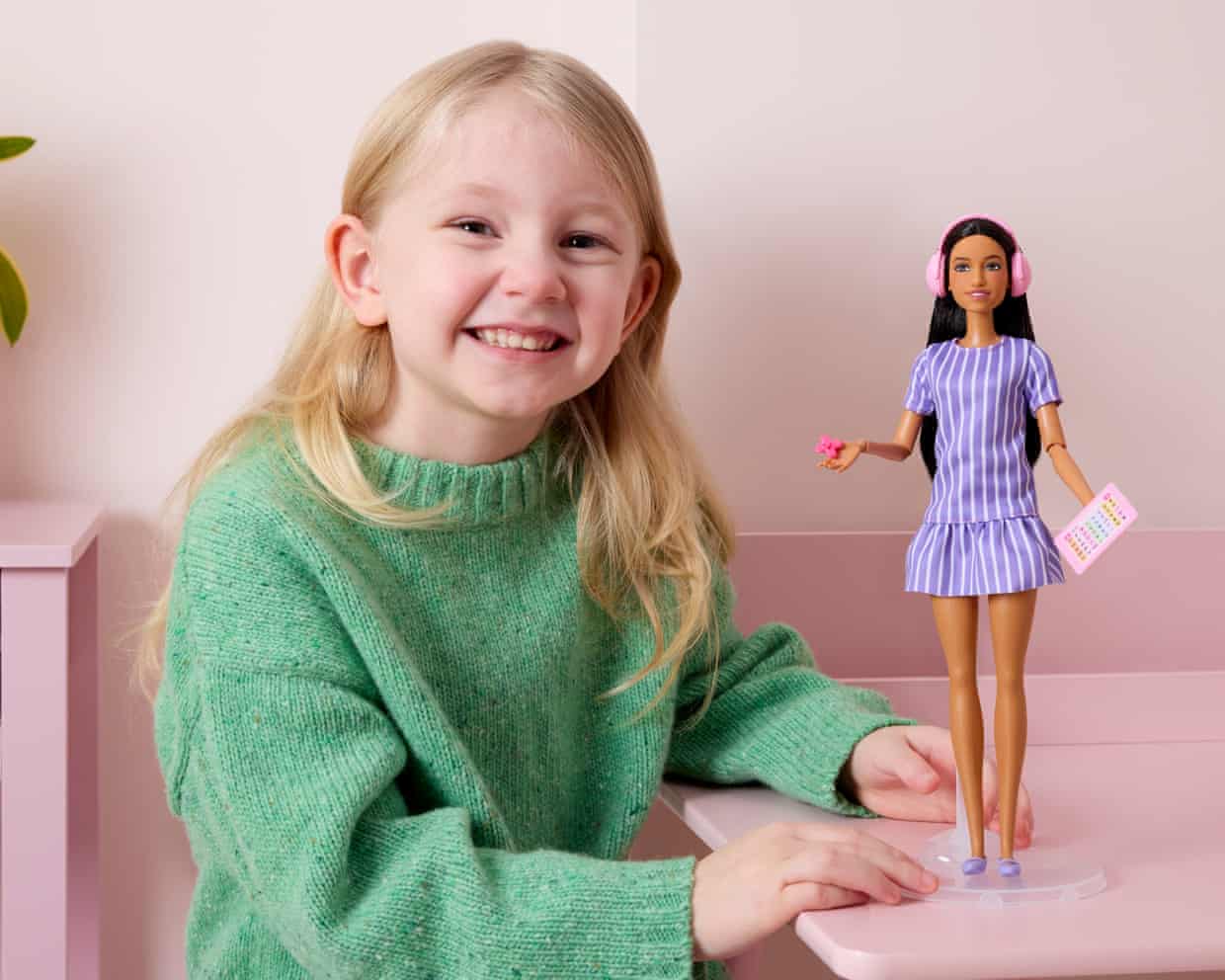
Mattel launches its first autistic Barbie
With an animated Barbie film in development, following the success of Greta Gerwig’s 2023 blockbuster movie, Mattel Studios will certainly have a diverse range of characters to bring to life.On Monday, Mattel launches its first autistic Barbie. Coming barely six months after its first doll with type 1 diabetes, this newest addition to Barbie’s Fashionistas range is designed so that more children “see themselves in Barbie” and to encourage all children to play with dolls that reflect the world around them.Autism is a form of neurodivergence that influences how people experience and interact with society. While characteristics of autism vary according to the individual, more than one child in a hundred is believed to be autistic, according to the World Health Organization

Finding a home is the care leaver’s greatest problem | Letter
At Become, the national charity for children in care and young care leavers, we agree with your editorial that the government’s recent offer of free eye tests and prescriptions for care leavers is a welcome step in strengthening support for those leaving care (The Guardian view on care leavers: responsibility for looked-after children does not end at 18, 2 January). However, this measure does little to address the far more urgent crisis facing care leavers: a third will experience homelessness within two years of leaving care.Every year, thousands of young people are forced out of care before they are ready, often on their 18th birthday or even younger, with vital support vanishing overnight. Many are pushed into unsuitable housing, such as B&Bs and hostels where they don’t feel safe. They then face the challenge of managing household bills while trying to continue education or find work

‘There’s a dark side to floristry’: are pesticides making workers seriously ill – or worse?
Unlike in food, there is no upper limit on the amount of pesticide residue levels in flowers. But after French officials linked the death of a florist’s child to exposure in pregnancy, many in the industry are now raising the alarmOn a cold morning in December 2024, florist Madeline King was on a buying trip to her local wholesaler when a wave of dizziness nearly knocked her over. As rows of roses seemed to rush past her, she tried to focus. She quickly picked the blooms she needed and left.I’m not doing this any more, she thought

Excessive screen time limits vocabulary of toddlers, experts warn
Excessive screen time is damaging toddlers’ ability to speak, the UK government has warned as it prepares to issue advice to parents for the first time on how to manage screen use in under-fives.Research has found that children aged two with the highest screen use – about five hours a day – could say significantly fewer words than those with screen use of about 44 minutes a day.Screen use is now near-universal in early childhood, with 98% of two-year-olds watching screens daily, the research also found.The education secretary, Bridget Phillipson, said parents and teachers had warned that “too much passive screen time can start to crowd out the talking, play and reading that are so important for children’s language and development in the early years”.“Screens are part of family life now

Hawaii: A Kingdom Crossing Oceans review – a feather-filled thriller full of gods, gourds and ghosts

Three board members and board chair resign from Adelaide festival as Randa Abdel-Fattah sends legal notice

Adelaide festival did not dump Jewish columnist from 2024 program despite request from Randa Abdel-Fattah and others

Eddie Izzard: ‘I once ran 90km in just under 12 hours. That was a tough day’

My cultural awakening: Losing My Religion by REM helped me escape a doomsday cult

From Hamnet to Bridget Christie: your complete entertainment guide to the week ahead