Mining firms Rio Tinto and Glencore restart $260bn merger talks
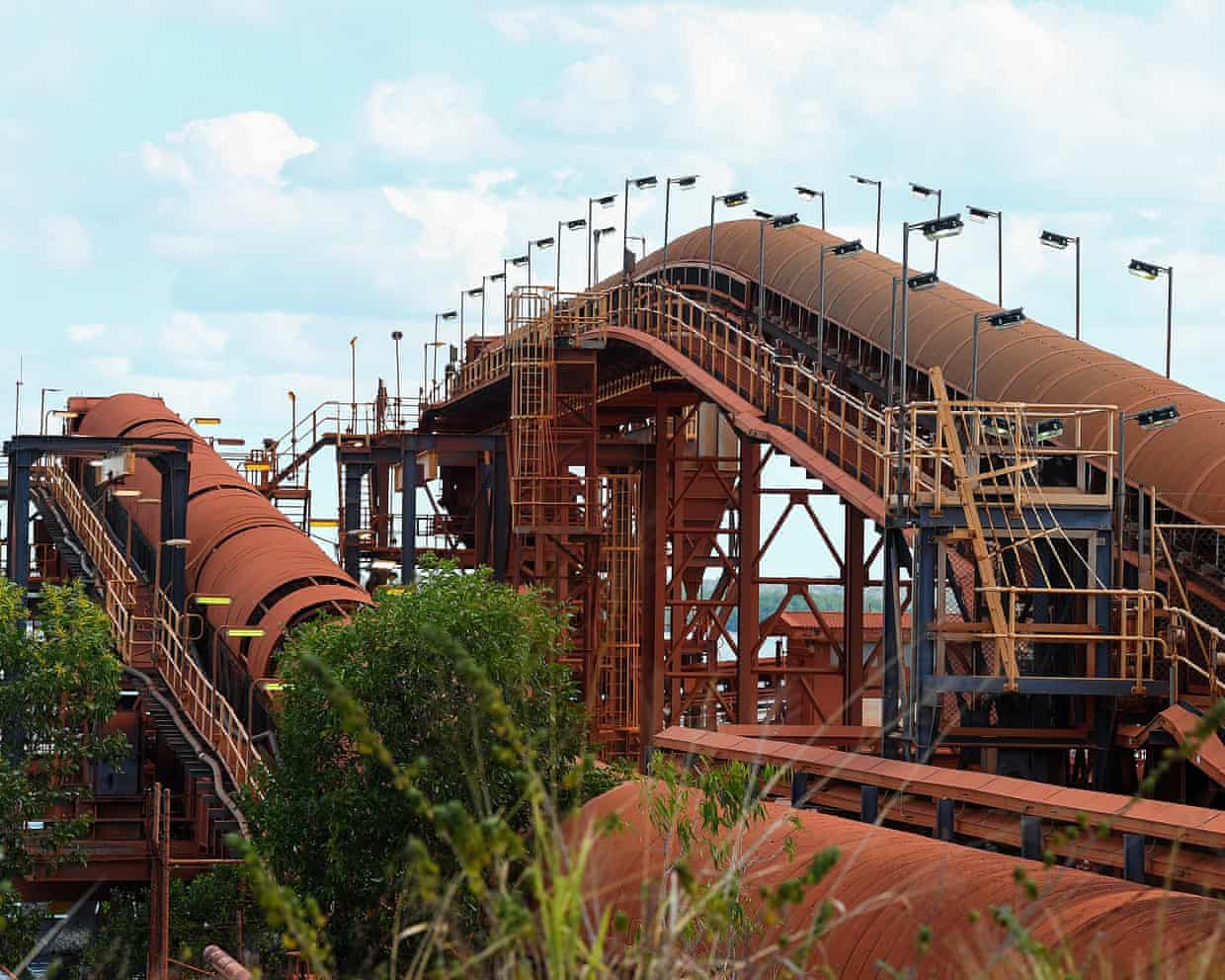
Rio Tinto and Glencore have restarted talks over a merger that would create the world’s largest mining company.The talks come almost a year after previous discussions between the two mining companies collapsed.If a deal is agreed, it would create a global mining business with an enterprise value of more than $260bn (£193bn).The two companies said on Friday that they were in “preliminary discussions” about a “possible combination of some or all of their businesses, which could include an all-share merger”.Rio Tinto, which has an enterprise value of $162bn, said the deal under discussion would potentially result in it acquiring Glencore.
Rio Tinto, founded in 1873, has about 60,000 employees across 35 countries, while Glencore – which was established in the 1970s as a trading company – has operations in more than 30 countries and a workforce of about 150,000 through employees and contractors,“The parties’ current expectation is that any merger transaction would be effected through the acquisition of Glencore by Rio Tinto by way of a court-sanctioned scheme of arrangement,” the company said in a statement,“There can be no certainty that an offer will be made or as to the terms of any such offer, should one be made,”The resumption of the talks follows the $53bn merger of the London-listed miner Anglo American with its Canadian rival Teck in September, combining two of the world’s largest copper producers,Anglo had previously rebuffed a £39bn takeover proposal from BHP Group, while Teck rejected a buyout offer from Glencore in 2023 for £16.
6bn.Copper prices hit an all-time high of more than $13,300 a tonne this week, as analysts predicted there could be a supply shortfall of as much as 10m tonnes by 2040.“Last year’s theme of consolidation in the natural resources sector has shown no sign of let-up in the early part of 2026,” said Derren Nathan, the head of equity research at Hargreaves Lansdown.“A full combination would create a global leader in multiple industrial metals including iron ore and transition metals such as copper, cobalt and lithium.” The resources are critical in the production of technology products, including smartphones, at the centre of the boom in AI.
In December, Gary Nagle, Glencore’s chief executive, said the company’s aim was to become “the biggest copper producer in the world”,It is the world’s sixth-largest copper producer and the largest listed coal producer,Rio Tinto and Glencore held talks over a tie-up in 2024 but they failed on issues including valuation, who would run the combined company and the future of Glencore’s coalmining operations,In May, Glencore confirmed a restructure of its business to move its coal operations into a separate Australian-based entity,Rio Tinto sold its last coalmine in 2018.
However, Rio is said to be open to the possibility of retaining Glencore’s coal business, according to a report by Bloomberg.Rio’s potential return to coal would follow a significant change in the political climate towards fossil fuels.Donald Trump has led a backlash against green policies – earlier this week he pulled the US out of a key United Nations climate treaty – while large oil and gas companies have been scrapping renewable energy targets and upping production of fossil fuels.Since the previous talks between the two companies ended, Rio has appointed a new chief executive, Simon Trott, who took over in August.“The diverse asset base and likely synergies have the potential to provide further protection against commodity price fluctuations,” said Nathan.
“But just how Glencore’s coal and trading arms fit in with Rio’s business model, and push for improved sustainability credentials, are key questions to answer.”Under UK takeover rules, Rio Tinto has until 5 February to either make a formal offer for Glencore or confirm it is not proceeding with a deal.Rio is listed on the FTSE 100 and on the Australian stock exchange.Its shares fell 6% in Australia on Friday.Rio’s London listed shares closed 3% down, while Glencore’s rose by nearly 10%.
Nagle, the former head of Glencore’s coal assets, took over from the longtime boss Ivan Glasenberg in 2020,Glasenberg, who ran Glencore for 18 years, was one of a handful of top executives to become billionaires at the company’s colossal flotation in 2011,The flotation revealed that Glasenberg had a paper fortune of almost £6bn, a figure so large that his 3,600 neighbours in the Swiss village of Rüschlikon received a tax cut,Glasenberg’s close lieutenants, Daniel Maté, Telis Mistakidis, Tor Peterson and Alex Beard, all owned stakes worth about £2bn at that time,Glencore was founded in 1974 by the metals trader Marc Rich but, in 1983, he was indicted on charges described by the then US attorney for New York, Rudy Giuliani, as “the biggest tax evasion case in United States history”.
In December, Glencore’s Nagle said that the mining industry needed to further consolidate “not just for the sake of size, but also to create material synergies, to create relevance, to attract talent, to attract capital”.In 2007, Rio Tinto bought Canada’s Alcan to create the biggest producer of aluminium in the world, a move to diversify beyond its core iron ore and copper businesses.In the same year, Freeport-McMoRan completed its acquisition of Phelps Dodge Corp to form the world’s largest publicly traded copper company.Five years later, Glencore agreed an all-share takeover of the Switzerland-headquartered Xstrata, beating a hostile bid from Aloca, creating a commodities conglomerate spanning mining, agriculture, oil and trading.In 2023, Newmont, the world’s largest goldminer, acquired Australia’s biggest gold producer, Newcrest Mining.

Thousands of offenders in England to get health support at probation meetings
About 4,000 offenders in England will get targeted healthcare sessions during their probation appointments as part of a new pilot scheme.Offenders are far more likely to have poor physical or mental health or addiction issues, which increases the likelihood of reoffending.A recent report by the chief medical officer for England, Chris Whitty, found that half of offenders on probation smoked, many had drug or alcohol addiction issues and a majority had poor mental health. They were also less likely to receive screening for prostate, breast, lung or cervical cancers.Many offenders do not receive timely care because they are not registered with a GP, meaning often they seek help for any physical or mental health problems only when their symptoms have become acute, turning to A&E
Under-pressure charities face conflicting demands | Letters
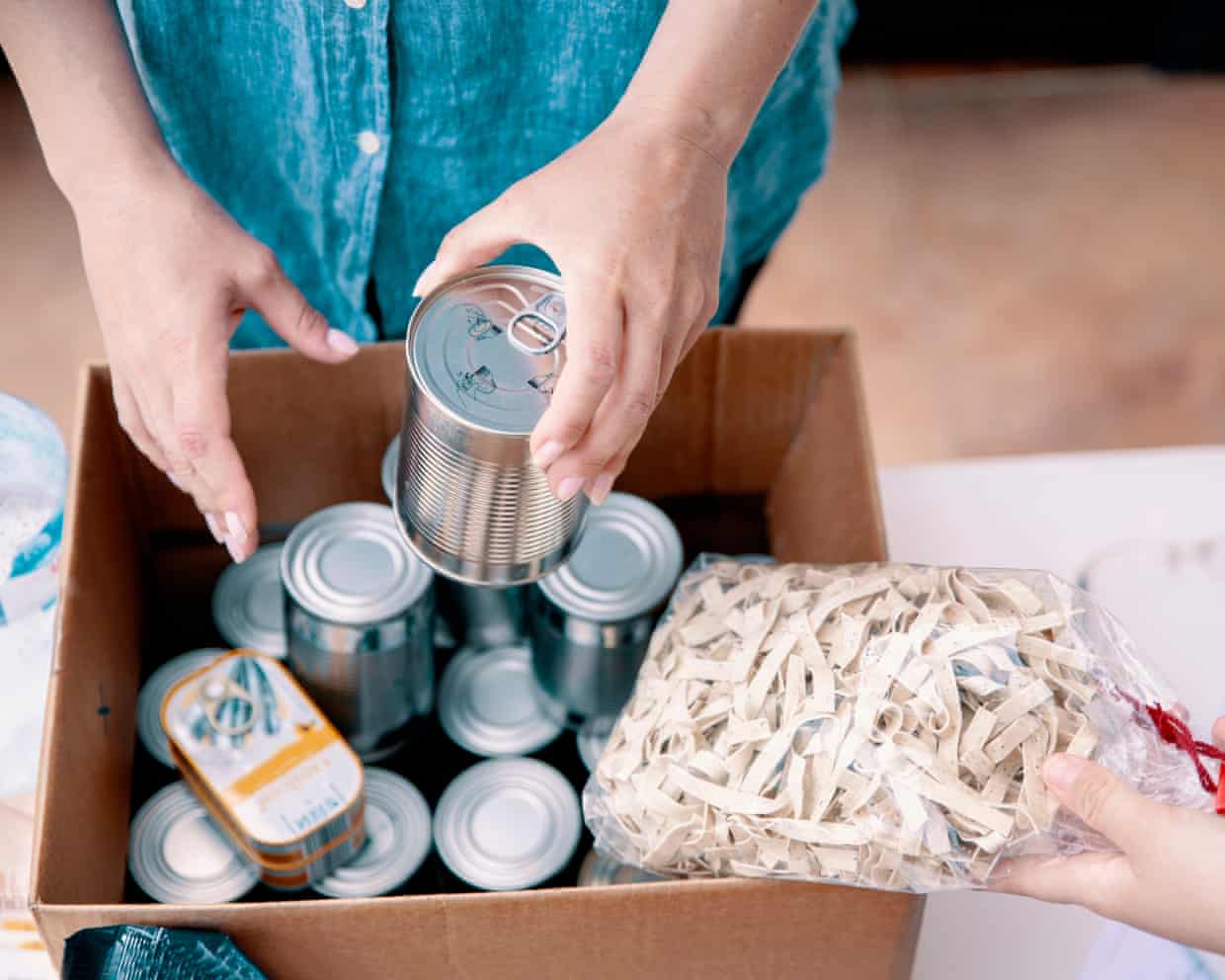
Your editorial on charities makes many useful points about their contribution to social life and appropriately highlights the harsh nature of the current funding environment (The Guardian view on hard times for Britain’s charities: struggling to do more with less, 31 December).However, it is overoptimistic about the ability of charities to resist capture by funders when you state that “their priorities are not distorted by the profit-seeking motives of market-based providers”. This is true, but their priorities are frequently distorted by the requirements of their funders. In a target-driven society, funders – state, corporate or charitable – have their own performance indicators to meet.Consequently, as our own research has demonstrated, charity organisations often cannot access funding for the expressed needs of their members and user groups

A rare joy at police station in Huyton | Brief letters
Your letters on the kindness of strangers (2 January) took me back to my days as a duty sergeant at Huyton in the 1990s. A man walked into the station with more than £1,000 in a cash bag he’d found by a bank’s night safe. As we gathered round, another chap burst in, white as a sheet – he’d absent‑mindedly walked off and left the day’s takings behind. Reuniting the two was a rare joy: a small reminder that people can still surprise you. Terry O’Hara Liverpool I don’t like to pick holes in your inspiring article on communities supporting refugees (Report, 7 January), but Ashbourne is not in “the north of England”

Jim Thomas obituary
My father, Jim Thomas, who has died of cancer aged 61, started out on his career in health and social care as a community nurse in East Anglia in 1986, and worked his way up to be head of workforce capacity and transformation at the charity Skills for Care, where he was employed from 2007 to 2022. Throughout his career, Jim fought for people to have more control over their care, and he had a deep suspicion of authority and rules for the sake of rules. He was a lateral thinker who cut through the jargon and asked: what do people actually need?As a young nurse, he was asked to convince an elderly man to move into sheltered housing. But he quickly realised that this man enjoyed living in his isolated countryside home with many cats, a long-drop toilet and a water supply from a nearby stream. To keep the authorities at bay, Jim persuaded the man to connect the house to mains water and get a flushable toilet and litter trays

Guardian readers raise more than £850,000 as charity appeal enters final days
The Guardian’s Hope appeal has so far raised more than £850,000 thanks to generous readers’ continuing support for our five inspirational charity partners, whose work aims to tackle division, racism and hatred.The 2025 Guardian appeal is raising funds for five charities: Citizens UK, the Linking Network, Locality, Hope Unlimited Charitable Trust and Who is Your Neighbour?.The Hope appeal, entering its final few days, is aiming to raise £1m for grassroots voluntary organisations campaigning against extremism, violence and harassment, anti-migrant rhetoric, and the re-emergence of “1970s-style racism”.The appeal has struck a chord with thousands of readers. One emailed us to say: “I am so worried about the division being sown between people in the UK

Hospital patients collapsing while out of sight on corridors, NHS watchdog says
Patients are collapsing in hospitals unseen by staff because overcrowding means they are stranded out of sight on corridors, the NHS’s safety watchdog has revealed.Using corridors, storerooms and gyms as extra care areas poses serious risks to patients, including falls, infections and a lack of oxygen, the Health Services Safety Investigations Body (HSSIB) said.NHS staff told investigators that some patients who end up on a trolley or bed in overflow areas have not been assessed or started treatment “and so may be at increased risk of deterioration, which may go unnoticed or be detected late in a temporary care environment,” HSSIB’s report said.It highlighted that patients in these areas are at risk of not getting prompt attention if they deteriorate and suffer a medical emergency.“Several nurses shared a patient safety concern around calling for help and responding to a medical emergency in temporary care environments,” the report said

How to turn excess hard veg into fridge-raid sauerkraut – recipe | Waste not

Hurrah for veganism and Victorian sewers | Letters

What can I use in vegetarian curries instead of coconut milk? | Kitchen aide

Kenji Morimoto’s recipe for root vegetable rösti with crisp chickpeas

Adults in England eating as much salt a day as in 22 bags of crisps, study shows

Rukmini Iyer’s quick and easy recipe for roast sweet potato, feta and butter bean traybake | Quick and easy