Trump suggests US taxpayers could reimburse oil firms for Venezuela investment
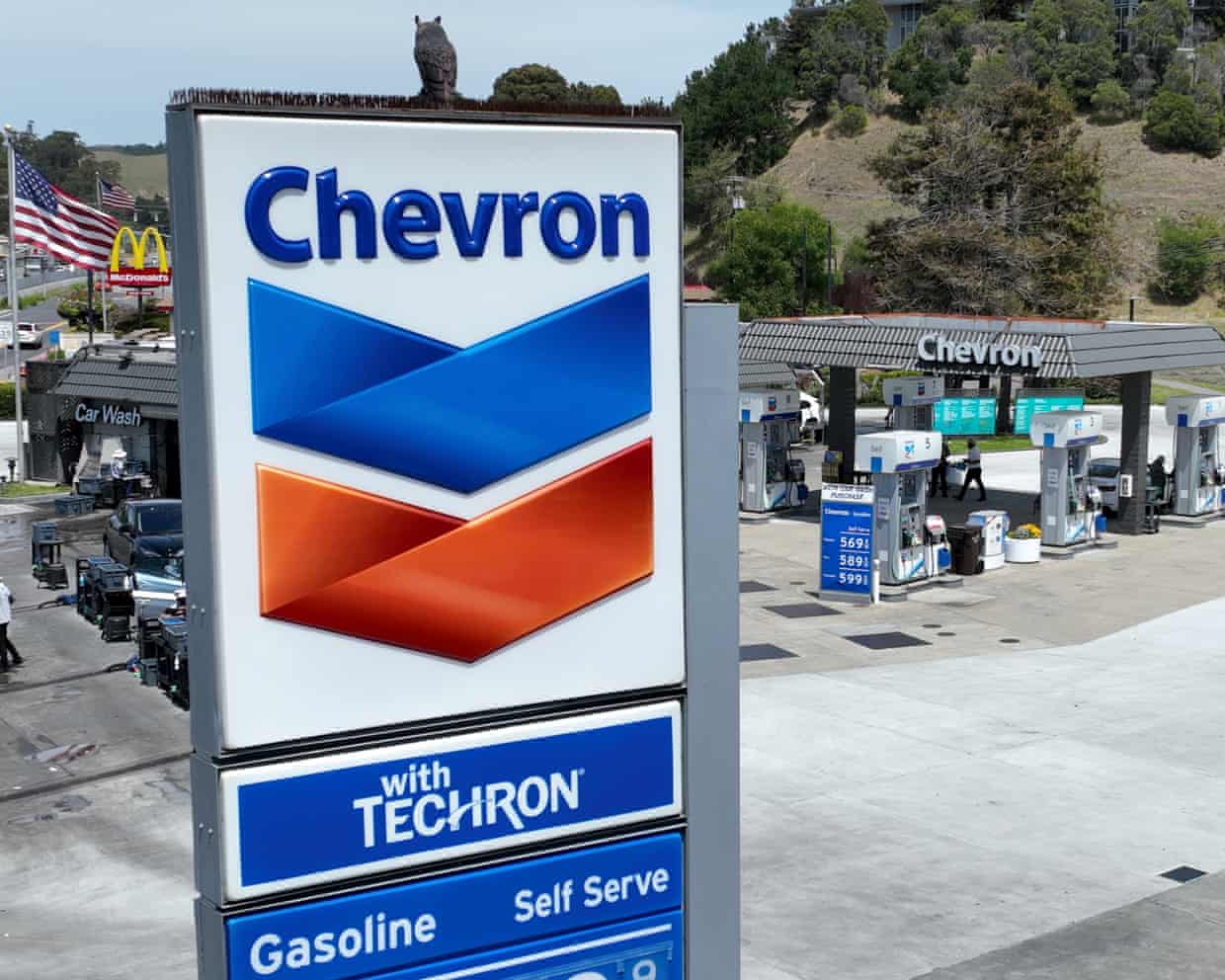
Donald Trump has suggested US taxpayers could reimburse energy companies for repairing Venezuelan infrastructure for extracting and shipping oil.Trump acknowledged that “a lot of money” would need to be spent to increase oil production in Venezuela after US forces ousted its leader, Nicolás Maduro, but suggested his government could pay oil companies to do the work.“A tremendous amount of money will have to be spent and the oil companies will spend it, and then they’ll get reimbursed by us or through revenue,” the president said.The US energy secretary, Chris Wright, reportedly plans to meet representatives of Chevron, ConocoPhillips and ExxonMobil at the Goldman Sachs Energy, Clean Tech & Utilities Conference in Miami later this week.Representatives of Trump’s administration are planning to meet executives to discuss increasing Venezuelan production, Reuters reported.
The meetings are crucial to the Trump administration’s hopes of getting top oil companies back into the South American nation after its government, nearly two decades ago, took control of US-led energy operations there.The three biggest US oil companies – Exxon Mobil, ConocoPhillips and Chevron – have not yet had any conversations with the administration about Maduro’s removal, Reuters reported.This contradicted Trump’s statements over the weekend that he had already held meetings with “all” the US oil companies, before and since Maduro was seized.“Nobody in those three companies has had conversations with the White House about operating in Venezuela, pre-removal or post-removal to this point,” one of the sources told Reuters.The upcoming meetings will be crucial to the administration’s hopes to increase production and exports of heavy, unctuous crude from Venezuela, a former Opec nation that sits atop the world’s largest reserves and whose barrels can be processed by specially designed US refineries.
Achieving that goal will require years of work and billions of dollars of investment, analysts say,Venezuela produces on average about 1,1m barrels of oil a day, down from the 3,5m barrels produced in 1999 before a government takeover of the domestic industry,It is unclear which executives will be attending the upcoming meetings, and whether oil companies will be attending individually or collectively.
The White House did not comment on the meetings but said it believed the US oil industry was ready to move in to Venezuela.“All of our oil companies are ready and willing to make big investments in Venezuela that will rebuild their oil infrastructure, which was destroyed by the illegitimate Maduro regime,” said White House spokesperson Taylor Rogers.Exxon, Chevron and ConocoPhillips did not immediately respond to requests for comment to Reuters.Asked if the administration had briefed any oil companies before the military operation, Trump said, “No.But we’ve been talking to the concept of, ‘what if we did it?’”“The oil companies were absolutely aware that we were thinking about doing something,” Trump told NBC News.
“But we didn’t tell them we were going to do it.”He told NBC News it was “too soon” to say whether he had personally spoken to top executives at the three companies.“I speak to everybody,” he said.Trump said hours after Maduro’s capture he expects the biggest US oil companies to spend billions of dollars increase Venezuela’s oil production, after it dropped to about a third of its peak over the past two decades because of underinvestment and sanctions.But those plans will be hindered by lack of infrastructure, along with deep uncertainty over the country’s political future, legal framework and long-term US policy, according to industry analysts.
Chevron is the only US major operating in Venezuela’s oilfields,Exxon and ConocoPhillips operated in the country before their projects were nationalised by former president Hugo Chávez,The S&P 500 energy index rose to its highest since March 2025 on Monday, as Exxon Mobil rose 2,2% and Chevron jumped 5,1%.

‘I felt violated’: Elon Musk’s AI chatbot crosses a line
Hello, and welcome to TechScape. Happy new year! I hope your 2026 is off to a great start. Today in tech, we are examining the output of Elon Musk’s AI chatbot, Grok, and the US’s ban on foreign drones.Late last week, Elon Musk’s Grok chatbot unleashed a flood of images of women, nude and in very little clothing, both real and imagined, in response to users’ public requests on X, formerly Twitter. Mixed in with the generated images of adults were ones of young girls – children – likewise wearing “minimal clothing”, according to Grok itself
Nvidia CEO reveals new ‘reasoning’ AI tech for self-driving cars
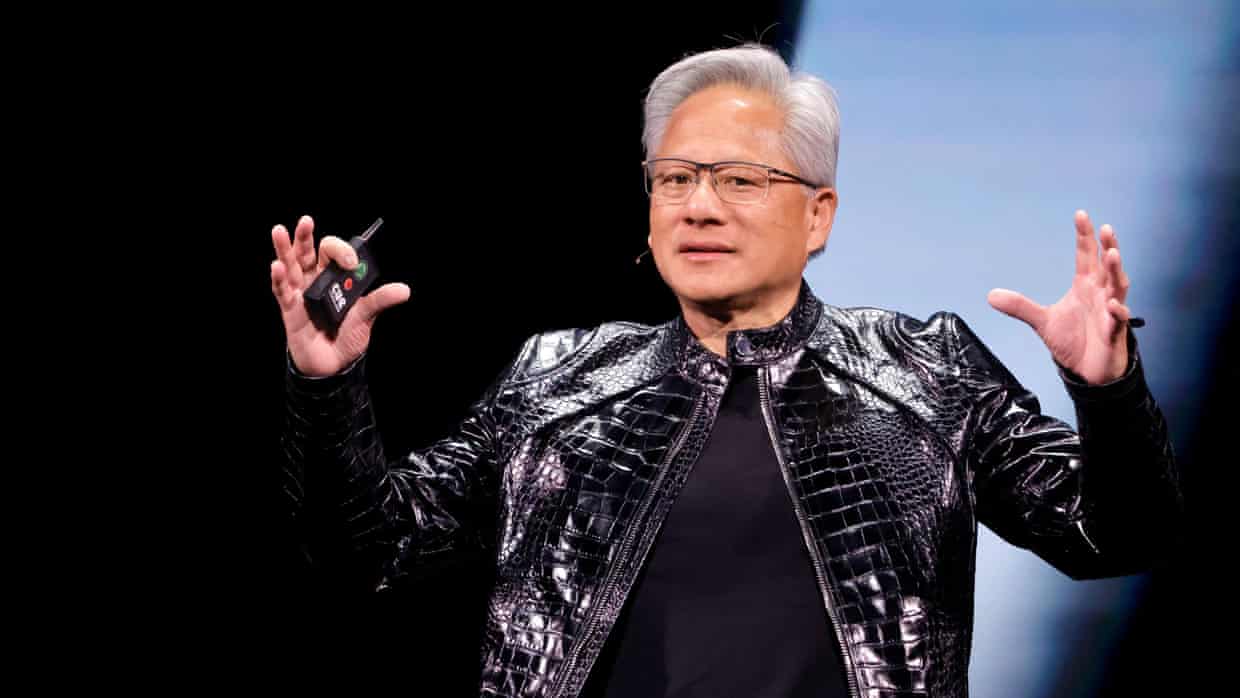
The billionaire boss of the chipmaker Nvidia, Jensen Huang, has unveiled new AI technology that he says will help self-driving cars think like humans to navigate more complex situations.The world’s most valuable company is to roll out the new technology, Alpamayo, which is designed to help self-driving cars handle tricky situations such as sudden roadworks or unusual driver behaviour on the road, rather than just reacting to previous patterns.Nvidia claims Alpamayo will bring chain-of-thought reasoning to self-driving vehicles, combining what the car sees with language-like reasoning.In a speech at the annual Consumer Electronics Show in Las Vegas, the Nvidia founder and chief executive said: “The ChatGPT moment for physical AI is here, when machines begin to understand, reason and act in the real world. Robotaxis are among the first to benefit

Leading AI expert delays timeline for its possible destruction of humanity
A leading artificial intelligence expert has rolled back his timeline for AI doom, saying it will take longer than he initially predicted for AI systems to be able to code autonomously and thus speed their own development toward superintelligence.Daniel Kokotajlo, a former employee of OpenAI, sparked an energetic debate in April by releasing AI 2027, a scenario that envisions unchecked AI development leading to the creation of a superintelligence, which – after outfoxing world leaders – destroys humanity.The scenario rapidly won admirers and detractors. The US vice-president, JD Vance, appeared to reference AI 2027 in an interview last May when discussing the US’s artificial intelligence arms race with China. Gary Marcus, an emeritus professor of neuroscience at New York University, called the piece a “work of fiction” and various of its conclusions “pure science fiction mumbo jumbo”
AI images of Maduro capture reap millions of views on social media
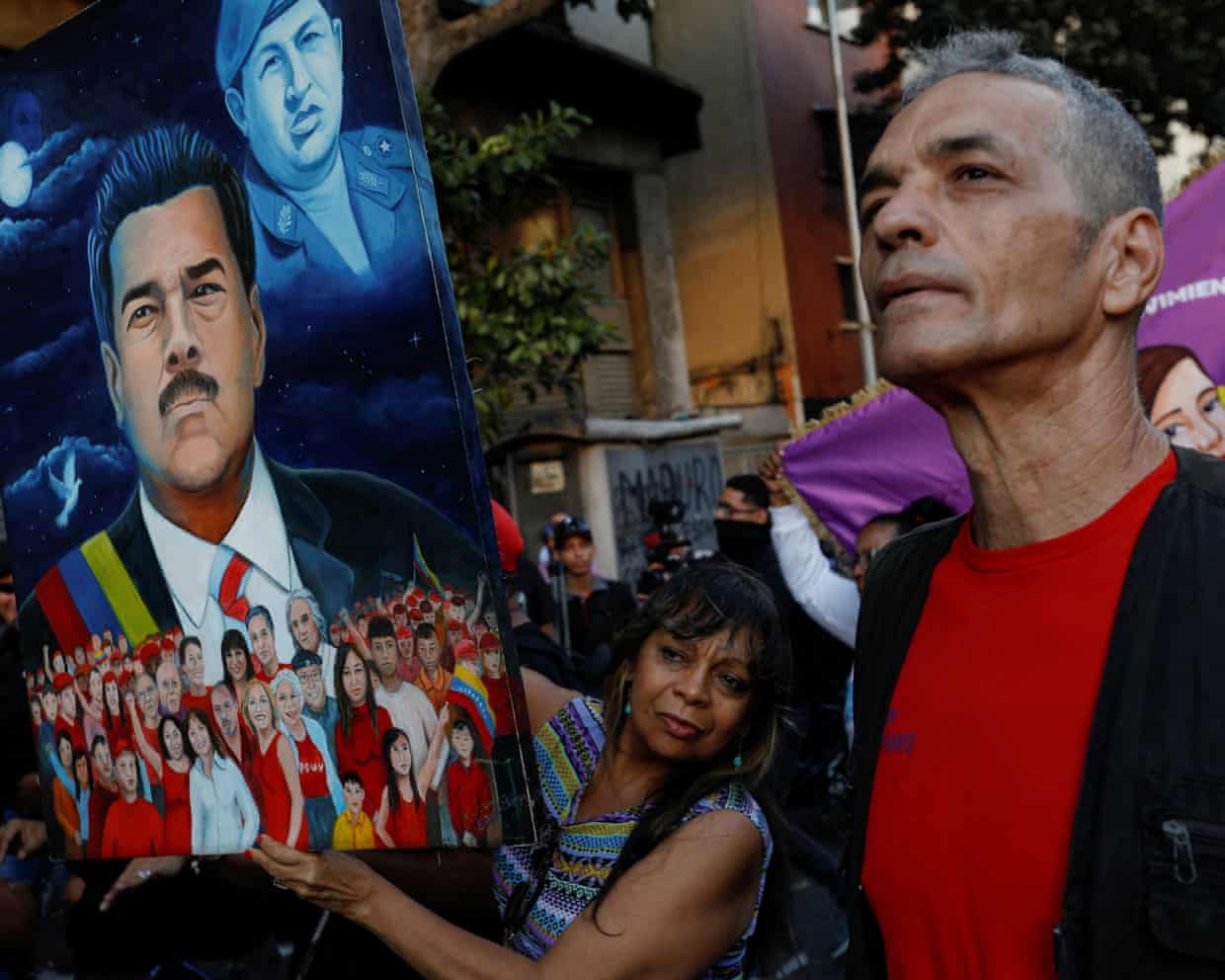
Minutes after Donald Trump announced a “large-scale strike” against Venezuela early on Saturday morning, false and misleading AI-generated images began flooding social media. There were fake photos of Nicolás Maduro being escorted off a plane by US law enforcement agents, images of jubilant Venezuelans pouring into the streets of Caracas and videos of missiles raining down on the city – all fake.The fabricated content intermixed with real videos and photos of US aircraft flying over the Venezuelan capital and explosions lighting up the dark sky. A lack of verified information about the raid coupled with AI tools’ rapidly advancing capabilities made discerning fact from fiction about the incursion on Caracas difficult.By the time Trump posted a verified photo of Maduro blindfolded, handcuffed and dressed in grey sweatpants aboard the USS Iwo Jima warship, the fake images with the US Drug Enforcement Administration (DEA) agents had already gone viral

Grok AI still being used to digitally undress women and children despite suspension pledge
Degrading images of children and women with their clothes digitally removed by Grok AI continue to be shared on Elon Musk’s X, despite the platform’s commitment to suspend users who generate them.After days of concern over use of the chatbot to alter photographs to create sexualised pictures of real women and children stripped to their underwear without their consent, the UK’s communication’s watchdog, Ofcom, said on Monday that it had made “urgent contact with X and xAI to understand what steps they have taken to comply with their legal duties to protect users in the UK”. Ofcom added that it would assess whether an investigation is necessary based on the company’s response.Meanwhile, politicians and women’s rights campaigners accused the UK government of “dragging its heels” by failing to enact legislation that was passed six months ago making the creation of such intimate images illegal.The trend, which went viral over the new year period, also prompted the European Commission to say on Monday that it was “very seriously” looking into complaints that Grok was being used to generate and disseminate sexually explicit childlike images

Mother of one of Elon Musk’s sons ‘horrified’ at use of Grok to create fake sexualised images of her
The mother of one of Elon Musk’s sons has said she felt “horrified and violated” after fans of the billionaire used his AI tool, Grok, to create fake sexualised images of her by manipulating real pictures.The writer and political strategist Ashley St Clair, who became estranged from Musk after the birth of their child in 2024, told the Guardian that supporters of the X owner were using the tool to create a form of revenge porn, and had even undressed a picture of her as a child.Grok has come under fire from lawmakers and regulators worldwide after it emerged it had been used to virtually undress images of women and children, and show them in compromising sexualised positions. The widespread sexual abuse consists of X users asking Grok to manipulate pictures of fully clothed women to put them in bikinis, on their knees, and cover them in what looks like semen.“I felt horrified, I felt violated, especially seeing my toddler’s backpack in the back of it,” St Clair said of an image in which she has been put into a bikini, turned around and bent over
Oil prices fall after Trump says Venezuela will send up to 50m barrels to US

Australia Post apologises for losing Aboriginal artist’s painting worth $4,000

AI consciousness is a red herring in the safety debate | Letters

Wave of Grok AI fake images of women and girls appalling, says UK minister

Jacob Bethell plays starring role in Ashes Wars Episode 5: A New Hope | Barney Ronay

Bethell’s elegant first Test century presses pause on Australia’s Ashes party