The death of Heather Preen: how an eight-year-old lost her life amid sewage crisis
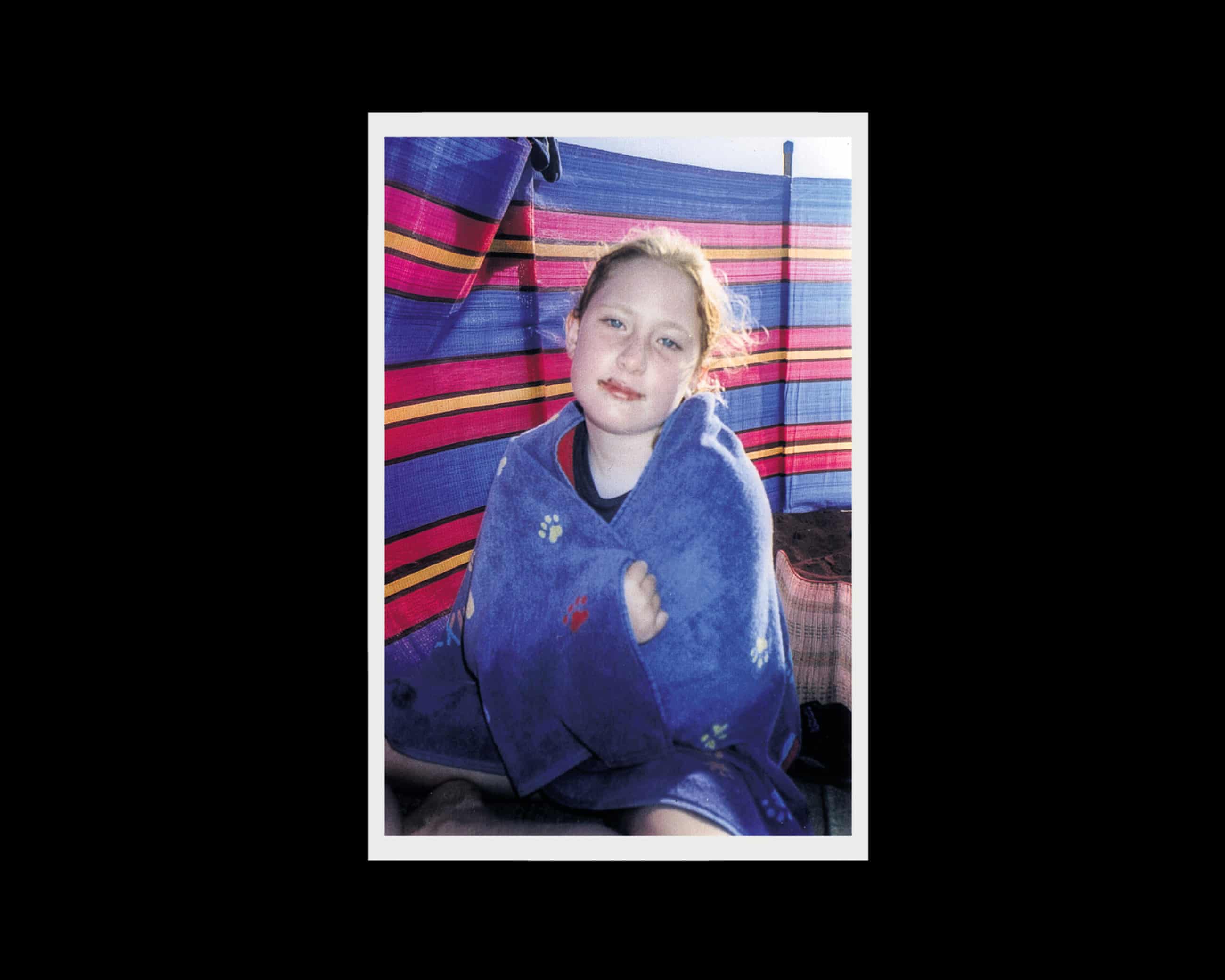
In 1999, Heather Preen contracted E coli on a Devon beach,Two weeks later she died,Now, as a new Channel 4 show dramatises the scandal, her mother, Julie Maughan, explains why she is still looking for someone to take responsibilityWhen Julie Maughan was invited to help with a factual drama that would focus on the illegal dumping of raw sewage by water companies, she had to think hard,In some ways, it felt 25 years too late,In 1999, Maughan’s eight-year-old daughter, Heather Preen, had contracted the pathogen E coli O157 on a Devon beach and died within a fortnight.
Maughan’s marriage hadn’t survived the grief – she separated from Heather’s father, Mark Preen, a builder, who later took his own life.“I’ve always said it was like a bomb had gone off under our family,” says Maughan.“This little girl, just playing, doing her nutty stuff on an English beach.And that was the price.” Yet there had been no outrage, few questions raised and no clear answers.
“Why weren’t people looking into this? It felt as if Heather didn’t matter.Over time, it felt as if she’d been forgotten.” All these years later, Maughan wasn’t sure if she could revisit it.“I didn’t know if I could go back into that world,” she says.“But I’m glad I have.
”The result, Dirty Business, a three-part Channel 4 factual drama, is aiming to spark the same anger over pollution that ITV’s Mr Bates Vs the Post Office did for the Horizon scandal.Jumping between timelines, using actors as well as “real people” and with actual footage of scummy rivers and beaches dotted with toilet paper, sanitary towels and dead fish, it shows how raw sewage dumps have become standard policy for England’s water companies.Jason Watkins and David Thewlis play “sewage sleuths” Peter Hammond and Ash Smith, Cotswolds neighbours who, over time, watched their local river turn from clear and teeming with nature to dense grey and devoid of life.Hammond is a retired professor of computational biology, Smith a retired detective, and together, they used hidden cameras, freedom of information requests and AI models to uncover sewage dumps on an industrial scale.The drama, which includes testimonies from whistleblowers, shows how Margaret Thatcher’s privatisation of the water industry in 1989, combined with David Cameron’s drive to slash regulation, transformed sewage systems.
Where once, according to one retired Thames Water engineer, it was run like a “military operation”, priorities shifted.Spending and investment fell away, while water companies extracted billions in profits.The catalogue of treatment plant failures, malfunctions and overflows resulted in a policy of flushing untreated sewage straight into our waterways.In 2024 alone, water companies dumped raw sewage into England’s rivers and seas for 3.61m hours.
The story of Heather Preen and her family forms one horrifying strand.Heather, says Maughan, had been their “Mad Hatter”, the family’s “life and soul”.“She was the youngest, her dad’s little baby.” In late July 1999, Heather, her sister Suzanne, 10, their dad and Maughan had travelled from Birmingham to stay in a chalet in Dawlish Warren, Devon.Maughan was about to enter her final year of a psychology degree at Birmingham University.
“I knew I’d have to knuckle down,” she says.“So we wanted to give the girls a good holiday first.”They had stayed at Dawlish Warren five years earlier, choosing it for its Blue Flag beach, supposedly the gold standard for water quality.This time, though, it seemed dirtier.“Walking along the front, we came to a combined sewage outlet, although I didn’t know that was what it was,” says Maughan.
“Mark held Heather’s hand and tried to help her jump over the water coming out the pipe.But she missed, there was a kerfuffle and her foot went into the water.Mark saw there was toilet paper in there, too.We took Heather into the sea to wash her off.” The holiday continued, in the sea, on the beach, collecting shells.
“Heather collected every seashell,” says Maughan,“She took buckets and buckets back to the chalet,We had an agreement that she’d go through them and could only bring the 10 best ones home,”One evening, while out walking, Heather urgently needed the toilet,“She had explosive diarrhoea and was quite distressed,” says Maughan.
“I just thought she had an upset stomach,I calmed her down, took her back to the chalet and did all the things any parent would do,Nothing to eat, just drink water,Now I know, that time in the chalet, that’s when she was dying right in front of me,She was slowly, slowly becoming more sleepy.
”When Heather began bleeding from her rectum, her parents took her to a walk-in clinic where a GP diagnosed colitis and prescribed anti-sickness tablets,Back at the chalet, the bleeding worsened,“We were having to use sanitary towels,” says Maughan,They returned to the GP, who this time called an ambulance,Heather was admitted to the local hospital.
“All through the night she was twitching,” says Maughan,“By morning, she had a massive fit,” Heather was transferred to the Bristol Royal hospital for children,She was on a ventilator,At some point during all this, Maughan can’t remember when, they were told that lab results showed Heather had been infected by E coli O157, the most aggressive strain.
There are many possible sources of infection, such as animal faeces, undercooked food, contaminated surfaces and sewage.There is no treatment.Though most people recover, in rare cases, it can lead to the life-threatening form of kidney failure hemolytic uremic syndrome (HUS).The whole family were tested and Suzanne had also contracted the pathogen but remained asymptomatic.“There by the grace of God,” says Maughan.
“I could have lost both of them.” Meanwhile, more families that had been on the beach were becoming seriously ill with E coli – one father with three hospitalised children (aged 11 months, four and 10 years old) later told how he “thought they were going to die”.There were six primary cases in total, and an outbreak team was formed to trace the source.“They had loads of questions about what and where we’d eaten, where we’d sat and walked,” says Maughan.“Luckily Mark burdened himself with it all and I stayed with Heather.
”Still, they didn’t expect to lose her.“The intensive care staff were just as shocked,” says Maughan.“They had said: ‘Take pictures of Heather because when she wakes, she’ll have lost this time.’ Photographs help patients understand what happened to them.I can’t believe we have photos of the worst time in our lives.
” On 8 August, consultants told the family that HUS had caused brain damage and kidney failure, and advised removing Heather’s life support.“The staff put her in our arms, but she didn’t die straight away,” says Maughan.There’s a pause while she fights back tears.“She was this strong little girl, her heart kept going, so she lay on us for quite some time … but not long enough.”Returning home from that holiday without their daughter felt unfathomable.
“We had deckchairs, the windbreakers, all the paraphernalia.Friends and family were brilliant: they brought it all back for us as we were in complete shock,” says Maughan.“We brought back all of Heather’s shells as she hadn’t picked her 10 favourites.I put them all out to dry.There were shells everywhere.
We’ve still got them now, in jars and vases.I keep the very special ones in the loft so they don’t get damaged.It’s mad, isn’t it?”The inquest took place the following February.By then, Maughan had the support of Chris Hines, co-founder of Surfers Against Sewage, and had learned that E coli O157 can survive in water for up to 91 days.The inquest heard that in the days before the family’s holiday, there had been 14 complaints to the Environment Agency about sewage on Dawlish Warren beach.
There was also evidence from others hospitalised by E coli O157, who’d been on the beach at the same time, as well as a local GP who had treated two children for febrile gastroenteritis the week before.Both sets of parents had told the GP that the children had been swimming in the sea and found themselves immersed in raw sewage.“I just wanted somebody to say: ‘This is what happened.We’re sorry..
,and we’re going to make sure it doesn’t happen again,” says Maughan,“Instead, there was this adversarial feeling that I couldn’t put my finger on,I remember thinking: ‘This is a little girl that died,Why weren’t we all in this together? Why do I feel like it’s them and us?’” South West Water and the Environment Agency presented the case that a “single spill” from the storm overflow four days before the families were on the beach was unlikely to be the source, given winds, currents and dispersal patterns.
They also stated that of 45 samples taken from the beach and water at Dawlish, only two tested positive for E coli – although these were taken on 25-27 August, a full month after the family’s visit,Gull droppings were cited as one possible cause, or, more likely than this, dog faeces,“I would have known if Heather had touched dog poo,” says Maughan,“The first thing she’d have done would be to tell me,What are the chances of all the infected families touching the same gull dropping or dog poo without noticing? But we all went in the sea.
”Ultimately, the cause of the outbreak was not identified, and a verdict of misadventure was returned by a jury,The coroner’s recommendations included the tertiary treatment of all sewage in the area to make it pathogen-free, as well as a summertime ban on dogs on the beach,The family was left to pick up their lives,Maughan had deferred her final year at university and threw herself into fundraising for research into HUS,“To be honest, I went ‘out’ and Mark went ‘in’,” says Maughan.
“I had tunnel vision and focused on campaigning,Poor old Mark just had to go back to work,He felt lost,Neither of us could cope with each other’s grief,” In the TV drama, their separation and Mark’s suicide in 2016 make for harrowing viewing.
“Seeing Tom McKay play Mark really helped me, actually,” says Maughan.“He did an amazing job.I think Mark died when Heather died.What Tom really helped me see was the guilt.Mark would not have been able to cope with that

Hull KR’s rollercoaster ride from the depths to chance of World Club Challenge glory
To appreciate the absolute highs, you perhaps have to first experience the ultimate lows: when Hull KR walk out for Thursday’s World Club Challenge, few will be better placed to say they have done that quite like their longstanding owner, Neil Hudgell.The Super League champions will aim to be crowned the world’s best club rugby league side for the first time when they take on the NRL’s Brisbane Broncos. To satisfy the unprecedented demand, they have taken ownership of the venue of their great rivals, Hull FC, for one night only – with 25,000 supporters, double the capacity of their Craven Park home, buying tickets in record time.It is a far cry from the many nadirs Hudgell has experienced during his 25-year ownership of the club. Rovers have languished in the sport’s second tier for lengthy periods during that time, coming close to financial ruin on more than one occasion

The Spin | Lancashire’s new second home brings renewed hope and old grumbles
The 2025 season for Lancashire’s men started full of cheerful high hopes. In the spring many, including a now bashful Spin, tipped them for immediate promotion back to Division One of the County Championship after being relegated in the last game of 2024 – as they had done in 2013, 2015 and 2019. It didn’t turn out like that.Two months later, hope had turned to heavyweight disgruntlement after a run of hapless performances. By the end of May, they were the only team in either division not to have a win under their belt

Ukraine officials to boycott Winter Paralympics opening ceremony over Russian athletes
Ukraine’s sports minister has condemned the decision to allow six Russians and four Belarusians to compete under their nation’s flags at next month’s Winter Paralympics as “disappointing and outrageous” and said Ukraine officials will not attend the opening ceremony or other official events as a result.“The flags of Russia and Belarus have no place at international sporting events that stand for fairness, integrity, and respect,” said Matvii Bidnyi in response to the International Paralympic Committee’s decision on Monday. “These are the flags of regimes that have turned sport into a tool of war, lies and contempt. In Russia, Paralympic sport has been made a pillar for those whom Putin sent to Ukraine to kill – and who returned from Ukraine with injuries and disabilities,” he added.Russia’s flag and anthem has not been heard at an Olympics or Paralympics since Sochi in 2014 because of the state-sponsored doping scandal and the invasion of Ukraine

From cursing curlers to comeback: is Canada on the turnaround after slow Olympic start?
Through the first 10 days of the Olympics, Canada had more memes than medals. More gaffes than golds. More “oh no” than “O Canada.”Canada didn’t win their first gold medal of the Games until the ninth day of full competition. Meanwhile, the narrative centered on the Great Curling Kerfuffle of 2026 and its accompanying viral online content

Winter Olympics briefing: Italy’s blades of glory deliver a lights-out performance
The noise at the Milano Speed Skating Stadium has been through the roof every time a competitor in Italian blue has appeared on the ice. It was no different on Tuesday with the roar of the crowd powering the host nation to another gold medal.Davide Ghiotto, Andrea Giovannini and Michele Malfatti thrashed the world record-holders, world champions and favourites Casey Dawson, Emery Lehman and Ethan Cepuran of the US to win the men’s team pursuit gold medal in speed skating. Buoyed by raucous cheering from the home crowd, the Italians won their country’s first Olympic title in this event since the Turin Games in 2006, beating the Americans by a whopping 4.51sec – a lifetime in speed skating
From the Pocket: only winners in Lachie Neale media storm are those counting the clicks
Lachie Neale has what boxers call “ring geometry” – an intrinsic, spatial understanding of safe spots and danger zones. He has fast feet that can dance, decelerate and drive out of a stoppage. But all the things that make him such a magnificent footballer – his timing, judgment, diligence and ability to extricate himself from trouble – were apparently absent in his private life. A Lions grand final hero in September, he was tabloid fodder by Christmas.What follows isn’t some sermon from the puritanical pulpit

March cut to UK interest rates more likely after inflation drops to 10-month low; London house prices fall – as it happened

As real wage growth falls again, Australian workers must feel the economy is rigged against them | Greg Jericho

Is it smarter to have a dumb home? ‘We’ve seen clients unable to flush toilets’

The bogus four-day workweek that AI supposedly ‘frees up’

Winter Olympics 2026: Mikaela Shiffrin soars to slalom glory; Klæbo wins fifth gold of Games – live

‘My DNA is in this car’: Lewis Hamilton revved up for Ferrari in new F1 season