Mandelson revelations show need for tougher UK constraints to resist rule of the rich | Heather Stewart

Peter Mandelson’s personal disgrace is deep and unique, and may yet bring down a prime minister – but by laying bare the dark allure of the “filthy rich”, it also underlines the need for tougher constraints on money in politics.It is hard to know what system or process could have shielded sensitive government decisions from the risk that a senior cabinet minister might nonchalantly pass on the details to a friend, the convicted sex offender Jeffrey Epstein.But Epstein’s efforts to influence government policy – working to water down Alistair Darling’s bonus tax at a time when the banks had crashed the British economy, for example – underline the powerful forces with which politicians are faced.One bulwark against this is the expectation that most will display a probity and strength of character Mandelson clearly lacked.The Bank of England governor, Andrew Bailey, spoke for many on Thursday when he unfavourably compared the disgraced Mandelson with the late Alistair Darling.
Describing the former chancellor as having “a thorough sense of honesty and decency”, Bailey appeared too emotional to finish the sentence that began: “To see those pictures of Peter Mandelson with Alistair Darling …” but all of us present at the press conference took the point.Unfortunately, when it comes to money and politics – whether post-parliamentary employment, lobbying or party funding – the revelations are a reminder that it is unwise to take honesty and decency as a given.Keir Starmer is reportedly furious with Mandelson, but the decision to appoint him was consistent with his administration’s tendency to blur the lines between business and politics.From allowing the Labour donor Waheed Alli a pass to No10, to hiring senior aides who continued to hold shares in lobbying companies, Starmer’s preference for competence over ideology sometimes appears to have blinded him to potential conflicts of interest.As Gordon Brown pointed out in the Guardian this weekend, it now behoves the prime minister to “let in the light”.
Taking life after politics first, it is clear from the Epstein emails that laying the groundwork for a lucrative future career was preoccupying Mandelson, even as Labour grappled with the global financial crisis,He was far from alone in parlaying his connections from his time in politics into cold hard cash,In just one example that became public, David Cameron bombarded former colleagues with messages on behalf of Greensill Capital, after allowing its founder, Lex Greensill, access to Downing Street while he was still prime minister,Labour promised in its manifesto to “review and update post-government employment rules to end flagrant abuses seen under the Conservatives”,It has taken the first step in this direction by announcing the abolition of the notoriously toothless Advisory Committee on Business Appointments and handing its job to the independent adviser on ministerial standards, Sir Laurie Magnus.
But so far no changes to the rules themselves have been announced – which the thinktank the Institute for Government called a “missed opportunity”.On lobbying, Labour has promised to tighten the restrictions on former politicians trying to influence the departments they once ran, and to make it harder for MPs to take up second jobs.Anti-corruption campaigners argue much more needs to be done, including forcing government departments to release more timely and detailed data about external meetings, and broadening the scope of the public lobbying register – which does not currently cover in-house corporate lobbyists, for example.The campaign group Spotlight on Corruption recently warned the current system is “full of major loopholes and gaps”.Finally there is the ability of big money donors to bankroll political parties and politicians.
Mandelson’s alleged receipt of direct payments from Epstein – which he has said he doesn’t recollect – is especially outrageous,But with no ceiling on party donations, it remains all too easy for wealthy individuals to buy outsized influence,Frank Hester, the healthcare tech entrepreneur whose unpleasant private views were uncovered by Guardian colleagues, gave the Tories £15m,Labour has promised an elections and democracy bill this parliament,Alongside lowering the voting age to 16, it will make important changes, including stopping shell companies being used as vehicles for donations, and obliging parties to assess whether there is a “risk of foreign interference,” attached to donations.
But it proposes no overall cap on individual donations and no ban on companies donating, either, as long as they can show they do business in the UK.Meanwhile, Nigel Farage had his recent £50,000 trip to the World Economic Forum in Davos, to declare an end to the rules-based global order, paid for by an Iranian-born billionaire, Sasan Ghandehari, for whose family trust Farage – who hopes to be prime minister – is apparently an “honorary and unpaid adviser”.This does not appear to contravene any rule.Arguing that Labour’s promised changes do not go nearly far enough, the anti-corruption campaign Transparency International warned last summer: “We stand at the beginning of a new and dangerous era, where big money dominates in a way that has corroded US politics across the Atlantic.”The grim details of what Mandelson was willing to do for Epstein suggest that era may already have dawned – but it is not too late to pull up the drawbridge.
As Starmer fights for his political life, he could do worse than show he has learned the lessons of the political side of this scandal by introducing stringent new rules to protect British democracy from the malign influence of powerful companies, and dodgy billionaires.
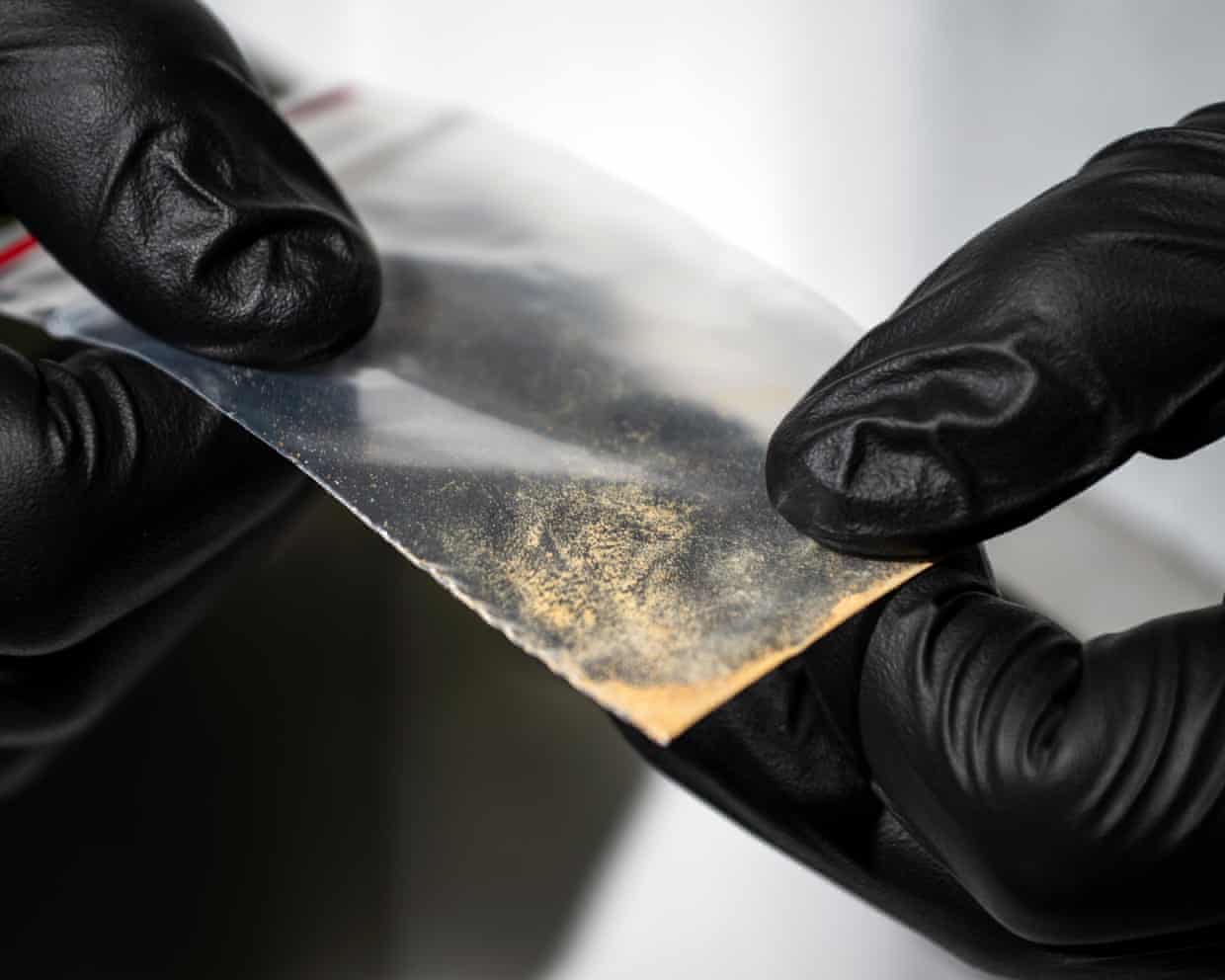
Synthetic opioids may have caused hundreds more UK deaths than thought
Deaths caused by a synthetic opioid that is hundreds of times stronger than heroin may have been underestimated by up to a third across the UK, according to research.Nitazenes are a class of synthetic opioids that are extremely potent, and up to 500 times stronger than heroin. They were manufactured originally as a painkiller in the 1950s but their development was halted due to their extreme potencies resulting in a high risk of addiction.In 2024, the National Crime Agency (NCA) reported that 333 fatalities across the UK were linked to the drug. However, researchers at King’s College London say that the true number of deaths may have been underreported, due to concerns that samples of the drug are likely being missed in postmortem toxicology tests

The troubling rise of longevity fixation syndrome: ‘I was crushed by the pressure I put on myself’
It was a pitta bread that finally broke Jason Wood. It arrived with hummus instead of the vegetable crudites he had preordered in a restaurant that he had painstakingly researched, as he always did, weeks before he and his husband visited. “In that moment, I just snapped,” he recalls. “I hit rock bottom, I got angry … I started crying, I started shaking. I just felt like I couldn’t do it any more, like I had been crushed by all this pressure I put on myself
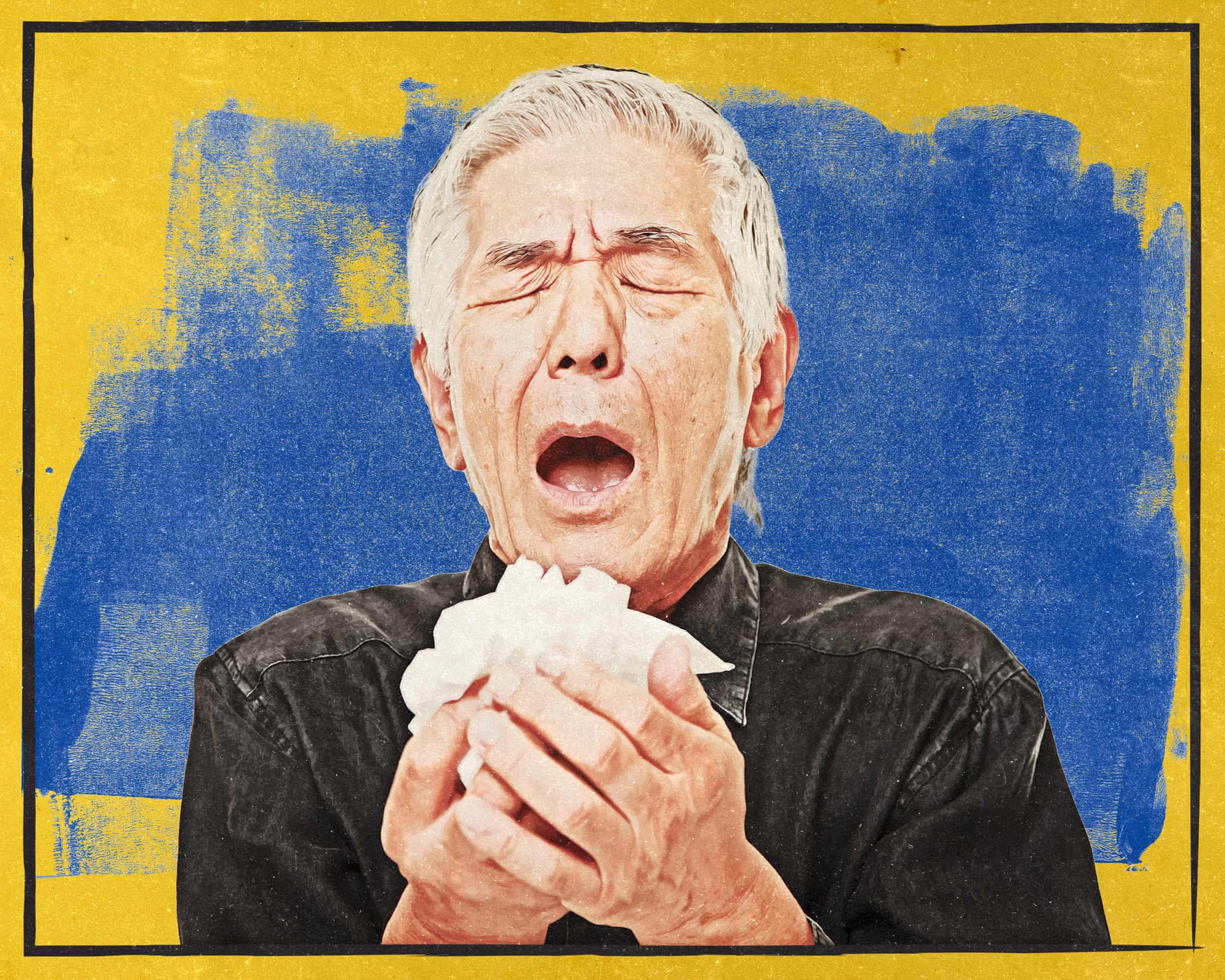
The sneeze secret: how much should you worry about this explosive reflex?
It is one of the most powerful involuntary actions the human body can perform. But is a big sneeze a sign of illness, pollution or something else entirely?How worried should we be about a sneeze? It depends who you ask. In the Odyssey, Telemachus sneezes after Penelope’s prayer that her husband will soon be home to sort out her house-sitting suitors – which she sees as a good omen for team Odysseus, and very bad news for the suitors. In the Anabasis, Xenophon takes a sneeze from a soldier as godly confirmation that his army can fight their way back to their own territory – great news for them – while St Augustine notes, somewhat disapprovingly, that people of his era tend to go back to bed if they sneeze while putting on their slippers. But is a sneeze an omen of anything apart from pathogens, pollen or – possibly – air pollution?“It’s a physical response to get rid of something that’s irritating your body,” says Sheena Cruickshank, an immunologist and professor at the University of Manchester

‘16 years later, I’m not unhappy’: the rise of Britain’s multigenerational flatmates
When Nicola Whyte first moved into a four-bedroom house share in Balham 16 years ago, she never imagined she would still be living there at 45. But with rents soaring, and ongoing challenges in saving up for a house deposit, she has ended up as a housemate far longer than she anticipated.“I didn’t think I was going to be here 16 years later, but I’m not unhappy,” she said. “My friends sometimes think I’m a bit weird, they ask me how I can still do it. But I really enjoy it

UK’s ‘unsung army’ of full-time unpaid carers needs more support, report says
A growing “unsung army” of 1 million people with full-time caring responsibilities needs better support, according to a report that found one in three unpaid carers from poorer backgrounds were unable to work because of their duties.The trend is the result of an ageing society and rising ill-health and disability concentrated in the poorest half of the country’s working-age families, the Resolution Foundation’s research found.Almost one in three working-age adults in lower-income families had a disability, compared with fewer than one in five in better-off families, the thinktank said.It added that in homes of modest means, 1 million people had caring responsibilities of 35 hours or more a week – the equivalent of a full-time job – making it challenging to secure paid work.Mike Brewer, the deputy chief executive of the Resolution Foundation, said: “Britain is getting older and sicker, while a greater share of its population has a disability

Menstrual blood test could offer alternative to cervical screening for cancer
A pioneering test of period blood for signs of cervical cancer could be a convenient, non-invasive and accurate way of screening for the disease, researchers have said.A regular sanitary pad topped with a blood sample strip can pick up human papillomavirus (HPV), which causes most cases of cervical cancer, and could be used by women at home, the results of a study indicate.Currently, most women undergo cervical screening under the care of a clinician, who collects a sample via a brush inserted into the vagina. But millions of women invited for screening do not attend.Researchers in China compared the diagnostic accuracy of menstrual blood with samples collected by a clinician for detecting cervical cell abnormalities (CIN2 and CIN3), which can require treatment

NatWest is chasing the mass affluent wallet. So is everyone else | Nils Pratley

Rise in UK borrowing costs reverses after cabinet backs Starmer

EU threatens to act over Meta blocking rival AI chatbots from WhatsApp

Logitech MX Master 4 review: the best work mouse you can buy

Winter Olympics 2026: Jutta Leerdam takes speed skating gold but GB medal wait goes on – live

Twickenham crackdown with 24 fines for ‘public urination’ after England v Wales