Polymarket in fundraising talks that could value the prediction platform at $15bn

Polymarket, the online prediction platform that hosts bets on events such as the Iran war, is in talks to raise $400m (£296m) at a valuation of up to $15bn.The company has gained notoriety in recent months over wagers placed on the Middle East conflict, including on the timing of US-Israel strikes against Iran, and on a US-Iran ceasefire, some of which appeared to bear signs of insider trading.During this time the US company has experienced a massive increase in volume, with more than $1bn a week now traded on its platform.Polymarket takes a commission on some of these trades, with a varying fee structure depending on the kind of bet.It states that geopolitical and world events markets are “fee-free”.
The latest fundraising round could lead to the business being valued at about $15bn, an increase of two-thirds on the previous valuation, according to the tech news site The Information.Polymarket’s value has been increasing rapidly, having achieved a $1bn price tag in June last year after Peter Thiel’s Founders Fund led a $200m round, followed months later by the owner of the New York stock exchange pledging $1bn at a valuation of $9bn.The NYSE’s owner, Intercontinental Exchange, has since invested a further $600m in Polymarket.It has said that it will become a “global distributor” of Polymarket’s data, using bets on the platform to provide “sentiment analysis” to investors who may use it to inform their strategies.Datafeeds from Polymarket and other online prediction markets have increasingly been shaping trades, including in oil markets.
Polymarket’s investors include a venture capital company owned by Donald Trump Jr.The company allows users to in effect bet on the outcome of events by buying and selling shares in a future outcome such as “will TikTok be banned in the US this year?”However, numerous bets placed by anonymous accounts on the platform have given rise to speculation that people are taking advantage of insider information to make money.The Israeli authorities earlier this year arrested several people and charged two on suspicion of using classified information to make Polymarket bets.A Guardian investigation found that thousands of people in online communities on Discord are strategising on how to make money from conflict – by betting on Ukraine’s frontlines, laying arbitrage wagers on geopolitical events, and, at times, copying the bets of what appear to be insider wallets.This investigation found that Polymarket gamblers appeared willing to pressure independent institutions – such as in the media and thinktanks – to change their reporting in order to allow these gamblers to win bets.
Polymarket gamblers recently threatened an Israeli journalist, demanding he change his article so that they could collect on a bet over whether Iran had struck Israel on a specific date.However, Polymarket does not just host bets on conflict: other wagers include the second coming of Jesus Christ, the date of the potential departure of the UK prime minister, Keir Starmer, and the outcomes of elections around the world.Polymarket rose in popularity during the 2024 US presidential election.At the time, the well-known US pollster Nate Silver joined the platform’s advisory board, saying that prediction markets – which offer users an opportunity to bet on an outcome – may be a superior way to forecast events, as they monetarily incentivise correct guesses in a way that polling does not.However, while Polymarket’s supporters say that it offers a “truth signal”, experts caution that it may cause distortion in larger markets.
A thin slice of users may be able to manipulate larger financial markets by placing strategic bets, skewing the odds of certain events, with effects rippling out to the companies and institutions that are placing more and more stock in the platform’s forecasts.Polymarket has been approached for comment.
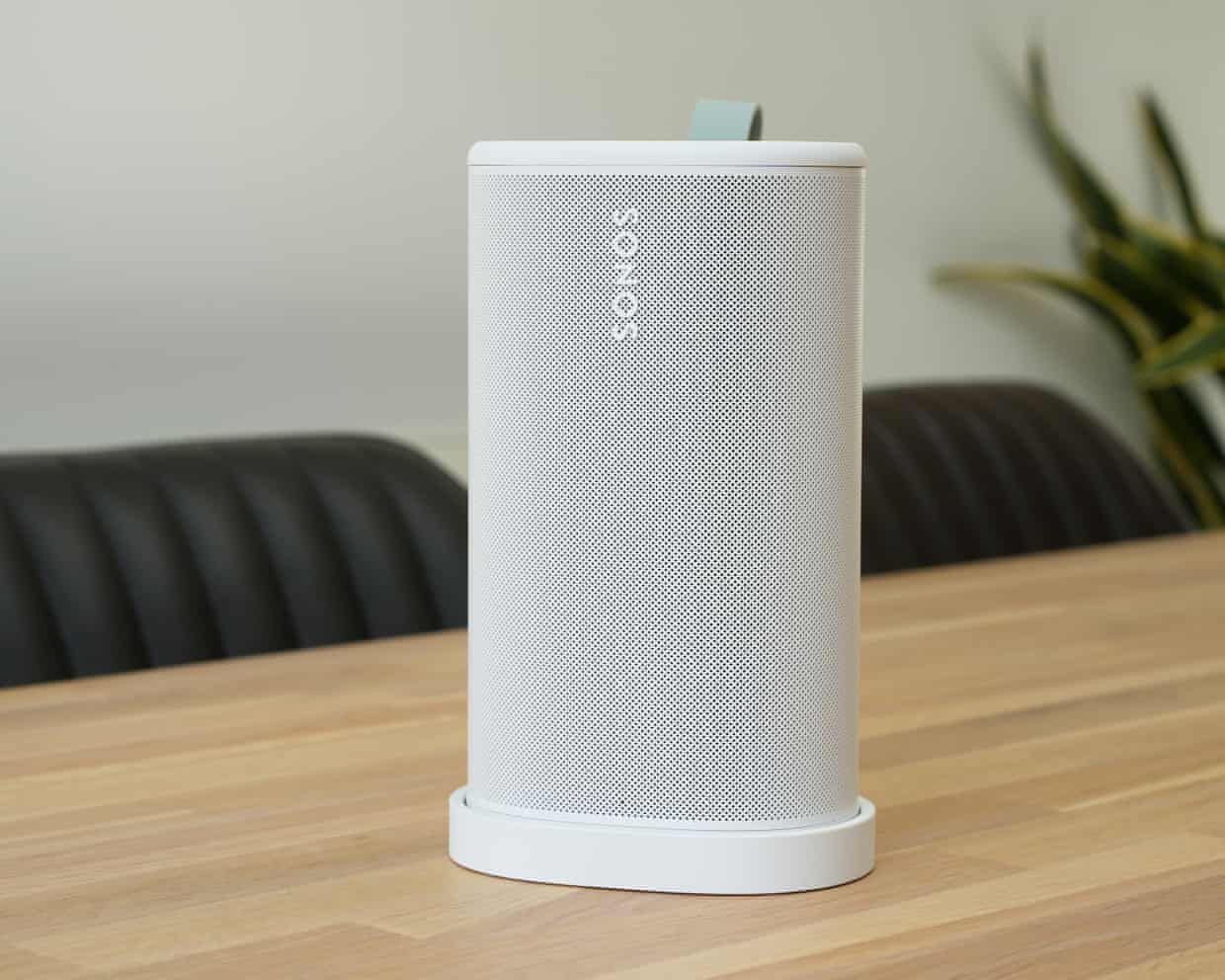
Sonos Play review: a great jack-of-all-trades portable speaker for home or away
The Play is a new portable wifi and Bluetooth home speaker that packs the best of Sonos into a jack of all trades that is intended to be a reset point in the company’s recovery from its app debacle that lost it faith, favour and a chief executive.The Guardian’s journalism is independent. We will earn a commission if you buy something through an affiliate link. Learn more.It is the first truly new music speaker since Sonos launched its new app in May 2024, which junked fan-favourite features while causing stability and usage problems for new and old customers alike

How a fiery attack on Sam Altman’s home unfolded
In the early hours of 10 April, a man approached the gate of OpenAI CEO Sam Altman’s house in San Francisco and hurled a molotov cocktail at the building before fleeing. The suspect, 20-year-old Daniel Moreno-Gama, was arrested less than two hours later while allegedly attempting to break into the headquarters of OpenAI with a jug of kerosene, a lighter and an anti-AI manifesto.Federal and California state authorities have charged Moreno-Gama with a range of crimes including attempted arson and attempted murder. His parents issued a statement this week saying that their son had recently suffered a mental health crisis. Moreno-Gama, who has not yet entered a plea, faces up to life in prison if convicted

Kenyan firm sacks more than 1,000 workers after losing Meta contract
More than 1,000 low-paid workers in Kenya have been abruptly sacked by an outsourcing company contracted by Meta, in what activists said was a shocking move exposing the precariousness of tech jobs in the global south.Sama, a company based in Nairobi to which Meta outsourced content moderation and AI training work, announced on Thursday that the workers were being laid off after Meta terminated a contract.Last month reports said some Kenyan workers involved in data annotation were asked to view content filmed using Meta’s AI smart glasses showing wearers using the toilet or having sex.The sacked workers, many involved in AI training, have been given six days’ notice, according to the Oversight Lab, an organisation that advocates for fair regulation and deployment of technology across Africa. It said it was advising the workers on legal options

UK’s OnlyFans tops $3bn valuation amid talks to sell stake to US investor
OnlyFans, the UK adult video platform, is in talks to sell a minority stake to a US investor that will value the business at more than $3bn (£2.2bn).The London-based company is in advanced talks to sell a stake of less than 20% to the San Francisco-based investment firm Architect Capital, according to the Financial Times. Sources familiar with the process confirmed the talks to the Guardian.OnlyFans has decided that offloading a minority stake is the best guarantee of stability for a business dealing with the death of its owner, Leonid Radvinsky

Finance leaders warn over Mythos as UK banks prepare to use powerful Anthropic AI tool
British banks will be given access in the next week to a powerful AI tool that was deemed too dangerous to be released to the public, as a series of senior finance figures warned over its impact.Anthropic, which has so far limited the release of the new model to a small clutch of primarily US businesses, including Amazon, Apple and Microsoft, said it would expand that to UK financial institutions.“That is in the very near term, in the next week,” Pip White, Anthropic’s head of UK, Ireland and northern Europe operations, said in a Bloomberg TV interview. “As you would expect, the engagement I have had from UK CEOs in the last week has been significant.”Anthropic, which is the company behind the Claude family of AI tools, has said that its latest model, Mythos, poses an unprecedented risk because of its ability to expose flaws in IT systems
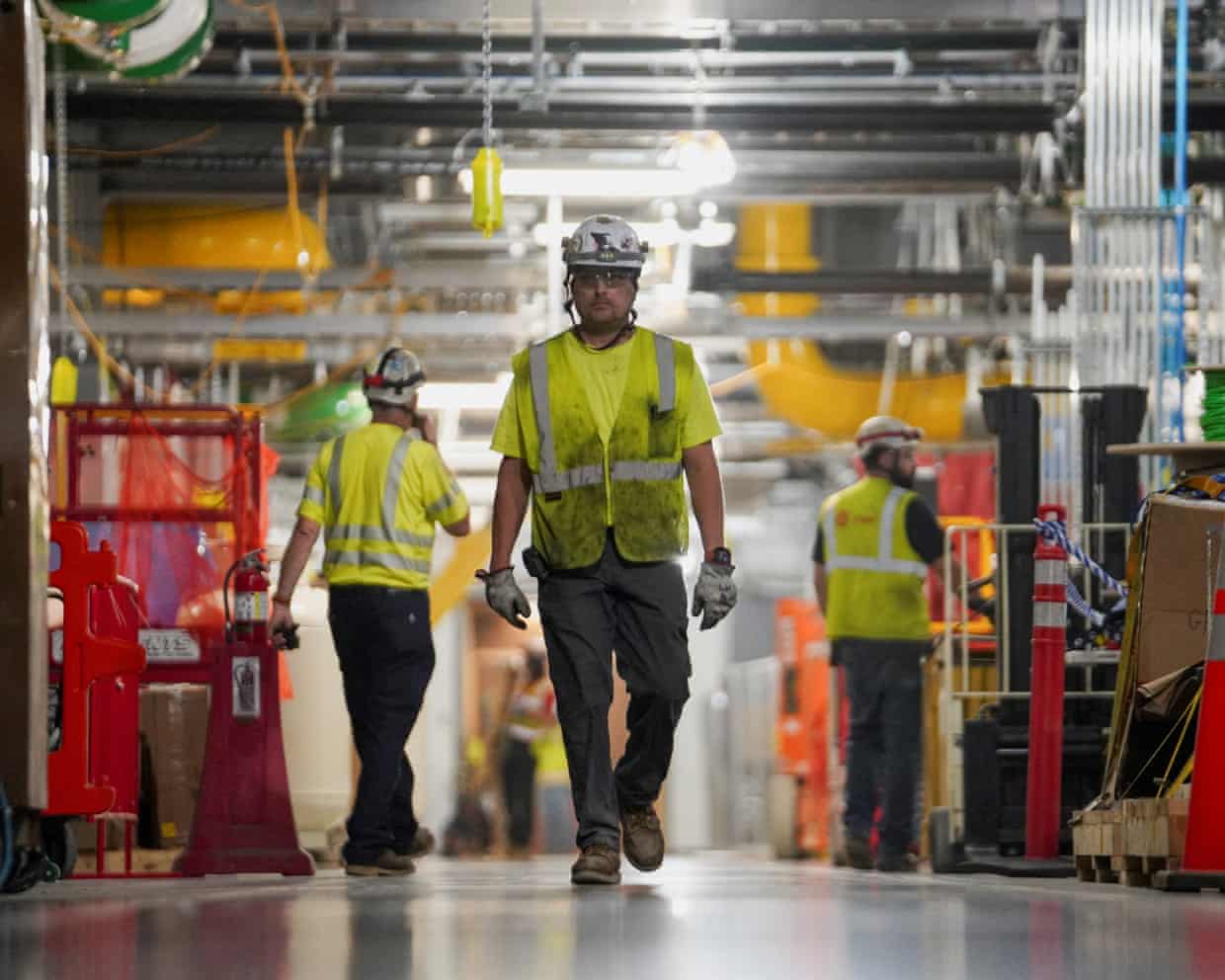
US tech firms successfully lobbied EU to keep datacentre emissions secret
Microsoft and other US tech companies successfully lobbied the EU to hide the environmental toll of their datacentres, an investigation has found, with demands to block a database of green metrics from public view written almost word for word into EU rules.The secrecy provision, which the European Commission added to its proposal almost verbatim after industry lobbying in 2024, hinders scrutiny of the pollution that individual datacentres emit. It leaves researchers with just national-level summaries of their energy footprints.The rise of AI chatbots has spurred a boom in the construction of chip-filled warehouses with a hunger for power that is being met, in part, by burning fossil gas. Legal scholars warn the blanket confidentiality clause may fall foul of EU transparency rules and the Aarhus convention on public access to environmental information

Wage growth hits lowest level since November 2020; unemployment rate unexpectedly falls - business live

Royal Mail invests £500m to tackle late deliveries as second-class post cut back

Palantir manifesto described as ‘ramblings of a supervillain’ amid UK contract fears

Who is John Ternus, Apple’s next CEO?

NFL draft questions: what should the Jets do at No 2, is Love worth it and will the Cowboys trade up?

The Breakdown | Erin King looks to lift Ireland: ‘It was tough some days to keep showing up’