Who is the rival family pitted against Gina Rinehart in a long-running court case – and is she still the richest person in Australia?
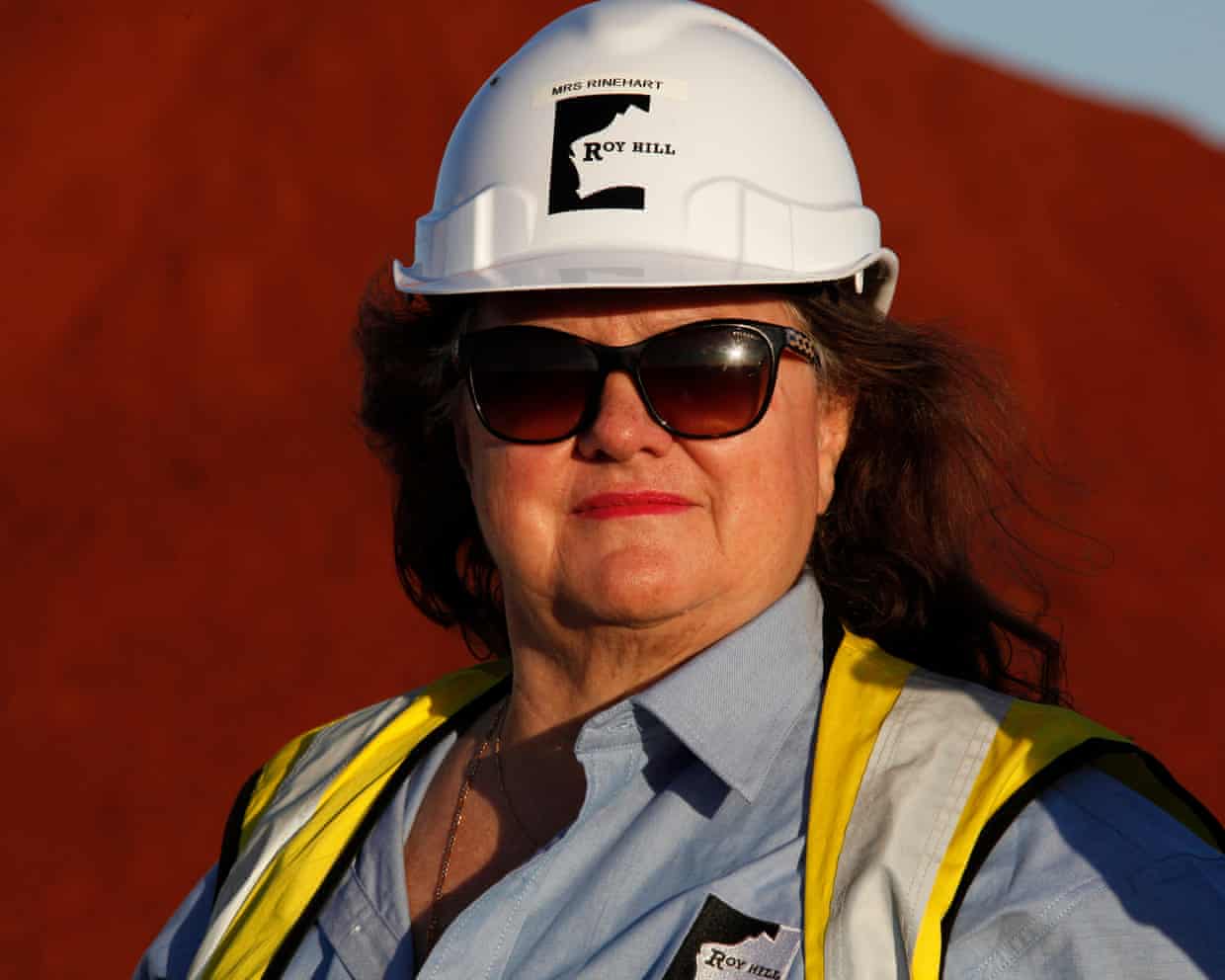
Gina Rinehart’s company will have to pay hundreds of millions of dollars to a rival business after securing the rights but losing some royalties on a major mine in a landmark court case.The more than 15-year-long Western Australian supreme court case pitted the extended families of Rinehart’s father and his business partner against each other, while tying up mining company Rio Tinto and a string of others.Who won and who lost? Will Rinehart still be the richest person in Australia?Here’s what you need to know.The case involved disputes over the ownership of mining plots in Western Australia’s Pilbara region and over the royalty income from mines developed on the plots.Business partners Peter Wright and Lang Hancock, Gina Rinehart’s father and the founder of Hancock Prospecting, made a series of claims over mining plots from the 1950s onwards.
They often traded their ownership of the land for separate rights to royalties from mines developed on the land, typically splitting royalties 50-50.In 1984 and 1985, after a long campaign, the partners gained access to a set of tenements later called Hope Downs and the East Angelas.Wright died in 1985 and Hancock died in 1992.In 2005, Hancock Prospecting, now led by Gina Rinehart, agreed with a Rio Tinto subsidiary to develop a co-owned mining project on the Hope Downs tenements.The project later began mining the East Angelas tenements.
The profits went to Rio Tinto and Hancock Prospecting.Wright Prospecting launched the case in 2010, claiming it had the right to half of Hancock’s royalties on any mines in the Hope Downs tenements.In 2012, it claimed a 50% stake in the East Angelas, which would entitle it to a share of profits from mines built on those plots, on top of royalties.Wright Prospecting has since 2012 been jointly owned by Peter Wright’s daughter, Angela Bennett, and two of his granddaughters, Leonie Baldock and Alexandra Burt.The company has made billions from the royalties paid by mines developed on its land claims, making all three billionaires.
In Wednesday’s judgment, Wright Prospecting won its claim to half of past and future royalties for the mines in the Hope Downs and East Angelas, which have been paid by Rio Tinto to Hancock Prospecting.Hancock Prospecting has estimated that will amount to $14m a year.Hancock-Rio mines have been profitable on the tenements for 16 years, which would imply over $220m in back pay to the Wrights.Rio Tinto is expected to pay more on top of that, with the exact amounts to be determined in future hearings.The Wrights lost their claim to own the East Angelas tenements, so will not get the profits, which are separate from the royalties.
Rinehart’s company, Hancock Prospecting, won its claim to owning the Hope Downs and East Angelas jointly with Rio Tinto.It defeated the Wrights’ claim to the East Angelas and their profits.It also defeated Rinehart’s children’s claims to the land, which were thrown out after the judge found they relied on Lang Hancock’s fraudulent corporate manoeuvring.Hancock Prospecting also won its claim that Rio Tinto should contribute to paying the owed royalties, interest and legal costs.Rinehart’s children won a partial confirmation of their claims to a greater stake in their mother’s business.
Justice Jennifer Smith determined a plan agreed by Gina Rinehart and her father in 1988 would have left 51% of the company’s shares to Rinehart and the other 49% to her children.Rinehart now controls 76.55% of the company and the children control 23.45%.The children have alleged Gina Rinehart had fraudulently rearranged the company’s affairs after Lang Hancock’s death, which Hancock Prospecting has denied.
Smith did not make a ruling, finding the children’s claims were irrelevant to the Hope Downs case and should be determined in an ongoing private arbitration.Another party claiming a win was the family business of Don Rhodes, a former business partner of Hancock and Wright who helped them unlock iron ore tenements in the Pilbara.DFD Rhodes won its claim against Hancock Prospecting, to past and future royalties from Hancock’s 50% share of the revenues from mines on some of the tenements.Hancock Prospecting estimated it would have to pay $4m a year.Wednesday’s judgment alone is not likely to knock Rinehart from her position as Australia’s richest person.
Rinehart’s wealth has been valued at about $40bn in recent years, largely from her 76,55% controlling stake of Hancock Prospecting and its mines,Hancock Prospecting made $4,5bn in profit in 2024-25 and $7,8bn the year before.
Peter Strachan, an independent mining analyst, said Rinehart and Hancock Prospecting would be able to handle the costs even if forced to pay hundreds of millions to the Wrights and DFD Rhodes.“It’s not hugely material to her wealth, but as the Rhodes side was quoted as saying, she was a ‘formidable opponent’, so I don’t think she’d be taking it lightly,” Strachan said.However, the judgment cleared the way for an ongoing private arbitration to make rulings over Rinehart’s children’s long-running claim for a bigger stake of Hancock Prospecting.If the arbitration found in favour of the children, Rinehart’s share of the company and her wealth could be reduced dramatically, Strachan said.“That would be more material,” he said.
“Since it hasn’t been resolved, there’s a question mark over it but I think there’s a lot of water to flow under the bridge before we get a final view.”
Big US banks rake in near $50bn profit as Iran war shakes markets
Big US banks raked in nearly $50bn (£37bn) worth of profits in the first three months of the year, as they benefited from stock market turbulence triggered by the US-Israeli war on Iran.Wall Street’s largest lenders have reported a jump in first-quarter earnings, reflecting the surge in demand for trading services as investors dumped risky stocks and bonds and sought safer havens for their cash.On Wednesday, Bank of America and Morgan Stanley posted a leap in profits, joining Goldman Sachs, JP Morgan, Citi and Wells Fargo in announcing strong results this week. Collectively, the six banks reported $47.4bn in profits
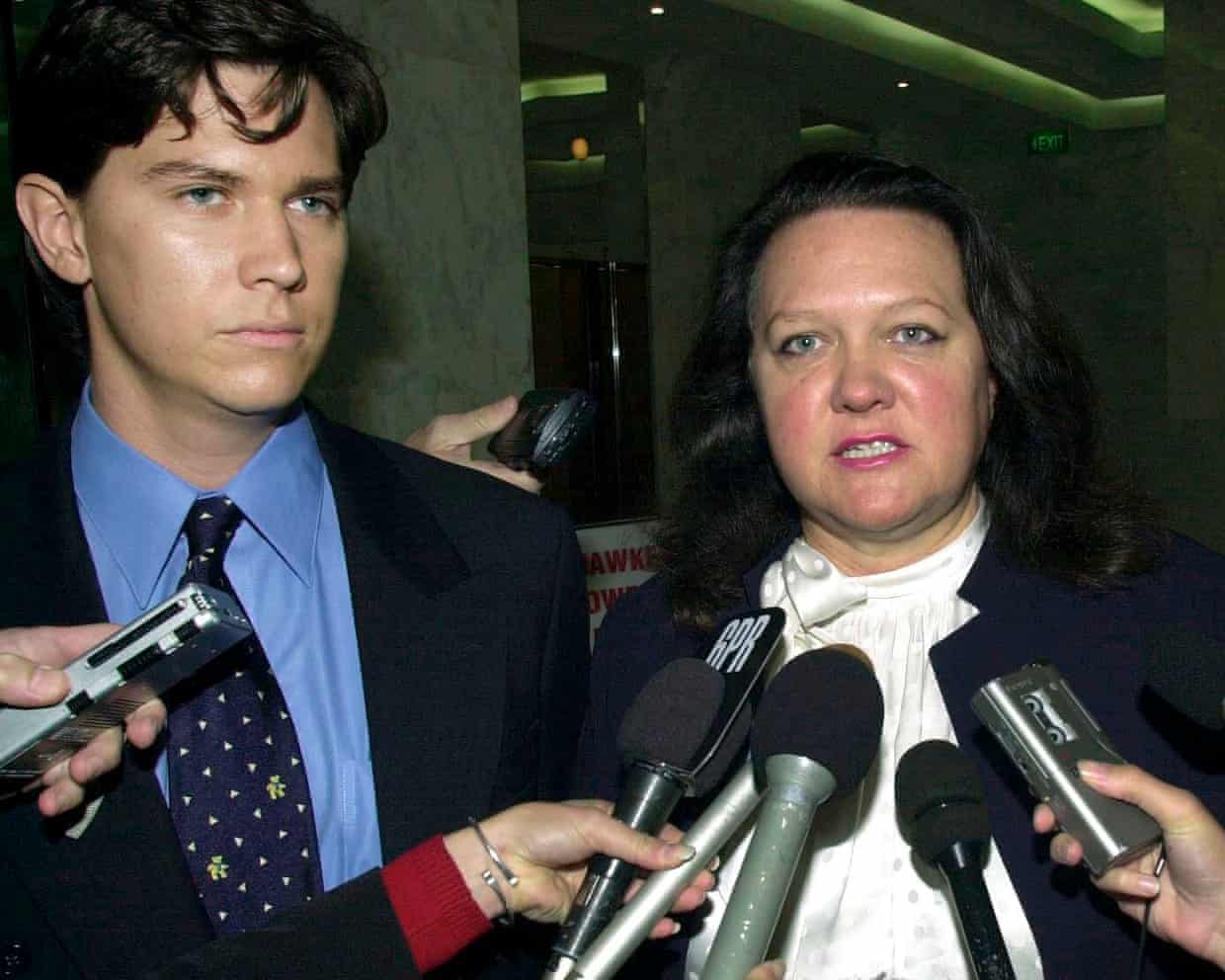
Gina Rinehart has been forced to share her riches. But will she fight on or end the family feud?
Gina Rinehart does not like to lose.Engaged in bitter legal battles for most of the past 35 years, Australia’s richest person has shown her propensity to fight tooth and nail to retain control of her family’s iron ore empire – and the riches that flow from it.Even as her own children were due to receive their inheritance from their grandfather Lang Hancock more than 20 years ago, Rinehart sought to block them in an ugly legal dispute that showed the lengths she was prepared to go to retain control.But as rain drizzled down on Perth’s central business district on Wednesday, Justice Jennifer Smith handed down a judgment that will force Rinehart to share. Not just hundreds of millions of dollars in royalty payments pocketed by Hancock Prospecting, but also some of the credit for the making of the Pilbara iron ore industry
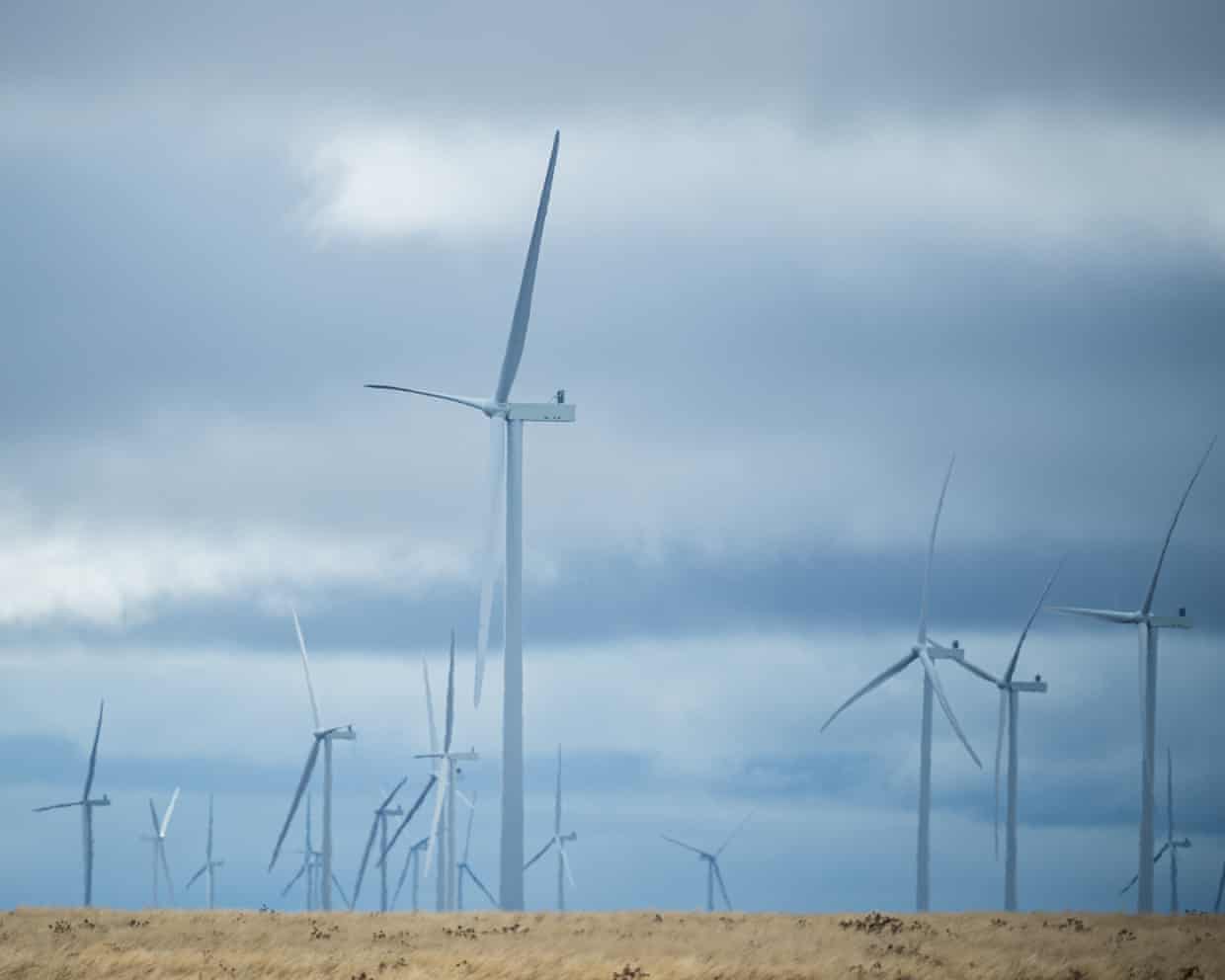
Amazon enters agreements for nine Australian renewable projects to power datacentres
Amazon has entered power agreements with nine new renewable projects in New South Wales and Victoria, as the technology company seeks to source renewable power for its datacentre operations in Australia.The nine deals, including one windfarm and 10 solar and battery projects, will take the amount of renewable energy Amazon is sourcing in Australia from 430MW to nearly 1GW.The power purchase agreements are contracts between energy providers and datacentre operators to meet the expected demands of their centres. Amazon has entered into agreements for more than 20 projects in Australia as it aims to reach net zero carbon emissions by 2040.These include power from Victoria’s Golden Plains 2, the largest windfarm in Australia, which began operating in 2024
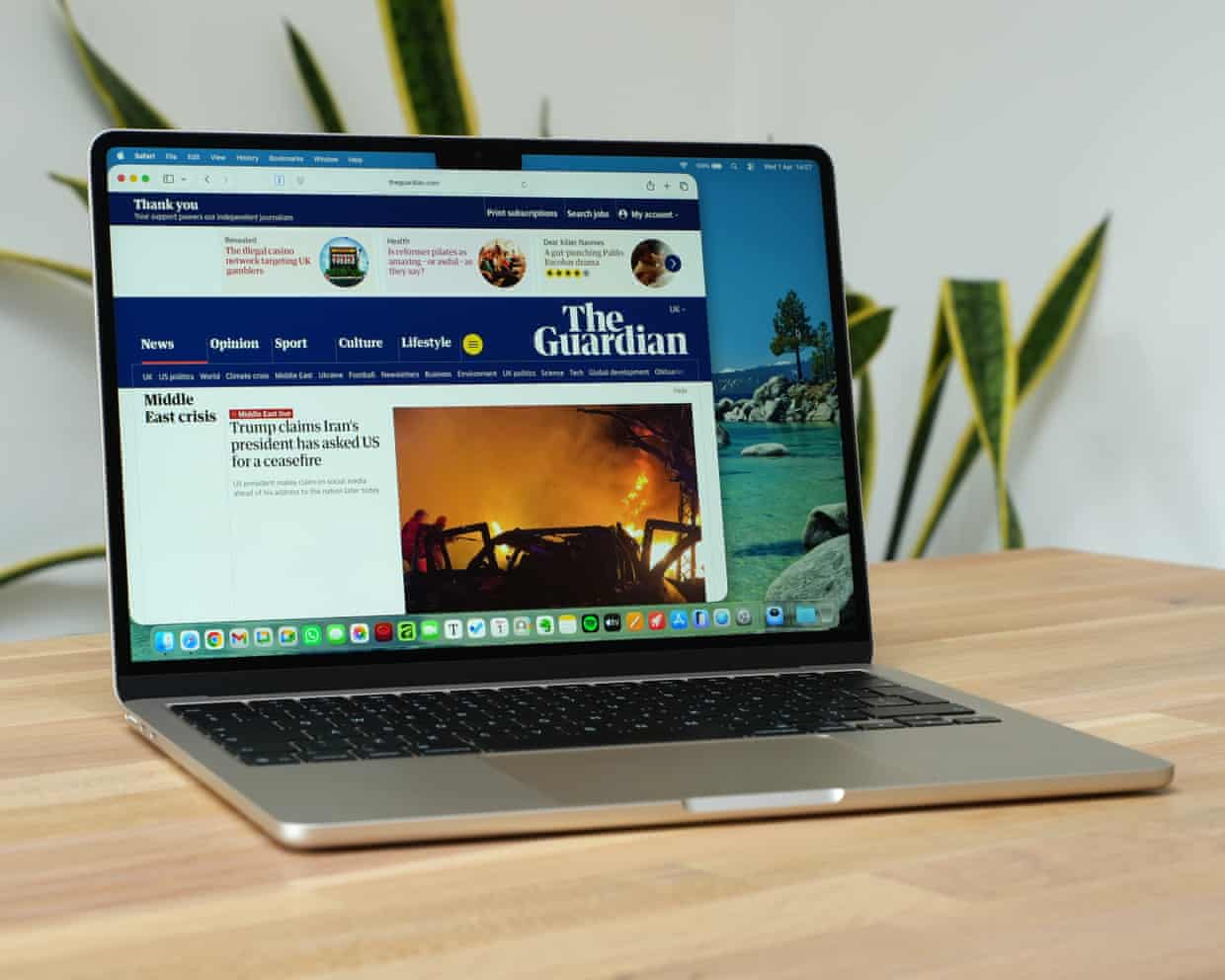
MacBook Air M5 review: Apple’s best consumer laptop speeds up
Apple’s latest MacBook Air is its most powerful yet, comes with double the starting storage and is better than ever for getting work done and as the benchmark for a consumer laptop. But this year the new lower-cost MacBook Neo has muddied the waters.The Guardian’s journalism is independent. We will earn a commission if you buy something through an affiliate link. Learn more

Unhappy Verstappen ‘has to be listened to’ over new rules, says F1 chief Domenicali
Formula One must listen to Max Verstappen’s grievances about the sport’s new regulations and their effects on racing, according to F1’s CEO, Stefano Domenicali. His intervention comes as key players hold meetings to consider adjusting the rules for the remainder of the season.Verstappen has been outspoken in his dissatisfaction with the new formula and the part energy management now plays in preventing being able to race flat-out. The four-time champion is not alone in his feelings with other drivers also critical of the deployment and recharging of electrical energy.Verstappen, one of F1’s biggest names, has been so disenchanted, however, that he has repeatedly suggested he is considering his future in F1 and Domenicali confirmed he had been speaking to the Dutchman and other drivers about their concerns

The Dianna Russini fallout is less about scandal than who carries blame in the NFL | Melissa Jacobs
Dianna Russini, one of the NFL’s most high-profile reporters, is photographed holding hands with New England Patriots head coach Mike Vrabel at a fancy resort in Sedona, Arizona. Rumors fly. Vrabel and Russini, who are both married to other people, issue statements denying the assumptions of something untoward. But the firestorm only grows. Russini resigns from her post at the Athletic, Vrabel continues with his job as usual

José Pizarro’s recipe for nettle (or wild garlic) and goat’s cheese tortilla

Gone from shop shelves, but not forgotten | Letters

Cornichon shortage leaves British sandwich shops in a pickle

Rukmini Iyer’s quick and easy recipe for chilli eggs with miso beans and spinach | Quick and easy

The US small town coffee shop that created a viral drink: ‘I still don’t understand how it went so far’

How to make Southern fried chicken – recipe | Felicity Cloake's Masterclass