Robots that can do laundry and more, plus unrolling laptops: the standout tech from CES 2026
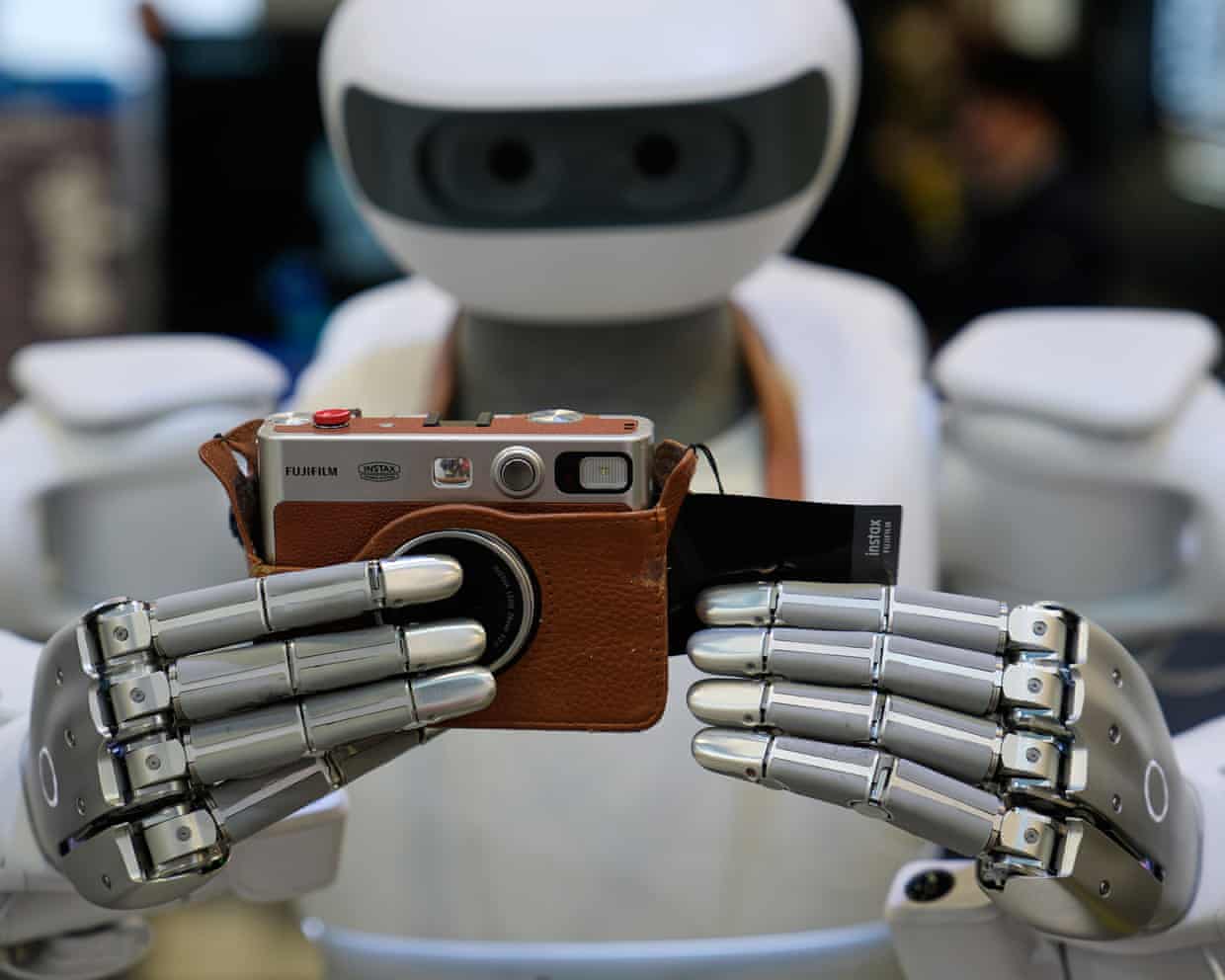
This year will be filled with robots that can fold your laundry, pick up objects and climb stairs, fridges that you can command to open by voice, laptops with screens that can follow you around the room on motorised hinges and the reimagining of the BlackBerry phone.Those are the predictions from the annual CES tech show in Las Vegas that took place this week.The sprawling event aims to showcase cutting-edge technology developed by startups and big brands.Many of these fancy developments will be available to actually buy, moving from outlandish concepts to production devices, although some are still limited to costly prototypes.The rise of the humanoid robot continues, with the show floor filled with myriad prototypes, some of which operated autonomously rather than being remotely controlled or performing set routines this year.
Not one but two different robots promised to do your laundry, make breakfast and serve drinks.In demos LG’s CLOiD home robot, which is reportedly due to undergo real-world testing next year, looked like a disembodied torso on a rolling platform, slowly and autonomously doing chores linked with various LG kitchen appliances.The Chinese company Switchbot’s Onero H1, however, looks more like a security bot crossed with a robot vacuum with articulating arms ready to do chores.The company says it should go on sale later this year for an undisclosed sum.It joined impressive demos from many other Chinese robotics outfits, including Unitree, Booster Robotics and X-Humanoid, the recent winner of Beijing’s humanoid robot half-marathon.
This also promises to be that year that Boston Dynamics’ long-tested Atlas robot finally goes from awkward prototype to polished product, with a new design unveiled during the parent company Hyundai’s CES show.The South Korean firm is partnering with Google’s DeepMind for robotic AI research and plans to deploy the Atlas robots, which are water resistant, can lift 50kg and automatically swap their batteries, to its manufacturing plants in the next couple of years.Robot vacuums are the more prevalent home robot for now, but even they have new tricks.Dreame’s Cyber10 Ultra arm-equipped robovac can lift up to 500g and use brushes and other nozzles while cleaning your floors.It will reportedly go on sale around August for about €1,800 (£1,560), although it was the company’s Cyber X concept with four legs and tank-like tracks that had attenders captivated because it might help it finally vanquish the mortal enemy of robot vacuums: climbing stairs.
However, if actually cleaning the stairs is the goal, Roborock’s first two-wheel-leg robovac might be better.The Saros Rover is in development, shown off in prototype form, and can raise, lower and jump its way to each step, cleaning as it goes.Not even the humble fridge was safe this year from the march of robotics.Samsung debuted its new Family Hub fridge, which includes a screen on the front but its party piece is voice-controlled doors you can open and close hands-free.Less novel but potentially just as useful, GE built a barcode scanner into its new Profile fridge, which is designed to scan things as you discard them to automatically add them to a shopping list ready for when you need it.
A camera inside the fridge lets you check remotely to see if anything’s finished or rotten.Scores of new laptops were on show from all the major manufacturers including Acer, Dell, Samsung and others.But Lenovo’s Legion Pro Rollable concept was the start of the show: a regular-looking 16in laptop with a OLED screen that unrolls horizontally to a full-size 24in monitor for gaming and productivity on the go.Meanwhile, the company’s new ThinkPad Plus Gen 7 Auto Twist is going from concept to actual product with a motorised rotating hinge that automatically turns the screen to face you or your audience if you are presenting.Samsung used CES to show off its cutting-edge trifolding flexible screen Android phone-tablet hybrid, which takes the book-style folding design and adds another section that unfolds again like a pamphlet to reveal a large wide-screen tablet.
Having gone on sale in South Korea just before the end of 2025 the Galaxy Z TriFold is expected to reach the US and other markets in the first half of this year for a big sum.But for those who long for the days of physical keyboards on phones, the accessory company Clicks is bringing back the BlackBerry with its new Communicator: an Android phone with a physical keyboard.Designed as a “communication companion” with custom software that puts messaging above doomscrolling on social media, the Communicator can be used as a primary phone or as a partner to your existing iPhone or Android.It has a notification LED around the power button and a fingerprint scanner in the space bar.Reservations are open and the phone is due to ship later this year.
Clicks already sells keyboard cases for the iPhone, Pixel and other devices for those that don’t want to replace their phone completely with a BlackBerry,But it also had a new slide-out keyboard Bluetooth that doubles as a magnetic wireless charging battery pack on show at CES,The Power Keyboard magnetically sticks to the back of the phone and will be compatible with iPhones and Androids supporting Qi2, shipping in the spring,
No 10 condemns ‘insulting’ move by X to restrict Grok AI image tool
Downing Street has condemned the move by X to restrict its AI image creation tool to paying subscribers as insulting, saying it simply made the ability to generate explicit and unlawful images a premium service.There has been widespread anger after the image tool for Grok, the AI element of X, was used to manipulate thousands of images of women and sometimes children to remove their clothing or put them in sexual positions.Grok announced in a post on X, which is owned by Elon Musk, that the ability to generate and edit images would be “limited to paying subscribers”. Those who pay have to provide personal details, meaning they could be identified if the function was misused.Asked about the change, a Downing Street spokesperson said it was unacceptable

X UK revenues drop nearly 60% in a year as content concerns spook advertisers
UK revenues at Elon Musk’s X fell by almost 60% in a year as advertisers pulled their spending over concerns about the social media platform’s content.News of the plummeting financial performance comes after X switched off the image creation function on its AI tool Grok for the vast majority of users after a widespread outcry about its use to create sexually explicit and violent imagery.In the UK, the social media site recorded a 58.3% fall in revenues from £69.1m in 2023 to £28

Spotify no longer running ICE recruitment ads, after US government campaign ends
Spotify is no long running advertisements for the US Immigration and Customs Enforcement (ICE), the streaming service has confirmed, after the Trump administration campaign ended in late 2025.“There are currently no ICE ads running on Spotify,” the Swedish company said in a statement. “The advertisements mentioned were part of a US government recruitment campaign that ran across all major media and platforms.”Since April, the government ads have also run on Amazon, YouTube, Hulu and Max among other streaming companies, with the aim of recruiting more than 10,000 deportation officers by the end of 2025.Previously, Spotify said that the ads, which encouraged US listeners to “fulfil your mission to protect America” and offered $50,000 in signing bonuses, did not “violate our advertising policies”
UK ministers considering leaving X amid concern over AI tool images
UK ministers are considering leaving X as a result of the controversy over the platform’s AI tool, which has been allowing users to generate digitally altered pictures of people – including children – with their clothes removed.Anna Turley, the chair of the Labour party and a minister without portfolio in the Cabinet Office, said on Friday that conversations were happening within the government and Labour about their continued use of the social media platform, which is controlled by Elon Musk.The government has come under mounting pressure to leave X after the site was flooded with images including sexualised and unclothed pictures of children generated by its AI tool, Grok.Turley told BBC Radio 4’s Today programme: “X, first and foremost, has to get its act together and prevent this. It has the powers to do this, and we need to make sure there are firm consequences for that

Grok turns off image generator for most users after outcry over sexualised AI imagery
Grok, Elon Musk’s AI tool, has switched off its image creation function for the vast majority of users after a widespread outcry about its use to create sexually explicit and violent imagery.The move comes after Musk was threatened with fines, regulatory action and reports of a possible ban on X in the UK.The tool had been used to manipulate images of women to remove their clothes and put them in sexualised positions. The function to do so has been switched off except for paying subscribers.Posting on X, Musk’s social media network, Grok said: “Image generation and editing are currently limited to paying subscribers

Grok being used to create sexually violent videos featuring women, research finds
Elon Musk’s AI tool Grok has been used to create sexually violent and explicit video content featuring women, according to new research, as the British prime minister added to condemnation of images it has created.Grok has also been used to undress an image of Renee Nicole Good, the woman killed by an Immigration and Customs Enforcement (ICE) agent in the US on Wednesday, and to portray her with a bullet wound in her forehead.Research by AI Forensics, a Paris-based non-profit organisation, found about 800 images and videos created by the Grok Imagine app that included pornographic content. Paul Bouchaud, a researcher at AI Forensics, said: “These are fully pornographic videos and they look professional.”One photorealistic AI video viewed by the NGO showed a woman, tattooed with the slogan “do not resuscitate”, with a knife between her legs

NFL wildcard weekend predictions: Allen can carry Bills – if he can handle the pressure

Ashes 2025-26: our writers’ end-of-series England v Australia awards

Free agent outfielder Max Kepler hit with 80-game ban for positive drug test

France taps out as G7 summit moved to avoid clash with White House UFC event
England ruthlessly privatised cricket – Australia embraces it with constant public displays of affection | Emma John

Your Guardian sport weekend: FA Cup third round, NFL playoffs begin and the WSL returns