Is the UK’s golden era of free museum entry coming to an end?
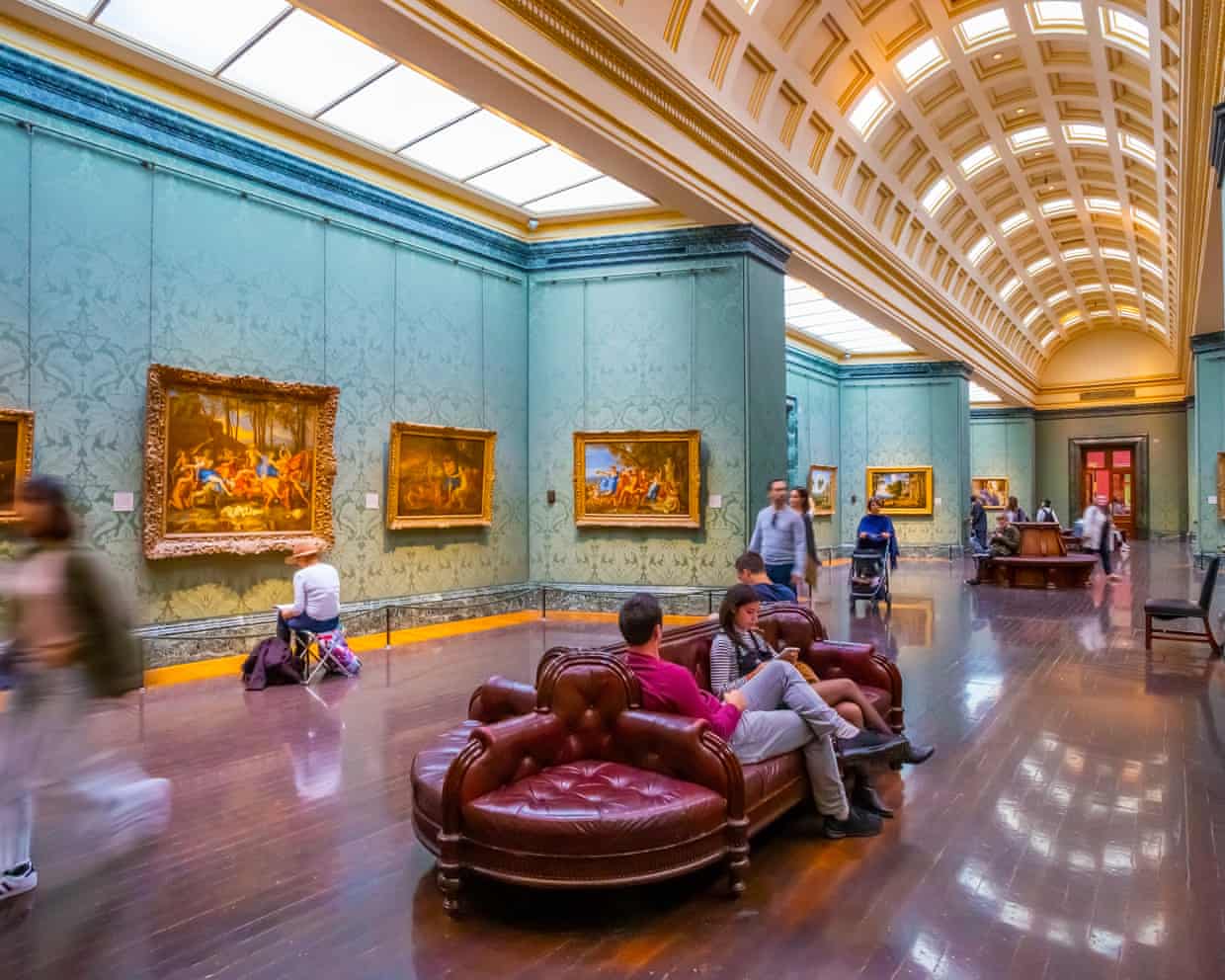
For a quarter of a century, visitors to the UK’s national museums and galleries have enjoyed universal free entry to see permanent collections,The policy, introduced by the New Labour government in 2001, has been widely credited with improving access to culture and significantly increasing footfall to some of the country’s best-known attractions,But as funding pressures deepen across the sector, and running costs increase, a policy once treated as untouchable is now under renewed scrutiny,The tension was brought into focus this week, when the National Gallery announced it was to make significant cuts in the face of an £8,2m deficit in the coming year, which could mean fewer free exhibitions, reduced international borrowing of artworks and higher ticket prices.
The gallery said it would cut spending on “public programmes, and activities where, for a number of reasons beyond our control, we can no longer justify their costs”,The announcement fuelled fears that free access may become harder to sustain – concerns heightened by the recent Hodge review of Arts Council England, which recommended charging international tourists to access permanent collections at national institutions,“It’s shocking to learn that the National Gallery is in such financial difficulties – but the answer should not be to make visiting museums and galleries more prohibitive,” said Alison Cole, the director of the Cultural Policy Unit thinktank,“There is the risk that some form of charging for entry may be reintroduced, eroding our landmark universal free admission policy and precipitating all the unintended consequences that flow from that,”According to Cole, while charging tourists or raising ticket prices may appear “tempting”, evidence suggests that free entry could be economically effective.
“Free entry encourages over 25% of visitors to pay for ticketed exhibitions, with many also spending more in cafes and shops,” she said.The situation has already been considered by the Treasury, which reportedly explored ending free entry for overseas visitors as part of spending cuts in the 2025 budget, and also modelled scrapping the policy entirely.The plans, which could have saved up to £480m from the Department for Digital, Culture, Media & Sport’s annual budget, were eventually dropped after pushback from ministers, including the culture secretary, Lisa Nandy.The Museums Association, which represents more than 1,800 UK institutions, has consistently defended free entry, warning that charging could damage tourism and have knock-on effects for retail and hospitality.Its director, Sharon Heal, said free entry had delivered “a huge range of cultural, learning and economic benefits”, adding that charging international visitors could cause reputational damage to the UK.
Jenny Waldman, the director of the charity Art Fund, said the real issue was chronic underinvestment,“We are seeing lots of innovation, from shared touring exhibitions to creative community fundraising,But in order to thrive, museums need sustainable, long-term public funding to help meet the annual costs of keeping the doors open and welcoming everyone to our public collections,” she said,The UK is an outlier among leading cultural nations in not charging at the door,France’s Louvre charges £28 for entry, Spain’s Prado £13, the US’s Museum of Modern Art £22, and the Vatican Museums £17.
Against that backdrop, a growing number of senior museum figures – some of whom once supported free entry – have begun to argue that the policy may no longer be fit for purpose.They include Nick Merriman, the former leader of the Horniman Museum & Gardens and English Heritage, who told the Daily Telegraph last week that while free entry had driven up visitor numbers, it had done little to diversify audiences.“You just get more middle-class people going,” he said.“In principle, why not charge? Most people, for the national museums, are willing to pay.”Roy Clare, the former head of Royal Museums Greenwich, called for a “more sophisticated approach”, arguing that free access did not need to apply “24/7 or 365”.
Mark Jones, the former director of the Victoria and Albert Museum, and interim director of the British Museum from 2023 to 24, described universal free entry as “regressive and inequitable”.He has said that taxpayers on modest incomes are subsidising access for tourists who can afford to pay, while charging could also help alleviate overcrowding.Writing in the Art Newspaper, the art critic and historian Ben Lewis said it was time to “dump the British art world’s gold-plated, diamond-encrusted sacred cow” and introduce entrance fees.The debate is unfolding against a stark financial backdrop.Between 2010 and 2023, core funding for UK arts and cultural organisations fell by 18%.
In its latest survey, the Museums Association found 61% of respondents were planning service cuts in 2024–25.At the Tate, staff staged a seven-day strike last year in response to repeated restructures, redundancies and below-inflation pay rises, with some workers reporting they had to use food banks.Noel McClean, of the Prospect union, which represents workers at the National Gallery, National Portrait Gallery, and Tate, said workers were “bearing the brunt” of the crisis.“If nothing is done, drastic action may follow,” he warned.“There are already fears that free access could be at risk – yet it is vital for social, economic and educational purposes.
”While national museums remain free for now, many regional and independent institutions have already begun charging where entry was once free, including the Kettle’s Yard in Cambridge.Oxford city council also voted to introduce a £4 standard fee to visit the Museum of Oxford.
Criminals ‘systematically’ targeting UK shops, costing £400m last year, say retailers
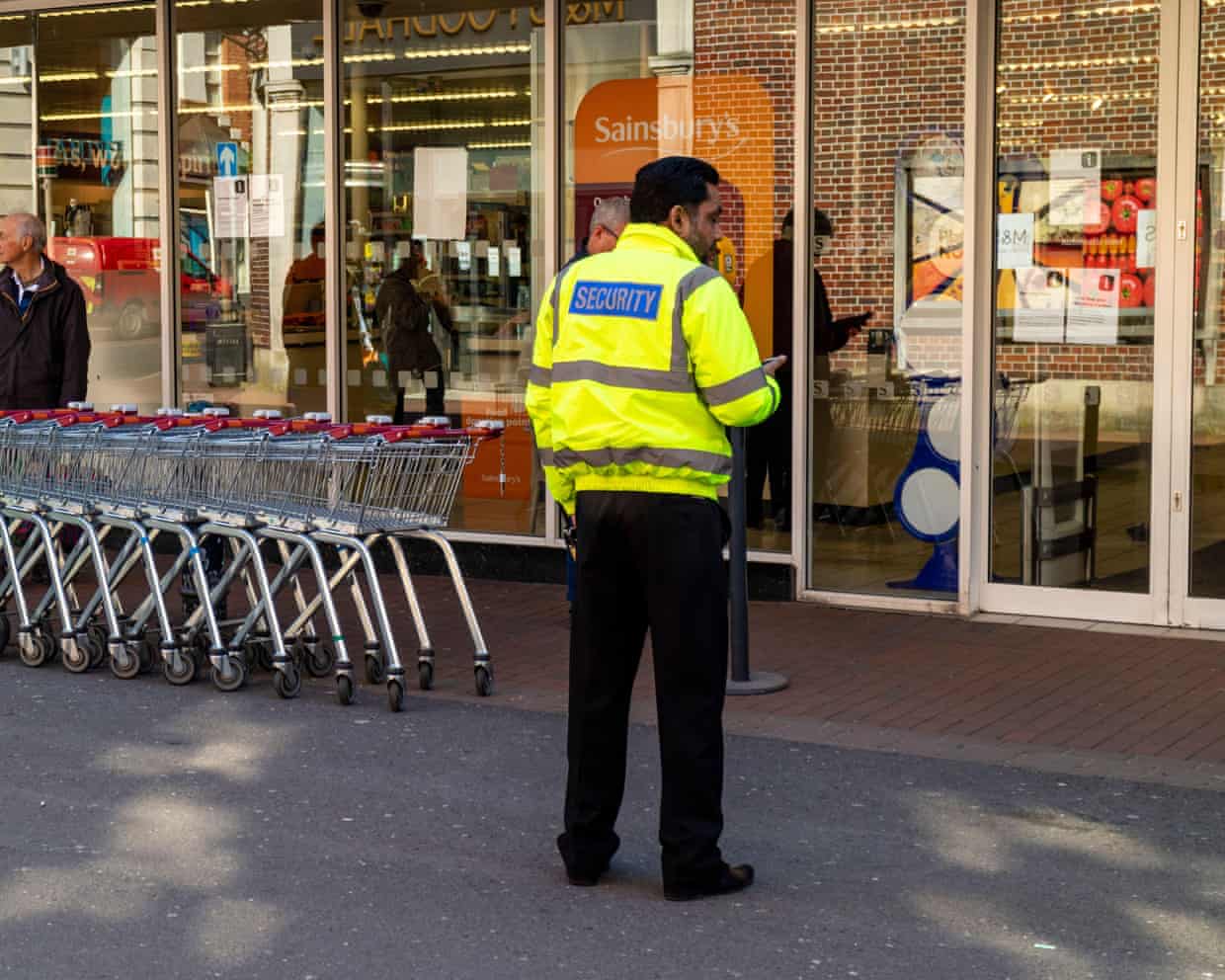
Criminal gangs are “systematically” targeting shops, retailers have warned, with 5.5m incidents of shoplifting detected last year, costing the industry an estimated £400m.The British Retail Consortium (BRC) has warned over “endemic” violence towards shop workers – who faced an average 36 incidents of violence involving a weapon every day last year – and said high levels of theft was causing “anxiety” among retail staff.Helen Dickinson, the chief executive of the BRC, called on police to consistently prioritise tackling retail crime and commit “dedicated resourcing” to the problem.The BRC research comes after the government put forward new legislation to back a stand-alone offence for assaulting a retail worker and to remove a £200 threshold for “low level” theft, which has a maximum six-month custodial sentence

Crypto exchange Binance may have funded Iranian entities, reports say
Shortly after Donald Trump pardoned Changpeng Zhao, the Binance founder, last fall, company employees revealed the cryptocurrency exchange may have funded Iranian entities with billions of dollars, according to a report by the New York Times.The discovery was made by a group of internal Binance investigators, who reportedly found that people in Iran had accessed more than 1,500 accounts on the crypto platform. Two of those accounts allegedly saw $1.7bn move to Iranian-backed groups that included Yemen’s Houthi militants throughout 2024 and 2025, according to the Wall Street Journal.The company investigators say they reported those transactions to Binance’s executives, but then were reportedly disciplined

Palantir deals are a threat to our data rights as UK citizens | Letters
For 100 years, the UK government has led us through existential threats, including two world wars. But instead of resisting the latest threat to democratic accountability, it has welcomed it with open arms: Palantir Technologies (NHS deal with AI firm Palantir called into question after officials’ concerns revealed, 12 February).This polarising US surveillance giant provides data-fusion and AI platforms used by by the US for immigration enforcement and by Israel in the Gaza conflict. Its software amplifies state power through militarised analytics and opaque algorithms.The current government hasn’t just surrendered citizens’ data rights to Palantir – it has paid for the privilege
Sam Altman defends AI’s energy toll by saying it also takes a lot to ‘train a human’
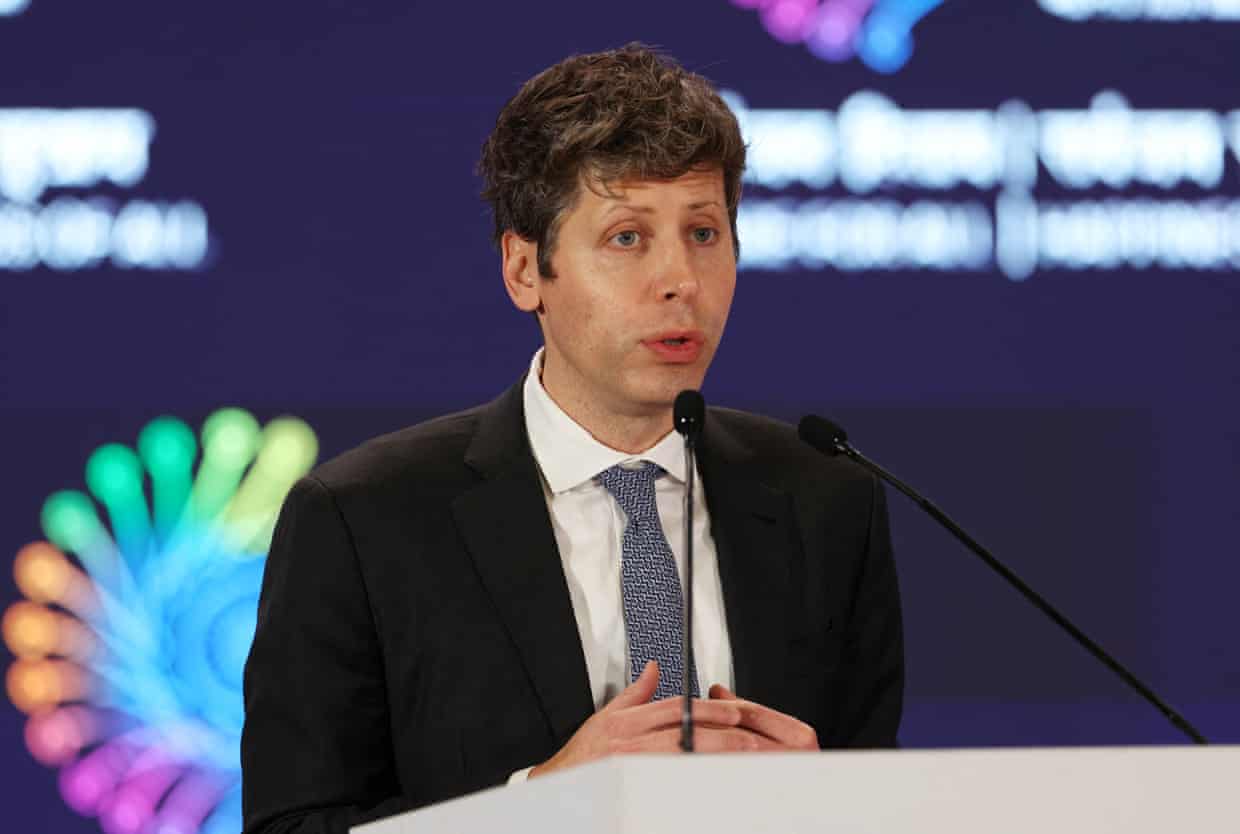
The OpenAI boss, Sam Altman, has tried to ease concerns about how much power is used by artificial intelligence models by comparing it to the amount of energy required by human development.“People talk about how much energy it takes to train an AI model – but it also takes a lot of energy to train a human,” Altman told the Indian Express recently while in India for the AI Impact summit. “It takes about 20 years of life – and all the food you consume during that time – before you become smart.”Despite that defense, he said that the public assessment of AI’s energy consumption was “fair”, adding: “We need to move towards nuclear or wind and solar very quickly.”Those remarks come amid growing discussion about the environmental impact of the datacenters required to power AI models – and, more generally, about technology’s possible impact on society
‘Landmark moment’: Emma Lawrence to become first woman to call NRL games
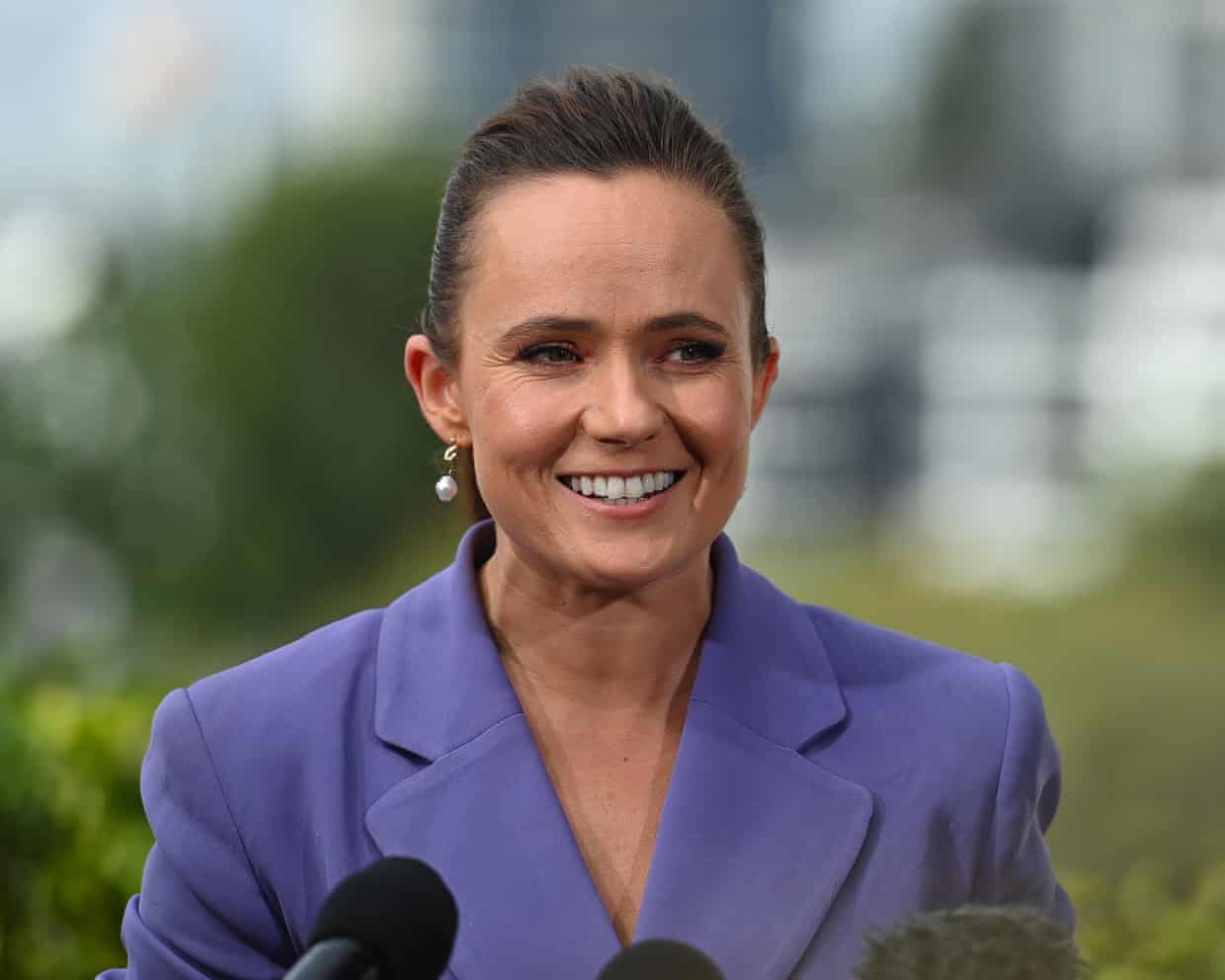
Emma Lawrence will become the first woman in NRL broadcast history to call a game, with Triple M including “one of the sharpest broadcasters in rugby league” on its play-by-play commentary team for the new season.Lawrence, one of the most respected voices in the game, will enter the domain previously reserved for men in a move the radio station called a “landmark moment”. Female voices are present across broader coverage of the NRL, but a woman has never been handed the prestigious play-by-play call before.The move follows other sports which showcase women as lead commentators for men’s matches, including Kelli Underwood on AFL and Isa Guha on cricket.Sports commentator Kate Allman said it was “a win for all women working in commentary and sport broadcasting”

Constitution Hill’s win at Southwell showed the way to a brighter future for racing
There are times when it feels as though the entirety of British horse racing exists in a state of perma-gloom, bewailing an ageing fanbase, declining attendances and a moribund, factional leadership. It is, so the narrative goes, a sport in slow but irreversible decline, waiting for the inevitable moment in 10 or 20 years’ time when someone finally comes along to turn out the lights.However, every now and again, there are moments such as the Friday Night Live! card at Southwell last week which lift the mood completely, and offer hope that a 250-year-old sport has plenty of running left to give.There were grizzled veterans of many decades on the racing beat who were struggling to recall a more uplifting day at any track as they left Southwell on Friday evening. This one certainly was
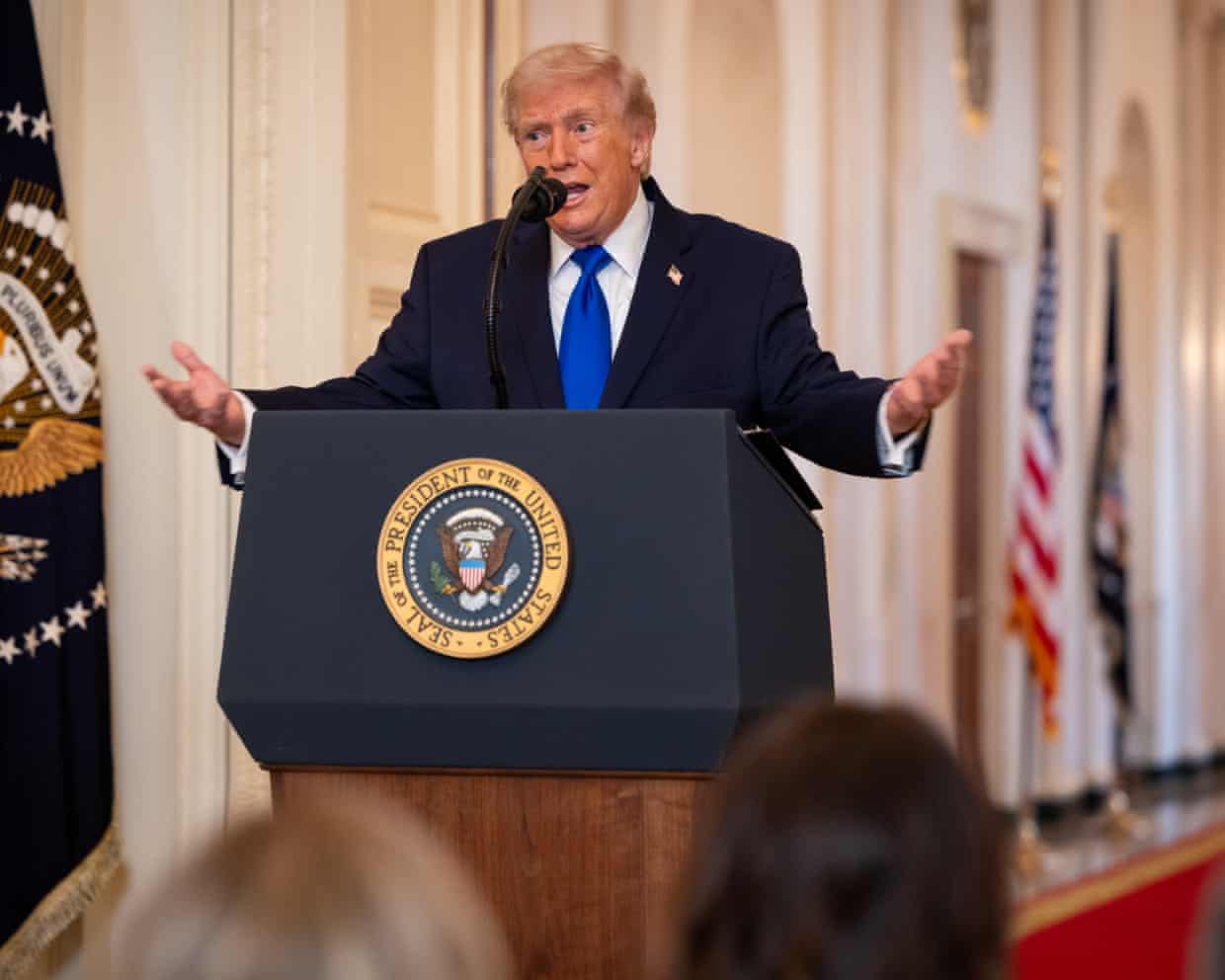
Trump’s new global tariffs kick in at 10% – business live
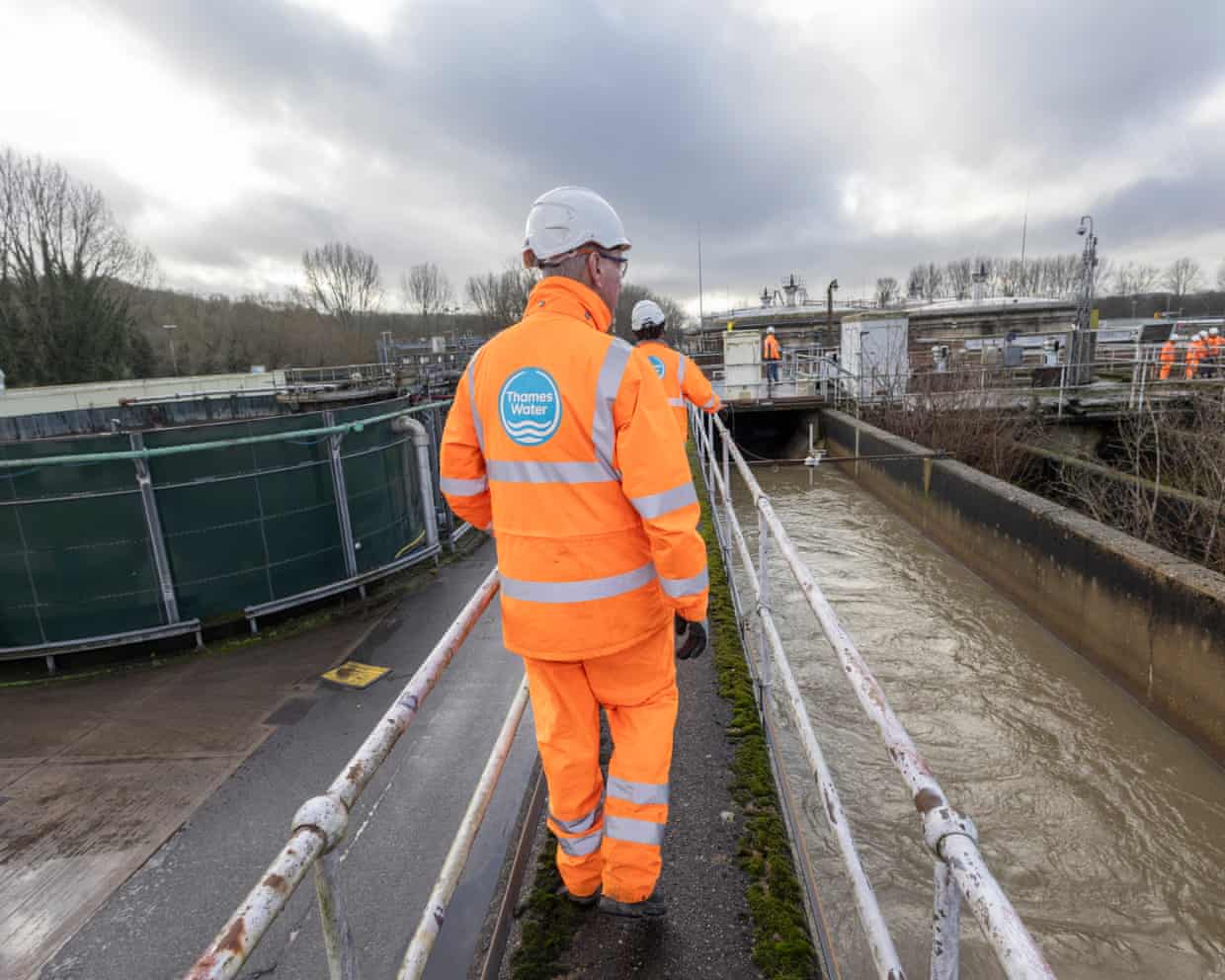
‘People yearn for stability’: the Thames Water sewage plant at frontline of its crisis
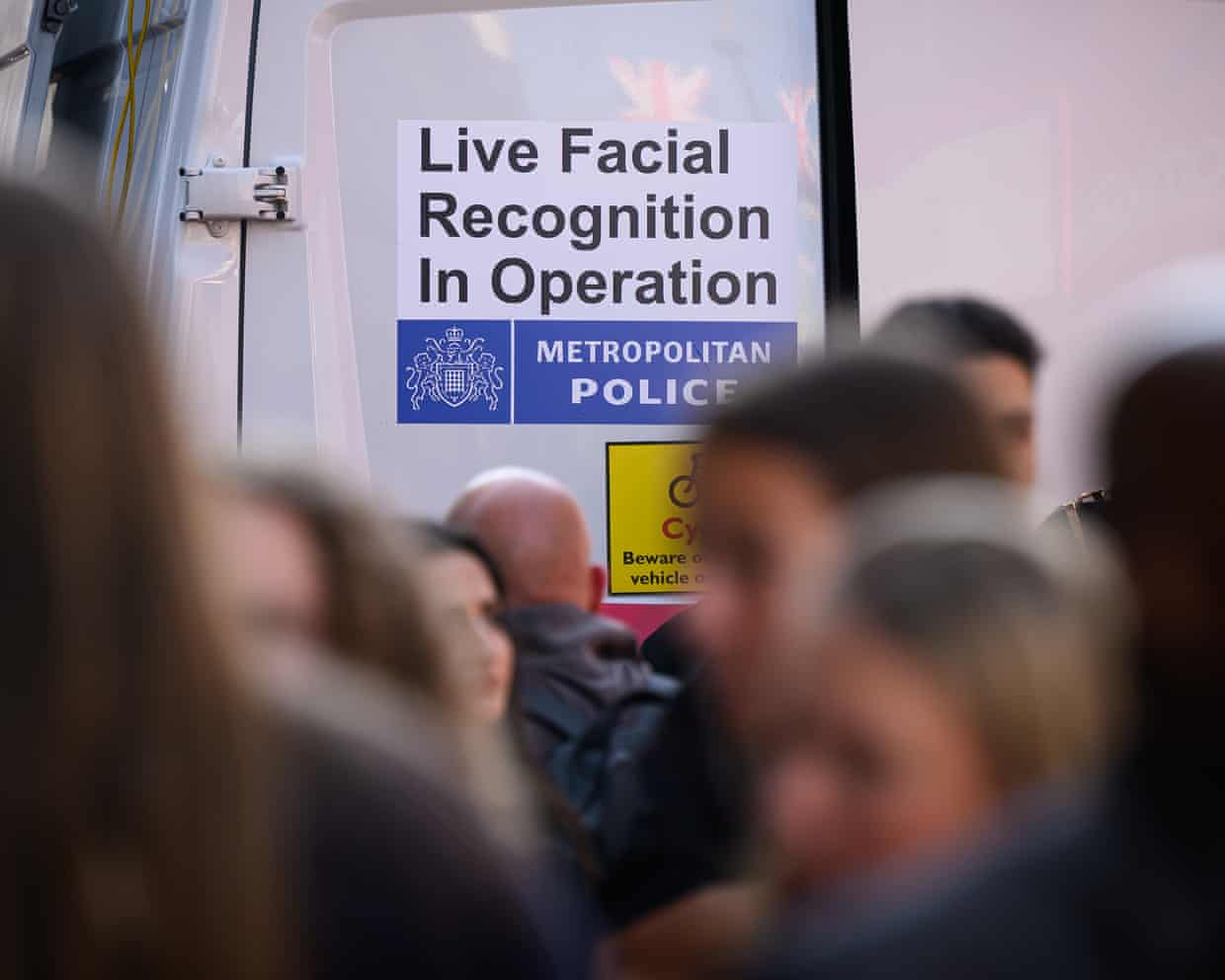
Police AI chief admits crime-fighting tech will have bias but vows to tackle it
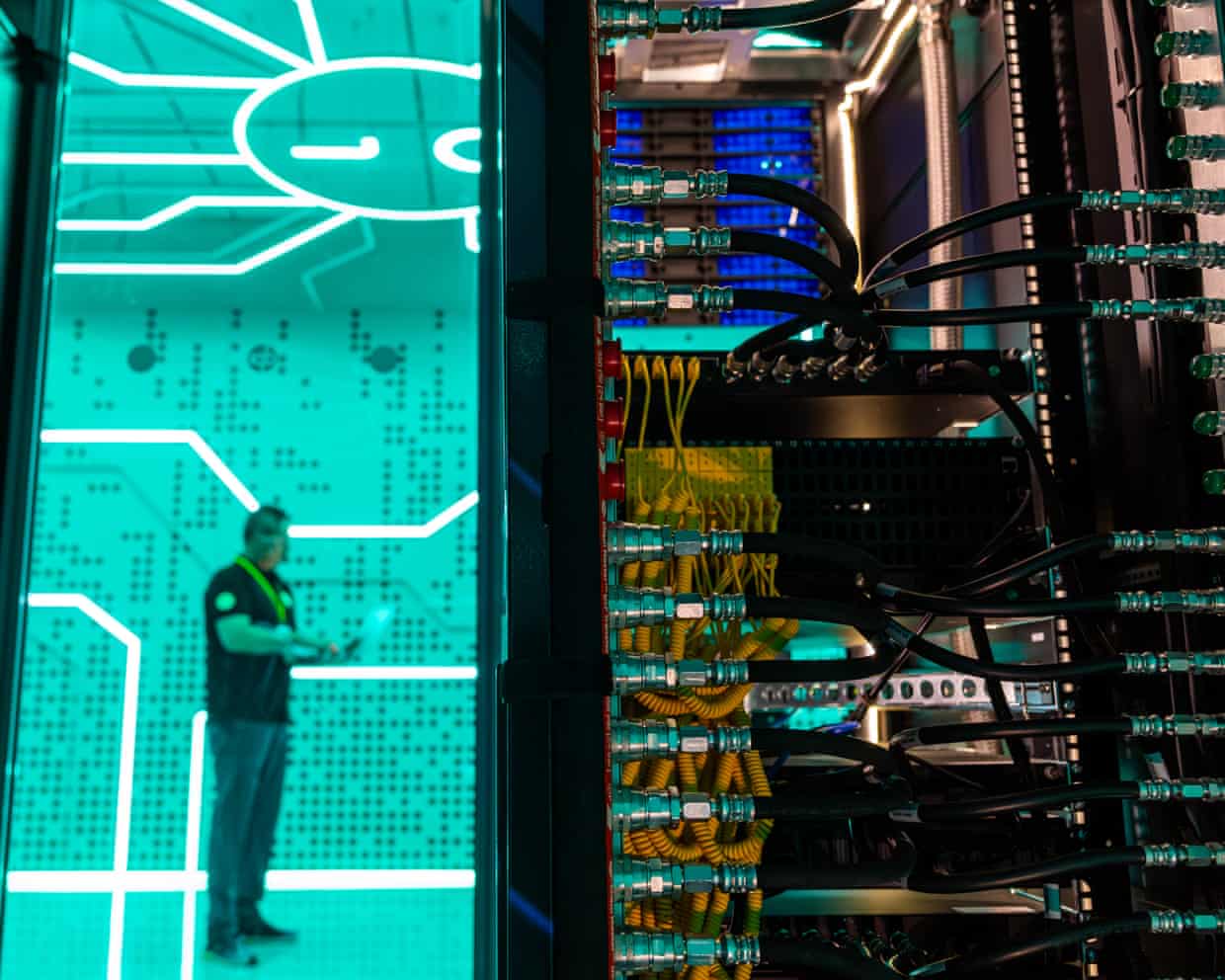
New datacentres risk doubling Great Britain’s electricity use, regulator says
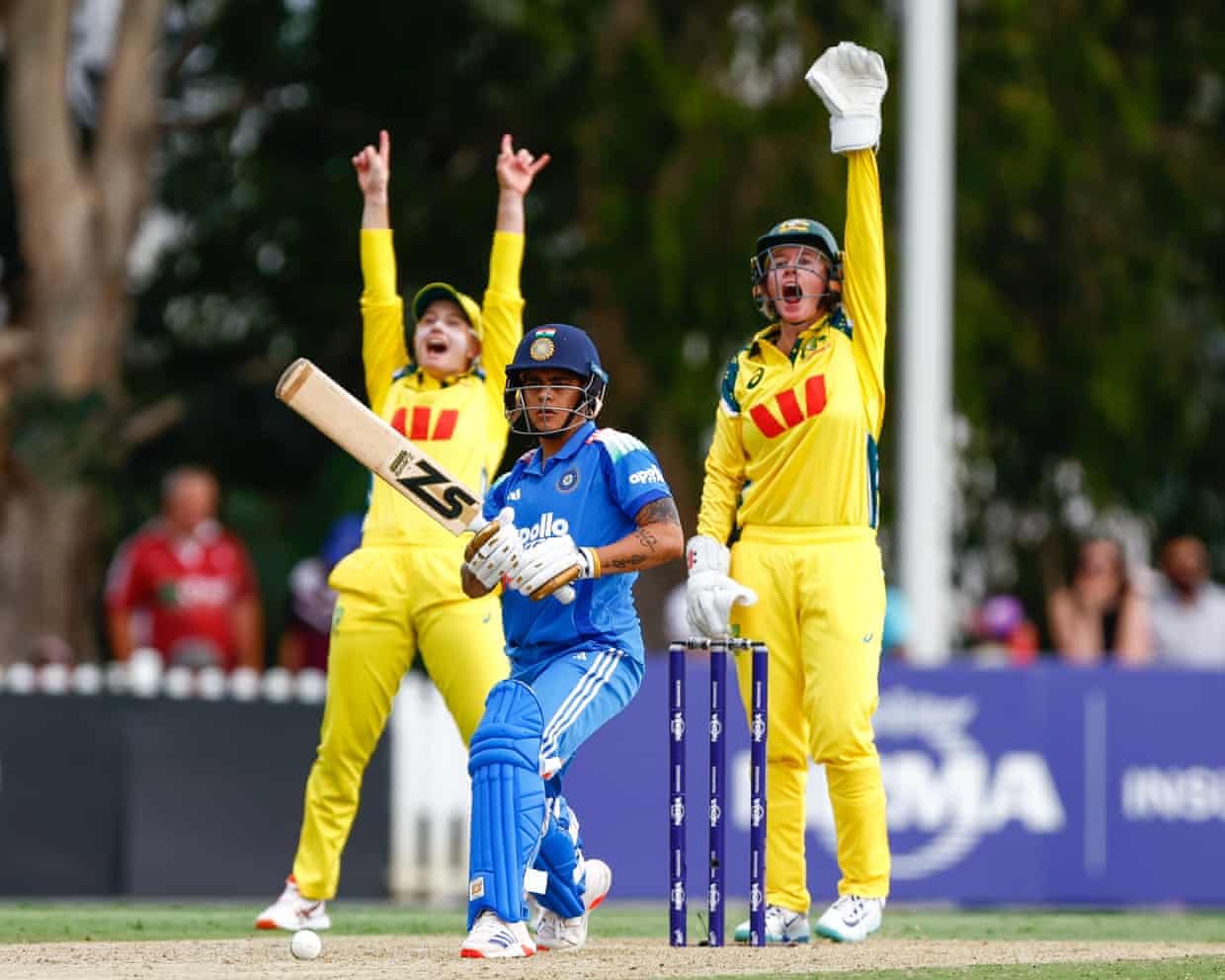
Australia v India: first women’s cricket one-day international – live

‘Resilience is the biggest lesson’: Raducanu is ready for revival after setbacks