Is it possible to develop AI without the US?

Hello, and welcome to TechScape,Today in tech, we’re discussing the Persian Gulf countries making a play for sovereignty over their own artificial intelligence in response to an unstable United States,That, and US tech giants’ plans to spend more than $600bn this year alone,I spent most of last week in Doha at the Web Summit Qatar, the Gulf’s new version of the popular annual tech conference,One theme stood out among the speeches I watched and the conversations I had: sovereignty.
The conference’s founder set the Summit’s tone on opening night: “Three years ago [when Web Summit Qatar began], people were talking about entering a multipolar world.We are now living in a multipolar world,” said Paddy Cosgrave.As evidence, he referenced the fiery rebuke of Donald Trump given by the Canadian prime minister, Mark Carney, at Davos a few weeks prior.He pointed to the act that had preceded him on stage: dancing robots built by a Chinese company, which he called the most advanced in the world.Cosgrave also brought on two speakers who would act out the dynamics he had mentioned.
First was the Qatari prime minister, who announced a series of billion-dollar moves meant to foster startups in the country.Then came the Palestinian-Jordanian founder of UpScrolled, an insurgent TikTok competitor whose founder announced on stage that the app had crossed 2.5 million users amid the confused backlash to the new US entity of TikTok.As the US becomes a more unstable place to immigrate to and start a company, all three major Gulf powers are making a show of their multibillion-dollar push into AI.It’s not just Qatar that is spending big.
Last year, the UAE signed a deal with the US for advanced chips that will fill one of the largest datacenters in the world to be constructed outside Abu Dhabi.Saudi Arabia’s state-owned AI firm, Humain, has inked billions of dollars in deals to create a “full-stack AI ecosystem”, which is to say the kingdom wants its own datacenters, training data, cloud services and AI models, perhaps even its own chips.The aim of sovereign AI – artificial intelligence under the control of its home country from tip to tail – is explicit.The move towards greater AI capabilities in the Gulf does not entail an end to cooperation with the US, though.While I was there, a newspaper owned by members of Qatar’s ruling al-Thani family trumpeted a deal between Jared Kushner’s AI company, Brain Co, and Qatar’s ministry of municipality to automate construction permitting.
The first line in the story gives an idea of the message: “Qatar is gaining prominence as a key player in practical artificial intelligence employment, leveraging partnerships that combine Silicon Valley expertise with local knowledge.”Will the Gulf’s push for its own AI succeed? That was the second question on everyone’s lips.(The first, of course, was: “Is AI a bubble?”) Multiple major factors are stacked against the region’s development of sovereign AI.Regional access to semiconductor chips is limited, though growing by hook or by crook.There is not enough homegrown engineering talent in the region to power an AI industry, but Doha offers India’s wellspring of engineers a much more attractive time zone for connecting with family than San Francisco does, as well as a price tag that’s lower than Trump’s $100,000 per visa.
For the construction of AI models, there is far less Arabic textual content online than English.Tech’s financiers, venture capitalists, are debating where to invest money amid the upheaval.The participants in one of the panels I moderated had competing visions.A French venture capitalist argued for backing startups across Europe and the Middle East.He and a German VC on another panel said that investing in the US had become more difficult in recent years due to huge valuations, which entail less percentage ownership for investors.
A partner at a venture capital fund that invests only in San Francisco firms argued that Silicon Valley’s companies possess a genuine moat that will fend off challengers and ergo are still the best bets to place.The Gulf is not alone in doing its best to build its own tech ecosystem.Europe is in the throes of similar angst over sovereignty, spurred on by Trump’s antagonism towards the region.But the bloc has crucial challenges to resolve.The EU’s relatively strict tech regulation has led to world-leading privacy protections for its citizens, but the continent’s tech sector is relatively weak in comparison with the laissez-faire US.
Will the EU’s parliament sacrifice the privacy guaranteed by the proposed AI Act in favor of the deregulation companies say they need?Europe’s governments are investing far less than the cash-rich petrostates in the Gulf.Can the EU’s companies and governments replicate all the tools they need without a significant influx of funding? France recently dumped Zoom, Microsoft Teams and Google Meet in favor of an application called Visio, which, coincidentally, is already the name of a Microsoft diagramming software.Belgium and the Netherlands are still essential for the global semiconductor supply chain, though only part of it.Elon Musk’s Starlink looms large over the continent as it attempts to boost the homegrown alternative Eutelsat, which has quite a long way to go to catch up to its American counterpart.One notable exception to Europe’s lagging at the Web Summit: the London startup ElevenLabs, seen as the developer at the forefront of generating voices and music with AI.
The company’s Polish founder announced on the first day that his company had closed a $500m fundraising round, led by blue-chip American firms, including the Maga-allied Andreessen Horowitz, which tripled ElevenLabs’ valuation,Bitcoin loses half its value in three months amid crypto crunchHow cryptocurrency’s second-largest coin missed out on the industry’s boomFiles cast light on Jeffrey Epstein’s ties to cryptocurrencyThroughout the past two weeks of quarterly earnings calls, Alphabet/Google, Amazon, Microsoft and Meta informed Wall Street that they would collectively spend more than $600bn in the coming year, mostly on the infrastructure that underpins AI,The amount of money dwarfs what many governments around the world spend to operate entire countries,Each company’s capital expenditure – money spent on fixed, physical assets (in this case the land, buildings and chips for datacenters) – equals or surpasses that of the past two years combined,Last year’s total for the four was $359bn, and 2024’s was $217bn, per Bloomberg.
Alphabet told Wall Street it would spend between $175bn and $185bn in the same time period, almost doubling from last year,Meta reported between $115bn and $125bn,Microsoft is slated to spend some $105bn, Bloomberg reports,Amazon stands out among the four for informing investors that its capital expenditure would increase the most, jumping from $125bn last year to $200bn in 2026,The day before Amazon’s earnings, Jeff Bezos’s Washington Post laid off a third of its staff.
The two are not directly linked corporations, but the contrast is stark.Bezos bought the Post in 2013 for 0.125% of what Amazon will spend this year alone, $250m.Even Tesla, an AI company in a more oblique sense than the others, revised its capital expenditure upward to $20bn, far more than analysts expected – or frankly wanted, given the company’s declining revenue.The figures are astronomical in scale, but there is reason to believe they will grow larger yet.
Take a look at the number of ads for AI products in the Super Bowl, which did their best to convince Americans that they actually like AI,The market for these products has not settled or matured into a sector with unseatable incumbents,AI is still a land grab, and the tech giants want to grab as much as they can,Why has Elon Musk merged his rocket company with his AI startup?Hail our new robot overlords! Amazon warehouse tour offers glimpse of futureSocial media companies are being sued for harming their users’ mental health – but are the platforms addictive?Anthropic’s launch of AI legal tool hits shares in European data companies

MPs call on welfare bosses to speed up redress over carer’s allowance scandal
An influential MPs’ committee has urged welfare bosses to speed up redress for tens of thousands of unpaid carers who stand to have huge benefit debts written off after they were wrongly hit with carer’s allowance penalties.The public accounts committee (PAC) said management failures and “systemic issues” at the Department for Work and Pensions (DWP) had led to carers being incorrectly forced to repay overpayments running into thousands of pounds.The committee said a “lack of integrated, concerted leadership” allowed carer’s allowance problems to proliferate for years and the DWP must now rebuild trust with carers by giving the issue “the leadership and attention it has long deserved”.Its comments are the latest in a series of damaging official criticisms of the DWP hierarchy’s role in longstanding carer’s allowance injustices. Last week, the work and pensions committee chair, Debbie Abrahams, accused it of a “culture of complacency”

Exercise can be ‘frontline treatment’ for mild depression, researchers say
Aerobic exercise such as running, swimming or dancing can be considered a frontline treatment for mild depression and anxiety, according to research that suggests working out with others brings the most benefits.Scientists analysed published reviews on exercise and mental health and found that some of the greatest improvements were observed in young adults and new mothers – groups that are considered particularly vulnerable to mental health problems.While aerobic group exercise emerged as the most effective physical activity for reducing depression and anxiety, low-intensity programmes that lasted only a couple of months may be best for anxiety, the researchers said.“Exercise can have a similar effect, and sometimes a stronger impact, than traditional treatments,” said Neil Munro, a psychologist at James Cook University in Queensland, Australia. “Getting moving, in whatever shape or form works best for each person, can help mitigate depression and anxiety symptoms

We need a fresh vision to save our high streets | Letters
Regarding your editorial (The Guardian view on high-street decline: a symbol of failure in a discontented nation, 3 February), saving high streets requires four things that the Treasury, the dead hand of government innovation, won’t like.First, it requires an overhaul of the business rates system, and second, a new tax for online business. Third, it requires compelling landlords to charge reasonable rents.Fourth, and finally, it requires local authorities the financial headroom to buy up vacant retail space. This ought to enable innovative community and business enterprises to flourish in what would otherwise be an overtaxed and overpriced rental market

Tom Maley obituary
My husband, Tom Maley, who has died aged 84, combined an exacting professional life in education, computing and braille with a musician’s appetite for company and mischief. Blind since early childhood, Tom refused the role of the heroic “overcomer”. He simply got on with things, usually at speed, with a running commentary that made any room feel more alive.Tom lost his sight before his third birthday because of retinoblastoma, an aggressive childhood tumour that led to the removal of both eyes. Blindness shaped his methods, but never diminished his curiosity or sense of fun
People with obesity 70% more likely to be hospitalised by or die from infection, study finds
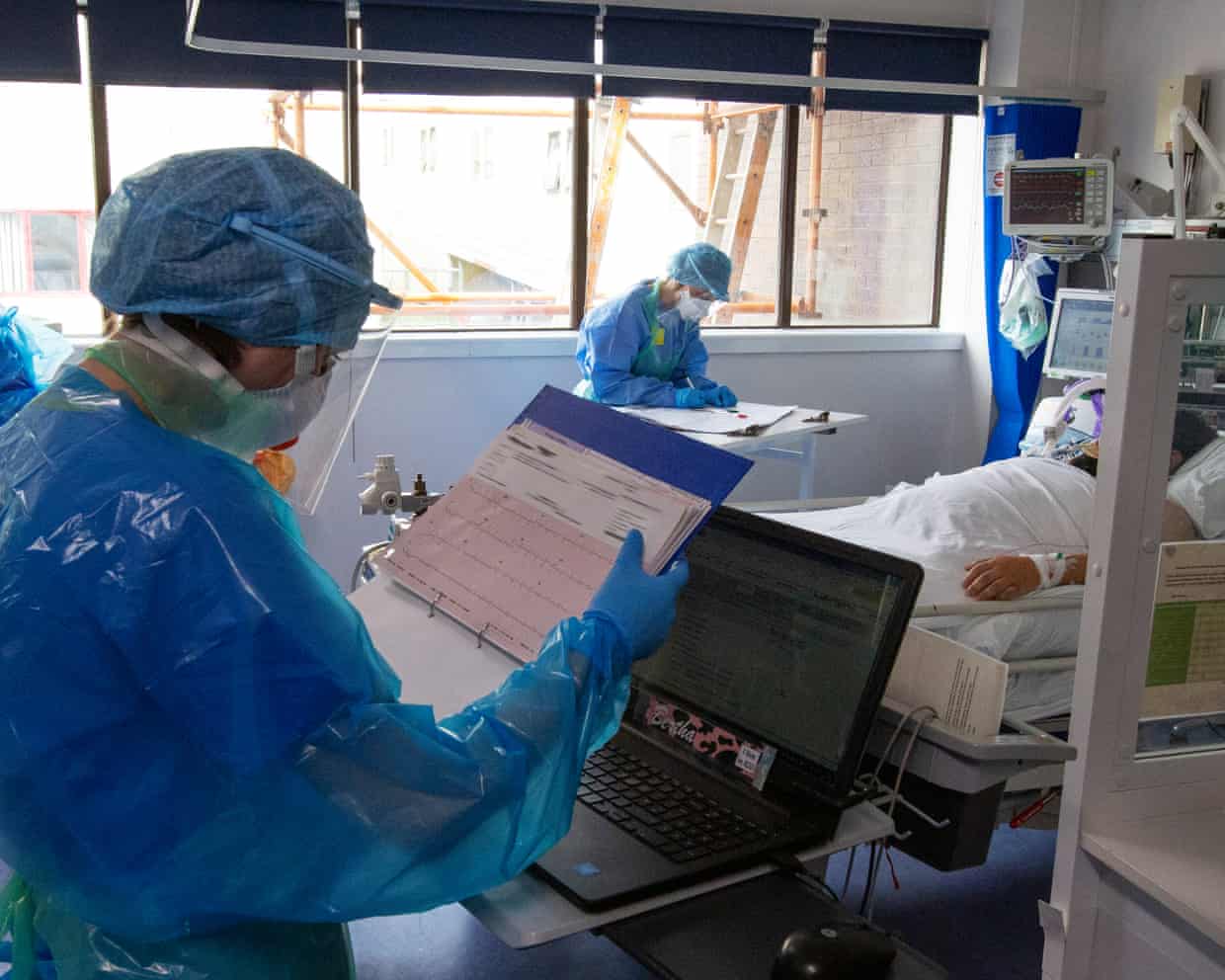
People living with obesity are 70% more likely to be hospitalised by or die from an infection, with one in 10 infection-related deaths globally linked to the condition, research suggests.Being an unhealthy weight significantly increases the risk of severe illness and death from most infectious diseases, including flu, pneumonia, gastroenteritis, urinary tract infections and Covid-19, according to a study of more than 500,000 people.Obesity may already be a factor in as many as 600,000 of 5.4 million deaths (11%) from infectious diseases every year, researchers found.The study’s first author, Dr Solja Nyberg, of the University of Helsinki, said the problem could worsen

Joy Davies obituary
My mother, Joy Davies, who has died aged 89, was a chemist, social worker and passionate advocate for people with severe learning difficulties.Born in Ormesby, North Yorkshire, to Olive (nee Postgate), a midwife, and Thomas Hansell, a butcher, Joy went to the Cleveland school (now Teesside High) in Eaglescliffe. She left aged 16 and decided against working on the family farm near Swainby in North Yorkshire, choosing instead to join the Ministry of Agriculture, based in Newcastle upon Tyne. Her work testing milk at farms took her all over a region that remained close to her heart all her life.In the late 1950s, she joined British Titan Products, a company that manufactured titanium oxide, as a chemist, and worked in the company’s laboratories in Billingham, near Middlesbrough

Housing market in England and Wales ‘showing tentative signs of recovery’

Starmer tells Jim Ratcliffe to apologise for saying UK ‘colonised’ by immigrants

Instagram CEO dismisses idea of social media addiction in landmark trial
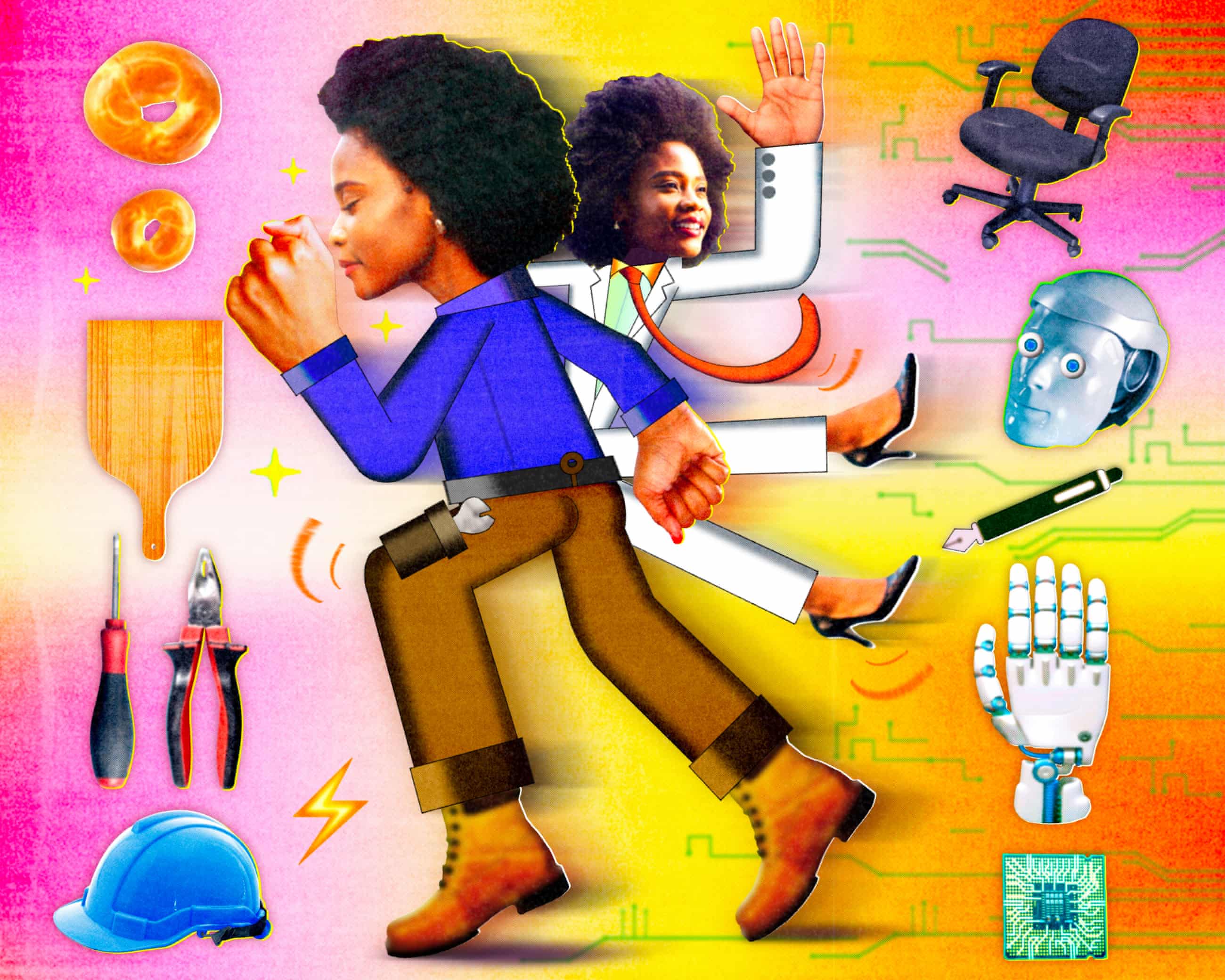
The big AI job swap: why white-collar workers are ditching their careers

Australia’s upward trajectory slips off course as Winter Olympics medal search goes on | Jack Snape

Fear and Gibson suffer nightmare on ice as GB Winter Olympic medal drought goes on