House of ice on a warming planet: Italy’s turn for the Olympics winter mirage
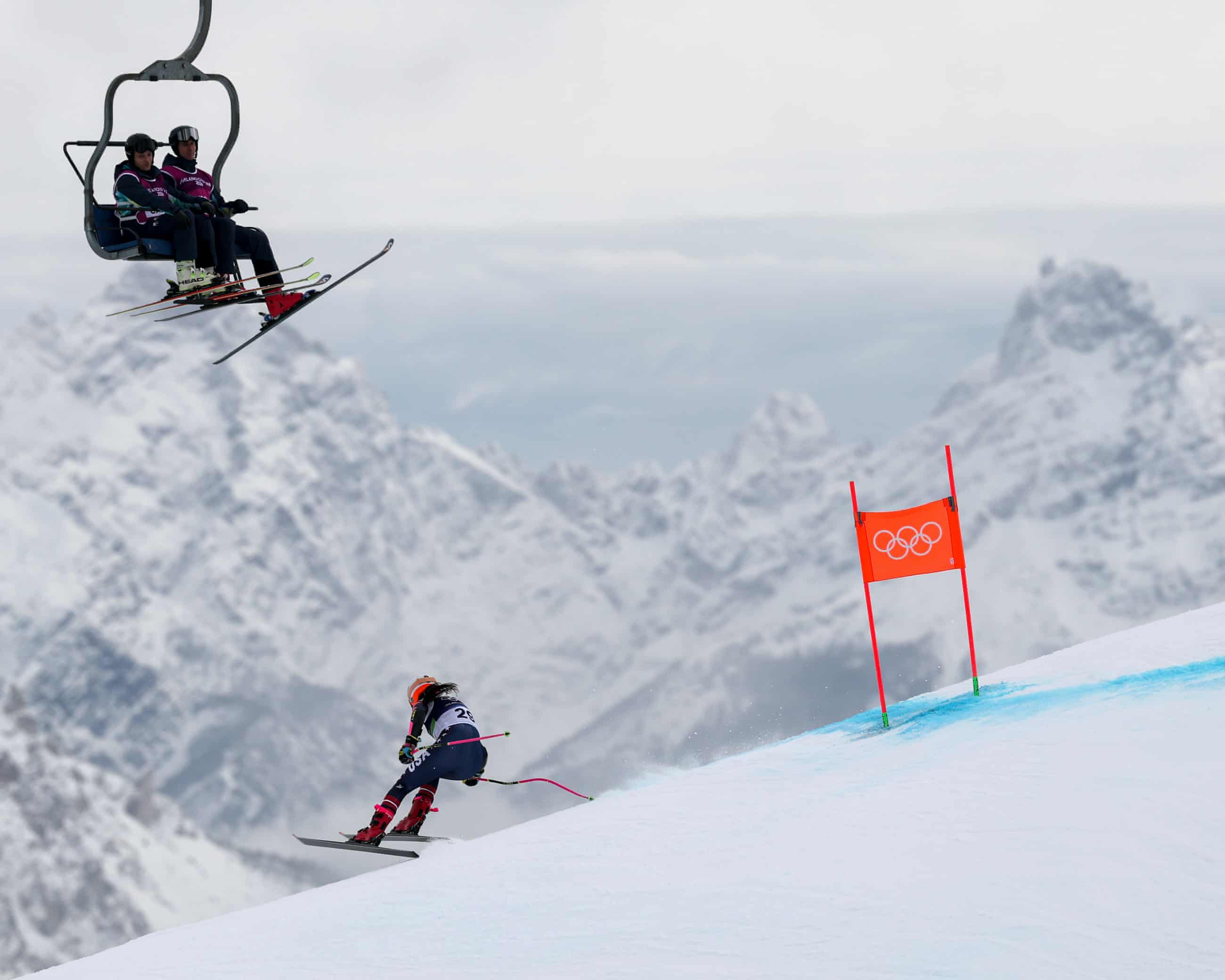
There will be twists, flips and turns to savour in a Games whose financial and environmental costs nonetheless continue to spiral out of controlPierre de Coubertin never wanted a Winter Olympics,He spent the best part of two decades lobbying, politicking and organising before he finally got the first summer Games up and running in Athens in 1896,Its winter sibling though, well, “the great inferiority of these snow sports …” de Coubertin once wrote, “is that they are completely useless, with no useful application whatsoever,” He allowed ice skating and ice hockey, the two stadium sports, to be part of the roster for the early summer Games, but it was another two decades before he was persuaded to hold a separate winter event,That was in 1924, in Chamonix.
The 100th anniversary fell midway between the last Winter Games in Beijing and this one in Milan-Cortina.It’s an interesting event to look back on.It was described at the time as a 10-day “winter sports week”, an “appendage” de Coubertin called it to that year’s summer Games in Paris.There were 16 countries competing in five sports, with four more, including “military patrol”, included as demonstration events.It was only later, after the International Olympic Committee had become more interested in burnishing its own history, that this knockabout event was officially designated as the very first Winter Olympic Games.
A century later, this Winter Olympics, like every Winter Olympics before it, will be the largest yet – 3,500 athletes, 93 nations, 19 days of competition, 16 different events, and everywhere an irrepressible sense that, like a party thrown by a teenager while their parents are away, this has all got a little out of control.All of a sudden Mariah Carey has turned up, ski jumpers are injecting acid into their penises, and the hosts are running around trying to plug the leaks in the €270m ice hockey arena they were compelled to build in the middle of 110 acres of brownfield south of Milan, which will only ever be needed for the next two and a half weeks.These Milan-Cortina Games are, in many ways, an attempt at retrenchment, an effort to redress grotesque excesses, which spiralled so madly out of control that Sochi in 2014 became the most expensive Games in history, and Beijing in 2022 required the Chinese to fabricate an entire winter sports resort out of concrete, steel and phoney snow.The IOC has found it increasingly difficult to get anyone sensible to want to take them on at all.In the past 12 years, Calgary, Innsbruck, Krakow, Oslo, Sapporo, Sion and Stockholm all dropped bids because of a lack of public enthusiasm.
Which is why this edition of the Games is being shared across northern Italy, rather than rooted in one city.In one way it’s made them more feasible, in another it now means that it takes at least 11 hours, and a lot of good luck, to get from the curling venue to the men’s downhill.The next one, which is being spread out across the French Alps, will be similar.The IOC is also trying to ground the Games in countries that actually have a culture of winter sport.This won’t last long.
Saudi Arabia have sent two skiers here this year, an advance guard for the $500bn winter sports resort city they are building in the desert, which was – until plans changed this week – due to host the Asian Winter Games in 2029, and, no doubt, an Olympics one beyond it,Even here, in a country that has hosted the Winter Olympics twice already, it is hard to avoid the feeling of just how ersatz and unsustainable this all is,Cortina has plenty of snow,But it’s not necessarily the sort athletes like, or TV schedulers can rely upon,So the organisers are using approximately 100m litres of water to make something like 50,000 tonnes of the stuff for these Games.
They had to build an entire reservoir just to service it.Cortina already has an ice track, too, the one they built the last time they had the Olympics here in 1956.It was shut in 2008 because no one used it and has been derelict ever since.Now they have a second, cut, at huge expense, right through a forest of ancient larch trees.According to analysis done by the World Wildlife Foundation of Italy, which is part of the Open Olympics movement, 60% of the construction works for these Games have been done without any environmental impact assessment, under the cover of this mega-event.
All this at a moment when almost 200 ski resorts have already been forced to close in the French Alps alone because of a truncated winter season caused by global heating and declining snowfall.All these resorts, and the towns around them, are in a position where they now need to fake it to make it.The IOC makes great play of its environmental credentials.But slapping the word “sustainability” on a brochure listing how much printed paper you’re saving by sticking everything online doesn’t add up to much when the bulldozers out back are chopping down a forest to make way for a bobsled run you need to provide for a fortnight of sliding competitions.De Coubertin changed his mind about winter Games in the end, but he wasn’t wrong about any of this.
A lot of these sports don’t have any utility beyond recreation,With the exceptions of Nordic skiing and the skating events, many of the rest were literally invented by British aristocrats on holiday in St Moritz as something fun to do during the winter,And away from the handful of countries across the northern hemisphere that have their own indigenous cultures of skiing and skating, they still exist largely as a privilege for the increasingly small band of well resourced tourists who can afford them,You might say that recreation is all the reason anyone needs,Going fast is its own reward, and watching other people do it makes for great TV.
The Games is going to be one hell of a show, full of twists, flips, turns, dashes and crashes, last-minute-winners and late-breaking stones sliding right on to the button during the 10th end.It is a gloriously silly business, and one which, even after the IOC’s attempts to roll it back, has an increasingly serious cost as it continues to grow out of all proportion.
Amazon reveals plans to spend $200bn in one year the day after Bezos guts Washington Post
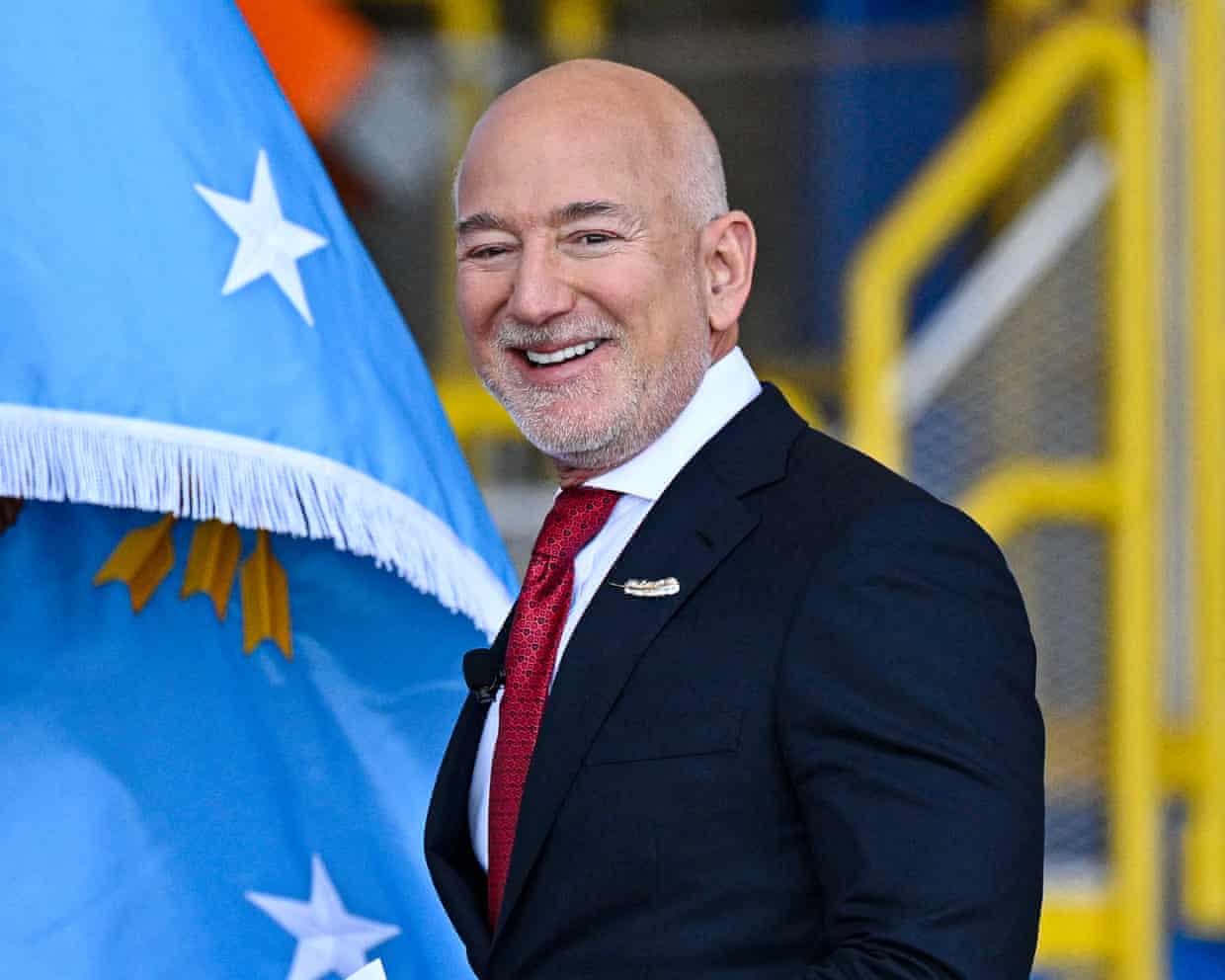
Amazon announced plans to spend $200bn on artificial intelligence and robotics this year, the latest tech giant to vow fresh enormous investments in the artificial intelligence arms race.The news of the investment comes one day after the Washington Post, owned by Amazon founder Jeff Bezos, announced it was cutting approximately a third of employees.Amazon also reported $213bn in revenue on Thursday. The fourth-quarter earnings of the e-commerce and cloud-computing giant came in slightly below Wall Street estimates even as sales and growth surged.Amazon will increase capital spending to $200bn this year from $125bn, CEO Andy Jassy said in a press release

Bitcoin loses half its value in three months amid crypto crunch
Bitcoin’s price sank to $63,000 on Thursday, its lowest level in more than a year, and half its all-time peak of $126,000, reached in October 2025. A months-long dip in cryptocurrency prices has tanked shares of companies that have increasingly invested in bitcoin, exacerbating broader stock market jitters.Bitcoin rode a high during Donald Trump’s ascent to the presidency in 2024 and throughout 2025; its price steadily increased as the president made one industry-friendly move after another. Crypto’s largest currency hit $100,000 for the first time in December 2024 and even rose to a record high of $126,210.50 on 6 October, according to Coinbase

‘Orwellian’: Sainsbury’s staff using facial recognition tech eject innocent shopper
A man was ordered to leave a supermarket in London after staff misidentified him using controversial new facial recognition technology.Warren Rajah was told to abandon his shopping and leave the local store he has been using for a number of years after an “Orwellian” error in a Sainsbury’s in Elephant and Castle, London.He said supermarket staff were unable to explain why he was being told to leave, and would only direct him to a QR code leading to the website of the firm Facewatch, which the retailer has hired to run facial recognition in some of its stores. He said when he contacted Facewatch, he was told to send in a picture of himself and a photograph of his passport before the firm confirmed it had no record of him on its database.“One of the reasons I was angry was because I shouldn’t have to prove I am innocent,” Rajah said

How cryptocurrency’s second largest coin missed out on the industry’s boom
US crypto developer Danny Ryan submitted a proposal in November 2024 to Vitalik Buterin, the founder and symbolic leader of Ethereum, a prominent blockchain powering the world’s second-largest cryptocurrency. Ryan, who had worked for seven years at the Ethereum Foundation (EF), Ethereum’s de facto governing body, suggested that Ethereum could be on the cusp of an era-defining shift.Since its founding in 2014, the foundation had prioritized technical upgrades and had avoided centralizing power while its user base was growing, but Ethereum had now grown up, and the cryptocurrency world around it had grown up, too. The EF could now “exercise a stronger voice” without compromising its ethos of decentralization, Ryan said – and he was open to leading that charge if appointed as the foundation’s new executive director.Ryan told the Guardian that he could see how political tides were changing “overnight”, which informed his proposal
What does the disappearance of a $100bn deal mean for the AI economy?
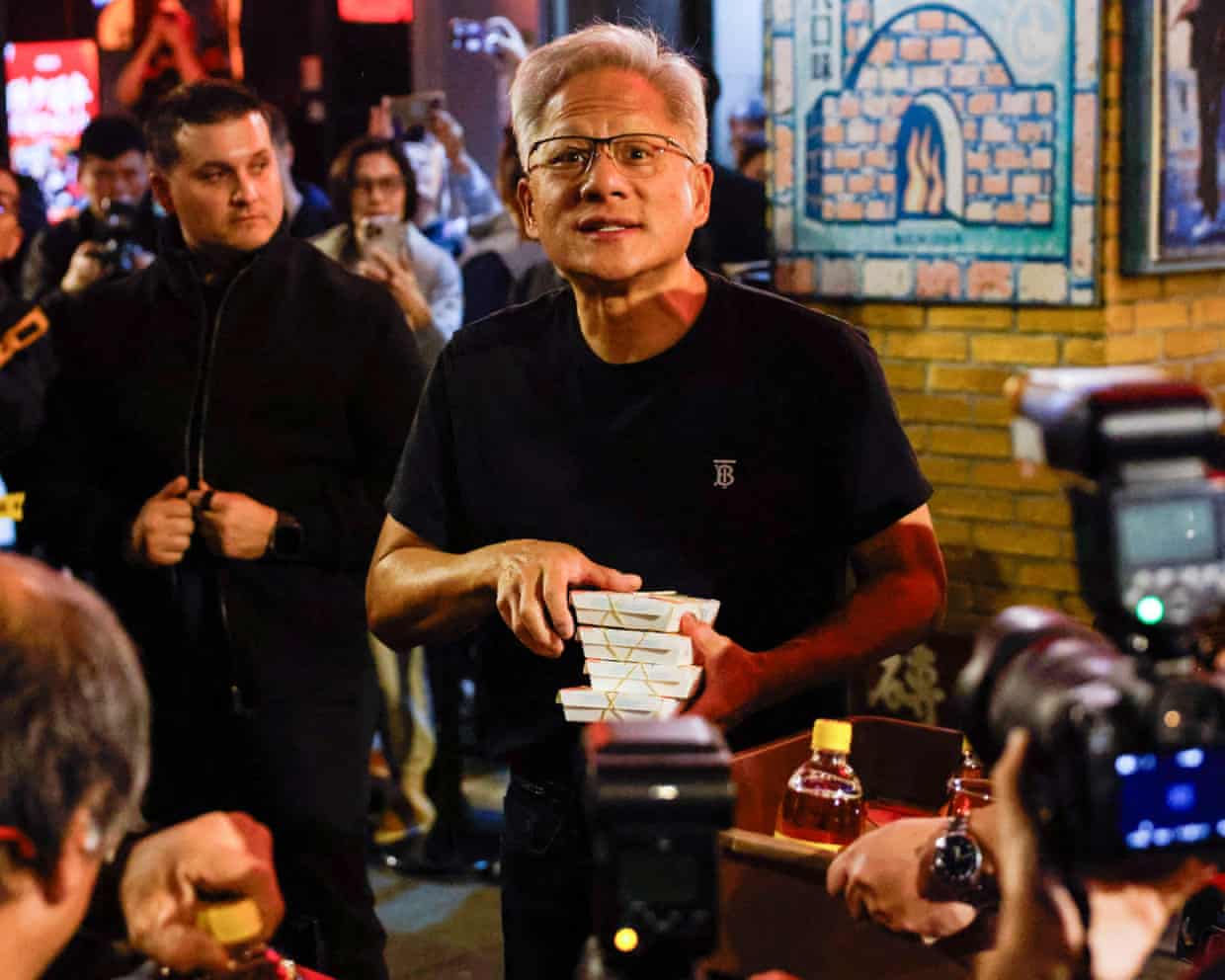
Did the circular AI economy just wobble? Last week it was reported that a much-discussed $100bn deal – announced last September – between Nvidia and OpenAI might not be happening at all.This was a circular arrangement through which the chipmaker would supply the ChatGPT developer with huge sums of money that would largely go towards the purchase of its own chips.It is this type of deal that has alarmed some market watchers, who detect a whiff of the 1999-2000 dotcom bubble in these transactions.Now it seems that Nvidia was not as solid on this investment as had been widely believed, according to the Wall Street Journal. Negotiations had not progressed, with Jensen Huang, Nvidia’s chief executive, privately emphasising that the deal was “non-binding” and “not finalised”
Google Pixel Buds 2a review: great Bluetooth earbuds at a good price
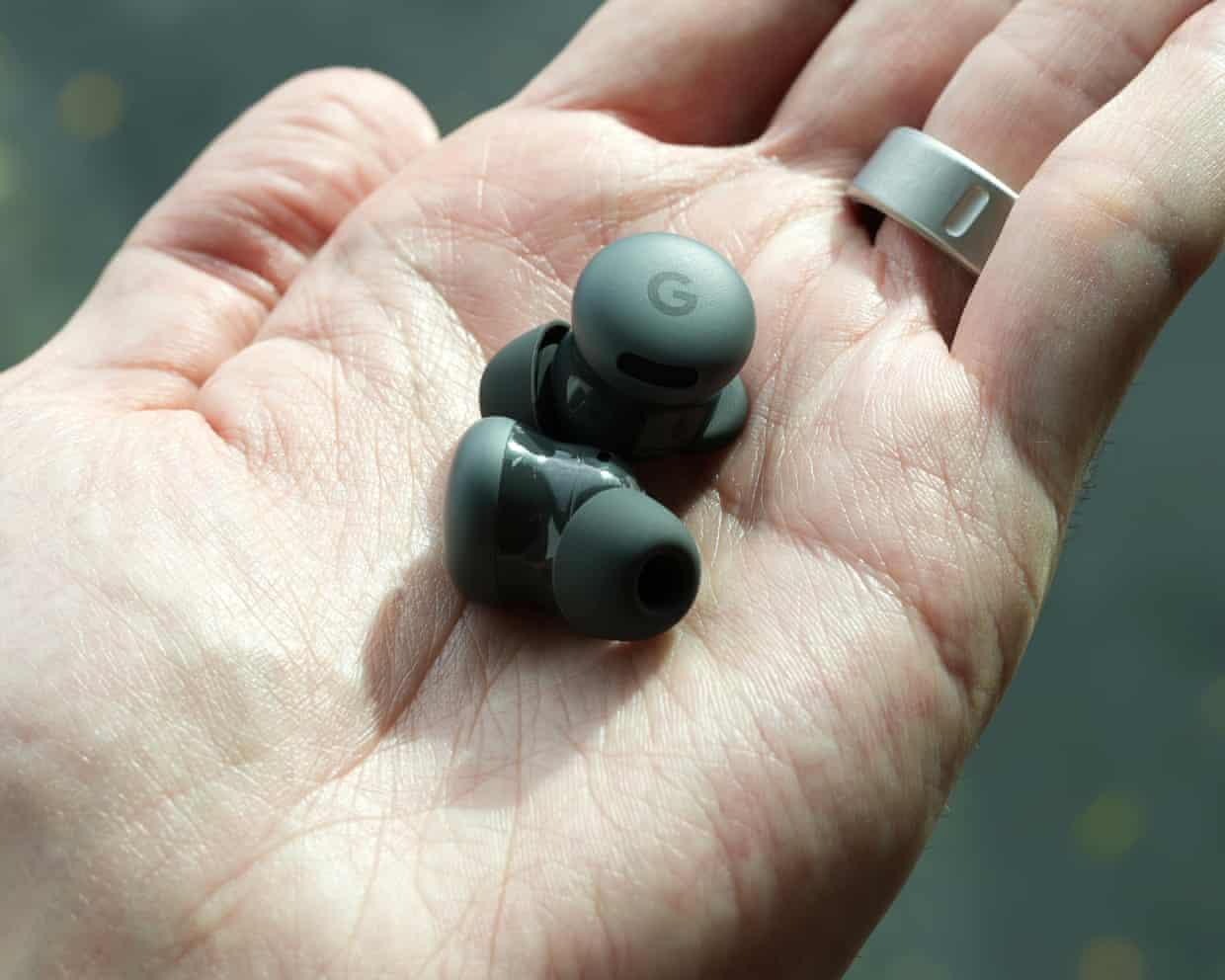
Google’s latest budget Pixel earbuds are smaller, lighter, more comfortable and have noise cancelling, plus a case that allows you to replace the battery at home.The Guardian’s journalism is independent. We will earn a commission if you buy something through an affiliate link. Learn more.The Pixel Buds 2a uses the design of the excellent Pixel Buds Pro 2 with a few high-end features at a more palatable £109 (€129/$129/A$239) price, undercutting rivals in the process
Price of average UK home passes £300,000 for first time, Halifax says

Almost a quarter of soup on sale in UK supermarkets has too much salt, study finds

TikTok could be forced to change app’s ‘addictive design’ by European Commission

Deepfake fraud taking place on an industrial scale, study finds
House of ice on a warming planet: Italy’s turn for the Olympics winter mirage
My simple message for England: get the ball into Arundell’s hands early against Wales | Ugo Monye