Division and derision: how plans for an AFL stadium left Tasmania in pieces | Jack Snape
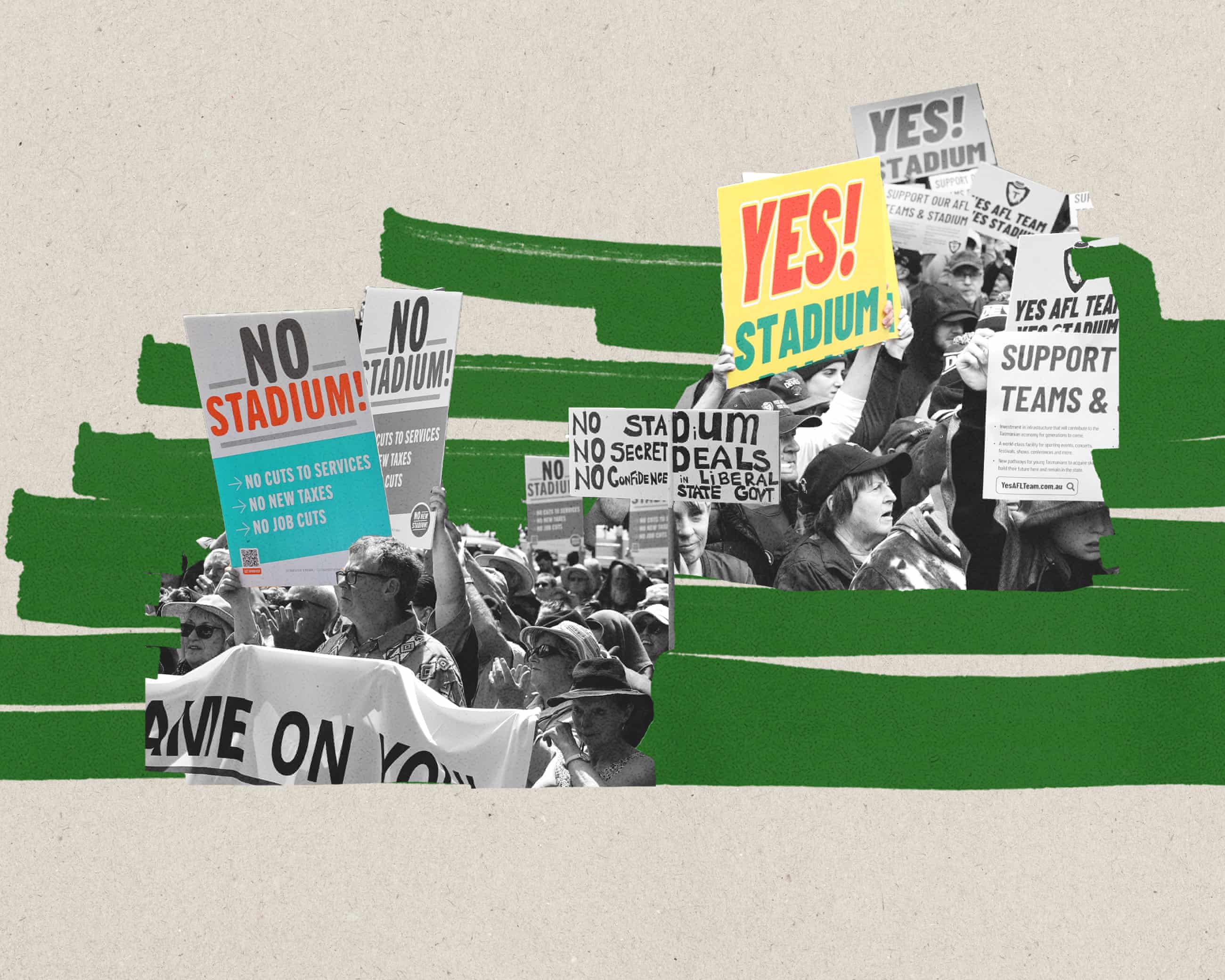
Whatever parliamentarians decide this week, the acrimonious debate over the Macquarie Point plan in Hobart has been damagingIn a state with a rich history of activism, Sunday was a protest against a protest.Around 15,000 braved the rain to gather at Hobart’s parliament house to tell the soon-to-vote crossbenchers: “Yes stadium.”The AFL’s invitation in 2023 for Tasmania to join the mainland’s premier competition is arguably the greatest gift in Australian sport.The condition of that offer however, that the poorest state builds an expensive stadium on a precious parcel of land, has been described as “unconscionable”.Even the project’s lead proponent, premier Jeremy Rockliff, accepts for many the deal is not perfect.
While the AFL is investing tens of millions of dollars each year in Tasmania, it has offered just $15m for a roofed venue now quoted at $1.13bn.Take out the $240m committed by the federal government, and Tasmania – already $5bn in debt and having had its credit rating downgraded just last week – will have to find the remainder.So eye-watering are the numbers, so strong is the opposition, and so tight is this week’s decisive parliamentary vote, that thousands were motivated to assemble on Sunday, fearing a once-in-a-lifetime opportunity was slipping away.The Liberal leader took to the stage just after 2pm, as the drizzle over Hobart began to intensify.
“I think we’re going to need an even bigger stadium,” Rockliff said.Organisers had hoped the gathering might become Tasmania’s largest ever political rally.History’s numbers are rubbery, but approximately 10,000 protested against damming the state’s wild rivers in 1983, and around 5,000 marched against the conflict in Vietnam in 1970.Thousands expressed opposition to the Iraq war in 2003, rallied against public service strikes in 2018, and turn out each year demanding the date of Australia Day be changed.In that context, the turnout on Sunday was impressive, particularly given the weather.
Police described it as “a significant crowd, with potentially up to 15,000 people”.By comparison, the previous week’s anti-stadium rally attracted 7,000 according to organisers, while police provided an estimate of 1,500.Bob Brown, who coordinated opposition to the dams, once wrote protest was “to fight that the world might avoid the worst and survive for a future worth living”.Sunday was unlikely to be what he had in mind.Rockliff, as the man who cut the deal with then-AFL chief executive Gil McLachlan in 2023, is regarded by Sunday’s crowd as a hero.
He praised the dripping attendees for giving Tasmania “hope”, and singled out those who were at a rally for the first time,“The big difference between this rally and so many other rallies around Tasmania, you’re actually standing here for our future, and for something, not against something,”What made Sunday unusual for a protest was the power of those on stage,Rockliff might have worn a custom-made jumper with “Rocky” on its back, but his is no underdog cause,He was standing alongside the Labor leader Josh Willie, former Labor leader David O’Byrne, a local construction union leader, and famous football, basketball and business names.
Behind the mic came a procession of Devils proponents and even one Demon, in Melbourne president and Tassie product Brad Green.One speaker, local real estate adviser Jacob Field, described his audience as “makers”, while the anti-stadium brigade were “takers”.Division and derision were a consistent theme.Despite the influential support and the polarising political language, the event was held in the guise of a grassroots movement.Pro-stadium Facebook page administrator and Sunday’s organiser Mark Brown described himself as “just a regular bloke from the suburbs” and thanked his family, as one of his children hugged him.
“We have spoken with our feet today,” he said,“And I urge the MLC upper house members to approve the stadium when it comes before them this week,”Those who have argued against the stadium have called for the money to instead be spent on health, education and housing,This group within Parliament include the Greens and a handful of independents,There are also many within the community who feel – even if they do want an AFL team representing the state – the stadium is too expensive, it’s in the wrong place, or that planning has failed the local Palawa people and former diggers who both share a connection to the Macquarie Point site designated for the arena.
An independent planning assessment found the project should not proceed due to its high cost and a myriad of problems in its final report released in September.Treasurer Eric Abetz labelled the commission’s conclusions as “subjective assessments”.Last week, urban planner Shelley Penn – one of the assessors and a Melbourne-based architect and urban planner – offered her response: “There’s a difference between taste and quality.”Sign up to Sport in FocusOur picture editors select their favourite sporting images from the past week, from the spectacular to the powerful, and with a little bit of fun thrown inafter newsletter promotionVFL great Brent Crosswell, a member of the Tasmanian team of the century, spoke against the building the previous week, saying the AFL’s requirement of a stadium for the team was “condescending” and “despicable”.“Once we’ve got this stadium here, which we are revolted by, what is charming will cease to be charming,” he said, describing the building as “a great moon ball” that “will move across the cityscape and deface things”.
The Devils – the team that has quickly attracted more than 200,000 members – are almost universally welcomed, but there is a sense within the community that the mainlanders at AFL House have pushed a hard bargain on Tasmania.Brendon Gale, the former Richmond player and chief executive who returned to his home state to lead the Devils, defended the deal.“The AFL has given the state an opportunity to be part of this incredible national platform and put the state on the map, and also tap into all their economic benefits and the revenue stream,” he said, adding “you’ve got to invest for that”.Independent MP Kristie Johnston was part of a group that travelled to Melbourne at the end of October requesting a meeting with the AFL, to try to find some kind of alternative.“Tasmanians are passionate about their football, they love their football, they want a team, but what they [AFL officials] have put before us is an unconscionable deal,” she said.
New AFL chief operating officer Tom Harley met the group in the meeting room looking out over Docklands, a precinct that is still waiting to be enlivened by its own stadium some three decades on.He heard their concerns then, after the allotted 30 minutes, stood and wound the meeting up.The AFL issued a brief statement afterwards, saying Harley “listened to a range of views and appreciated the group travelling to AFL House and putting those views forward”.Ultimately though, the AFL’s “position has not changed”.Roland Browne, a Tasmanian lawyer who helped organised the anti-stadium rally, said whatever the result this week, the debate has been a stain on the state.
“The healing that will be needed, whichever way this decision goes this week, is very significant,” he said,“It’s been acrimonious, and there’s no end point if a decision is made that the stadium is to be built,”Brian Clark, a retired mechanic, wore his myrtle green on Sunday,The 66-year-old was attending just his second public rally, after an experience during his parents’ final years motivated him to support the voluntary assisted dying movement in 2020,“There’s going to be a lot of angst if this doesn’t go through,” he said.
“It’s part of Tasmania, it’s part of me.I’m nearly 70 and I want this.I’ve wanted it for 30, 40 years.”He said he wouldn’t usually be out on a Sunday, and he is currently managing prostate cancer.But he was adamant this was a cause he will keep supporting, even if parliament votes against the stadium this week.
“Just hope that it’s not all finished yet, which I would imagine is the case, keep trying,” he said, before turning towards Mount Wellington.“It’s like our cable car up here.”
Let’s not repeat the folly of PFIs for NHS buildings | Letter
In response to Lord Hutton’s letter (23 November) on NHS hospitals built under the private finance initiative (PFI), independent research into the design quality of PFI public buildings, by all of the auditing authorities in the UK, showed serious flaws and a significant “quality gap” when compared to traditional design-led procurement.In my 2007 book The Design Quality Manual: Improving Building Performance, I included results from all these reviews, starting with the Audit Commission’s 2003 report PFI in Schools. The design flaws were serious, including poor functionality, short-life materials, and non-compliance with building and safety regulations.PFI contracts tend to be led by building contractors rather than architects. So was the refurbishment of Grenfell Tower
Fears for UK security as Foreign Office moves to scrap unit on conflict and refugee crises
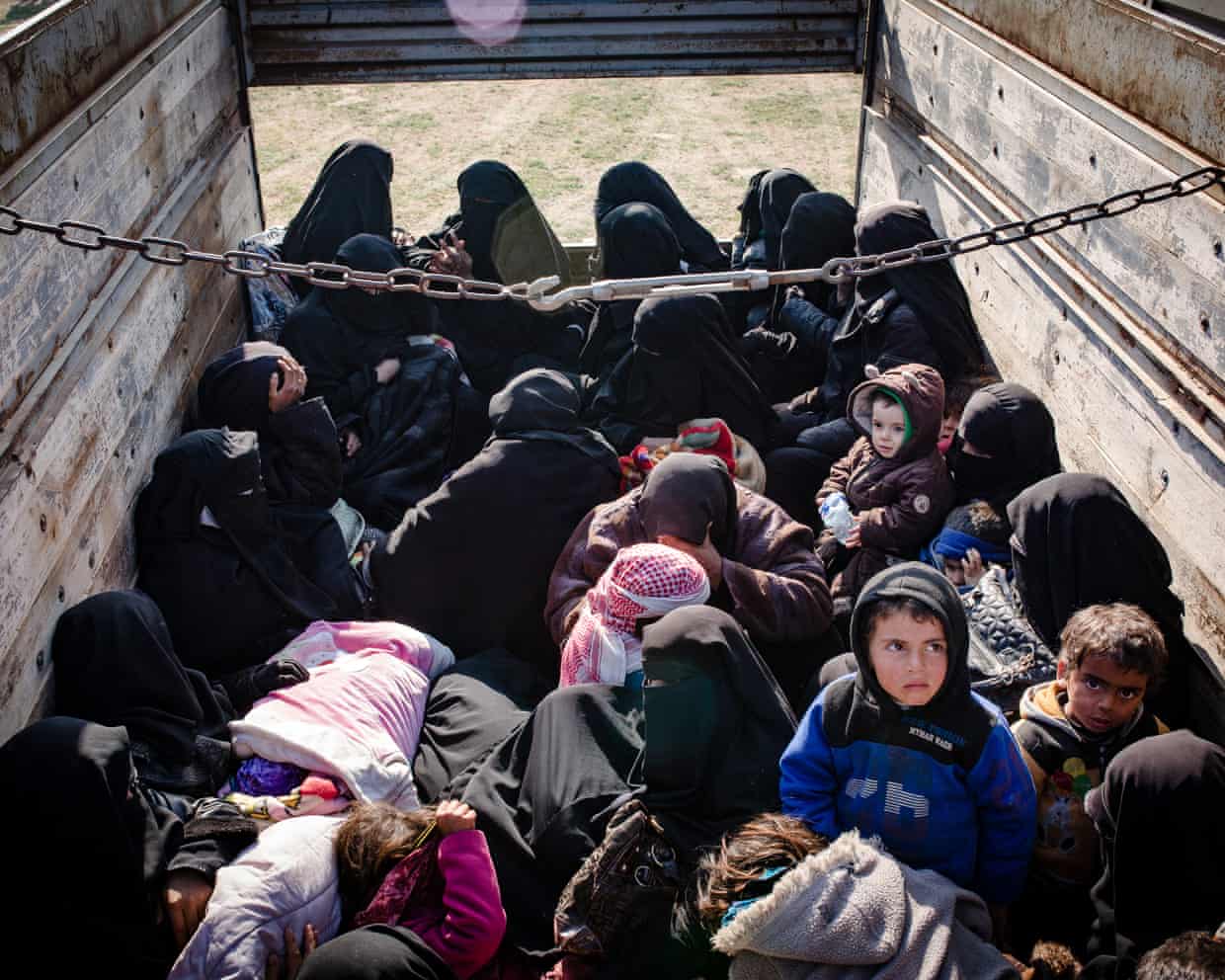
The Foreign Office has been warned that a plan to axe its dedicated unit on emerging conflicts and refugee crises is a “real error” that “undermines UK security” as the department grapples with swingeing cuts.The Foreign, Commonwealth and Development Office’s (FCDO) migration and conflict directorate, which employs about 100 civil servants, is being abolished at the end of this year and its work subsumed by the rest of the department.The directorate provides advice and technical support to governments and civil society groups in trouble spots, including Syria, South Sudan, Ethiopia, Yemen and the Philippines.It is slated to close despite Yvette Cooper, the foreign secretary, writing last week that the FCDO was “stepping up efforts” to support peace-building.The move is part of a wider restructuring that threatens 2,000 jobs – about a quarter of the workforce – and has damaged morale among diplomats
Your Party to have ‘collective leadership’ in win for Zarah Sultana
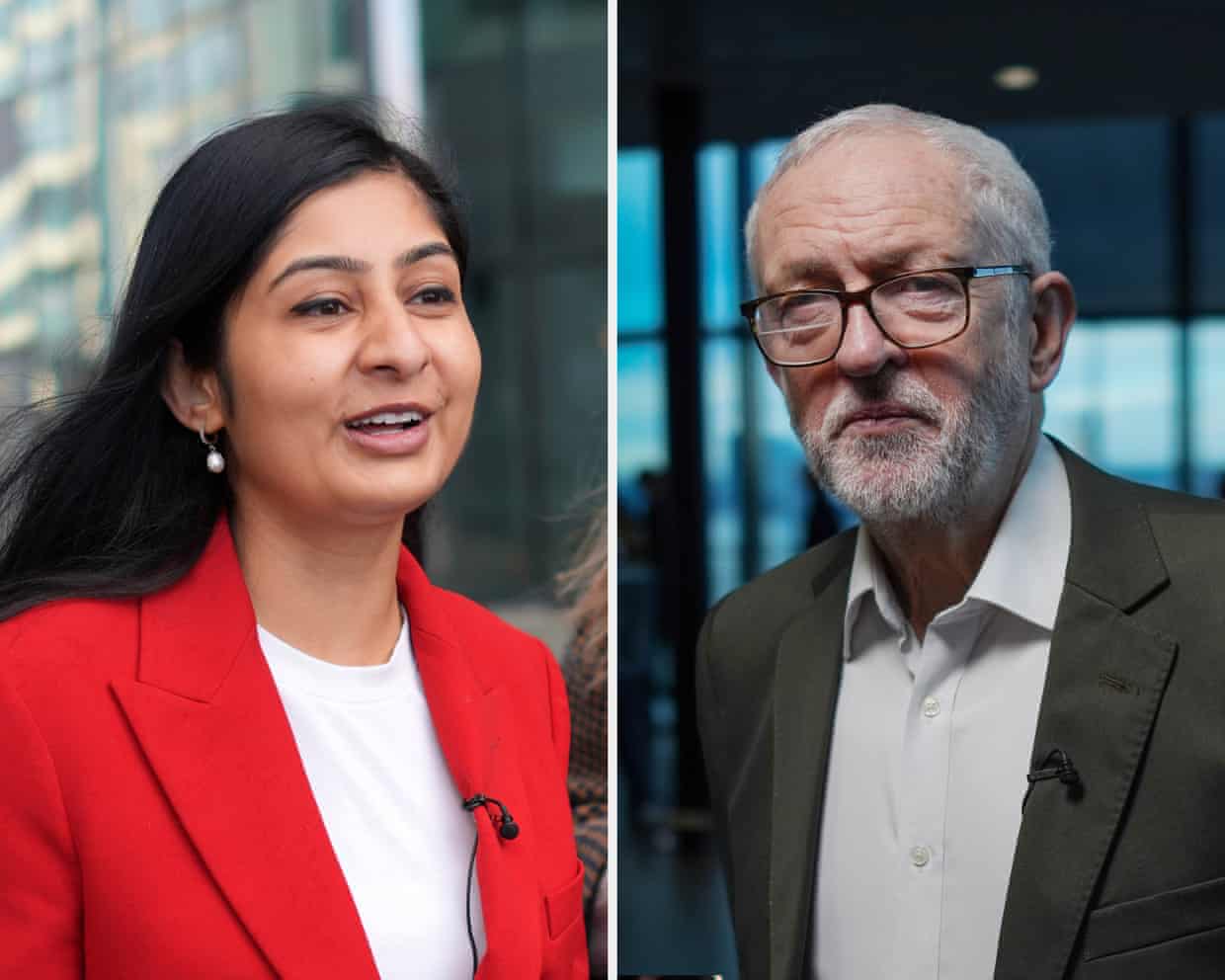
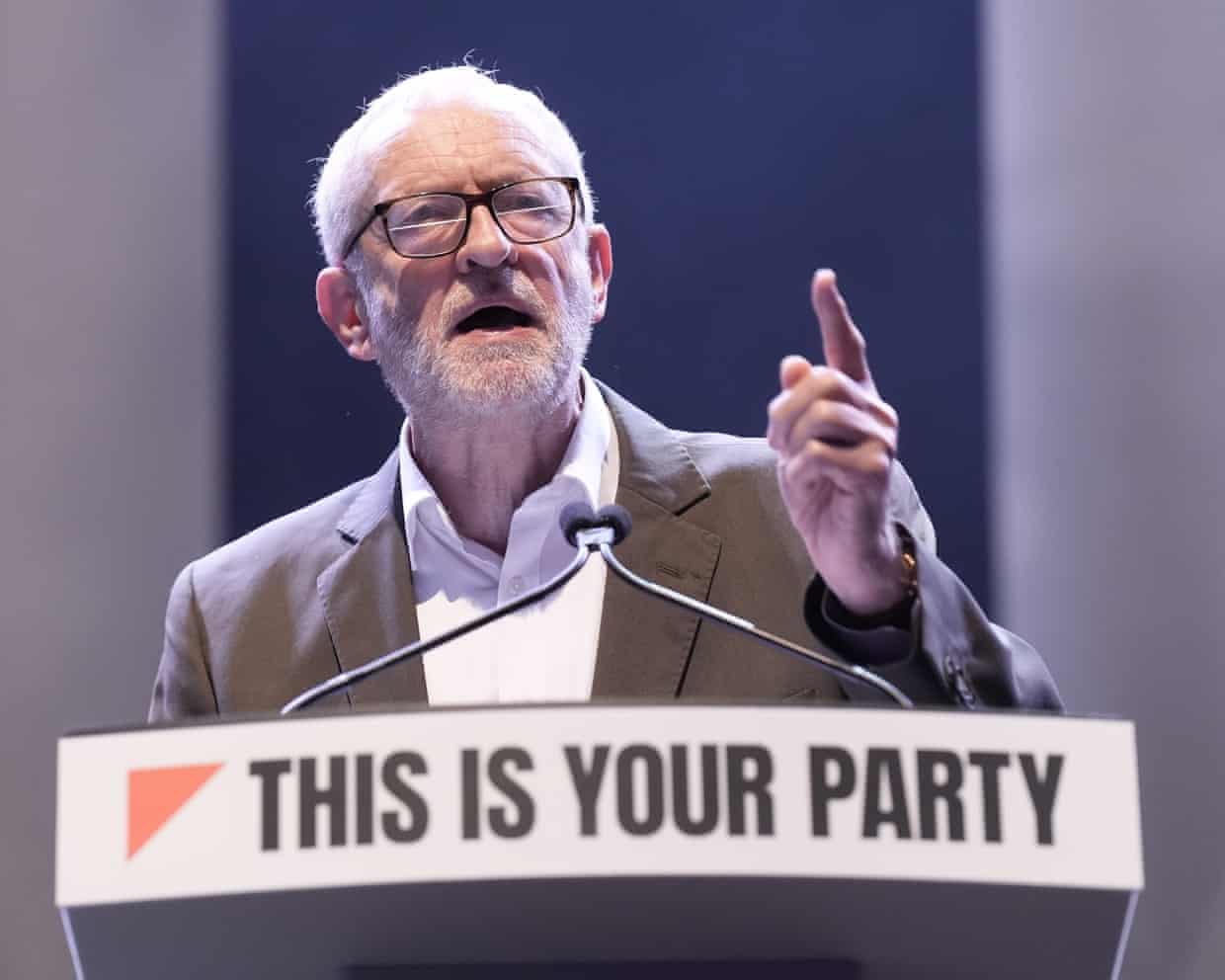
The new leftwing party headed by Jeremy Corbyn and others has voted narrowly for it to have a ‘“collective leadership” in a win for Zarah Sultana, who has been at loggerheads with the former Labour leader.The results were announced on Sunday after a chaotic start to its founding conference in Liverpool. Sultana, a former Labour MP who now sits as an independent, had boycotted the first day of the conference amid disagreements over how Your Party – its provisional name – should be run.In advance of the results of voting on the party’s constitutional arrangements, Corbyn had said: “It’s quite hard for the public to grasp things that there are sort of 10 people who run things.”However, members voted by 51
Rachel Reeves denies lying to public in run-up to budget
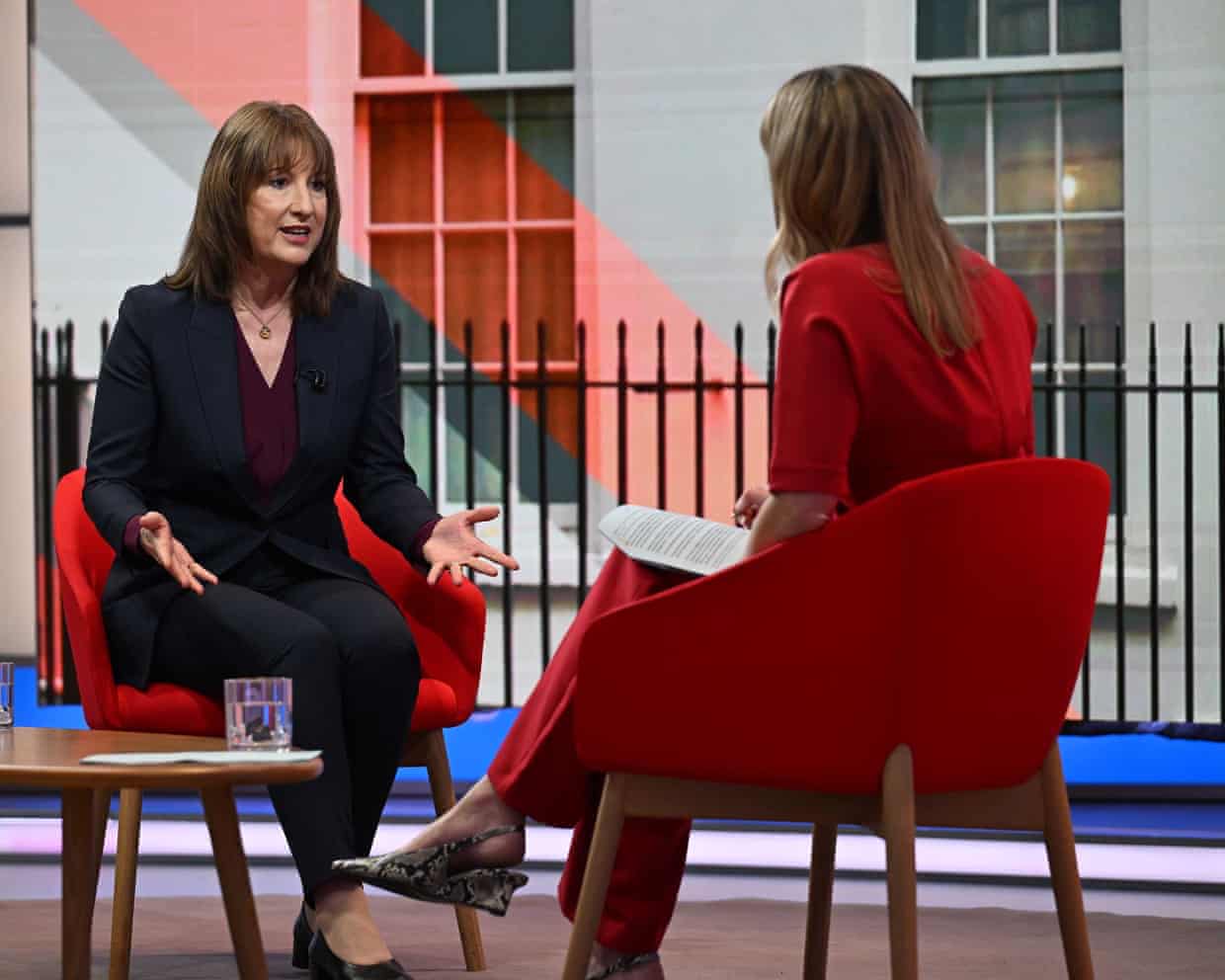
Rachel Reeves has denied lying to the public in the buildup to last week’s budget, insisting that she needed to raise taxes to a record level to ensure economic stability.The chancellor said on Sunday she had announced £26bn-worth of tax rises on Wednesday in part to build a buffer against her fiscal rules and reduce the risk of further tax increases in the future, and in part to protect public spending.Her messaging contrasted, however, with what she said before the budget, when she said tax rises would be necessary because of an expected decision by economic forecasters to reduce their growth expectations.In the end, the Office for Budget Responsibility (OBR) did downgrade its expectations for economic productivity, but said unexpectedly strong wage growth and tax receipts would more than make up for that.The OBR’s comments have kickstarted a political firestorm, which has led opposition politicians to demand Reeves’s resignation
Your Party’s first conference shows little sign of achieving fresh start
When the idea of a new leftwing party spearheaded by Jeremy Corbyn and Zarah Sultana was first mooted in the summer, it was so popular that hundreds of thousands of people expressed an interest in joining.Although it was quickly beset by arguments – its co-founders rowed bitterly over its initial leadership and funding model – many hoped this weekend’s inaugural conference would signal a fresh start.A sizeable chunk of the 2,500 delegates are former Labour members, disappointed by the policies of the current government and looking for a political home as they worry about the rise of Reform UK.As plans for the party’s first official gathering were finalised, Sultana and Corbyn looked to have buried the hatchet. Appearing at a leftwing festival in Manchester last month, Sultana jokingly compared the duo to the Gallagher brothers, saying: “I’m here to tell you the show is back on the road
Your Party conference thrown into chaos as Zarah Sultana boycotts first day
Zarah Sultana has boycotted the first day of Your Party’s inaugural conference, throwing the party’s first official gathering into chaos amid disagreements with co-founder Jeremy Corbyn over how the party should be run.Corbyn confirmed to journalists on Saturday that he preferred a single leader and is likely to stand for the role but Sultana said she would vote for collective leadership and that she did not believe parties should be run by “sole personalities”.In a sign of further division within the fledgling movement, a spokesperson for Sultana said she would not be entering the conference hall on Saturday in solidarity with delegates who were expelled over links to other leftwing parties, describing the process as a “witch-hunt”.The Guardian understands Sultana will run against Corbyn if members decide to elect one leader. Delegates in Liverpool will choose between electing a sole leader or a collective of lay members – those not already serving as MPs or councillors

The Guide #219: Don’t panic! Revisiting the millennium’s wildest cultural predictions

From Christy to Neil Young: your complete entertainment guide to the week ahead

Susan Loppert obituary
Oh yes he is! Kiefer Sutherland dives into the world of panto

O come out ye faithful: a joyful roundup of UK culture this Christmas

Nominate your favourite Australian children’s picture book of all time