Keir Starmer under pressure to agree exit plan after election mauling
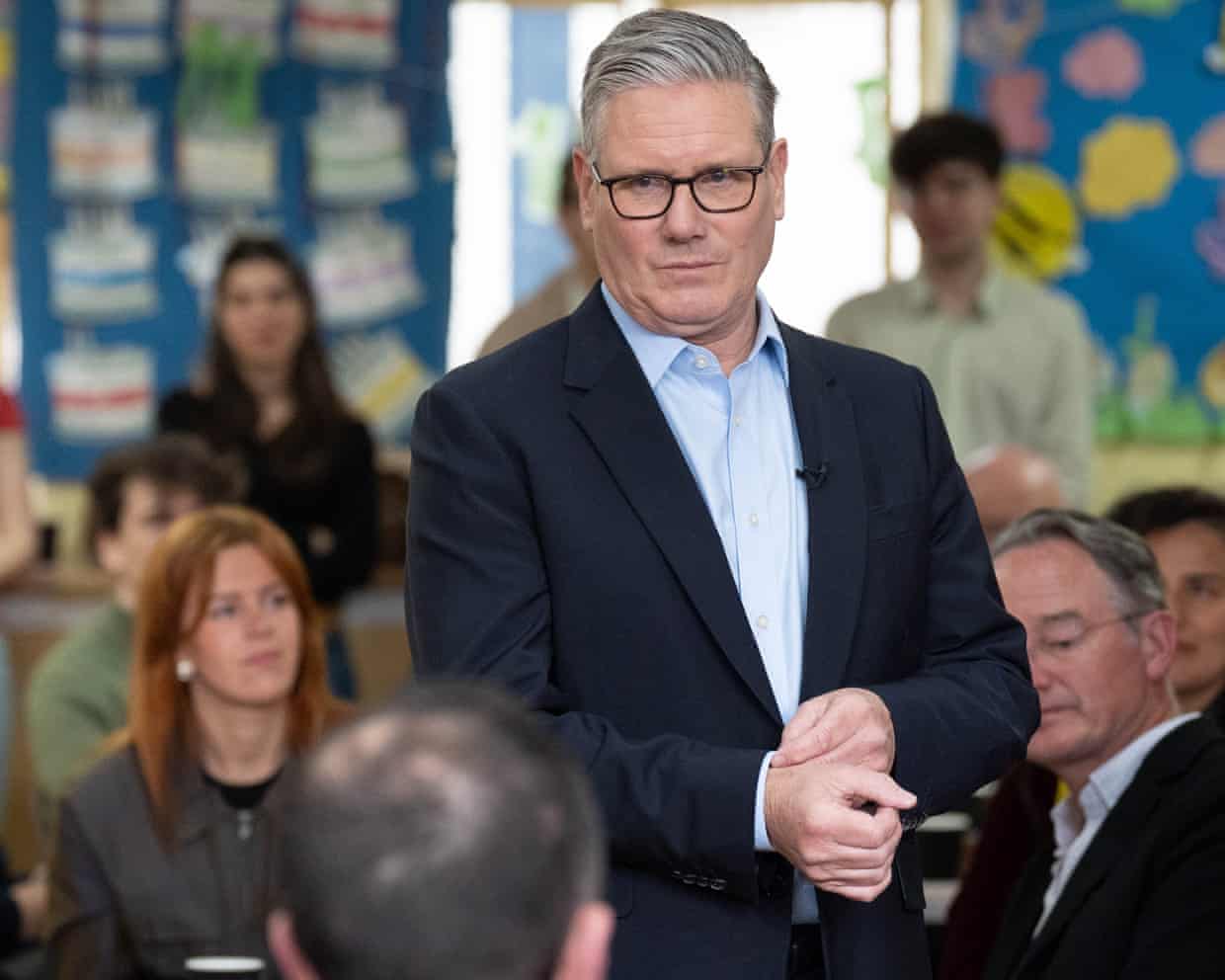
Keir Starmer is under pressure to set out a timeline for his departure after a crushing defeat in elections across Britain prompted senior Labour MPs to call for him to step down within a year.In a disastrous set of results, Labour had lost control of more than 25 councils and almost 1,000 council seats in England by Friday evening, many to Nigel Farage’s Reform UK, which made large gains across the Midlands and the north as well as taking seats from the Tories in the south.After more than a century of domination, Labour has faced near-wipeout in Wales, where the party’s first minister, Eluned Morgan, lost her seat.Labour could slump to third place in Scotland behind the SNP and Reform.In London, a Green surge meant Labour lost control of councils it had dominated, including Hackney and Waltham Forest.
While the prime minister appeared to have avoided an immediate coup, there was a furious response to the results among senior MPs and the unions, with some warning him to change course or risk electoral oblivion.By Friday evening, 10 more MPs had called for him to set out a timetable for departure from No 10.Louise Haigh, a former cabinet minister and co-chair of the powerful Tribune group of MPs, was the first to break cover.“What is abundantly clear is that unless the government delivers significant and urgent change, then the prime minister cannot lead us into another election,” she said.One senior backbencher said: “We want Keir to agree a timetable for his departure, but we want it to be dignified.
He should have his last conference this autumn and then oversee a leadership contest straight after.He can’t take us into next year’s locals.It’s too late.”However, Starmer insisted that he “won’t walk away” from the leadership as doing so would “plunge the party into chaos”, although he acknowledged that voters were fed up with the slow pace of change.The prime minister would deliver a major speech next week in which he would seek to set out a more optimistic vision of the country’s future, Downing Street sources said.
The king’s speech on Wednesday will also include policy announcements, though a cabinet reshuffle is not expected.On a tumultuous day:Farage said a “truly historic shift in British politics” had occurred after Reform UK won hundreds of seats and control of more councils in England.The gains included Essex where the Tory leader, Kemi Badenoch, has her constituency and which the Conservatives held for 25 years.Plaid Cymru became the largest party in Wales, beating Reform into second place, after Labour admitted it was on course to lose control of the Senedd for the first time since devolution.Morgan, the first woman to lead the Welsh government, became the highest-profile casualty and called on Labour to “go back to being the party of the working class”.
The SNP leader, John Swinney, declared victory in the Holyrood elections – though was expected to fall short of an outright majority.The Scottish Labour leader, Anas Sarwar, conceded defeat saying his party had failed to counter “national dissatisfaction” with Starmer.The Greens gained their first two directly elected mayors – in Hackney and Lewisham – although they missed out on some more ambitious targets in London, as their leader, Zack Polanski, declared Britain’s two-party politics “dead and buried”.They also won three councils: Norwich, Hastings and Waltham Forest.The Tories were on course to lose hundreds of seats – both to Reform and the Liberal Democrats – across the south of England.
However, they won back the flagship Westminster council in central London, with Badenoch announcing it meant the party was “coming back”.Labour appeared to be struggling in its London stronghold, despite early indications that its vote was holding up, unexpectedly losing control of Brent.Party insiders were closely watching councils including Lambeth, Lewisham and Haringey.Despite Labour’s losses, allies of Angela Rayner and Andy Burnham, two of Starmer’s potential leadership rivals, said they would keep their counsel and watch how events developed over the weekend.Wes Streeting was expected to speak to the media after his local council results.
But they all appeared to have put any plans for a coup on hold.As results were declared across the country, several other senior Labour MPs – many thought to be supporters of Burnham who usually refrained from openly criticising the prime minister – went public with their warnings.Sarah Owen, the chair of the women and equalities committee, said: “Unless Keir Starmer delivers tangible change and truly connects with the public on a human level, he can’t lead us into another election – locally or nationally.”Anneliese Midgley, the MP for Knowsley, said: “The results here and across the north are beyond our worst expectations.It’s truly devastating.
Unless that changes significantly and quickly it’s clear the PM can’t lead us into another election.”Simon Opher, the MP for Stroud, added: “The public has spoken; I think we need to change our leader.It’s not if now, it’s when.Keir is a decent guy but I think he’s not the right leader for the next election.If we go into the next election with him we will just get slaughtered.
”Several frontbenchers told the Guardian they agreed the prime minister’s time in office should not go beyond the end of the year,“I think it’s clear if he’s still in place by the autumn then efforts to remove him should step up,” said one,Cabinet ministers and Labour grandees rallied around Starmer as more backbenchers called for him to go,The housing secretary, Steve Reed, said: “The British public don’t want to hear about timelines, backroom deals and navel-gazing,Let’s get on with the job.
”The business secretary, Peter Kyle, added: “Reversing these results requires a collective effort, not just blaming the boss.We can’t do that by turning in on ourselves.We do it by rebuilding faith in Labour’s ability to inspire and lead our country.Losing our PM is the very opposite of that.”There will be relief in Downing Street that some of Starmer’s most powerful critics did not directly call for him to quit.
The Unite general secretary, Sharon Graham, issued a warning that Starmer must “change or die” but Labour’s trade union liaison group issued a statement that – although critical – called for a change of direction and not explicitly a leadership change.Sadiq Khan, the mayor of London, issued a grave warning that Labour could face the same terminal decline in the capital as it had faced in Scotland, though he did not call for Starmer to resign.“Labour has lost votes in London to a variety of different parties, but the biggest change has been Labour voters switching to the Greens,” Khan said.“Without a change in course and an acceleration in delivery, the threat to Labour is existential.We risk a repeat in London, Wales and across England of what happened in Scotland, where we have still not recovered.
”Several cabinet ministers have acknowledged privately that even with Starmer’s determination to stay in Downing Street after the election results, the mood on the backbenches is febrile and events could yet spiral out of control over the weekend.They also admitted that – while they would discourage any move against Starmer now – they did not expect him to lead the party into the next election.“When your personal brand is so poor, it is seldom retrievable,” one told the Guardian earlier this week.But Labour MPs who have urged Starmer to move to the left in response to losing votes to the Greens – which in many areas then led to Reform taking seats – were set to be disappointed.Writing in the Guardian, the prime minister said: “While we must respond to the message that voters have sent us, that doesn’t mean tacking right or left.
”Starmer also faced trouble in his own back yard, as Richard Olszewski, the Labour leader of Camden council, was one of three councillors who lost Holborn and Covent Garden ward to the Greens.He had switched from a seat in the north of the borough at risk from Lib Dems because this one was – supposedly – safer.
Iran war costs Toyota £3bn as prices of materials soar and sales fall
Toyota has reported a £3bn hit from costs from the war in Iran, as prices of parts and materials soared and sales dropped.The world’s biggest carmaker said profits declined in its financial year to March as it was “likely unable to absorb newly added impact from the Middle East”, in one of the largest warnings yet of the war’s impact on businesses.The biggest hit for the Japanese manufacturer was a 400bn yen (£1.9bn) increase in materials costs linked to the war, while it lost another 270bn yen in lower sales. Toyota is the dominant automotive brand in the Middle East
British Airways fares to rise in attempt to offset £1.7bn fuel cost hit
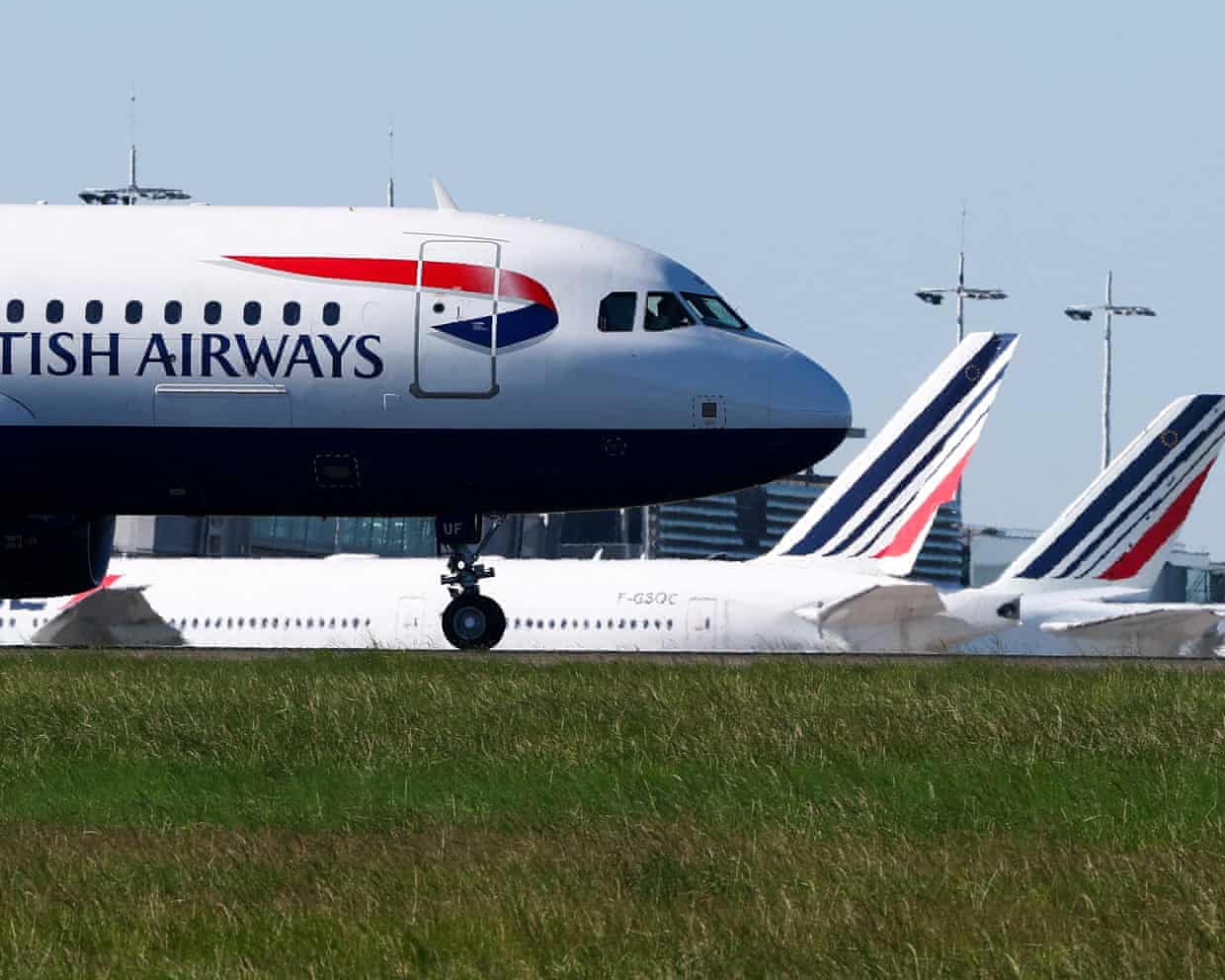
British Airways fares will rise to try to recoup most of a €2bn (£1.7bn) hit in fuel costs this year, its parent group has said, adding that the Iran war will dent profits.The International Airlines Group (IAG) said its annual fuel bill was now expected to be about €9bn, up from the forecast €7.1bn, as 70% of its supply was hedged, shielding it from the full impact of soaring jet fuel prices since the start of the conflict.It expects to recover about 60% of the €2bn additional fuel costs through “revenue and cost management actions”, with fare rises primarily loaded on BA rather than its sister airlines

GameStop CEO opens eBay storefront to pay for potential eBay acquisition
The CEO of GameStop, Ryan Cohen, said he was selling vintage video games, baseball cards, GameStop merchandise and a $14,000 pair of tube socks to help fund the company’s proposed $55.5bn acquisition of eBay.His platform of choice? eBay, of course.Cohen posted a link to his eBay storefront on Tuesday night, saying: “I’m selling stuff on eBay to pay for eBay.”Hours later, Cohen posted a screenshot with a notification that his account had been suspended

Gas-fired power still looks a safe bet for Centrica in the renewables era
The eye-catching non-Hormuz news in energy-land last month was that Great Britain is set for a record-breaking summer for wind and solar power generation. The national energy system operator even thought there could be periods – a sunny weekend or a bank holiday afternoon of low demand, for example – when more renewable power would be available than the electricity grid needed.So, on the face of it, it is an odd moment for Centrica, the owner of British Gas, to fork out £370m to buy a 16-year-old combined-cycle gas turbine plant in south Wales. After all, the government’s clean power plan imagines that, come 2030, Great Britain’s entire fleet of gas plants will be used to generate only 5% of its electricity, down from 31.5% in 2025

Senate Democrats press top media regulator Brendan Carr to back off ABC
A group of prominent Senate Democrats sent a letter on Thursday to Brendan Carr, the Trump-aligned Federal Communications Commission chair, asking him to rescind the US media regulator’s order last week requiring ABC to apply early to renew its television licenses.The eight ABC-owned station licenses were not originally up for renewal until 2028 at the earliest and 2031 at the latest; now, the renewal requests must be filed by the end of May.Although Carr told reporters that the early license renewal request stemmed from an ongoing investigation into the diversity, equity and inclusion (DEI) efforts of ABC’s parent company, Disney, the announcement came just a day after the president and his wife called on the network to fire Jimmy Kimmel, the late-night comedian, for a poorly timed joke. The letter called the early renewal demand an “extraordinary abuse of power” and an “unconstitutional abuse of the Commission’s powers”.“The campaign against Disney and its editorial decision-making, culminating in last week’s early-renewal order, is an egregious abuse of power and a clear violation of the First Amendment,” lawmakers state in the letter led by Senators Edward J Markey, Chuck Schumer, Maria Cantwell and Ben Ray Luján

Financial stability risks are rising as AI fuels cyber-attacks, IMF warns; oil below $100 on Iran peace hopes – as it happened
Newsflash: The International Monetary Fund is warning that financial stability risks are rising as artificial intelligence fuels cyber-attacks.In a new blogpost, just published, the IMF singles out Claude Mythos as an example of how quickly risks are increasing.The Fund is calling for “resilience, supervision, and international coordination” to safeguard global financial markets, and protect them against attackers with new AI tools.It warns that AI tools such as Mythos can “dramatically” cut the time and cost needed to identify and exploit vulnerabilities, which raises the risk of weaknesses in key systems being discovered and exploited.IMF experts Tobias Adrian, Tamas Gaidosch and Rangachary Ravikumar write:double quotation markMythos could find and exploit vulnerabilities in every major operating system and web browser—even when used by non-experts

Navel gazing: oranges, mandarins and persimmons top Australia’s best-value fruit and veg for May

How to save asparagus trimmings from the food-waste bin – recipe | Waste not

Thoran and chaat: Romy Gill’s Indian-style asparagus recipes

Australian supermarket sauerkraut taste test: one is ‘like eating the smell of McDonald’s pickle’

Fears for spears: how to cook asparagus without blanching | Kitchen aide

Georgina Hayden’s quick and easy recipe for spanakopita orzo | Quick and easy