Lib Dems suspend Chris Rennard amid new inquiry into sexual harassment claims
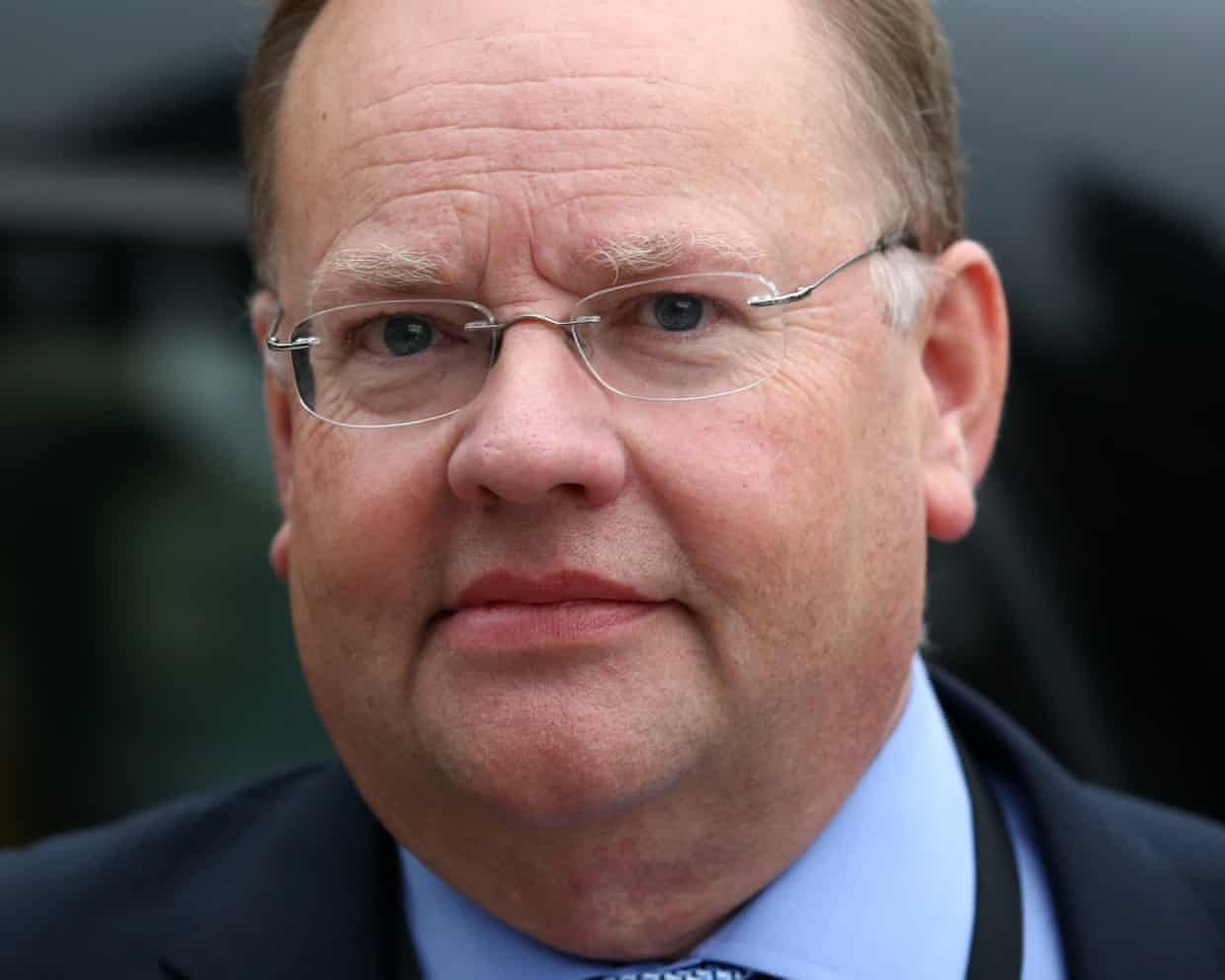
The Liberal Democrat peer Chris Rennard has been suspended from the party amid a new investigation into sexual harassment allegations.The party said it had received advice that a 2013 inquiry into the claims made by four women against Lord Rennard was “flawed in several respects”.The Lib Dem leader, Ed Davey, believes Rennard, 65, should not be a member of the House of Lords, the party added.In turn, Rennard, a former chief executive of the party who was awarded a life peerage in 1999, pointed to a series of investigations by police and lawyers that had concluded the allegations against him could not be proved.He previously said he was sorry if he had “inadvertently encroached” upon anyone’s “personal space”.
Three of the women involved in the original claim welcomed the move as “the first signs of change” by the party.The former deputy party chair Alison Goldsworthy, the academic Alison Smith, and Bridget Harris, a former adviser to Nick Clegg, issued a joint statement after the latest developments.They said: “We decided to speak out in 2013 so that future generations of women could participate in politics safely.“We did not expect a fair investigation to take so long and hope that the next steps will finally put the matter to rest.”The fourth complainant, the former councillor Susan Gaszczak, resigned from the party in 2014 after the original investigation.
She said at the time she “could no longer remain a member of a party that feels it acceptable for the then chief executive to invite me to his hotel room to advance my political career”,A Lib Dem spokesperson said: “Rennard has had the Liberal Democrat whip in the House of Lords and his party membership suspended, and the party is conducting a new investigation into these allegations,“The party has now received legal advice that the 2013 investigation into allegations against Rennard was flawed in several respects,“Ed Davey has made clear he believes Rennard should not be a member of the House of Lords and that it should be made easier for peers to be expelled from the Lords for serious misconduct,”A review carried out by the senior lawyer Alistair Webster KC in 2013 concluded that there was a less than 50% chance of the case against Rennard being proved beyond a reasonable doubt.
But in a statement summarising his findings, he said there was “broadly credible” evidence of “behaviour which violated the personal space and autonomy of the complainants”.Responding to the latest suspension, Rennard said: “All allegations made against me were investigated by the Metropolitan police service in 2013 in what was acknowledged by one of the complainants to be a ‘thorough and professional investigation’.“After interviewing all concerned and considering any evidence they decided not to send a file to the Crown Prosecution Service and took no further action.“A thorough investigation of all allegations was then undertaken by an independent lawyer, Alistair Webster KC, following very extensive appeals for any complaints concerning me and any evidence.“His report submitted to the party in December 2013 concluded that there was insufficient evidence to hold a disciplinary hearing.
“The report he submitted did not include the word ‘credible’,His report was accepted by the relevant party body in January 2014,“A further investigation was conducted by another independent lawyer as to whether there were any grounds at all for any form of disciplinary action against me and it concluded that there were not,“This conclusion was accepted by the party in August 2014 when all disciplinary action against me ended,”

TikTok could be forced to change app’s ‘addictive design’ by European Commission
TikTok could be forced into changes to make the app less addictive to users after the EU indicated the platform had breached the bloc’s digital safety rules.The EU’s executive arm said in a preliminary ruling that the popular app had infringed the Digital Services Act (DSA) due to its “addictive design”.The European Commission said TikTok, which has more than 1 billion users worldwide, had not adequately assessed how its design could harm the physical and mental wellbeing of users including children and vulnerable adults.By constantly “rewarding” users with new content, the Chinese-owned platform fuelled constant scrolling and shifted the brains of users into “autopilot mode”, the commission added, which could lead to compulsive behaviour and reduce users’ self-control.The preliminary ruling accused TikTok of ignoring indicators of compulsive use, such as the amount of time children spend on the app at night

Deepfake fraud taking place on an industrial scale, study finds
Deepfake fraud has gone “industrial”, an analysis published by AI experts has said.Tools to create tailored, even personalised, scams – leveraging, for example, deepfake videos of Swedish journalists or the president of Cyprus – are no longer niche, but inexpensive and easy to deploy at scale, said the analysis from the AI Incident Database.It catalogued more than a dozen recent examples of “impersonation for profit”, including a deepfake video of Western Australia’s premier, Robert Cook, hawking an investment scheme, and deepfake doctors promoting skin creams.These examples are part of a trend in which scammers are using widely available AI tools to perpetuate increasingly targeted heists. Last year, a finance officer at a Singaporean multinational paid out nearly $500,000 to scammers during what he believed was a video call with company leadership
Amazon reveals plans to spend $200bn in one year the day after Bezos guts Washington Post
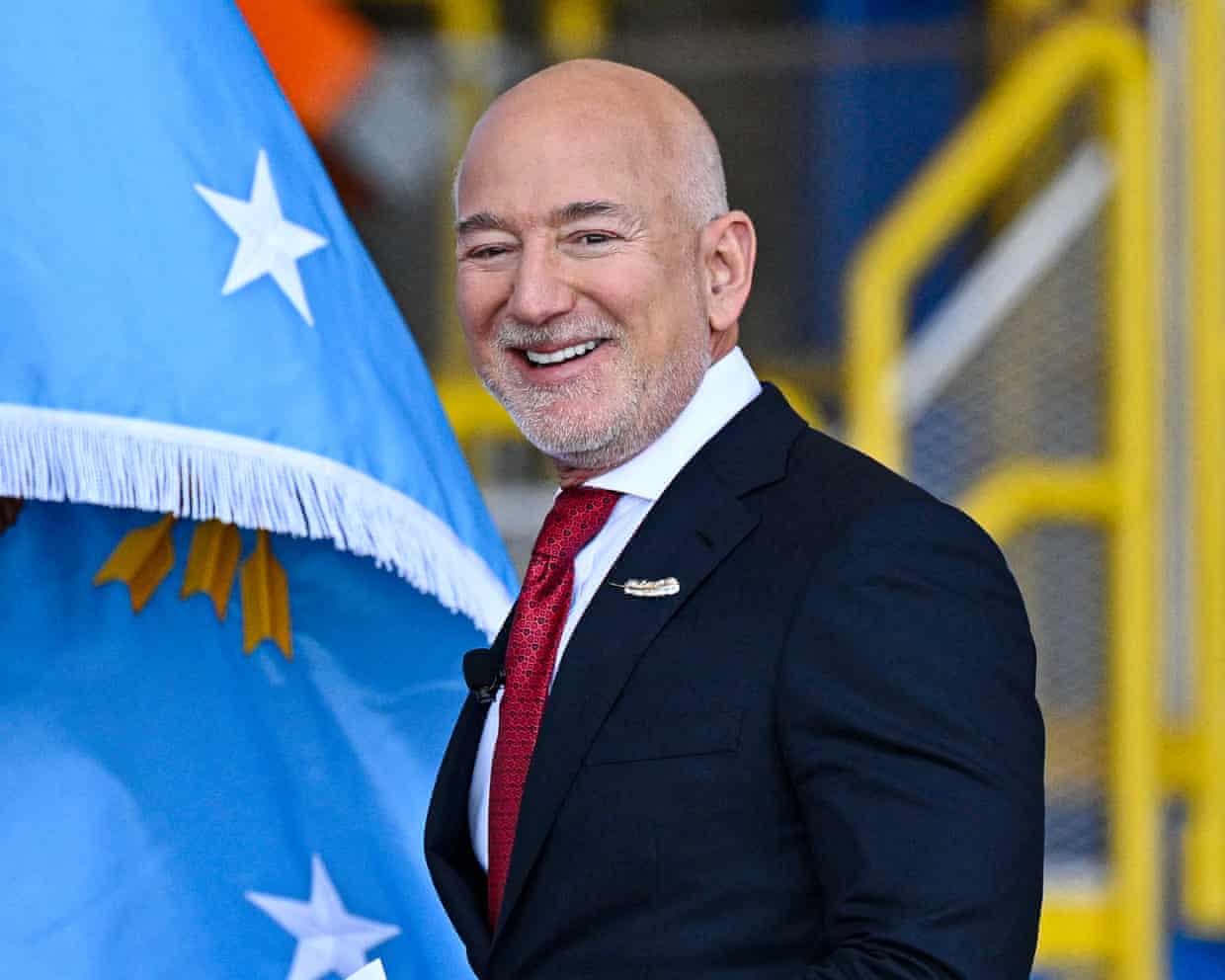
Amazon announced plans to spend $200bn on artificial intelligence and robotics this year, the latest tech giant to vow fresh enormous investments in the artificial intelligence arms race.The news of the investment comes one day after the Washington Post, owned by Amazon founder Jeff Bezos, announced it was cutting approximately a third of employees.Amazon also reported $213bn in revenue on Thursday. The fourth-quarter earnings of the e-commerce and cloud-computing giant came in slightly below Wall Street estimates even as sales and growth surged.Amazon will increase capital spending to $200bn this year from $125bn, CEO Andy Jassy said in a press release

Bitcoin loses half its value in three months amid crypto crunch
Bitcoin’s price sank to $63,000 on Thursday, its lowest level in more than a year, and half its all-time peak of $126,000, reached in October 2025. A months-long dip in cryptocurrency prices has tanked shares of companies that have increasingly invested in bitcoin, exacerbating broader stock market jitters.Bitcoin rode a high during Donald Trump’s ascent to the presidency in 2024 and throughout 2025; its price steadily increased as the president made one industry-friendly move after another. Crypto’s largest currency hit $100,000 for the first time in December 2024 and even rose to a record high of $126,210.50 on 6 October, according to Coinbase

‘Orwellian’: Sainsbury’s staff using facial recognition tech eject innocent shopper
A man was ordered to leave a supermarket in London after staff misidentified him using controversial new facial recognition technology.Warren Rajah was told to abandon his shopping and leave the local store he has been using for a number of years after an “Orwellian” error in a Sainsbury’s in Elephant and Castle, London.He said supermarket staff were unable to explain why he was being told to leave, and would only direct him to a QR code leading to the website of the firm Facewatch, which the retailer has hired to run facial recognition in some of its stores. He said when he contacted Facewatch, he was told to send in a picture of himself and a photograph of his passport before the firm confirmed it had no record of him on its database.“One of the reasons I was angry was because I shouldn’t have to prove I am innocent,” Rajah said

How cryptocurrency’s second largest coin missed out on the industry’s boom
US crypto developer Danny Ryan submitted a proposal in November 2024 to Vitalik Buterin, the founder and symbolic leader of Ethereum, a prominent blockchain powering the world’s second-largest cryptocurrency. Ryan, who had worked for seven years at the Ethereum Foundation (EF), Ethereum’s de facto governing body, suggested that Ethereum could be on the cusp of an era-defining shift.Since its founding in 2014, the foundation had prioritized technical upgrades and had avoided centralizing power while its user base was growing, but Ethereum had now grown up, and the cryptocurrency world around it had grown up, too. The EF could now “exercise a stronger voice” without compromising its ethos of decentralization, Ryan said – and he was open to leading that charge if appointed as the foundation’s new executive director.Ryan told the Guardian that he could see how political tides were changing “overnight”, which informed his proposal
Dow Jones hits 50,000 milestone amid tech gains and hopes of lower interest rates
Amazon shares tumble as $200bn AI rollout plan worries markets – as it happened

Why has Elon Musk merged his rocket company with his AI startup?
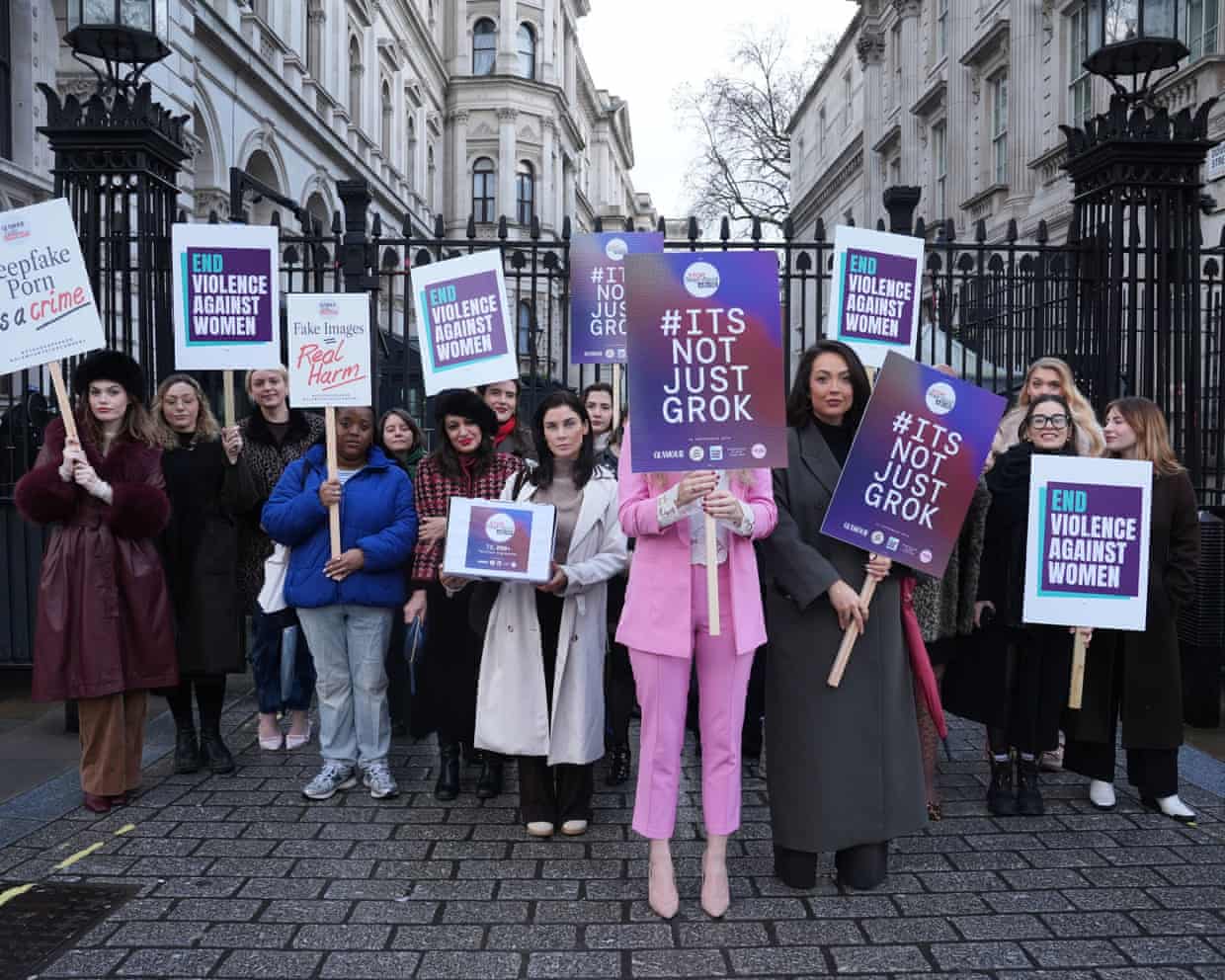
Victims urge tougher action on deepfake abuse as new law comes into force

Winter Olympics 2026: first gold to Swiss, GB await helmets verdict, slopestyle and more – live

Italy v Scotland: Six Nations 2026 rugby union updates – live