Buzz kill: US breweries shutter as fanfare over craft beers appears to fade

In the early 2000s, Chris Bell, then a student at University of Colorado Boulder, followed a common path among people interested in brewing beer.He started doing so at home, then spent years working at established craft beer makers Long Trail Brewing in Vermont and Avery Brewing in Colorado before opening Call to Arms Brewing Company in 2015 in Denver.In a crowded market, the business was successful.Its More Like Bore-O-Phyll beer won a gold medal in the fresh or wet hop ale category at the 2018 World Beer Cup.A local outlet called it one of the city’s best breweries, and it had a 4.
7 rating from more than 400 reviews on Google.In 2019, the business had its best year, Bell said.“We felt very good about the future,” he said.But then, of course, the Covid-19 pandemic hit and, like many breweries, Call to Arms’s sales decreased and its costs increased.People started spending more time at home and consuming less alcohol.
In December 2025, Bell and a co-owner closed the business,“It was heartbreaking,” Bell said,“I put my entire career into it,”Call to Arms was one of 100 breweries to close in the state over the last two years, according to the Colorado Brewers Guild,That is part of a national trend.
After the industry boomed in the late aughts and 2010s, the once-intense cultural buzz over craft beers appears to have faded.“Craft beer is part of the culture and the definition of Colorado, and so I don’t think craft beer is going away, but it might just look a little different,” said Shawnee Adelson, executive director of the Colorado Brewers Guild.In 2009, there were about 500 microbreweries in the United States, according to the Brewers Association, a trade group.In 2018, there were 4,500, an 800% increase.“We were providing people with something brand new to like,” said Garrett Oliver, who in 1994 started as brewmaster of the Brooklyn Brewery, one of the most successful craft breweries in the United States.
“Craft beer offers unlimited flavor in every direction you could imagine, and if you think about it, why would people not love that?”Stuart Keating was a home-brewer for many years and especially interested in “experimental beers, botanical, herbal kind of stuff, really historic styles”, he said.In 2014, he opened Earthbound Beer in south St Louis, which, as the home of Anheuser-Busch, has a rich history of beer-making.In 2017, Earthbound expanded into a historic building that housed a 19th-century brewery.He and his business partners discovered a cave beneath it with lagering cellars.They used the space to produce and store beer – and allowed customers to tour it.
“We used a lot of ingredients that you wouldn’t have found in beer at that time, things like oak leaves, cardamom,” Keating recalled.“The attitude and the vibe we brought towards craft beer was very welcoming and open and non-serious.”But like other bars and breweries, the pandemic led to a “terrible downturn in sales”, Keating said.In 2019, US microbreweries produced 4.9m barrels of beer, according to the Brewers Association.
In 2024, the breweries produced 3.7m barrels.There were also only about 2,000 microbreweries in the United States in 2024, less than half the number six years earlier.“It was a shift away from alcohol consumption for health and societal reasons.Some of it was a downturn in the economy.
Our customers were all younger and weirder, and they are the ones that got hurt the most by the economic shocks post-Covid,” said Keating, who decided to close the brewery in 2024.Bell, of Call to Arms, said the increase in the cost of labor, property taxes, maintenance and insurance hurt the business too.Plus, low interest rates led to a “real estate purchasing frenzy” in the surrounding neighborhood, he said.“It turned our entire neighborhood over, so we lost a lot of regulars,” Bell said.Despite the closures of many beloved breweries, people at the remaining breweries are still optimistic about their industry.
Oliver sees the market contraction as part of a cycle and points to a downturn in craft beer sales that occurred in the late 90s, when an administrator of the Institute for Brewing Studies told the New York Times: “‘A lot more people are jumping into the pool, and it’s getting crowded.A lot of people are treading water, and some people are just drowning.’’The Brooklyn Brewery owners are preparing to move into a larger building just four blocks away from its space in Williamsburg.In 2024, the brewery released Fonio Rising Pale Ale, made from “an ancient super grain that supports smallholder farmers in Africa”, according to its website.“As craft brewers, we have not done a great job – we haven’t done any job – of speaking to the 40-plus per cent of people in the United States that are not of European background,” said Oliver, who is African American.
Fonio “has a hook to it that other beers of ours might not have”.Adelson thinks more of gen Z, who drink less than older generations, could also start coming to breweries.“As they enter the workforce, and they are able to have maybe more disposable income, they will find those spaces that are outside of their traditional home or workspaces,” she said, “and hopefully, you know, put down their phone and go have a beer with their neighbor.”

Watchdog takes over running of home for adults with learning disabilities
The charity watchdog has taken control of a learning disability care home in Northamptonshire that is under investigation after residents’ families raised concerns over its management, including payments of £1m to a trustee.The Charity Commission has appointed an interim manager to run William Blake House, which faces potential insolvency in three weeks’ time if it cannot head off a winding-up order brought by the tax authorities over £1.6m in unpaid tax bills.The move, which freezes out the current board of trustees, is a victory for an activist group of families whose adult children are residents at the home. They campaigned for change after discovering the parlous state of the charity’s finances last autumn

Women and girls bearing brunt of water shortages globally, UN warns
Women and girls are bearing the brunt of water shortages and a lack of sanitation around the world, hindering the economic and social development of poorer countries, the UN has warned.Women are responsible for collecting water in more than 70% of rural households that do not have access to mains water across the developing world. Women and girls collectively spend 250m hours a day collecting water globally.The climate crisis is exacerbating the problem, according to a new report from the UN. A 1C rise in temperature reduces incomes in female-headed households by 34% more than in male-headed ones, while also causing women’s weekly labour hours to increase by an average of 55 minutes relative to men’s

Kent meningitis outbreak has been contained, health officials believe
Health officials increasingly believe they have contained the fatal outbreak of meningitis in Kent, with no cases emerging that are not linked to the original cluster of 20.In another boost to efforts to contain the infection, the bug that caused it has been identified as a known strain of meningitis B, the Guardian understands.That should mean that the MenB vaccine offered to 5,000 students living in University of Kent halls of residence in Canterbury, hundreds of whom received it on Wednesday, will prove a good match.There is growing confidence among the NHS, the UK Health Security Agency (UKHSA) and county council public health staff tackling the outbreak that the people infected in Kent, many of whom visited a nightclub on 5, 6 or 7 March, have not passed it on to anyone outside the area.“All cases to date are linked to the current outbreak in Kent,” a UKHSA spokesperson said

AI software for smart glasses wins £1m prize for technology to help people with dementia
AI software that can be embedded into smart glasses has won a £1m prize for technology to help people with dementia.Built into chunky, black-rimmed frames that have a camera, microphone and speakers, the tech – known as CrossSense – guides wearers through everyday life by means of a chatty assistant called Wispy.Not only can Wispy offer prompts and feedback during tasks – through verbal cues and text that floats in front of the wearer’s eyes – but it can also ask questions, engage in light conversation and aid reminiscences.The software has won the Longitude prize on dementia, one of a number of awards designed and delivered by Challenge Works and supported by Nesta.Funded by Alzheimer’s Society and Innovate UK, the prize aimed to encourage the development of technology to help people with dementia stay independent for longer

Playing with dolls can help children develop imagination and social skills – UK study
Playing along with dolls can help boys and girls develop more sophisticated imaginations and better social skills, compared with children who play on electronic devices, according to research.Psychologists at Cardiff University and King’s College London found that children given dolls gained a richer appreciation of other people’s beliefs and feelings, in contrast to those given a tablet loaded with video games.Parents also reported that the children, aged between four and eight, were more likely to play alone when using the tablet, while those with dolls were more likely to play with friends or family.Dr Sarah Gerson, the lead author and a reader in psychology at Cardiff, said: “We believe that doll play may encourage children to engage in social interactions more and give children more opportunities to rehearse or reflect on others’ beliefs, emotions, or intentions, compared to other types of play.“When playing with dolls, children have the opportunity to role-play characters, create narratives, and act out scenarios – doing so relies on and fosters the ability to imagine others’ thoughts, feelings, and intentions

Having my ears syringed left me with tinnitus | Letter
I sympathise with Freya Bennett (A moment that changed me: I was planning to be a musician – then I had my ears syringed, 11 March). In 2010, I found that my hearing was being muffled by a buildup of wax in my ears. I had always imagined that having ones ears syringed was a straightforward, risk-free process.An appointment was made at my local GP practice, and a healthcare assistant, without any explanation as to what to expect or any warning about side-effects, essentially turned the irrigation machine, like a water pistol, up to full and blasted out the wax. The power of the jet was such that I actually jerked my head away in shock

Prolonged high oil prices could ‘crimp’ AI boom, WTO warns

Europe’s biggest airlines say fuel price spike caused by Iran war will drive up fares

‘Alright mate?’: Amazon pins UK hopes on AI upgrade of Alexa
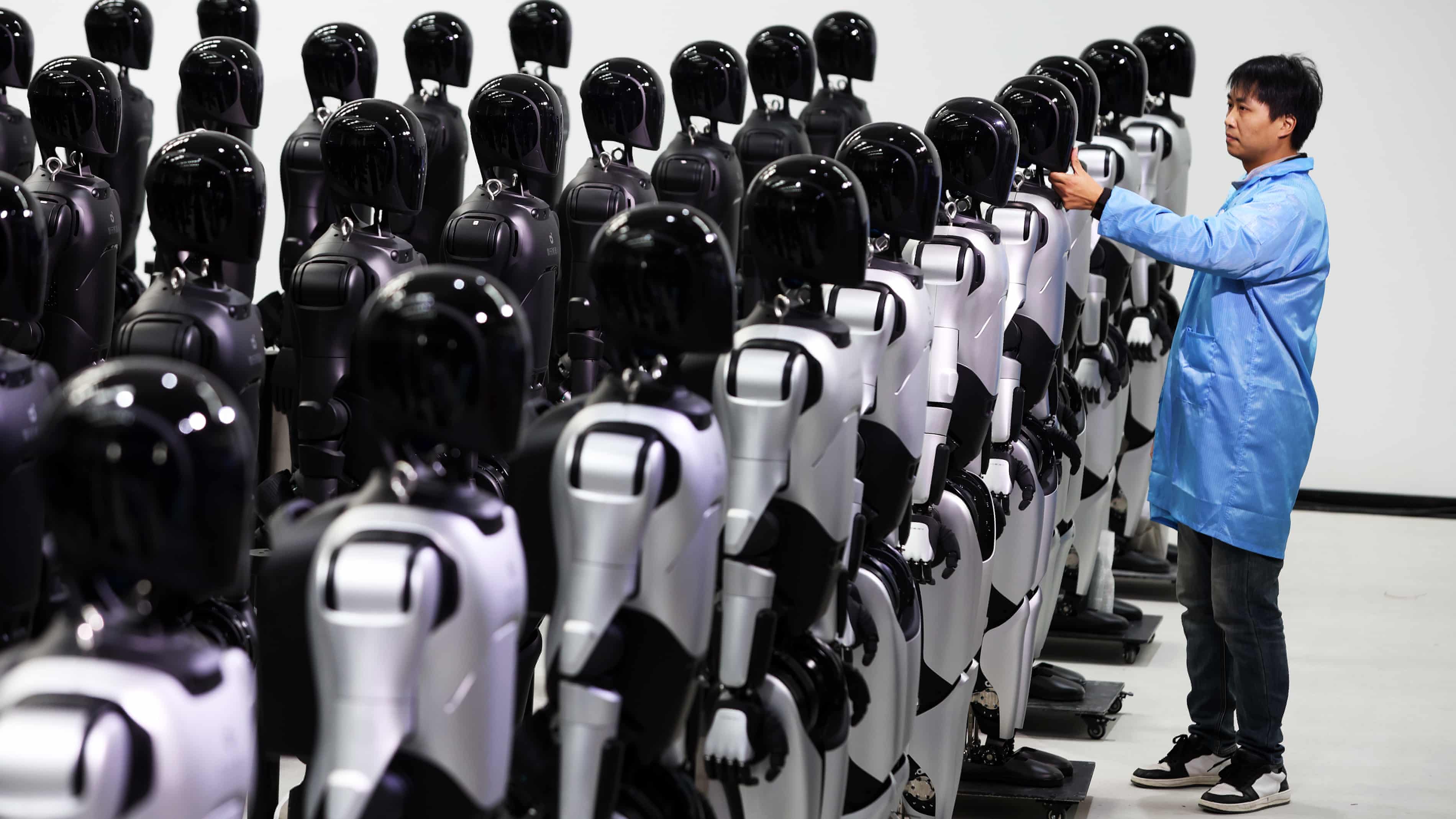
Inside China’s robotics revolution

March Madness 2026 women’s predictions: can anyone thwart a UConn repeat?

‘The only thing left for me was death’: meet the meth-addict long jumper who has been to hell and back