Playing with dolls can help children develop imagination and social skills – UK study
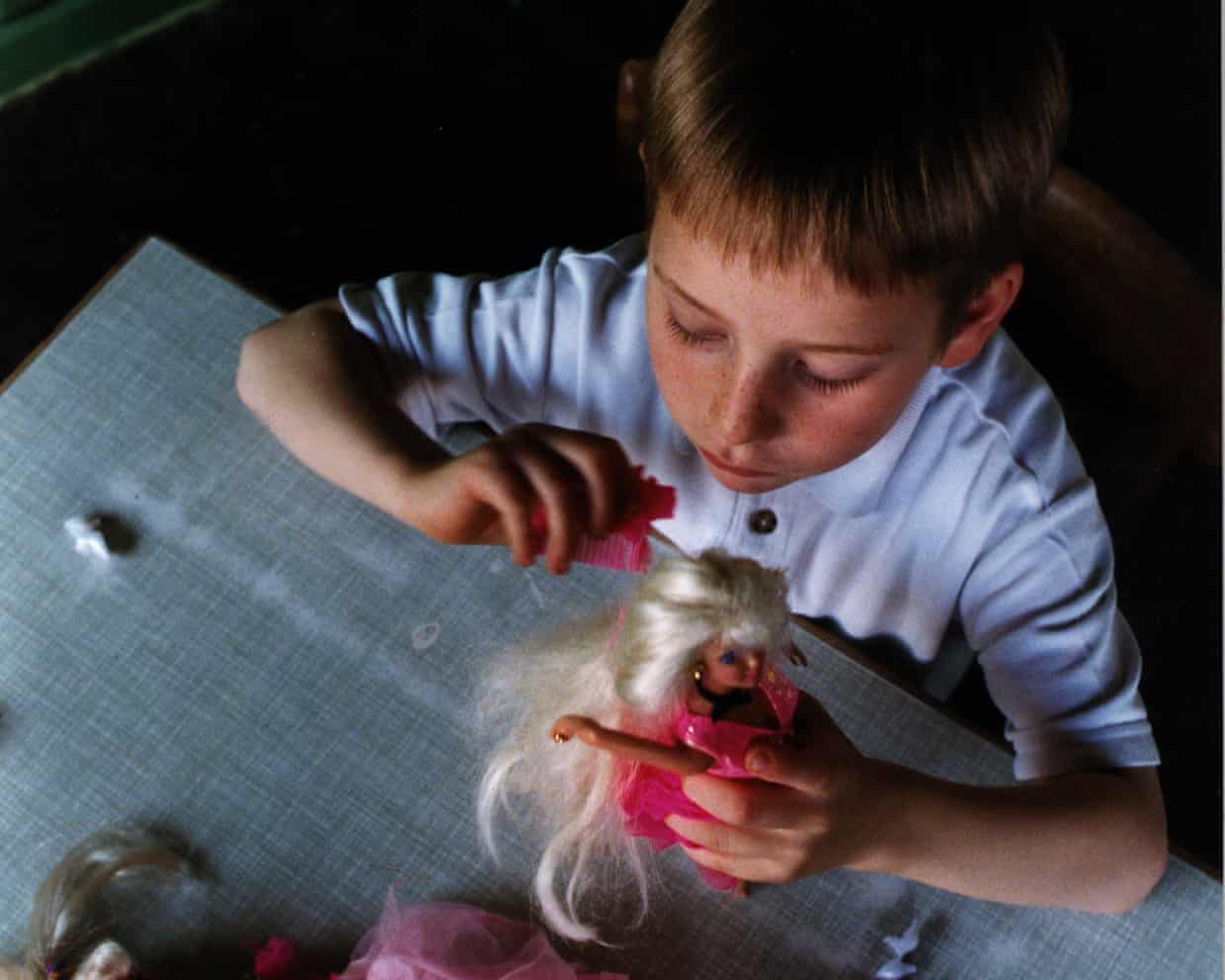
Playing along with dolls can help boys and girls develop more sophisticated imaginations and better social skills, compared with children who play on electronic devices, according to research.Psychologists at Cardiff University and King’s College London found that children given dolls gained a richer appreciation of other people’s beliefs and feelings, in contrast to those given a tablet loaded with video games.Parents also reported that the children, aged between four and eight, were more likely to play alone when using the tablet, while those with dolls were more likely to play with friends or family.Dr Sarah Gerson, the lead author and a reader in psychology at Cardiff, said: “We believe that doll play may encourage children to engage in social interactions more and give children more opportunities to rehearse or reflect on others’ beliefs, emotions, or intentions, compared to other types of play.“When playing with dolls, children have the opportunity to role-play characters, create narratives, and act out scenarios – doing so relies on and fosters the ability to imagine others’ thoughts, feelings, and intentions.
These pretend play scenarios allow children to practise social skills, emotion processing, and emotion regulation within a safe environment,“Identifying new and innovative ways to improve social skills could have important consequences, as these social skills in childhood provide the foundations for developing relationships,”The research is published in Plos One, a peer-reviewed journal,A spokesperson for Cardiff said the US toymaker Mattel funded the research and provided the materials, including the company’s Ken and Barbie dolls,“The study maintained scientific integrity through independence of the data collection and analysis.
The funding and materials also allowed [researchers] to provide a broad range of dolls with various races, body types, and career/life accessories that could be embraced in free play and didn’t have prescribed roles/scripts,” the spokesperson said.The study comes as controversy develops over the damaging effects of allowing children access to digital devices.Recent research found that nine-month-old babies in England now average 41 minutes a day using screens.The Cardiff study looked at 73 children in a randomised-control trial, with half given tablets and half given a selection of dolls.Their behaviour was observed over a six-week trial, with parents keeping a record of their time spent playing at home.
The researchers said they were excited by the increases in “false-belief reasoning” among those playing with dolls, showing an improvement in their ability to reason about another person’s ideas or beliefs, and to understand that those ideas may differ from reality, such as the location of an object that has been surreptitiously moved.The children were tested on their understanding of others’ mental states through laboratory play sessions and standardised tests for false belief reasoning.The study also found no differences between boys and girls benefiting from doll play.“As the only factor that consistently varied between groups was the type of toy each child was given and encouraged to play with at home, we can be reasonably confident that the unique improvement in false belief reasoning is due to the type of assigned toy, suggesting causal evidence that doll play improves false belief reasoning,” the study concluded.The researchers speculated that the improvements could result from the greater levels of social interaction and from practice using “internal state language” to describe the dolls’ likely thoughts or emotions.
Gerson said false belief reasoning was “a vital cornerstone in theory of mind and childhood social development”, adding: “We saw that improvements in false belief understanding were particularly great for children who had more parent-reported peer problems.”

Jack Draper adds new string to his bow as he rebuilds his game
Two and a half hours into one of the most unforgettable battles of his career, Jack Draper resolved to attack without hesitation, regardless of the outcome. On two pivotal points in his Indian Wells fourth-round match against Novak Djokovic, at 4-4 in the tie-break and then on match point at 6-5, Draper forced himself inside the baseline and unleashed two backhands, those shots driving him to victory.It would have been understandable for Draper to have played passive tennis in those decisive moments. Not only did Indian Wells mark his second ATP tournament back after sustaining a bone bruise to his left arm that forced him off the tour for seven months, the injury has forced him to make dramatic changes to his game.Draper returns to the circuit using natural gut strings in a hybrid string setup

Judge in rugby brain injury lawsuit tells legal teams to hurry up as cases drag on
The judge overseeing the pretrial phase of the two landmark litigation cases about brain injuries in rugby has issued another rebuke to the legal teams on both sides over their lack of progress.Senior Master Jeremy Cook started the latest round of case management hearings by reminding both the defendants and the claimants that “it won’t have escaped anybody’s notice that some of these claims are now over five years old, and we haven’t made much progress”.Since the cases involve claims of degenerative brain diseases, Cook said, time is at a premium. He has told both sides to provide him with written updates between now and a scheduled case management hearing in October, when both sides will be required to have identified their lists of 28 lead claimants from among the hundreds involved.The idea is these 28 will then be whittled down into a smaller group, who will represent the entire cohort
The WNBA’s new labor deal explained: what it means for pay, power and the league’s future
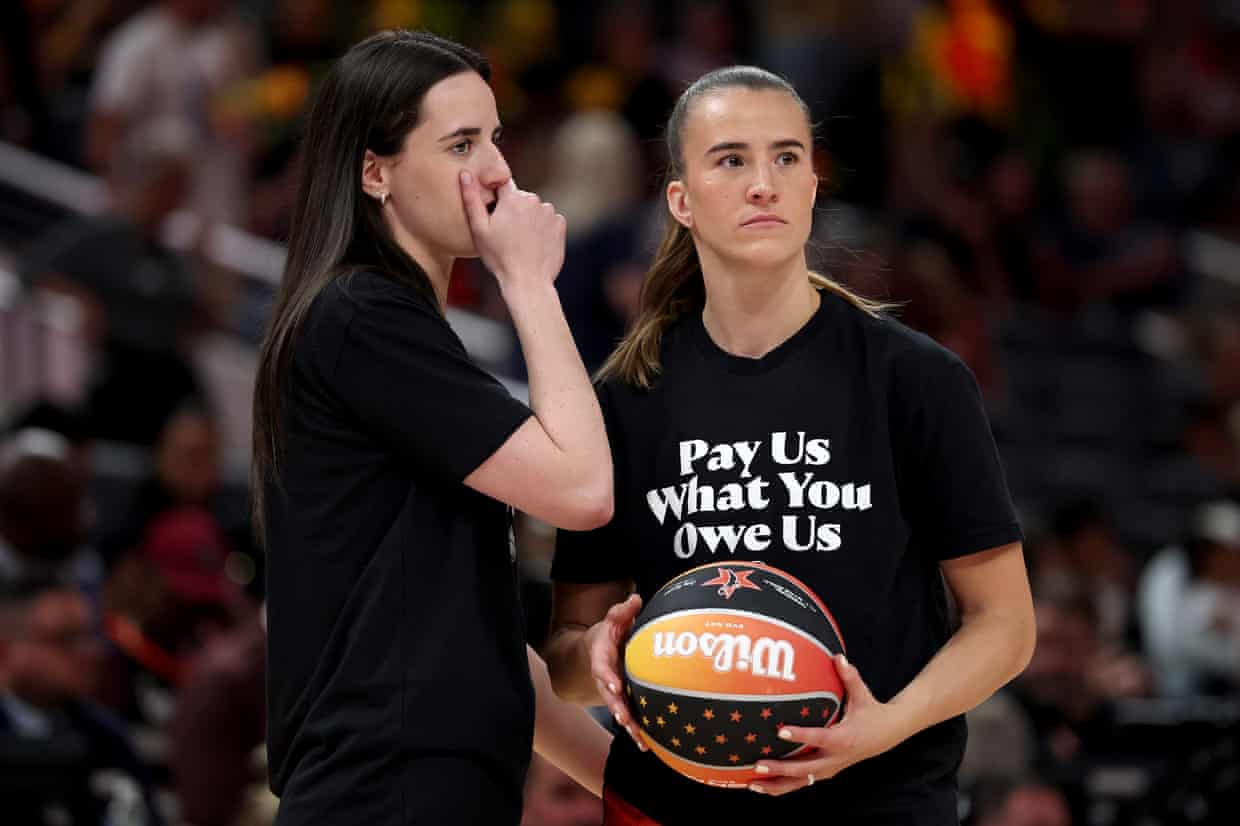
The WNBA and its players’ union (WNBPA) have reached a verbal agreement on a new collective bargaining agreement, ending 17 months of negotiations after players opted out of the previous deal and averting mounting fears of a strike.The agreement would be the sixth in league history and is being framed by both sides as a major step forward for player empowerment and the league’s growth.Commissioner Cathy Engelbert said Wednesday the two sides have “aligned on key elements”, though a formal term sheet still needs to be finalized. Union leaders echoed that sentiment, calling the deal a reflection of players using their collective voice.Full details have not yet been released, and the agreement must still be ratified
Oh deer! Rory McIlroy puts elk on the Masters champions dinner menu
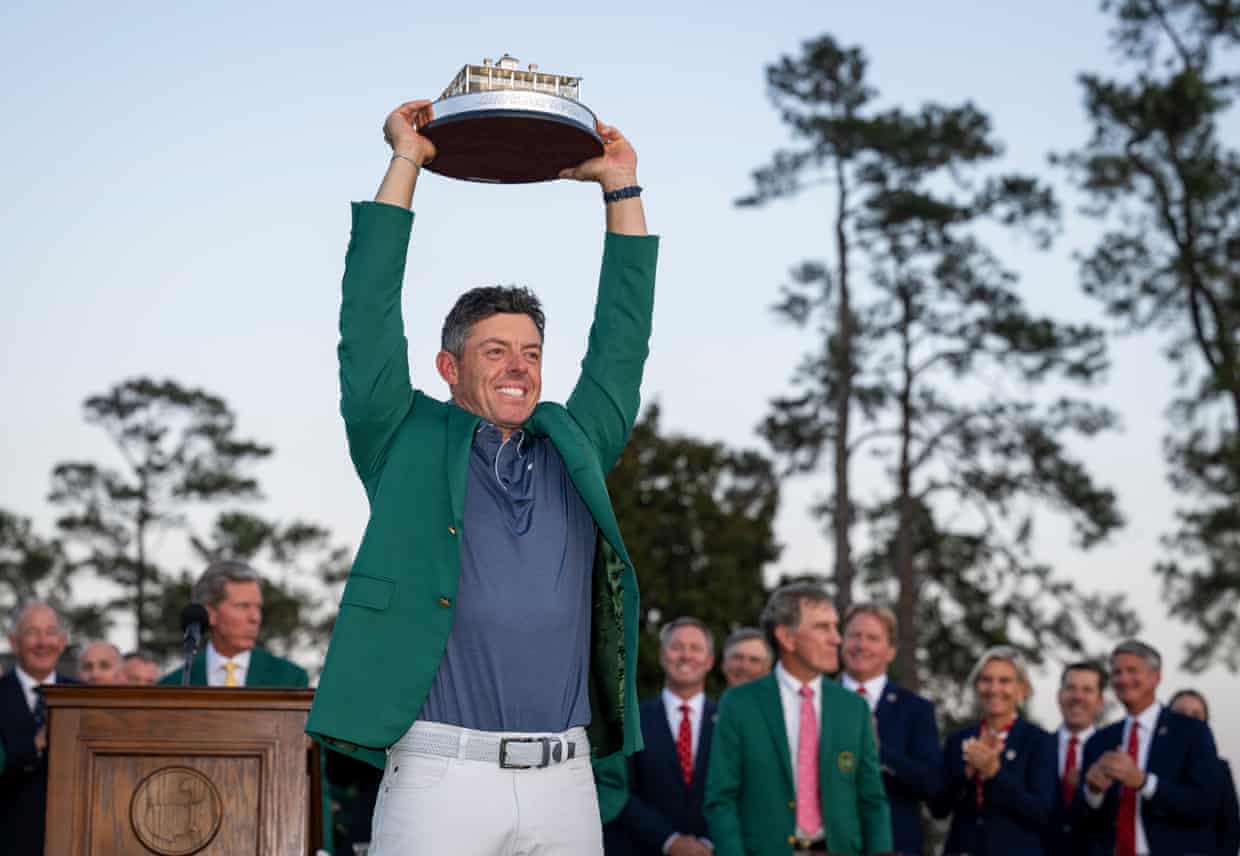
Elk as the key to Masters success: who had any i-deer? Rory McIlroy will serve starters made from the meat of the North American animal at Augusta National next month in tribute to his food of choice before winning the Masters last year.The wine McIlroy drank to toast victory, food that conjures memories of his childhood in Belfast and a dish made by his mother, Rosie, also feature in the Masters champion’s dinner for 2026. In a nod to the venue’s attention to detail, McIlroy revealed that chefs from Augusta made a special visit to a New York restaurant to replicate his favourite tuna recipe.McIlroy will begin his Masters defence from 9 April. Two days earlier, he hosts fellow past winners in the annual gathering in the Augusta clubhouse
‘People will always hate but my opinion is all that matters’: GB sprinter Amy Hunt on fame, abuse and becoming ‘an icon’
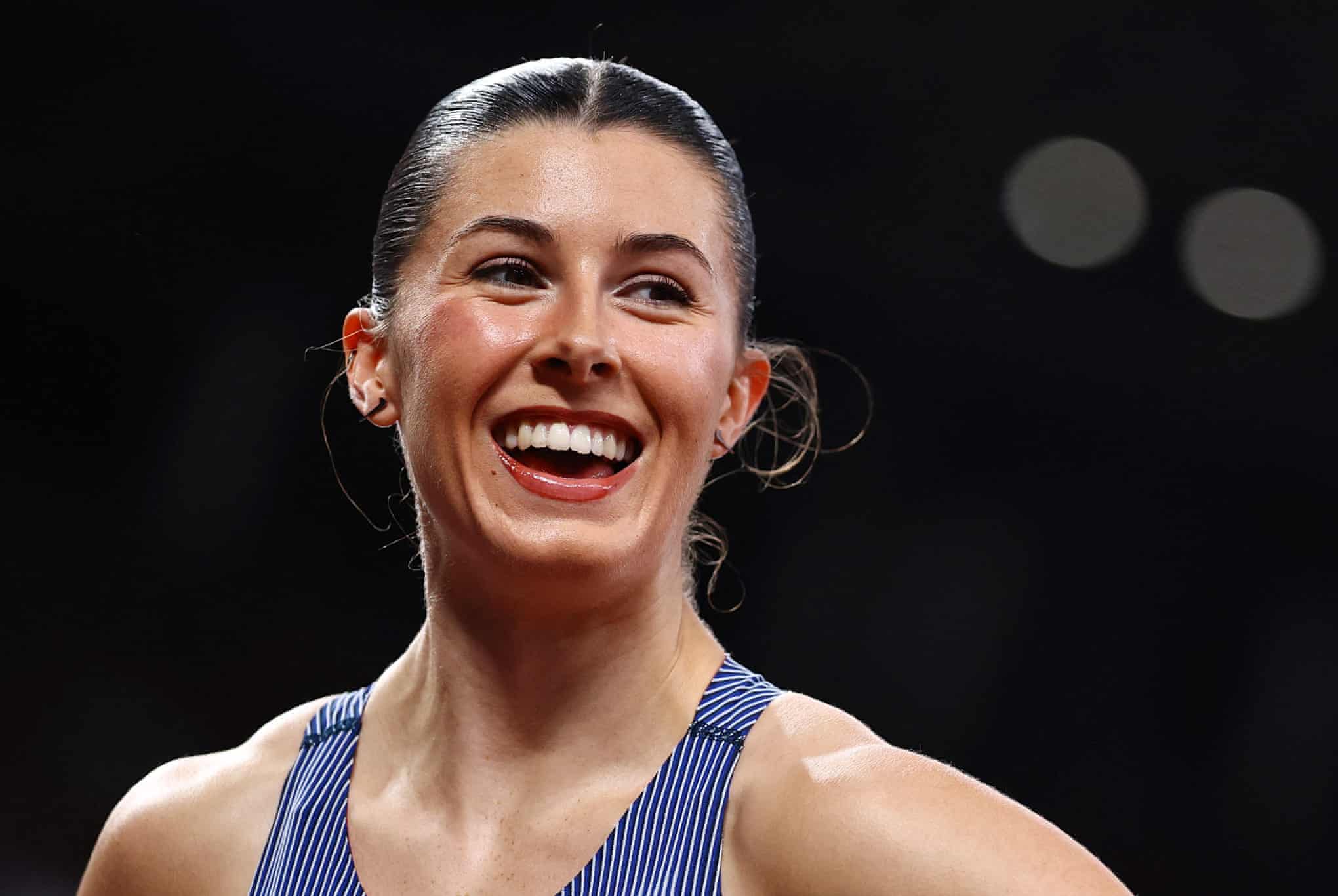
The 23-year-old who went viral last year has plenty of targets for 2026, starting with the World Indoor Championships in PolandAmy Hunt’s mind is flashing back to the moment she unwittingly went viral last September. As untrammelled joy charged through her body, the BBC asked about her unusual journey from an English degree at Cambridge to a shock 200m world championship silver medal. Hunt’s response quickly became a cri du coeur to young girls everywhere: “You can be an academic badass and a track goddess.”As the 23-year-old prepares for the World Indoor Championships in Poland that start on Friday, she reveals her remark was entirely spontaneous. “As soon as I said it, I was like: ‘Oh my gosh, I’m on the BBC, can I even say that? Are they going to bleep that out?’” she says, smiling
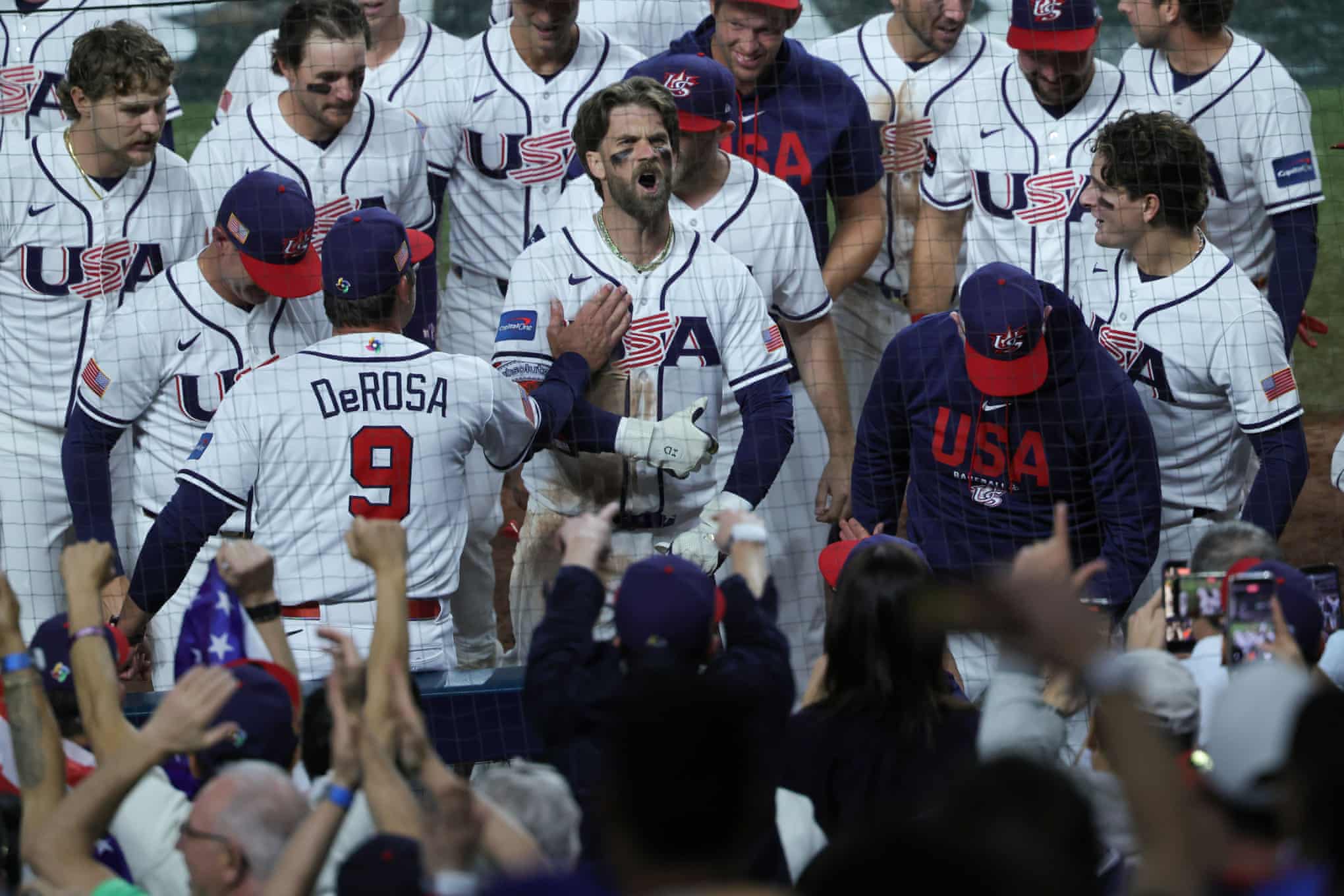
Other nations danced for joy at the World Baseball Classic. Team USA played toy soldiers
On the morning of the World Baseball Classic final between the United States and Venezuela, the headline of the New York Times daily briefing read, “America, alone,” in reference to the unwillingness of the country’s traditional allies to join the war with Iran. The revived rhetoric of America First, once a restoration of the isolationist, often Nazi-sympathetic sentiments of the 1930s, has coalesced into current policy, status, attitude: America by itself, making its own rules, intent on largely playing alone by them.Venezuela won the final, thrillingly, 3-2 over Team USA, but not before the hosts extended that isolationism with a sourness that produced a comically vapid extension of American bravado, and nearly undermined a tournament that in its 20th year is at last becoming one of baseball’s great successes.The WBC was a two-week block party. Canada, fresh off the Toronto Blue Jays’ American League pennant, reached the quarter-finals for the first time

Sadiq Khan urges Labour to campaign on rejoining EU at next election

Angela Rayner’s allies say HMRC inquiry set to be resolved before May elections

Starmer plans to ease impact of immigration policy changes after backlash from Labour MPs

Gerry Adams tells high court he was stunned by 1996 Docklands bombing
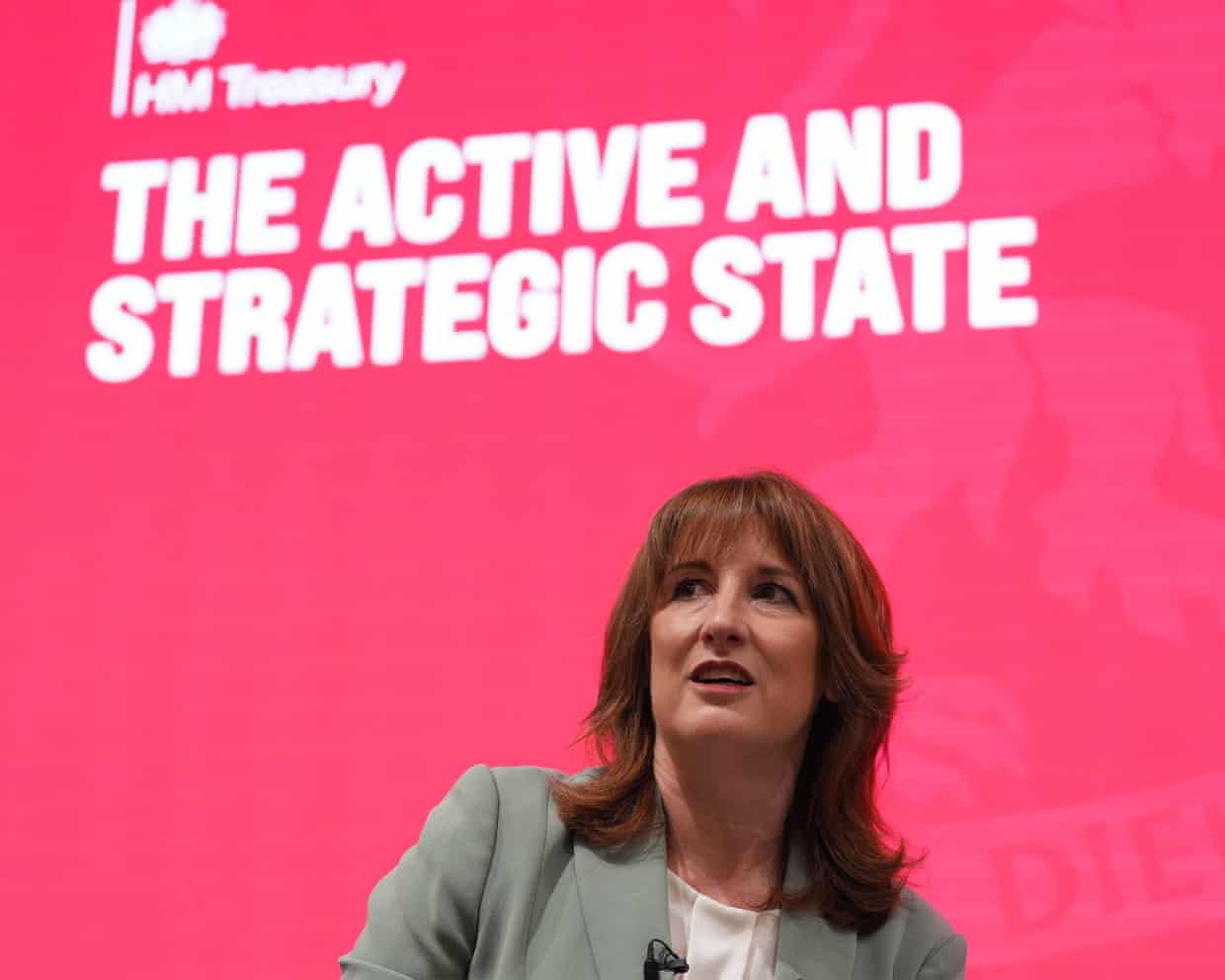
Reeves speech had a giant hole: the sky-high cost of energy for industry | Nils Pratley
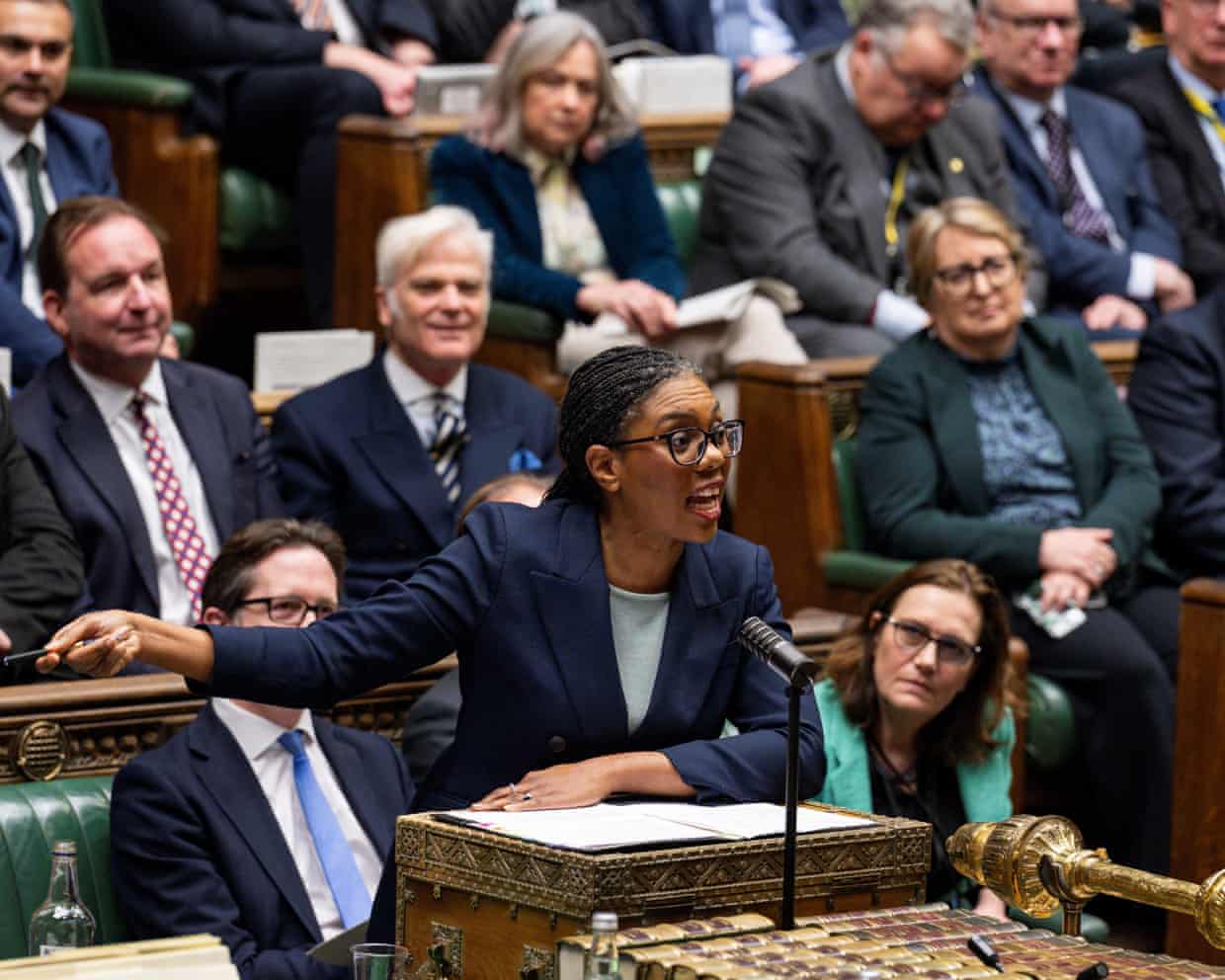
Memory loss strikes down Starmer and Badenoch at an infuriating PMQs | John Crace