UK motor fuel prices rise since Middle East conflict began, and energy bills could jump 10% in July – as it happened
Good morning, and welcome to our rolling coverage of business, the financial markets and the world economy.The dust is settling after Rachel Reeves’s spring forecast statement yesterday, which showed that growth will be weaker than hoped this year while unemployment will be higher.While the chancellor claimed the UK could ‘beat the forecasts again’, economists are concerned that the ongoing Middle East crisis will hurt the economy, and household finances, badly.The Resolution Foundation have just released their overnight analysis of the Office for Budget Responsibility’s forecast.The good news? The UK is set for a “decent”, one-off increase in living standards this year, and a bumper rise for lower-income families.
The bad news? A fresh energy price shock risks wiping out these gains.The big picture? The medium-term picture for living standards remains bleakAccording to Resolution’s calculations, living standards for typical working-age families are set to grow, by £300, over the coming year (between 2025-26 and 2026-27).Lower-income households are set for a bigger bump in living standards, up 3.9% or £800.This would be the second strongest year for living standards in the past two decades for poorer families.
BUT if energy prices don’t drop, then all these gains will be wiped out,If recent rises in the price of oil and gas were to be sustained they could add around a percentage point to inflation and £500 on to typical annual energy bills, Resolution say,The energy price cap could raise by £500 in June says the Resolution Foundation,That puts everything else from the Spring Forecast in the shadows,Watch: https://t.
co/KynP3Cq9mRRuth Curtice, chief executive at the Resolution Foundation, says:double quotation mark“The immediate economic outlook for Britain is highly uncertain, with yesterday’s forecasts already looking out of date, while the living standards picture for the rest of the Parliament is very lopsided,“This coming year is set to be a decent one for living standards, and a bumper one for poorer families, as wages and benefit support rise above the level of inflation,But a fresh energy price shock risks puncturing this good news,9am GMT: Resolution Foundation event on the spring forecast9,00am GMT: eurozone services PMI for February9.
30am GMT: UK services PMI for February10am GMT: Eurozone unemployment report for January2.45pm GMT: US services PMI for FebruaryTime to wrap upFears are growing that the Middle East crisis will hit UK living standards, as the conflict keeps energy prices elevated.The Resolution Foundation predicted this morning that the Middle East crisis could trigger an energy price shock that more than wipes out the £300 rise in living standards a typical working-age household could otherwise expect this year, a leading thinktank has warned.It said a “decent” one-off increase in average living standards in 2026 and a bumper rise for lower-income households could be reversed by rising oil and gas prices as the Iran conflict disrupts supplies.However, if the recent jump in energy prices persists, the foundation said all the gains could be wiped out.
While the effect may not be as large as the increase caused by the Russian invasion of Ukraine, which sent the cost of food, oil and gas soaring, a rise this year in oil and gas prices could add a percentage point to UK inflation and £500 on typical annual energy bills, it said.Cornwall Insight predicted that the UK’s energy price cap could rise by 10% in July.The RAC flagged that petrol and diesel prices have already risen this week.European stock markets have rallied on a report claiming Iran is engaging in a “secret outreach” to end the war in the Middle East, after several days of heavy losses on indices around the world.The New York Times reported that a day after the attacks began, operatives from Iran’s Ministry of Intelligence indirectly contacted the CIA with an offer to discuss terms for ending the conflict.
Officials briefed on the backchanneling are, however, sceptical – at least in the short-term – that either the Trump administration or Iran is really ready for an off-ramp, the report said.There are also questions over whether any Iranian officials could negotiate a ceasefire agreement, as Israeli strikes have taken out many senior figures.The report helped push up the UK’s FTSE 100 share index by 1% in late trading, with the pan-European Stoxx 600 index up 1.6%.UK households face the prospect of bills “whiplash” if the energy cap soars this summer, warns Richard Neudegg, director of regulation at Uswitch.
com.Responding to Cornwall Insight’s forecast that bills could rise 10% in July, Neudegg says:double quotation mark “This prediction is a stark reminder of why relying on the price cap leaves customers exposed to global events.While it’s still far too early to say with certainty what the price cap will be in July, if these predictions ring true, the majority of households could see a significant jump in household energy bills, driven by the situation in the Middle East.Energy markets remain sensitive to major events, especially when they involve key gas transport routes.These early forecasts come only days after Ofgem announced that the price cap will fall by £117 for the average household in April, so many households could feel whiplash with the potential changing direction of bills.
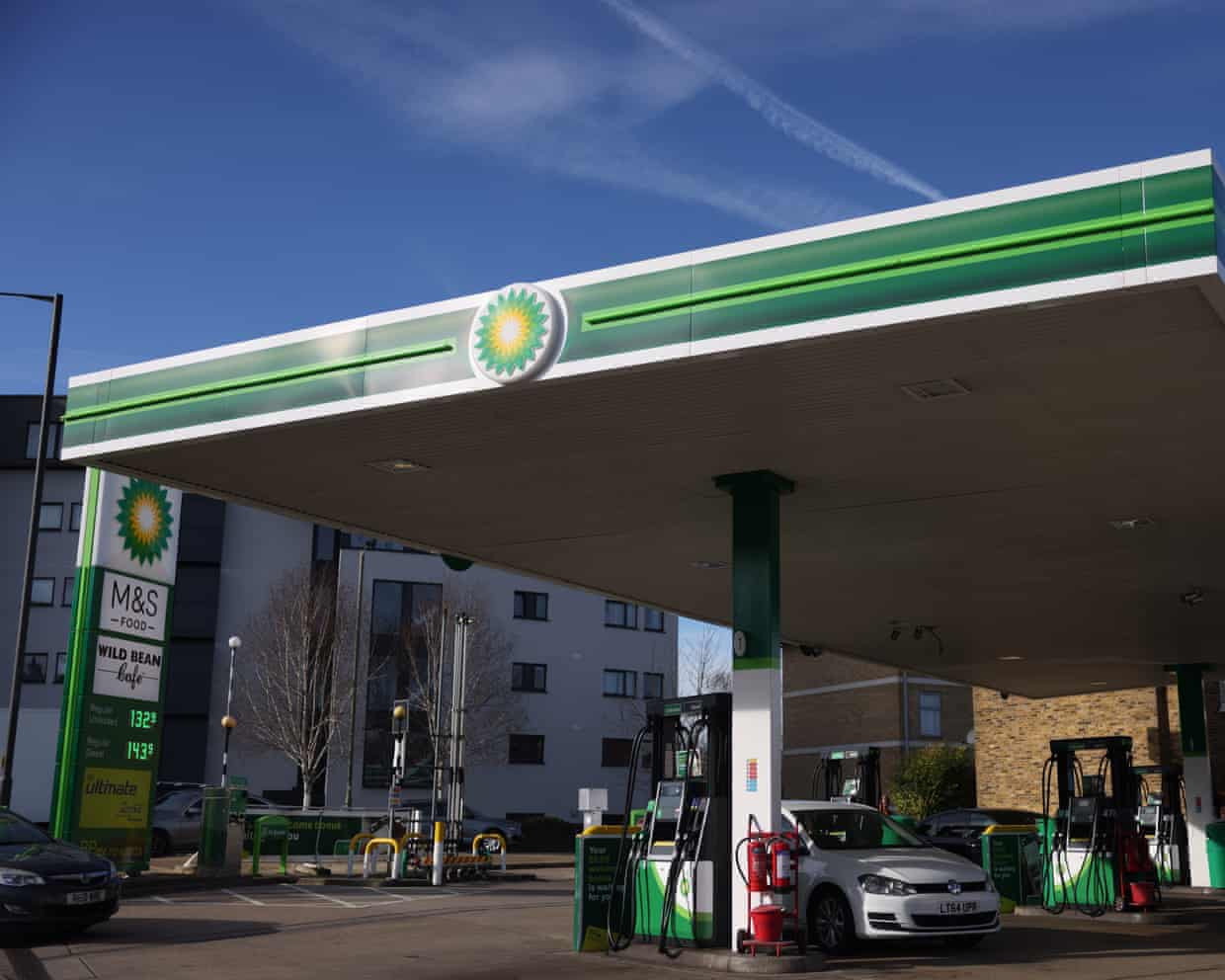
UK fuel prices are rising following the outbreak of the Middle East conflict, the RAC reports.The RAC, which represents UK motorists, reports that both diesel and petrol prices have risen this week – an early example of how the turmoil in the energy markets can hit households.RAC head of policy Simon Williams says:double quotation mark“The average price of petrol has increased by nearly 2.5p a litre since Saturday and diesel by more than 3p on the back of oil surging above $81 a barrel - a price not seen since January last year.Providing oil stays around this level the average price of petrol shouldn’t really rise to more than 136p.
Diesel, however, is increasing at a faster rate.”Wall Street’s main indices have opener calmly, as investors welcome the NYT’s report that Iranian operatives secretively reached out to the U.S.to pursue talks to end the conflict.The S&P 500 share index is up 0.
17% in early trading.However, the Dow Jones Industrial Average is down 70 points or -0.14% at 48,431 points, with oil produer Chevron down 2%.The conflict in the Middle East is disrupting shipping across the region, including in the Strait of Hormuz, one of the world’s busiest maritime routes.Maritime traffic through the strait, the narrow channel linking the Persian Gulf with the Gulf of Oman, has effectively been closed since strikes on Iran began.
Some vessels have been diverted or delayed and ports and shipping companies are dealing with heightened security concerns and uncertainty.Meanwhile, at least six major cruise ships, each carrying thousands of tourists, are anchored in or close to harbours across the region, their passengers confined to the shipsWe would like to hear from maritime workers, port staff and shipping crews about how the situation is affecting your work.Click here to take part.As if we didn’t have enough to worry about… US Treasury Secretary Scott Bessent has suggested that President Donald Trump’s recently announced 15% global tariff will likely be implemented sometime this week.Bessent was asked about CNBC about the discrepancy between the 15% level that Trump had promised and the current rate of 10%, and if Bessent knew when a change to the higher level would occur.
“That’s likely sometime this week,” Bessent said.The current 10% global tariff began at the start of last week, after the US supreme court ruled that Trump’s sweeping “liberation day” tariffs were illegal.It will take time for the volatility in the energy market to settle down, points out Professor Costas Milas, of the Management School at University of Liverpool:double quotation markThere is a lot of talk about rising energy prices and their inflationary impact or even depressionary impact on UK growth.But wild volatility regarding energy prices also matters.Even if the war is settled (as Trump claims within.
,,4 weeks), GDP growth will take a hit,First, Trump cannot “write a program” to settle a war within an arbitrary deadline, and second, it will take time for energy volatility to settle,The sooner, of course, the better.
Britain’s energy price cap could rise by 10% this summer if the surge in gas prices this week doesn’t reverse, consultancy Cornwall Insight estimates,Cornwall has raised its forecast for the July–September Default Tariff Cap to £1,801 per year for a typical dual‑fuel household,That would be an increase of £160 or 10% on April’s cap announced last week,Dr Craig Lowrey, principal consultant at Cornwall Insight, says:double quotation mark“Looking at the April cap, the role of wholesale prices as a determinant of bills had eased given the impacts of policy costs and network costs,However, this latest forecast puts the role of wholesale markets firmly back in the spotlight and illustrates how exposed UK households remain to international market movements.
“While the rise is eye‑catching, any immediate concern should be tempered.We are still early in the assessment period for the July cap, and what happens in the energy markets over the next three months will be the key factor, rather than this spike alone.“Events like this reinforce the case for greater home-grown renewable generation.Reducing the UK’s reliance on volatile global gas markets is the most durable way to protect households from future price shocks.”Legendary investor, the late Charlie Munger, argued there are only three ways a smart person can go broke: liquor, ladies and leverage.
Investors in South Korea learned that lesson today, as the market suffered a terrible slump, wiping 12% off the Kospi index.Bloomberg reports:double quotation markAs South Korean stocks crashed Wednesday afternoon, panic spread through Seoul’s financial district.At the small downtown office of Mirae Asset Securities, scores of clients hurriedly lined up to get their money out.Some in the crowd had snapped up stocks on leverage — part of the mania that had turned the market into a national pastime and made the Kospi the world’s top-performing benchmark — and they were now desperate to unload them as the war in Iran rocked the global economy.They gestured and shouted to get the attention of Mirae employees who could help them sell the positions they couldn’t unwind online.
As they waited for help, their phones flashed ever-growing losses — the Kospi was down 8%, then 10%, then 12% — added to their angst.Korea’s KOSPI index could enter a bear market after just 3 days..index is down 18% now from last Thursday’s close 😱 pic.twitter.
com/mh7dDzAwFgShipping through the strait of Hormuz still appears heavily disrupted today.Reuters estimats that at least 200 ships, including oil and liquefied natural gas tankers as well as cargo ships, remained at anchor in open waters off the coast of major Gulf producers including Iraq, Saudi Arabia and Qatar, based on data from the MarineTraffic platform.Brent crude oil prices have also turned negative.Brent crude has slipped back to $81.33 per barrel, down from almsot $84.
50, following this morning’s report that Iran had reached out to the US about talks to end the conflict.The US secretary of state for war, however, doesn’t sound like he’s ready to stop the conflict, judging by these Reuters snaps:04 Mar 2026 13:07:08 - HEGSETH: WE ARE PUNCHING THEM WHILE THEY ARE DOWN04 Mar 2026 13:07:40 - HEGSETH: MORE WAVES COMING WE ARE JUST GETTING STARTEDThe London stock market is continuing to claw back some of its losses from earlier this week.The FTSE 100 share index is now up 84 points, or 0.8%, at 10,567 points.Metlen Energy & Metals (+4.
4%), the industrial and energy company, is the top riser, followed by copper producer Antofagasta (+3.9%).As feared, QatarEnergy has declared force majeure on shipments of liquefied natural gas.The move, which frees QatarEnergy from existing supply contracts, comes after attacks on its production facilities on Monday that forced a pause to LNG production.A container ship has reported being hit by a projectile in the Strait of Hormuz north of Oman on Wednesday, according to the UK Maritime Trade Operations.
The ship said the strike had caused a fire in its engine room, but no environmental impact had been reported, UKMTO added.Pedro Sanchez has risked the ire of the unpredictable Donald Trump with his firm stances that Spain is “not going to be complicit in something that is bad for the world”.Trump’s threat to halt trade with Spain has prompted the EU to remind the US president that the deal they signed last year on tariffs still stands as a matter of good faith.If it is breach the bloc will react, it said on Wednesday hinting at retaliatory powers at its disposal.It would be impossible for Trump to halt trade with any single country such is the global nature of supply chains.
But he does have, in his own words, a series of “powerful and obnoxious” tariff options that are outside the scope of the supreme court ruling 10 days ago which struck out his reciprocal tariffs.He has constantly threatened, for example, sectoral tariffs on pharmaceuticals made in the EU and sold in the US, something that keeps Irish leaders awake at night.Although Spain’s pharma sector is not as high profile politically as Ireland’s, it is also vulnerable.In 2024 Spain exported $1.15bn pharmaceutical products in 2024 including medicines, sera and other blood products.
Trump could also attack a country’s legislative canon if he felt it was prejudicing American companies such as tech sector, something we know he feels strongly about.He is currently invoking section 122 of the 1974 Trade Act to impose a global 10% tariff on foreign imports but pharma tariffs would be available to him under a different law, section 232 of the 1962 Trade Expansion Act.He is currently threatening eight sectors under Section 232.But he has three other laws he can draw on - here’s the explainer.UK and continental European gas prices have fallen back today – a relief for households, politicians and central bankers alike