UK house prices rise in February as chancellor avoids ‘negative speculation’

House prices in the UK increased in February, avoiding a repeat of the “negative speculation” that depressed the market before last November’s budget, as Rachel Reeves prepares to present the spring forecast on Tuesday.The average price of a home rose to £273,176 last month, up by 0.3% from the month before, according to Nationwide, the UK’s biggest building society.It matched January’s monthly increase, and was above analysts’ forecasts of a 0.2% gain.
The annual growth rate remained steady at 1%.The chancellor’s imminent forecast has not led to a slowdown in the housing market, as speculation around property tax changes in the months leading up to last November’s budget did.Jason Tebb, the president of the property website OnTheMarket, said: “Housing market activity and sentiment have continued to pick up this year, with buyers and sellers proceeding with their moves with more clarity and confidence, particularly as the spring forecast has not attracted anything like the same level of negative speculation as November’s budget.”Reeves will seek to project calm and competence after a tumultuous 18 months, following the latest forecasts from the independent Office for Budget Responsibility on Tuesday.In a short statement to parliament, the chancellor is expected to highlight progress on reducing the cost of living and say Labour has the “right plan” for fixing the economy.
Robert Gardner, the Nationwide chief economist, said the latest house price figures pointed to a “a modest recovery after a dip at the end of 2025” driven by uncertainty around potential property tax changes before the budget,“Housing market activity is likely to recover in the coming quarters, especially if the improving affordability trend seen last year is maintained as expected,”Housing market transactions climbed 10% last year compared with 2024,Gardner said improved affordability and an easing in mortgage availability “has helped to support first-time buyer activity”,First-time buyers are expected to drive sales this year.
UK inflation had been expected to ease to the Bank of England’s 2% target by April, allowing it to deliver another interest rate cut in the face of rising unemployment, sluggish economic growth and slowing wage rises.However, the odds of a rate cut in March dropped to 50% on Monday, from 80% last week, after US-Israeli airstrikes on Iran drove oil prices sharply higher because of fears of oil supply disruption.Brent crude, the global benchmark, jumped as much as 13% in early trading and hit $82 a barrel.Alice Haine, a personal finance analyst at Bestinvest, said higher energy prices would make it harder for the Bank to bring inflation down to target.She said many borrowers on one of the 1.
8m fixed-rate mortgages expiring this year were rolling off ultra-low five-year fixed-rate deals into a much higher mortgage rate environment.“They face refinancing at much higher rates than their current deal, which will put pressure on disposable incomes, though they can take comfort that they have avoided the worst of the mortgage crisis.”The number of new mortgages approved declined to 59,999 in January, the lowest in two years, the Bank of England reported on Monday.That slowdown came despite a drop in the “effective” interest rate on new mortgages, which fell to 4.09% in January from 4.
15% in December.Net borrowing of mortgage debt by individuals dropped to £4.1bn in January, from £4.5bn in December.

Three in four women unaware menopause can trigger new mental illness, poll finds
Nearly three-quarters of UK women do not know menopause can trigger a new mental illness, polling shows.This lack of understanding is so acute that the Royal College of Psychiatrists has launched its first targeted “position statement” to raise awareness about menopause and mental health.A YouGov poll, commissioned by the college, which represents more than 20,000 psychiatrists, found that only 28% of women know a new mental illness can be associated with menopause. In contrast, 93% of women associate menopause with hot flushes and 76% with reduced sex drive.As a result, many women are not seeking or receiving vital help, the RCPsych’s report says

The decline in healthy life expectancy in Britain should shock us all | Letters
The decline in healthy life expectancy (HLE) is so momentous it should have ejected the former prince from the front page (Female healthy life expectancy falls three years, print edition, 20 February). The shocking fall of three years for women and two years for men, in just three years, reveals the cumulative impact of the Tory/Liberal Democrat austerity programme and the gross mismanagement of the pandemic.In contrast to the lowest HLE since these figures were first estimated (2011-13), Swedish HLE has continued to rise and is an average of five years higher than the UK’s. It is blindingly obvious that unless the government urgently prioritises extending HLE, it cannot hope to stem the flow of older workers out of the labour market.Alan WalkerEmeritus professor of social policy and social gerontology, University of Sheffield Falling healthy life expectancy and a rising pension age – so work until 67 possibly 68, then spend your last years recovering

UK health official recused from puberty blockers trial after bias claims
A health official who reportedly intervened to pause a clinical trial on the use of puberty blockers has been removed from any further involvement due to accusations of bias.Prof Jacob George, who was appointed chief medical and scientific officer at the Medicines and Healthcare products Regulatory Agency (MHRA) in January, raised concerns that led to the Pathways trial being put on hold by the government, according to the Sunday Times.But the regulator announced on Saturday that George would be recused from involvement in the trial after gender-critical social media posts made last year emerged.In one post he described the author JK Rowling, known for her gender-critical views, as being a “treasure of our time”. In another he said “the denial of basic biological fact is concerning”, in relation to questions about whether the Olympic boxer Imane Khelif was a woman
‘Viruses don’t know borders’: US anti-vaccine rhetoric could impact global measles crisis
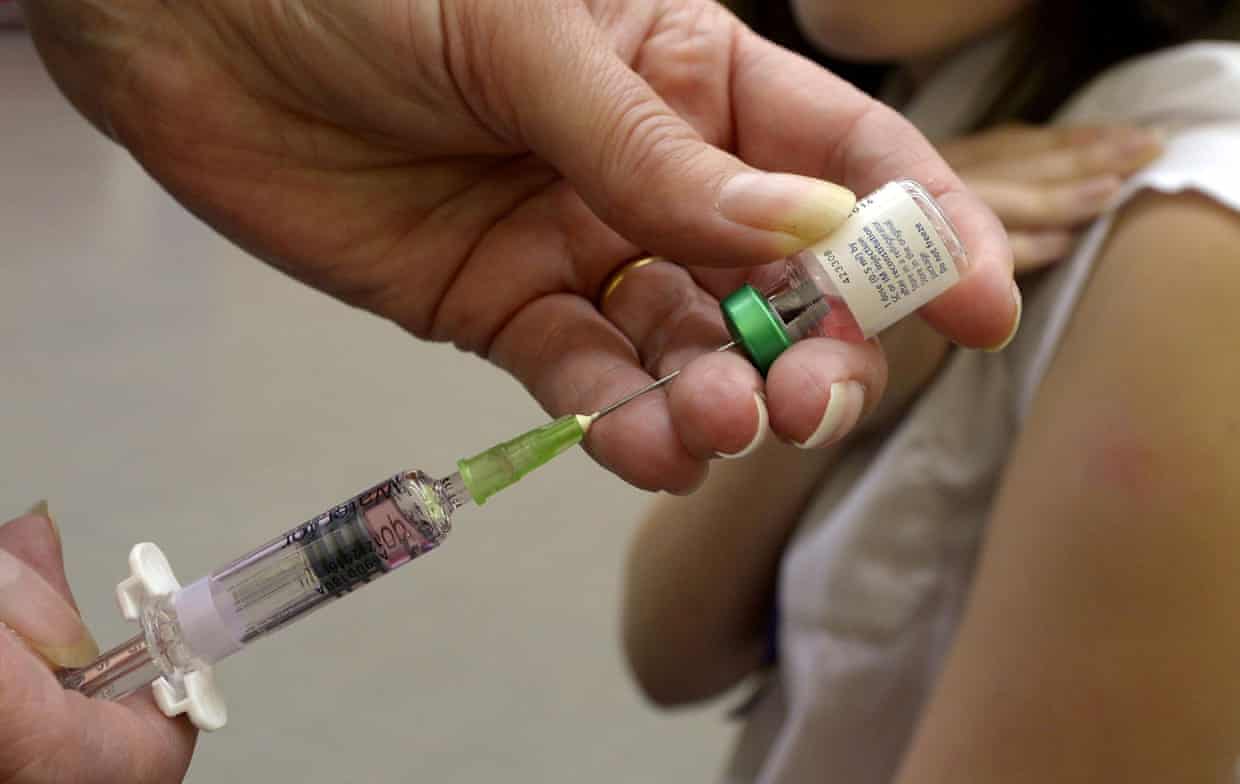
The US government has amplified anti-vaccine rhetoric and signaled that it does not consider measles to be a priority, which could have global ramifications as countries around the world have lost or are on the brink of losing measles elimination status.The World Health Organization announced in late January that six European countries: the United Kingdom, Spain, Austria, Armenia, Azerbaijan and Uzbekistan had all officially lost their measles elimination status, which means the virus has been circulating continuously in those countries for more than 12 months. In order to contain measles, at least 95% of children should be fully vaccinated against it, according to health recommendations, but vaccination rates have been falling across Europe.Measles vaccination in the UK has fallen especially dramatically, with only 84% of five-year-olds receiving both recommended doses of the measles, mumps and rubella (MMR) vaccine as of 2024. The UK is also “ground zero”, for vaccine hesitancy, according to Jennifer Nuzzo, director of the Pandemic Center at Brown University

Poorly regulated clinics in England are putting children with ADHD at risk, warn doctors
Children with ADHD are being put at risk by poorly regulated private clinics that prescribe powerful stimulants without key physical examinations, doctors have warned.A surge in remote-only assessments has led to what one clinician described as “widespread and unsafe practice”, where children are being diagnosed and medicated via video link. The clinical warnings have now forced health authorities in Greater Manchester to overhaul prescribing rules, mandating face-to-face checks to protect the safety of children.Rashad Nawaz, a consultant paediatrician with clinics in Manchester and Liverpool, has written to national regulators and health bodies. He warned that he had treated young patients with potential underlying heart conditions who had been prescribed stimulants by national online providers without a single in-person check

Researchers praise ‘stunning’ results of new prostate cancer treatment
A new drug for advanced prostate cancer has shown promise in early trials experts have said, with the medication shrinking tumours in some patients.Prostate cancer is the most common cancer among men in many countries, including the US and UK. About 1.5 million men are diagnosed worldwide each year.The new drug has caused excitement as it is a type of treatment called immunotherapy

Pulp have the last word in Adelaide festival saga with triumphant opening gig

Seth Meyers on Team Trump’s Iran threats: ‘These guys speak like they’ve been hit on the head’

How to keep free entry to UK museums and galleries | Letters

‘You’re sweet – and I’m old!’: Billy Porter and Sam Morrison on teaming up for a comedy about love and death

‘Seems I’m not dead’: Magda Szubanski says she is in remission after treatment for stage four cancer

Seth Meyers on Trump’s State of the Union address: ‘A vehicle to attack anyone who doesn’t bend the knee’