Bank of England should cut rates to boost consumer spending, says TUC
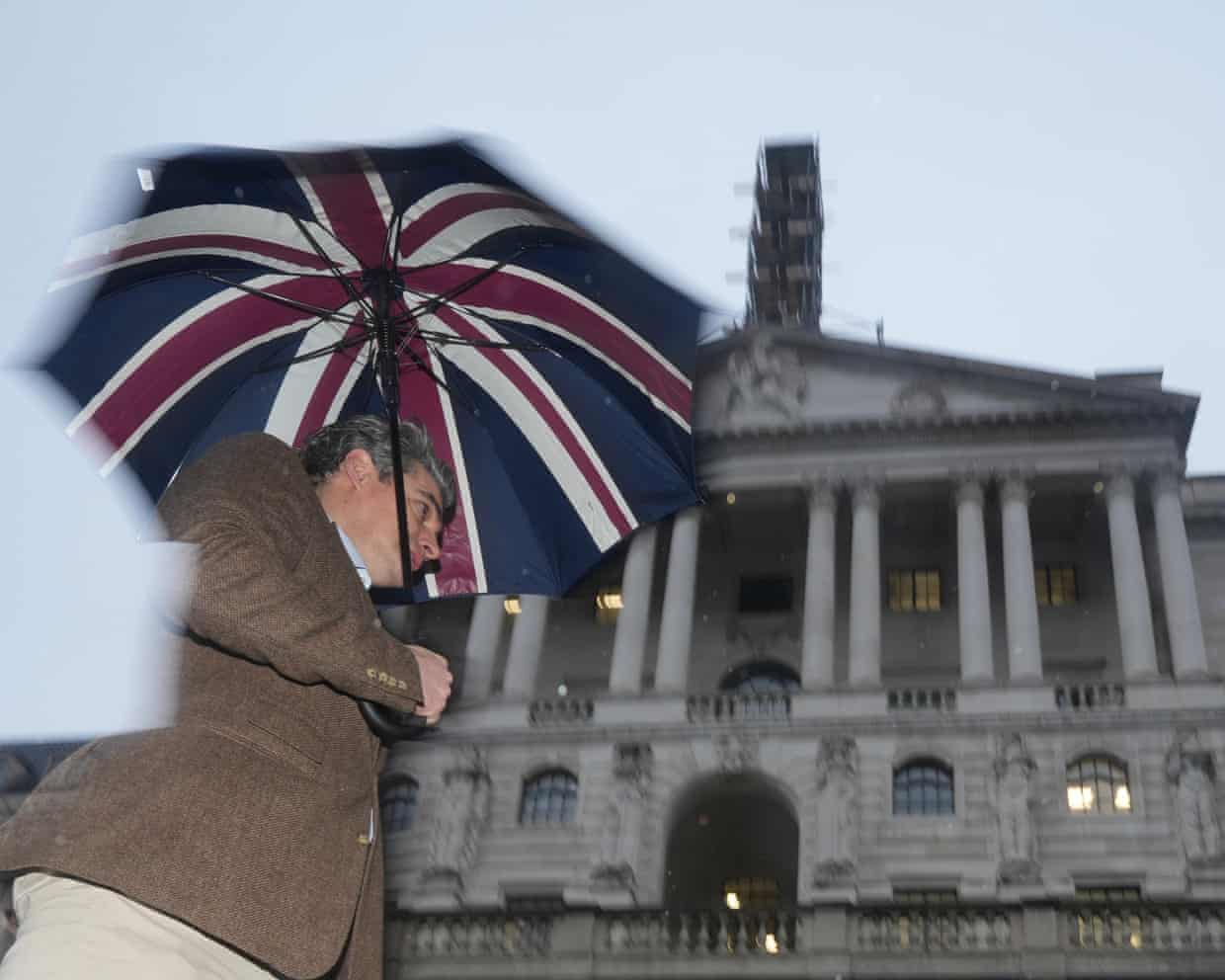
The Trades Union Congress is urging the Bank of England to cut interest rates and rekindle economic growth, pointing to analysis showing that cash-strapped consumers are lagging their international peers.The Bank’s monetary policy committee voted 5-4 to leave borrowing costs unchanged this month, after six cuts since mid-2024.Some members of the committee remain anxious about the risks of high wage growth unleashing a fresh bout of inflation, but the TUC argues that weak growth should be the more pressing concern.Paul Nowak, the TUC’s general secretary said: “The Bank of England has a crucial role to play here.Last year they were overly cautious and too slow to act.
They should go for growth with a sequence of quick-fire cuts this year.“Lower interest rates would help households and help the high street – putting money in people’s pockets to spend in shops and restaurants, and boosting confidence for consumers and for businesses.”Official data showed GDP expanded by just 0.1% in the final quarter of last year.The TUC said that was because consumer demand was being depressed by high borrowing costs, with the Bank’s base rate set at 3.
75%.Its analysis shows consumer demand has grown more slowly in the UK over the past three years than in 32 of the 37 industrialised economies in the Organisation for Economic Co-operation and Development – many of which have still achieved low inflation.And while consumer demand has generally accounted for two-thirds of economic growth since the 2008 financial crisis, the TUC said that over the past two years it made no contribution at all.The Bank is widely expected to cut rates at its next meeting in March after this month’s close vote, but markets are not expecting a repeat of last year’s run of reductions.Rachel Reeves, the chancellor, sought to open the way for further cuts with policies in her November budget designed to bring down inflation – including by cutting energy bills from April.
The monetary policy committee has said that should help to bring inflation back down to the 2% target by the spring, from 3,4% in December,However, some businesses have said that Reeves’s decision to raise employer national insurance contributions and the national minimum wage contributed to inflation as employers sought to pass on the costs through price rises,Huw Pill, the Bank’s chief economist, said on Friday he believed interest rates were already “a little bit too low” and that “underlying” inflation was probably 2,5%, once the impact of Reeves’s price-cutting policies were taken out of the equation.
Data on the jobs market and inflation will be published this week.After a fortnight of Labour party turmoil, the chancellor is determined to show she will stick to her growth strategy, which involves boosting infrastructure investment and liberalising planning reforms as well as tackling inflation.She plans to give a low-key Commons statement on 3 March responding to updated economic forecasts by the Office for Budget Responsibility – in contrast to last year’s spring statement, when she made hasty welfare cuts that were subsequently reversed.Reeves will then make a speech later in the spring reiterating her commitment to what she has called “securonomics”, which combines an activist industrial policy with supply-side changes such as cutting red tape.Responding to the lacklustre recent growth figures, Reeves said: “I’m confident that the decisions that we have made to return stability to the economy, to bring investment to our economy, and the changes we’re making around planning and regulation will help deliver stronger growth this year.
”Labour’s economic policy would be likely to feature heavily in any leadership contest.City analysts are weighing up the probability that some candidates would pursue more relaxed tax and spending policies, with knock on effects for government bond markets.
Treasury considering changes to Australia’s contentious tobacco excise, as calls grow for a freeze
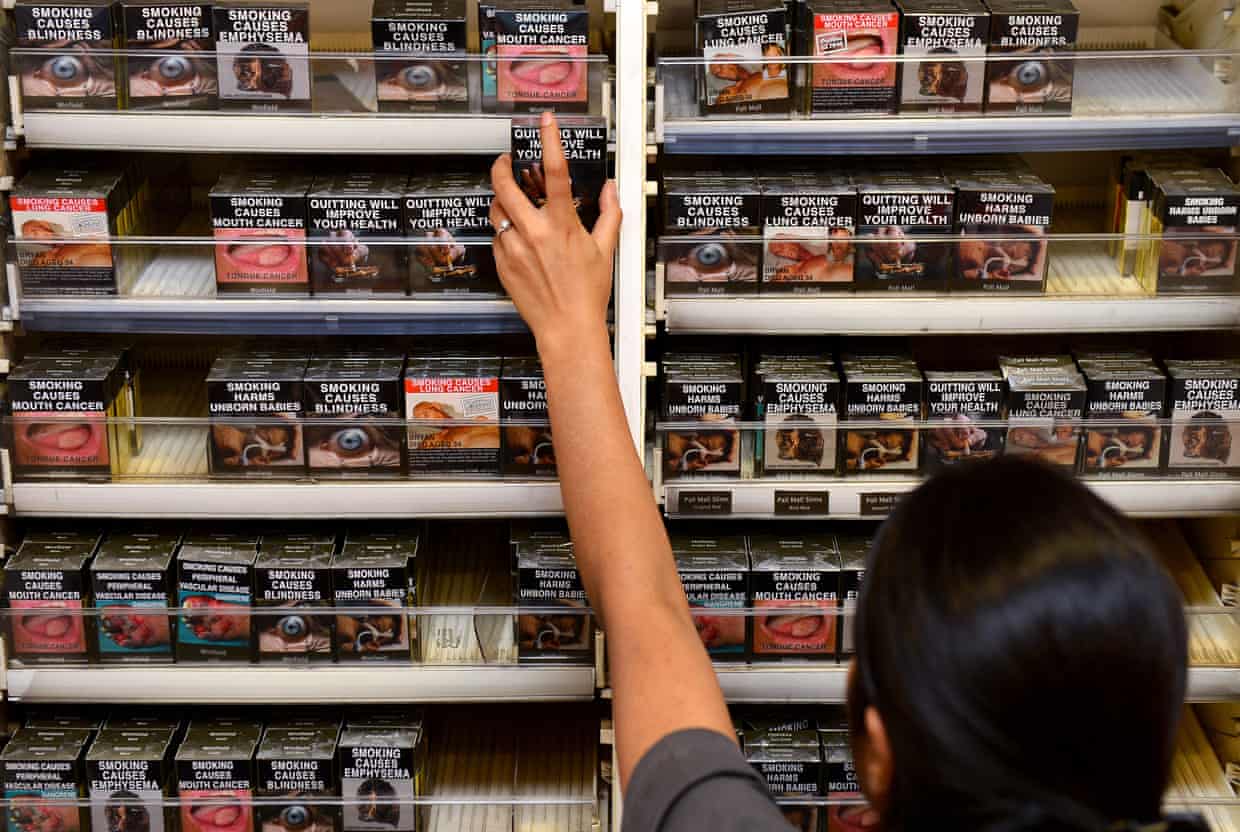
Experts say a freeze on the federal government’s contentious tobacco excise should be considered, after the Treasury revealed it was modelling the impacts of cigarette prices on demand amid a booming black market.Lachlan Vass, a research manager at the e61 Institute, said the Treasury’s examination of “price elasticity” and demand for tobacco would be a necessary step to costing potential reforms to the excise.Jim Chalmers, the treasurer, and Mark Butler, the health minister, have previously rebuffed any suggestion that reducing the sky-high cost of cigarettes was the solution to curbing the black market trade, which has ballooned over the past five years and smashed a $17.8bn hole in the budget since 2020-21.Sign up: AU Breaking News emailBut when asked at Senate estimates last week why a cut to the excise couldn’t be considered as part of a wider strategy to curb the illegal tobacco trade, Katy Gallagher, the finance minister, left the door open to a change in excise policy

Starmer has chance to put overseas aid and debt relief on G20 agenda | Heather Stewart
If Keir Starmer wants to win back disillusioned voters deserting his party for the Liberal Democrats or the Greens, he could do worse than rediscover Labour’s longstanding moral commitment to international development.Since cutting the overseas aid budget to fund higher defence spending – losing the excellent Anneliese Dodds in the process – Labour has had little to say on the subject, aside from the fact that 0.3% of national income is the new normal.But despite the cuts, Foreign Office sources insist that behind the scenes there is a renewed commitment to winning the argument for “the impact and benefits of international development”. If so, it could not come at a more propitious moment

Firm that went bust owing £650k to HMRC offers staff Las Vegas trip after being bought by ex-owner
A recruitment business that went bust owing the tax authorities and other creditors almost £3m has promised to send its staff on an all-expenses paid trip to Las Vegas after being repurchased by its former owner for an initial £10,000.Premier Group Recruitment went into administration in September with debts of £2.9m – including £647,000 owed to HM Revenue and Customs (HMRC), which had commenced enforcement proceedings against the company.The recruiter’s assets were acquired three days later by a new company, PGGBR Ltd, founded by Andrew Woosnam, Premier’s 99% shareholder.Shorn of its debts, the new company has been active on social media, posting on LinkedIn: “END OF YEAR TRIP 2026
BrewDog could be broken up as craft beer business put up for sale
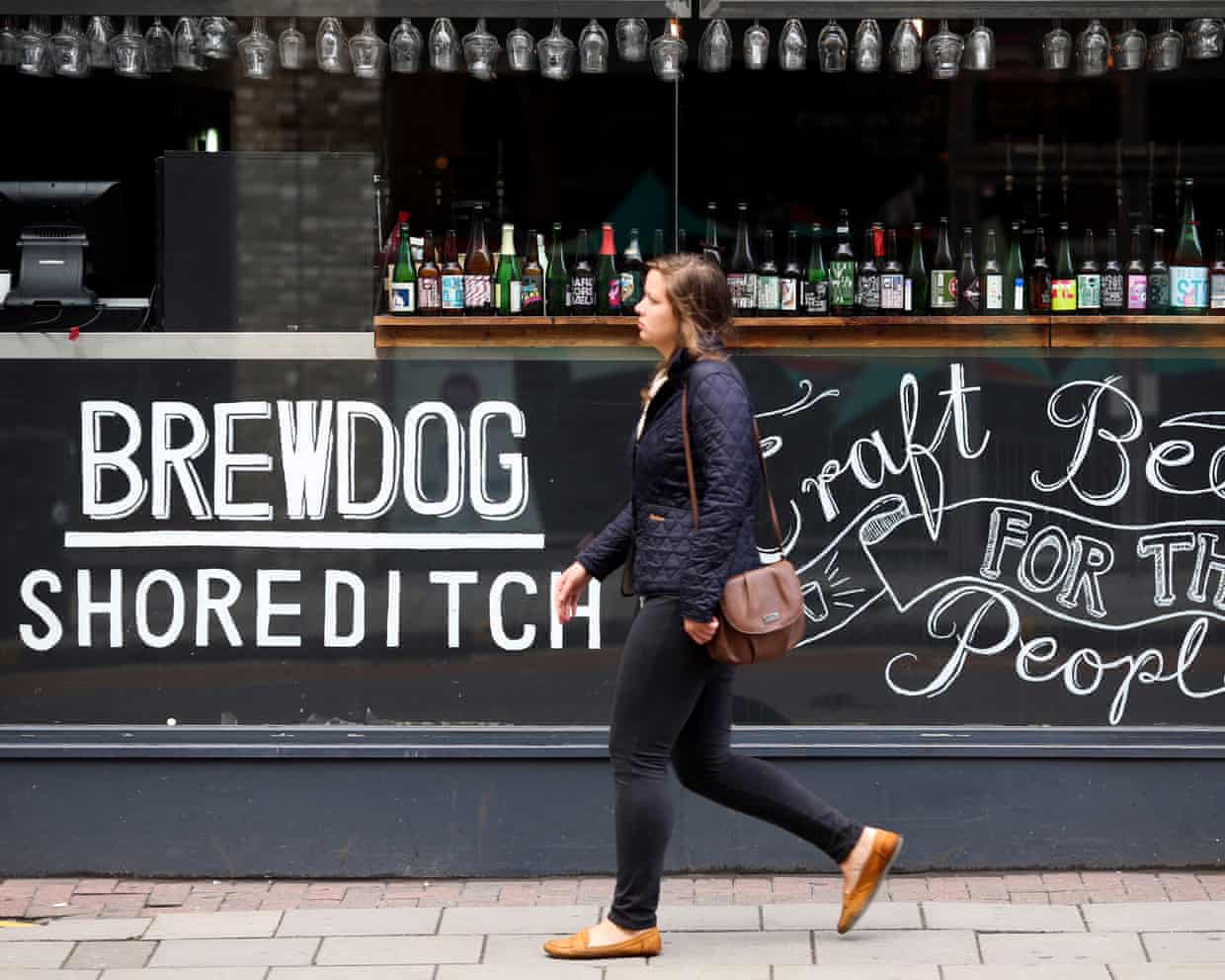
The beer-maker BrewDog could be broken up after consultants were called in to help find new investors.The Scotland-based brewer, which makes craft beer such as Punk IPA and Elvis Juice, has appointed consultants AlixPartners to oversee the sale process.BrewDog last month announced it was closing its distilling brands, prompting concerns for jobs at its facility in Ellon, Aberdeenshire.The company, which was founded in 2007 by friends James Watt and Martin Dickie, said it made the decision to focus on its beer products.No decision has been made in respect of the sale process

Did you buy a coffee machine with a tax refund? It may have affected Australia’s interest rate
One of the first things many Australians did last year after receiving a tax refund or a lower mortgage rate was to buy an armchair, an air fryer or a coffee machine.The purchases, evident in company earnings published this week, came after households had endured years of high living costs – and consumption had been weak up until that point.And policymakers didn’t think homeowners or renters had the spare capacity.This pickup in demand – along with rising prices – for such goods turned out to be an important factor in the Reserve Bank’s decision to raise interest rates, because it was concerned inflation was broadening.“The things that are driving the uptick in inflation really are housing, durable goods and market services,” Michele Bullock, the RBA’s governor, said last week

Reeves appoints higher pay advocate to fight skills shortages as chief economic adviser
Rachel Reeves has appointed a labour market expert who has repeatedly called for better pay and conditions in key sectors, such as social care, to reduce the UK’s reliance on migrant workers as her new chief economic adviser.Prof Brian Bell, who chairs the independent Migration Advisory Committee (MAC), which advises the government, has been announced as the new chief economic adviser in the Treasury – a senior civil service role.He will take up the post just as the UK economy is adjusting to a plunge in net migration, which fell by more than two-thirds, to 204,000, in the year to June 2025.Some economists have predicted a further decline, towards zero net migration – but Bell rejects that forecast, expecting it to bounce back towards 300,000 a year by the end of the decade.A professor of economics at King’s College London, Bell has used his role on the MAC to make the point that the “skills shortages” bemoaned by UK employers may often reflect the failure to offer good enough terms and conditions to domestic workers

The problem with doorbell cams: Nancy Guthrie case and Ring Super Bowl ad reawaken surveillance fears

US military used Anthropic’s AI model Claude in Venezuela raid, report says

Elon Musk’s xAI faces second lawsuit over toxic pollutants from datacenter
AI is indeed coming – but there is also evidence to allay investor fears

Anthropic raises $30bn in latest round, valuing Claude bot maker at $380bn

How to deal with the “Claude crash”: Relx should keep buying back shares, then buy more | Nils Pratley