Human rights groups cheer ‘watershed’ verdict in social media addiction trial

The verdict in a landmark social media trial that Meta and YouTube deliberately designed addictive products has sparked calls for reform across borders.International human rights and tech freedom groups issued statements after the decision, praising jurors for holding social media companies accountable for harms to children and urging tech giants to change their design features to ensure children are safe.Amnesty International said in a statement on Thursday that “this court decision is clear: these platforms are unsafe by design and meaningful change is urgently needed”.The day prior, a Los Angeles jury found both Meta and YouTube liable for intentionally creating platforms that hooked a young user and led to her being harmed.The six-week trial was one of more than 20 “bellwether” trials that are expected to go to court in the next few years.
The jury awarded the plaintiff in the case damages of $6m, with Meta to pay 70% and YouTube the remainder.Plaintiffs have taken particular issue with the use of features such as infinite scroll and autoplay – arguing that they prioritize engagement over users’ well-being.These elements are particularly harmful for children, they say; the plaintiff in the Los Angeles case, a 20-year-old who went by the initials KGM, testified that she became addicted to YouTube at age six and Instagram at nine, which began a long cycle of depression, self-harm and body dysmorphia.“Rather than using blunt tools like banning young teens from social media, states must require a fundamental overhaul of how these platforms operate, including addressing their addictive design,” said Erika Guevara-Rosas, Amnesty International’s senior director of research, advocacy, policy and campaigns.“This is the only path to a truly safe social media.
” Guevara-Rosas said the trial “laid bare” the use of “unsafe design features”,Human Rights Watch described Wednesday’s decision as a “a rare accounting of tech companies’ decisions to build products that have ignored the best interests of children”,“Children and parents have long known that social media platforms are designed in ways that result in children struggling to regulate their use, even as they’re exposed to and suffer serious harms,” said Hye Jung Han, senior researcher on children and technology at Human Rights Watch, in a statement emailed to the Guardian,The Business and Human Rights Centre, a global non-profit, said that Wednesday’s verdict was a “watershed moment for corporate accountability in the digital age”,Michael Clements, the group’s executive director, stressed the verdict “reinforces longstanding concerns about the sector’s business models, and highlights the urgent need for companies to undertake robust human rights, due diligence to identify, prevent and mitigate harm – and not to engineer it for profit”.
She stressed the need for regulators to take action to enshrine protections for children and other vulnerable users, though: “This shouldn’t be only left up to the courts.”Sabhanaz Rashid Diya, executive director at Tech Global Institute, a digital rights organization, told Rest of World that Wednesday’s verdict set “an important precedent as far as platform accountability goes – and in recognizing the role of algorithms in scaling harm”.The United Nations, which has laid partial blame at Facebook’s feet for the spread of ethnic violence in Myanmar, declined to comment on Wednesday’s verdict.Not all tech freedom and human rights groups are on the same page, though.Fight for the Future, a US-based digital rights group that advocates for global internet freedom, is viewing the verdict with more skepticism, according to a recent blogpost.
While the organization is in favor of successful lawsuits that “reduce the power of these companies and force them to change their policies”, they worry the court decision is “already being weaponized by lawmakers” who are focused on legislative solutions, such as the Kids Online Safety Act (Kosa), online ID check mandates and attacks on Section 230.Fight for the Future views these measures as raising free speech concerns by “forcing platforms to suppress certain categories of speech or getting the government involved in dictating what content platforms can show to which users”.Advocates of these measures say they are necessary to enhance safety for young social media users.Diya, who praised the verdict as a milestone in accountability, noted though that the verdict may also result in challenges for free speech and privacy.“While a landmark verdict, it does set a dangerous precedent by potentially risking an end to end-to-end-encryption [and] taking children completely off social media, or requiring backdoor data access to user data under the guise of child safety,” she told Rest of World.

‘It’s fired people up’: support grows, including within Labor, for new gas tax to curb wartime profits
The gas industry is mobilising in opposition to a potential new tax on the sector as political momentum builds – including among Labor MPs – for the government to use the May budget to prevent producers profiting from the Middle East war.The Australian Energy Producers (AEP) chief executive, Samantha McCulloch, claimed a new tax would punish the same Asian trading partners Australia was leaning on to supply more fuel amid the global energy crisis.The gas sector was blind-sided by revelations the Treasury was modelling options for a new levy to capture windfall profits from gas and thermal coal companies, as well as potential changes to the Petroleum Resources Rent Tax (PRRT) and corporate tax.Government, industry and opposition sources believe the public mood on taxing the resources giants has shifted, giving the Albanese government cover to pursue changes it might have considered too politically risky a few months ago.The sources point to a campaign spearheaded by independent senator David Pocock, social media influencer Konrad Benjamin of Punter’s Politics fame and progressive thinktank the Australia Institute, which has highlighted how much tax gas companies pay

Blink and miss: Trump’s tactic of threats first and U-turn later is proving stale in Iran war
President’s move, dubbed Trump Always Chickens Out, appears to have soured as he loses hold on situation in IranFrom Wall Street to the White House, the dish everyone’s talking about this week is the Persian Taco. It’s what’s served when Trump chickens out in Iran.In the early hours of Monday morning, witnessing oil prices surge, stock futures plummet and bond yields climb due to his threat to pummel Iran’s civilian power infrastructure, the president hurriedly walked it back, announcing he would put off the bombing because talks with Iran were actually going great. After the bombast and bloodshed, it was time for Taco (Trump Always Chickens Out), a move he first put on display during the tariffs crisis last year.Bonds snapped back in instants and the price of Brent crude recoiled to below $100 a barrel from more than $112 seconds earlier
‘Accountability has arrived’: dual US court losses show shifting tide against Meta and co
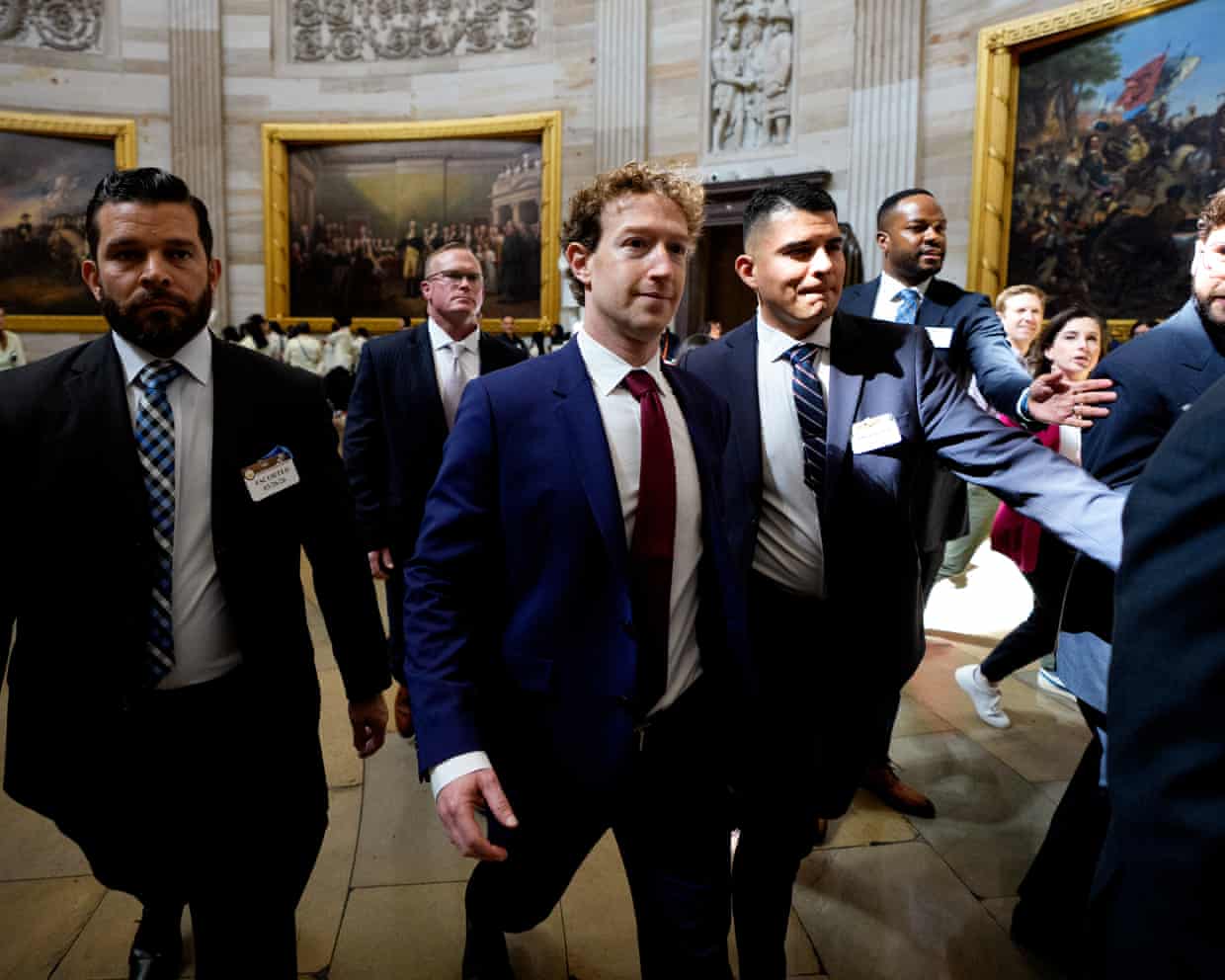
In the span of just two days, the most powerful social media company in the world faced a more severe public reckoning than it has in years.Jurors in California and New Mexico gave back-to-back verdicts this week that for the first time ever found Meta liable for products that inflict harm on young people. For years, lawmakers, parents and advocates have raised red flags over how social media can hurt children, but now the tech firms are being held to account via court rulings that could set long-lasting precedents.A jury in New Mexico ordered Meta to pay $375m in damages on Tuesday over claims that its products led to child sexual exploitation, among other harms. The following day, a jury in California ordered Meta and YouTube to pay $6m over claims that both companies deliberately designed addictive products to hook young users

New York City hospitals drop Palantir as controversial AI firm expands in UK
New York City’s public hospital system announced that it would not be renewing its contract with Palantir as controversy mounts in the UK over the data analytics and AI firm’s government contract.The president of the US’s largest municipal public healthcare system, Dr Mitchell Katz, testified last week before the New York city council that the agreement with Palantir would expire in October.He said at the hearing that the contract, which focused on recovering money for insurance claims, was always meant to be short-term, and that there was an “absolute firewall” preventing Palantir from sharing information with US Immigration and Customs Enforcement. He said that the agency had “not had any incidents”.The contract and related payment documents shared with the Guardian by the American Friends Service Committee and first reported by the Intercept, show that NYC Health + Hospitals has paid Palantir nearly $4m since November 2023

Can Adam Freier’s California Legion solve America’s rugby problem?
One day in March 2012, Adam Freier sat down to write a column for the Sydney Morning Herald. His Melbourne Rebels were on a losing streak and though he had 25 caps at hooker including a World Cup campaign for Australia, he was nearly 32 and staring at the end of a career at the coalface, 12 years in the front row of the scrum at the highest level. Describing a body breaking down, a struggling club, the agony of endless defeats, he imagined group therapy in front of “strangers in the local hall”.“My name is Adam Freier, and I hate to lose.”Fast-forward 14 years

The Strong, silent type: UConn’s standout is making basketball stardom look easy
Sarah Strong has the most jump-off-the-page talent in the women’s game since Caitlin Clark, and UConn greats say she could be the best of themFormer WNBA All-Star turned Boston Celtics executive Allison Feaster was recently asked about the differences between high-level female and male hoopers.“This is a very basic example,” the Celtics’ vice-president of team operations and organizational growth told the Far From the Tree podcast. “But most of the women have had exposure to different types of leadership. Most of the professionals have four-year degrees and even advanced degrees. Many of the professional women have lived outside of the US

From basil to pistachio and peas – in praise of pesto, whichever way you make it

Anything but eggs – the best chocolate for Easter

Four knockout bakes and tips from the master: Edd Kimber’s recipes for cooking with chocolate

Sauces, spreads, sprinkles – and cocktail in a can: whose fridge is this?

Rachel Roddy’s recipe for potato, aubergine and herb tortino alla fiorentina

How to turn old sourdough into a classic pudding – recipe | Waste not