US supreme court hears whether smartphone location data warrants infringe users’ privacy

The US supreme court is considering whether sprawling warrants for smartphone location data infringe on Americans’ privacy rights and violate the constitution.Justices heard opening arguments in Chatrie v United States on Monday that concerned law enforcement’s reliance on so-called “geofence warrants” in difficult cases.The case was originally brought by Okello Chatrie, whose phone location data helped police in Richmond, Virginia, track him down after he robbed a bank at gunpoint and escaped with $195,000 in 2019.Chatrie pleaded guilty to armed robbery and was sentenced to 12 years in prison, but his lawyers argue none of the evidence against him should have been admissible in court.A lawyer for the US Department of Justice argued that nearly any actions taken in public while in possession of a smartphone afforded no expectation of privacy.
“An individual has no reasonable expectation of privacy in movements that anyone could see, that he has opted to allow a third party to analyze for its own purposes,” the US solicitor general, a high-ranking lawyer for Donald Trump’s administration, has argued in legal filings.Law enforcement is increasingly demanding that tech companies hand over sensitive phone location data on people at or near a site where a suspected crime occurred – anyone who falls within the radius of a virtual “fence”.These geofence warrants, rather than specifying their targets, instead compel tech companies to hand over data to police or the FBI on every electronic device in a particular place at a given time.Privacy advocates and some legal experts view geofence searches as a dragnet that sweeps up innocent bystanders.“Just because you have a cell phone, should you be subjected to all sorts of law enforcement investigations because of crimes that may have happened in your vicinity?” said Paul Ohm, a law professor at Georgetown University, who submitted an amicus brief in the case.
These warrants can lead to an individual’s phone location data being shared with the police simply because they “were in the wrong place at the wrong time, or even worse – you weren’t, but your phone thought you were”, Ohm added.Law enforcement officers and prosecutors say these geofence warrants help them solve crimes after reaching dead ends.Justice Brett Kavanaugh expressed concerns about “the practical consequences of not being able to solve murders”.Chatrie had turned on an optional Google “location history” feature that documented his location every few minutes.The government noted in its legal filings that “only about one-third of active Google account holders actually opted into the location history service”; Chatrie’s lawyers noted in theirs that this amounted to more than 500 million Google users.
After officers interviewed witnesses at the bank Chatrie robbed and reviewed security footage, they had no leads,In a geofence warrant request, law enforcement requested that Google provide phone location data for a 30-minute period before and after the robbery from all cellphones within 150 meters of the bank, bringing in Chatrie’s phone location data but also information on 19 other accounts,The detective on the case asked Google for more data on all of these people, but the tech company pushed back, and eventually he only requested further information on nine people,Towards the end of the investigative process, that number whittled down to three devices; one was Chatrie’s, and the information included an email address with his name,The US government has argued in legal filings that Chatrie chose to allow Google to collect and use his phone location data, and that investigators identified him through a warrant – although the plaintiff’s lawyers have argued this warrant was overly broad.
Google, for its part, has changed some of its geofencing policies since Chatrie was arrested.The tech giant has transferred this location data off its servers and onto people’s phones, so that it can’t comply with geofencing warrants in the same way anymore, said Matthew Tokson, a law professor at the University of Utah.But the government is increasingly trying to obtain this information directly from cell phone providers and other companies, he adds.The case still affects “privacy protections for data stored in cloud services and collected by consumer apps”, the Electronic Privacy Information Center noted in a press release.Privacy advocates warn the implications of this case go far beyond suspected criminals.
“If the government doesn’t need to get a warrant or link something to a crime, it could monitor a protest or an abortion clinic or a gun range or a church or an AA meeting or a doctor’s office,” Tokson says.Some justices were worried about the broader privacy implications, too.If the court rules that a geofence warrant doesn’t constitute a search by law enforcement, “our privacy rights might be completely eviscerated”, Ohm said.“It would lead to a lot of unregulated police activity.” The fourth amendment of the US constitution protects against “unreasonable search and seizure”.
Both Ohm and Tokson got the sense from the judges’ remarks on Monday that at least some justices seemed likely to find these geofence warrants counted as a search, which should bring some relief to privacy advocates.Justice Sonia Sotomayor suggested on Monday that she wasn’t convinced by the government’s argument that short-term location information doesn’t reveal much about an individual’s patterns of life.She explained how people take their phones everywhere, from the bathroom, to a cannabis shop to a brothel.“It really doesn’t matter … whether it’s a minute that you’re searching for or six weeks, it’s not the time that’s an issue – it’s whether or not private information in which you have a reasonable expectation of privacy will be sought,” she said.

What did Morgan McSweeney and Philip Barton tell MPs about Mandelson’s vetting?
Morgan McSweeney, the prime minister’s former chief of staff, gave his first public appearance at a high-stakes hearing of the foreign affairs select committee to be grilled on the appointment – and vetting – of the disgraced US ambassador Peter Mandelson. He was preceded by the former Foreign Office chief Philip Barton, who oversaw the early formal process for Mandelson’s appointment. Here’s what we learned.Barton said that there was “absolutely” pressure on the Foreign, Commonwealth and Development Office (FCDO) to get Mandelson to Washington as quickly as possible, though he drew the same distinction as the prime minister that there was a difference between pressure to grant vetting and pressure to do the process quickly.He said that No 10 was “uninterested” in the vetting process, and the inquiries were about the pace at which he could arrive in Washington, ideally before the inauguration

Man who heckled Shabana Mahmood dismisses ‘laughable’ white liberal claim
A protester who heckled Shabana Mahmood said he came to the UK as a child from Malaysia, describing the home secretary’s claim that he was a “white liberal” as “laughable”.Joe, 32, who did not wish to give his last name, migrated from Malaysia at the age of four with his family. He said the home secretary’s proposed immigration rule changes would have left him, and thousands of children like him, in limbo.“Imagine being a child growing up and not knowing whether you’re going to be deported out of this country?” he said.Mahmood told “white liberal” hecklers to “fuck right off” during a live interview in central London last week, after protesters accused her of copying the policies of Nigel Farage’s Reform UK during an on-stage event

What is ‘DV’? Key terms used in the Mandelson vetting row explained
The story of how Peter Mandelson failed his UK security vetting before he took up his post as ambassador to the US – and the overturning of the decision that he should not be given clearance – is full of the abbreviations of the British national security apparatus and the archaic language used to describe parliamentary process.Here are the key terms to understand about the story, as Morgan McSweeney and Philip Barton answer questions from the foreign affairs select committee. McSweeney, formerly Keir Starmer’s chief of staff, and the ex-Foreign Office chief Barton are giving evidence about who knew what, when.At the heart of the story is Mandelson’s application for a level of security clearance known as “developed vetting” (DV) made after his appointment as ambassador had been announced.According to a government guide to security clearance levels, officials in roles that require them to have “frequent and uncontrolled access” to top secret material and assets need to have DV

Welsh Labour faces ‘existential’ change as party braces for May election defeat
Welsh Labour is the democratic world’s most successful election-winning machine, coming first in Wales in every general election since 1922 and every devolved election since 1999. Come next month’s Senedd election, however, this history-making run is expected to end.Labour’s collapse has left a vacuum, and former Labour voters are going to opposite ends of the political spectrum. Plaid Cymru and Nigel Farage’s Reform UK are neck and neck in the latest poll, although coalition maths make it highly unlikely Reform would be able to form a government.The possibility of Labour losing power after 27 years and the pro-independence Plaid entering government as a senior partner for the first time means “this election is huge”, said Laura McAllister, a professor of public policy at Cardiff University
Britain becoming ‘soft target’ for Russian propaganda, says security expert
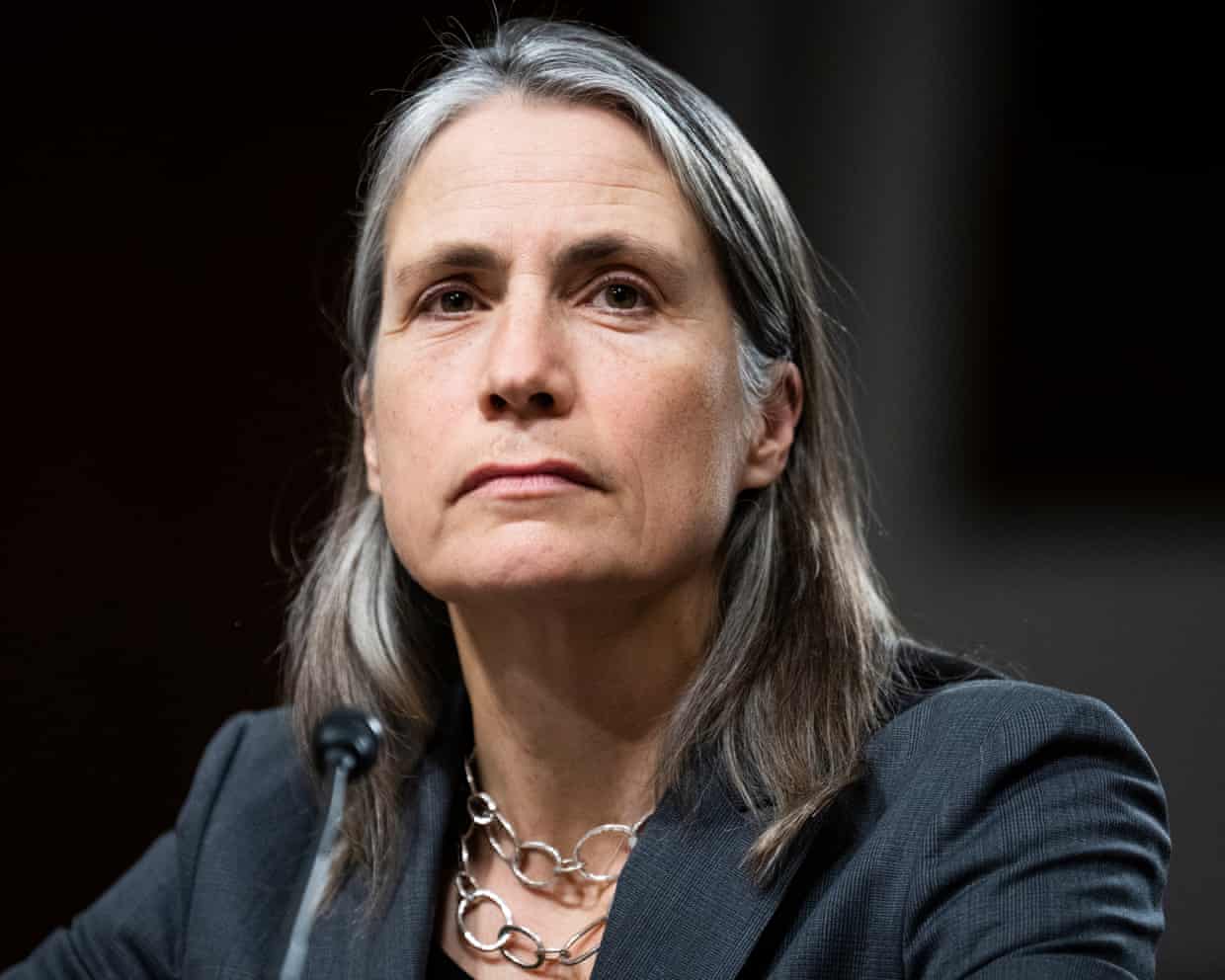
Britain is becoming a soft target for Russian and other state propaganda because the UK is not prepared to educate people on how to deal with information warfare, according to a former White House adviser and security expert.Fiona Hill told a parliamentary committee that she feared the UK had become “extraordinarily vulnerable” to online manipulation feeding into the electoral system because there was a lack of discussion about civil defence.“I think part of the problem is also on the societal level: that the UK increasingly looks like a soft target rather than a hard target, because modern war, as we all know, is fought with so many different methods now, including propaganda,” Hill said.She contrasted the UK with Sweden, which has an idea of “psychological defence”. It is about “training people to think about how you deal with all kinds of information warfare, so people can recognise when they’re being manipulated”
Top Foreign Office official ‘felt pressure’ for ‘rapid outcome’ on Mandelson vetting
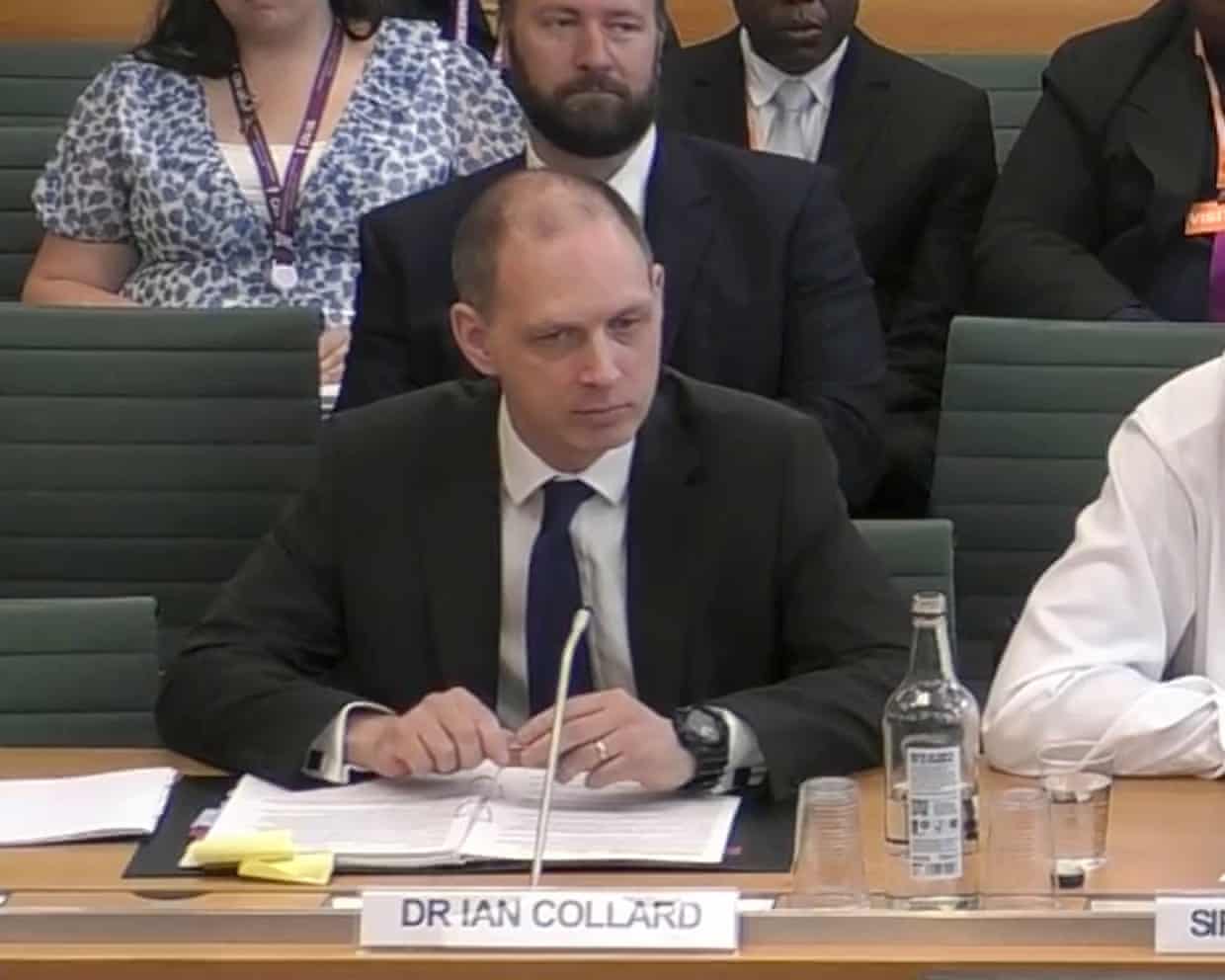
A top Foreign Office security official who played a key role in granting Peter Mandelson’s vetting clearance “felt pressure to deliver a rapid outcome” because of contacts from Downing Street, MPs have been told.In testimony relayed to parliament via the Foreign Office (FCDO), Ian Collard said he had not seen the assessment summary produced by the vetting agency when he gave an oral briefing to Olly Robbins, the department’s former permanent secretary. Instead, Collard had received an oral briefing from a member of the FCDO’s personnel security team.Robbins was dismissed from his position by Keir Starmer on 16 April after the Guardian revealed the FCDO gave Mandelson “developed vetting” clearance despite United Kingdom Security Vetting (UKSV) recommending it not be granted in late January 2025. The clearance was necessary for Mandelson to take up his announced role as British ambassador to Washington

Europe’s smaller airports ‘under threat’ if fuel shortages cause many cancellations

Barclays cuts back risky lending after £228m hit from UK mortgage firm MFS

‘They’re supposed to be handmade’: zine creators fight to resist AI influence

MacBook Pro M5 review: serious power, still long battery life

‘Like cutting the head off a hydra’: how Mary Cain exposed Nike’s disgraced coaching team

The Breakdown | Celebrating elite speed machines who can send rugby into the stratosphere