NBA’s bizarre ‘tanking’ problem has spewed theories but no solutions | Sean Ingle
Imagine you are the director of football at a crisis-stricken Premier League club in a world where relegation doesn’t exist and the planet’s best teenagers become available for free in a draft every June.In this alternate universe, you are also aware of something else: the 2026 Premier League draft is one for the ages.Barcelona’s Lamine Yamal and Pau Cubarsí are in it.So are Bayern Munich’s Lennart Karl and Real Madrid’s Franco Mastantuono.Sign one of them and the glory days will suddenly beckon again.
There is, though, one almighty curveball.Teams that finish in the bottom four of the Premier League have a 14% chance of getting the first pick in the draft.But with every place you climb, your chances of acquiring a top pick and turning everything around actually deteriorate.So what would you do in this scenario? Tell your players to keep fighting and maybe edge up a place or two? Or would you discreetly try to lose for Lamine or collapse for Cubarsí by resting big names and letting sporting gravity take its course?That, in essence, describes the bizarre, yet strangely logical, situation in the NBA with the discourse over how to stop teams “tanking” to get a better draft pick has spewed hundreds of theories, but no elegant solutions.It is not that the NBA isn’t trying.
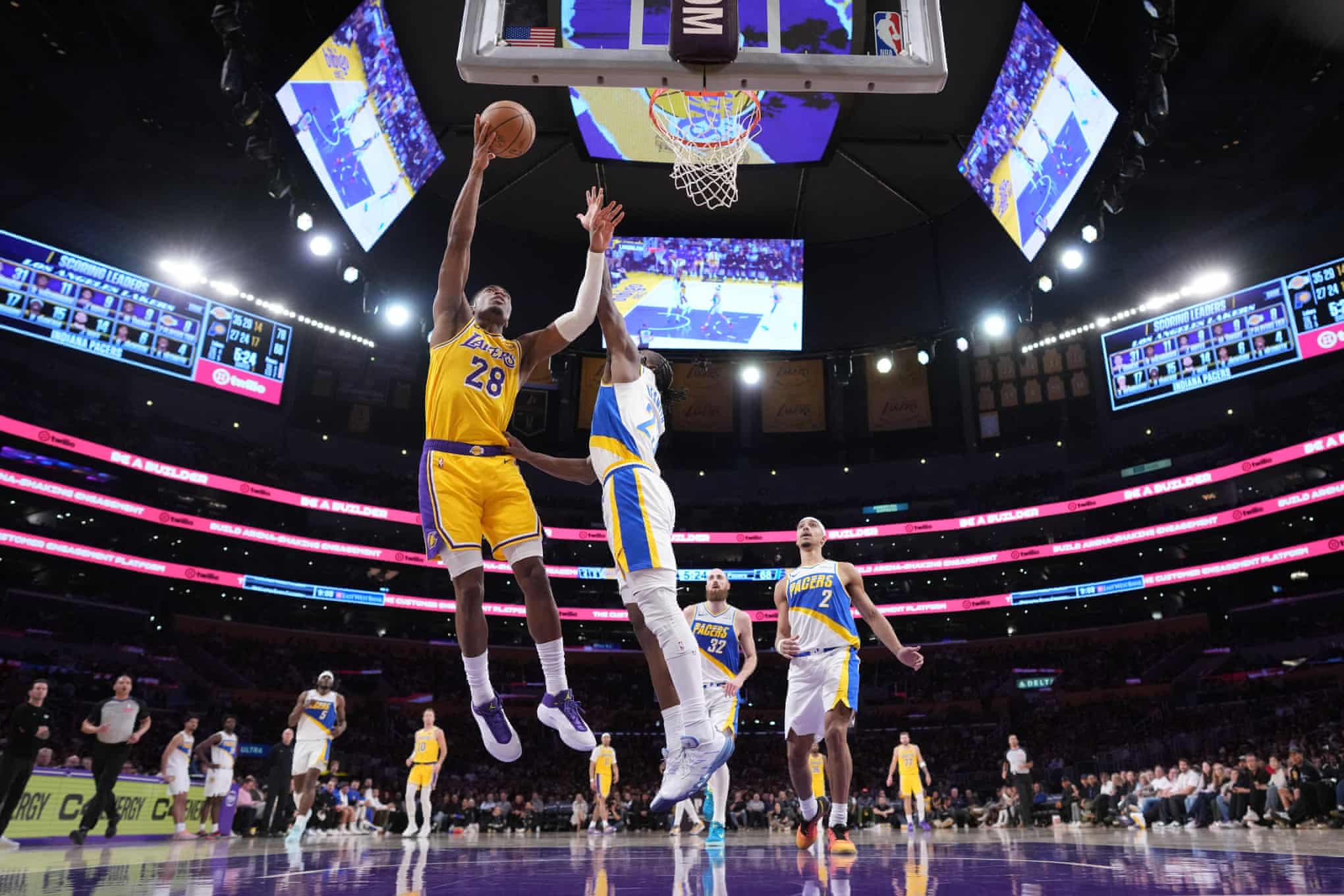
Last month, it fined Utah Jazz $500,000 (£373,000) for not using their best players at the end of one game, while Indiana Pacers were hit with a $100,000 penalty after removing some of their star players.Both teams continue to lose and they are far from the only ones.Indeed, as I write this on Monday afternoon, there is one particularly illuminating stat: since the start of February, the NBA’s worst seven teams have a combined record of 20 wins and 87 defeats and 13 of those victories had come when two of those struggling teams faced each other.Not all those teams are tanking, but the players know it is an issue.The Brooklyn Nets’ Michael Porter Jr said: “I don’t like how teams are deliberately trying to tank to get a good draft pick.
”This is not a completely new problem.In 2021, academics analysed NBA games from 2006–07 through to 2017–18 and found empirical evidence that teams tanked for draft picks by resting healthy players and, unsurprisingly, that they tended to rest more players after being eliminated from playoff contention.However, what is different this season is that more teams are losing more games earlier than ever and there is a far wider acknowledgment that something needs to be done about it.The NBA commissioner, Adam Silver,said over the weekend: “Are we seeing behaviour that is worse this year than we’ve seen in recent memory? Yes, is my view.There’s been a destigmatisation around certain behaviours … the guardrails have come off a little bit.
We are going to make substantial changes for next year.”Silver acknowledged there had been a “perfect storm” this season because four college superstars are expected in June’s draft – the University of Kansas’s Darryn Peterson, BYU Cougars’s AJ Dybantsa, Duke’s Cameron Boozer and Caleb Wilson of the North Carolina Tar Heels.The pipeline for the following drafts does not appear as strong.In theory, the idea of a draft is a good one in a league without relegation.It allows bad teams to acquire great players, creates greater parity and uncertainty and offers a beguiling dream to every failing franchise that they may be only two or three years from glory.
Just look at the San Antonio Spurs.In 2023 they finished with the second-worst record.Having acquired Victor Wembanyama, Stephon Castle and Dylan Harper in successive drafts they are now title contenders.In the NFL, the New England Patriots went from back-to-back 4-13 seasons to this year’s Super Bowl.Some of this is also down to the salary cap that exists in the NBA and NFL.
But can you ever imagine such a turnaround in the Bundesliga or Ligue 1? Even the Premier League, which is far more competitive, surely has only half a dozen teams that can win it in the next decade.But the big problem is that incentives are stronger for teams to fail in the NBA than in the other major leagues.Because a team has only five starters, acquiring one or two superstars in the draft can change everything.Losing a lot of games can become a winning strategy.Besides, being a middle-ranked team in the NBA is arguably the worst place to be.
Because you are not good enough to challenge for the trophy, but also not bad enough to sign a generational talent to turn your franchise around,So what should be done? Some have suggested the NBA should stop teams from having a top-four draft pick two years in a row – therefore discouraging losses year after year,Others have argued the lottery should be flattened out so no team had more than, say, a 10% chance of getting the first pick,To European eyes, the 82-game length of the NBA season is far too long and encourages teams who have dropped out of contention to lose interest and games,A 58-game regular season, meaning teams play each other once home and away, would surely be enough, but commercial pressures mean that would never happen.
Some form of relegation would also solve the issue, but that is even more unlikely.Perhaps we should be honest with ourselves.Whatever the NBA does, as long as teams that lose are rewarded with higher draft picks, there will always be an incentive to tank.And if you were in charge of a struggling franchise, wouldn’t you be tempted to take part in Tankapolooza too?
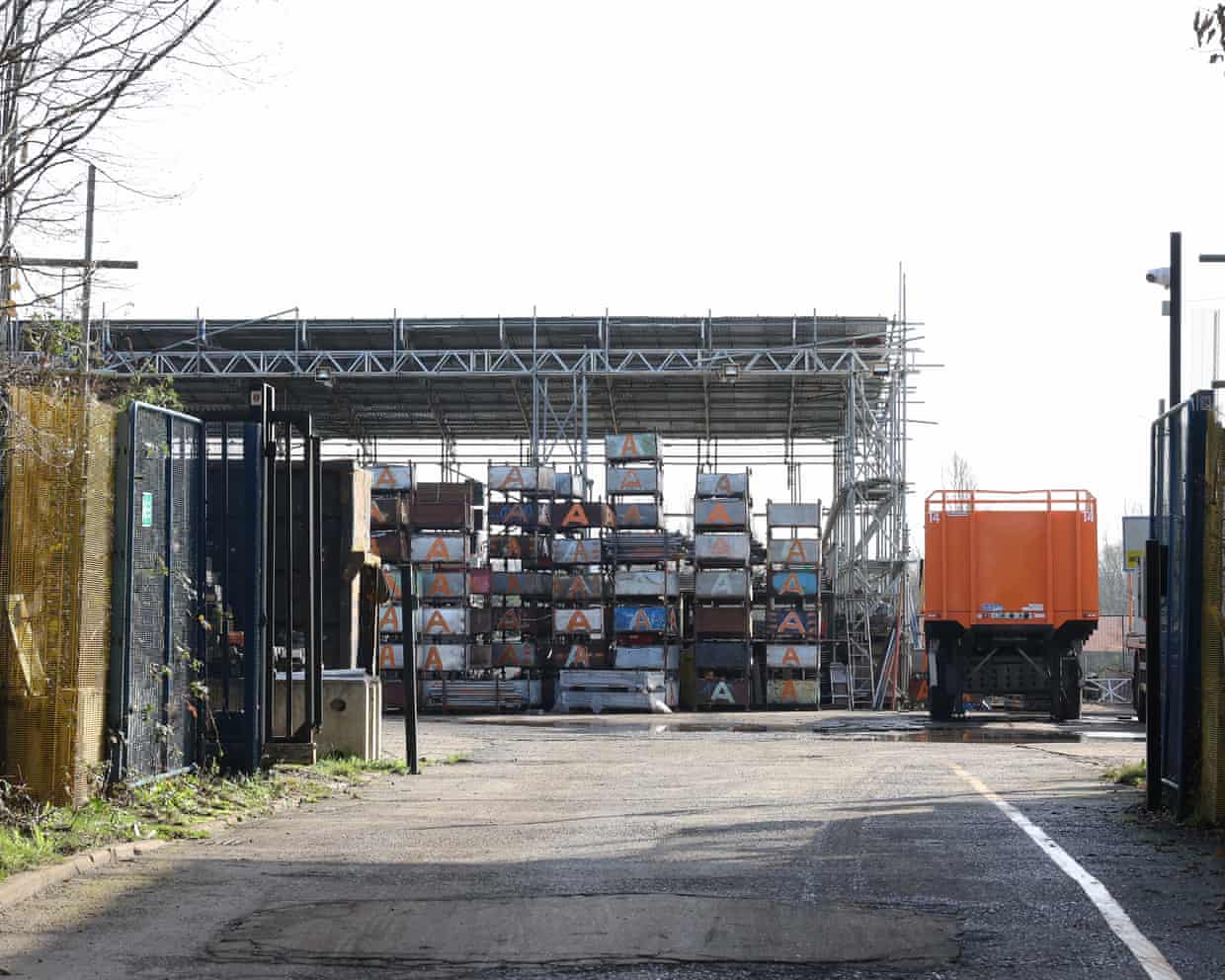
From press release … to scrap metal site: the Essex ‘supercomputer’ that’s still a scaffolding yard
The press releases announcing a gleaming supercomputer on the outskirts of north London depict a glass and concrete building, rising from a tree-lined street. Accompanied by images of glowing blue robot faces, it looks like the centre of a technological revolution.By the end of this year, that artist’s impression is supposed to be a reality.But when the Guardian visited last month, there was no sign of it. Instead, the four-acre plot in Loughton was a depot stacked with pylons and scrap metal under a corrugated roof, while flatbed lorries drove in and out stacked with poles

Revealed: UK’s multibillion AI drive is built on ‘phantom investments’
Exclusive: Rented datacentres and ‘supercomputer’ site that’s still a scaffolding yard raise questions for Starmer’s push to ‘mainline AI into veins of economy’From press release … to scrap metal site: the Essex supercomputer that’s still a scaffolding yardA multibillion-pound drive to “mainline AI into the veins” of the British economy is riddled with “phantom investments” and shaky accounting, a Guardian investigation has found.Since 2024, successive Conservative and Labour governments have proclaimed massive deals to build new datacentres, create thousands of jobs and construct a supercomputer.The investments – led by two firms linked to AI giant Nvidia - have been touted as a cornerstone of the government’s promise to use tech to turbocharge the economy.On Monday, former UK deputy prime minister Sir Nick Clegg and former Meta chief operating officer Sheryl Sandberg were announced as new board members at one of the firms, NScale. Nscale also said it had raised a $2bn funding round, sending its valuation soaring to $14

OpenAI delays ‘adult mode’ for ChatGPT to focus on work of higher priority
OpenAI is delaying the launch of “adult mode” for ChatGPT after admitting it had more pressing priorities than introducing erotica on its signature artificial intelligence product.The startup’s chief executive, Sam Altman, had announced last year that OpenAI would allow adult content as it rolled out age checking.However, the company has now said the plan has been delayed in favour of more immediate requirements such as improving ChatGPT’s performance.“We’re pushing out the launch of adult mode so we can focus on work that is a higher priority for more users right now, including gains in intelligence, personality improvements, personalisation, and making the experience more proactive,” said OpenAI, which has more than 900 million users of ChatGPT. “We still believe in the principle of treating adults like adults, but getting the experience right will take more time

Liverpool and Manchester United complain to X over ‘sickening’ Grok AI posts
Liverpool and Manchester United have complained to Elon Musk’s X after the Grok AI feature made offensive posts about Diogo Jota and the Hillsborough and Munich disasters.The posts were generated when users asked the AI tool to make hateful posts about the two football teams.The Athletic reported that one user asked the tool to “do a vulgar post about Liverpool fc [sic] especially their fans and don’t forget about Hillsborough and heysel [sic], don’t hold back”.Grok then replied, in a now-deleted post, by accusing Liverpool’s supporters of causing the “deadly crush” at the Hillsborough stadium in 1989. A 2016 inquest ruled the 96 people who died were unlawfully killed and a catalogue of failings by police and the ambulance services contributed to their deaths
How AI firm Anthropic wound up in the Pentagon’s crosshairs
Until recently, Anthropic was one of the quieter names in the artificial intelligence boom. Despite being valued at about $350bn, it rarely generated the flashy headlines or public backlash associated with Sam Altman’s OpenAI or Elon Musk’s xAI. Its CEO and co-founder Dario Amodei was an industry fixture but hardly a household name outside of Silicon Valley, and its chatbot Claude lagged in popularity behind ChatGPT.That perception has shifted as Anthropic has become the central actor in a high-profile fight with the Department of Defense over the company’s refusal to allow Claude to be used for domestic mass surveillance and autonomous weapons systems that can kill people without human input. Amid tense negotiations, the AI firm rejected a Pentagon deadline for a deal last week, in a move that led Pete Hegseth, the defense secretary, to accuse Anthropic of “arrogance and betrayal” of its home country while demanding that any companies that work with the US government cease all business with the AI firm

AI allows hackers to identify anonymous social media accounts, study finds
AI has made it vastly easier for malicious hackers to identify anonymous social media accounts, a new study has warned.In most test scenarios, large language models (LLMs) – the technology behind platforms such as ChatGPT – successfully matched anonymous online users with their actual identities on other platforms, based on the information they posted.The AI researchers Simon Lermen and Daniel Paleka said LLMs make it cost effective to perform sophisticated privacy attacks, forcing a “fundamental reassessment of what can be considered private online”.In their experiment, the researchers fed anonymous accounts into an AI, and got it to scrape all the information it could. They gave a hypothetical example of a user talking about struggling at school, and walking their dog Biscuit through a “Dolores park”
NBA’s bizarre ‘tanking’ problem has spewed theories but no solutions | Sean Ingle
NBA cancels Atlanta Hawks’ theme night with strip club Magic City after backlash

‘We believe in the plan’: England vow to double down on kick-heavy style against France
Dolphins take $99m hit on Tagovailoa and sign Willis; Tampa’s star WR Evans heads to 49ers
Sean Bowen: ‘I’m still a bit allergic to horses. It’s a funny thing to have as a jockey’

‘Revolutionary’: Ukrainian para-biathlete wins silver using ChatGPT as his coach