Human rights experts raise concerns over Olympics transgender women athlete ban
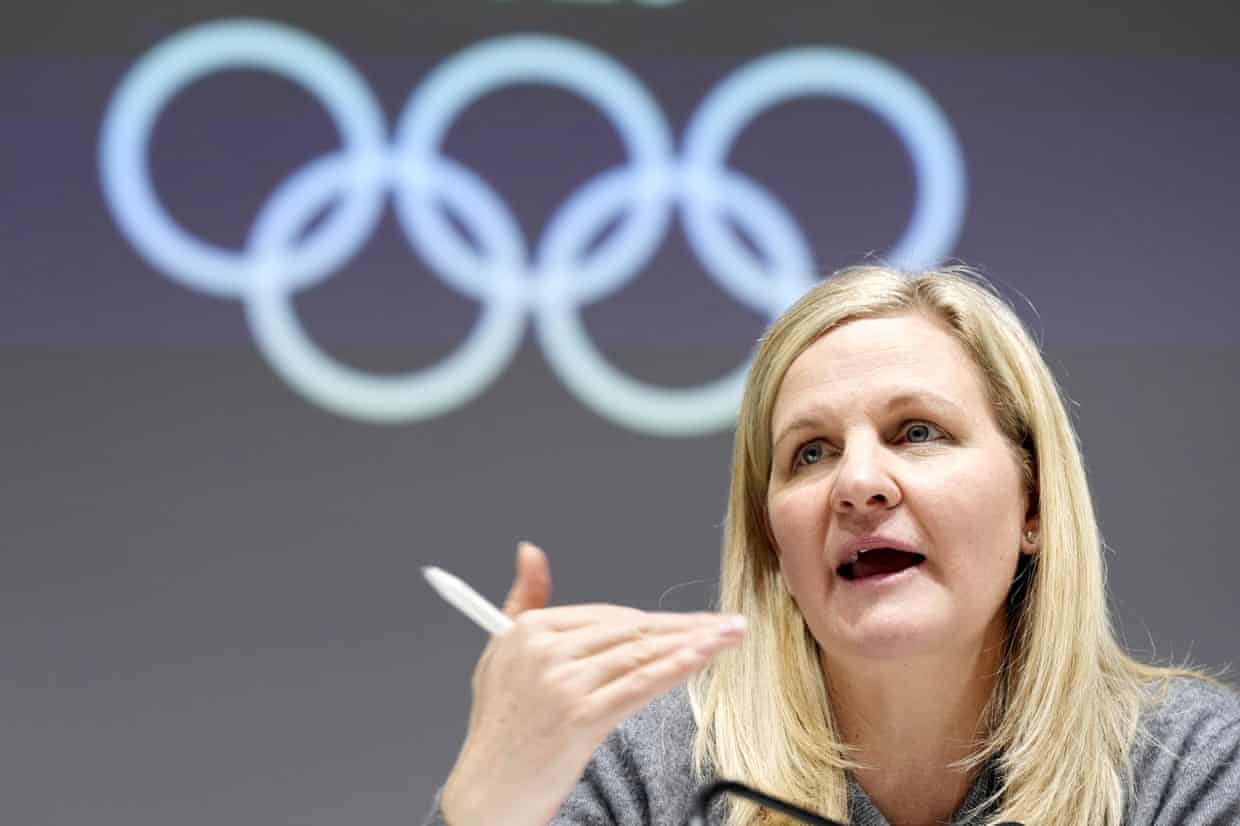
Over 100 human rights, sports and scientific groups have criticised the International Olympic Committee’s new gender eligibility guidelines as “a blunt and discriminatory response that is not supported by science and violates international human rights law”.The IOC’s new guidelines, announced on Friday, mandate genetic sex tests for all athletes competing in its women’s categories, as well as blanket bans of people who identify as transgender, intersex or with sex differences.Athletes in these categories have been allowed to compete in Olympic events since the IOC scrapped mandatory sex testing in 1999, which was deemed arbitrary, inaccurate, expensive and discriminatory.New IOC president Kirsty Coventry reversed the organisation’s position and backflipped on its own 2021 Framework on Fairness, Inclusion, and Non-Discrimination, a policy informed by extensive consultation and research which recognised the need for evidence-based, sport-specific and rights-respecting rules.“Mandatory genetic sex testing and rigid biological criteria as a condition for participation in the women’s category violates fundamental and universal human rights … including the right to equality, non-discrimination, dignity, privacy, and bodily autonomy,” said Professor Paula Gerber, an international human rights lawyer at Monash University.
“As several UN independent experts have noted, binary definitions of sex reinforce harmful stereotypes and erode progress toward substantive gender equality,Any testing of athletes needs to be individualised and evidence-based, not arbitrary or degrading,”The new guidelines were developed by a committee which has not publicly shared the scientific data that the IOC claims informed their position,In a press conference on Friday, Coventry claimed all women athletes will be tested for the SRY gene, which multiple medical experts have stated is unreliable and reductive,“The IOC’s move to mandate sex testing across the female category risks undermining both evidence-based policy and athlete wellbeing, while diverting attention from the real priorities in women’s sport,” said Dr Ada Cheung, a professor of endocrinology at the University of Melbourne.
“The best available data … shows that transgender women receiving gender-affirming hormone therapy are not meaningfully different from cisgender women in key performance-related measures such as muscle mass, strength, body composition, or cardiorespiratory fitness, and in many aspects have a disadvantage.“This represents a return to practices that were abandoned decades ago for good reason.”Of the tens of thousands of athletes who have participated in Olympic events since 1999, just one has identified as a transgender woman – Laurel Hubbard of New Zealand.She did not place in her event.Athletes who are intersex or have differences of sex development, including cisgender women, will be overly affected by the new guidelines, with women of colour likely to be disproportionately targeted due to their appearance.
The guidelines do not affect community sport, but national governing bodies could follow the IOC’s lead in implementing similar tests and bans at grassroots level.“This isn’t just about transgender or intersex athletes; this impacts every girl playing Australian sport today,” said Nikki Dryden, a human rights lawyer and former Olympic swimmer.“If these rules are adopted, it could mean that when you sign your daughter up to play sport, she may be subjected to sex testing just to participate.“Worse, it creates a culture where someone like a coach, an official, or even another parent, feels entitled to question whether your daughter ‘looks female enough’ to belong.That is not protecting women’s sport.
That is policing girls’ bodies.And once sport starts deciding which women are ‘acceptable’, no woman or girl is truly safe.“The IOC’s new guidelines will be unlawful in Australia.Mandatory sex testing and blanket bans directly conflict with the Sex Discrimination Act, our sporting National Integrity Framework, and our safeguarding obligations to children.“Moving towards exclusionary, invasive rules is not only unnecessary, it is a step back over 25 years that exposes athletes and organisations to serious legal and integrity risks.
”Australian Olympic Committee president Ian Chesterman said he supported the new guidelines, and offered affected athletes counselling and support.“Without doubt, this is a challenging and complex subject and at the AOC we approach it with empathy and understanding,” Chesterman said.“This decision provides clarity for elite female athletes who compete at the highest level and demonstrates a commitment to fairness, safety and integrity in Olympic competition, all of which are fundamental principles of the Olympic movement.”Australia’s chef de mission for the 2028 Games in Los Angeles, Anna Meares, said she commended the IOC for “taking the lead” on the issue.“The IOC ruling today protects female athletes at the highest level of competition, ensuring it remains safe and fair,” said Meares.
“I also know the pain this decision will cause some athletes and I empathise with them.“This is about integrity on the Olympic field of play.Female athletes know that when they compete it will be fair, it will be safe.”The AOC said it will now take some time to work with the IOC and member sports to fully understand the workings of the new policy.
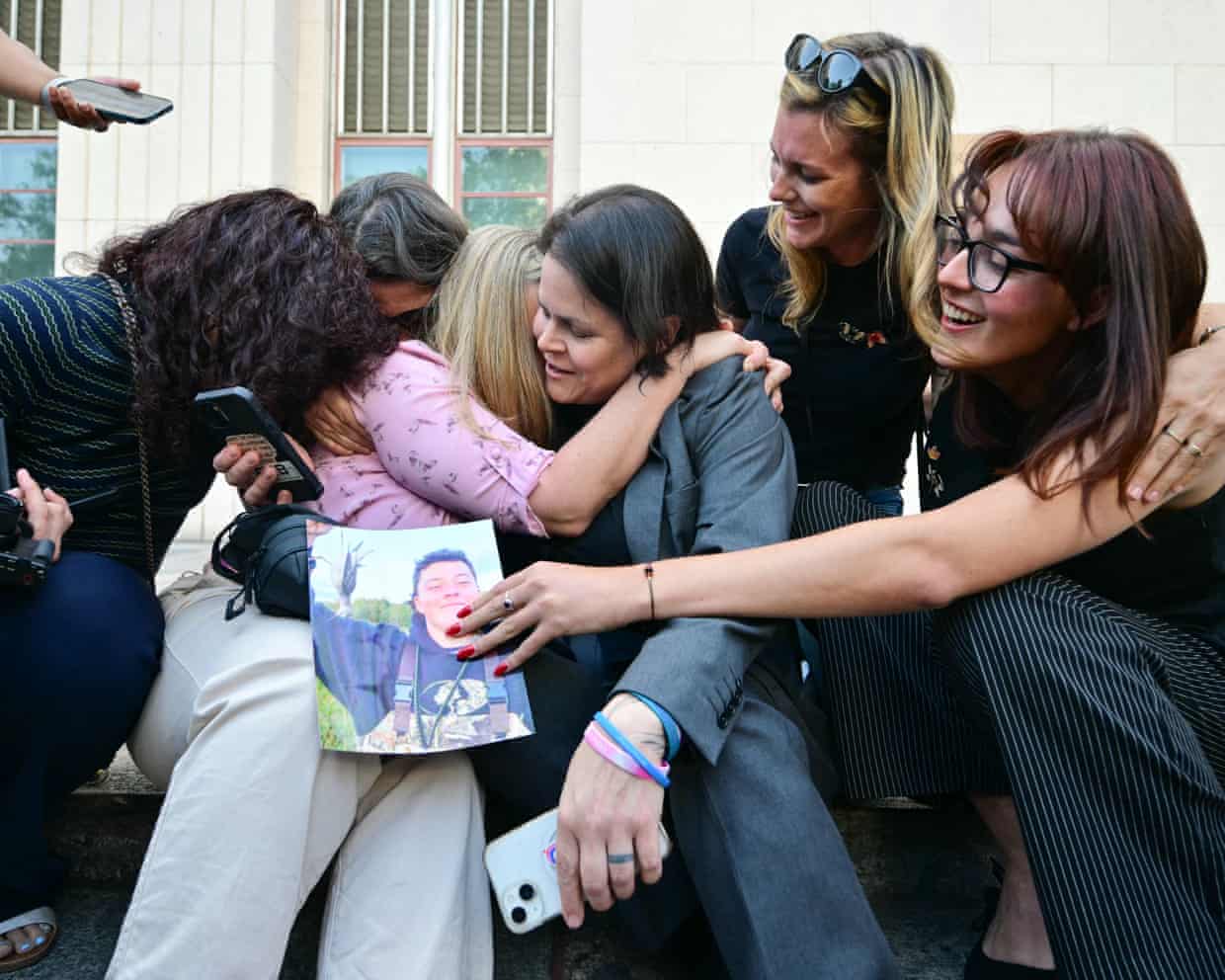
Human rights groups cheer ‘watershed’ verdict in social media addiction trial
The verdict in a landmark social media trial that Meta and YouTube deliberately designed addictive products has sparked calls for reform across borders. International human rights and tech freedom groups issued statements after the decision, praising jurors for holding social media companies accountable for harms to children and urging tech giants to change their design features to ensure children are safe.Amnesty International said in a statement on Thursday that “this court decision is clear: these platforms are unsafe by design and meaningful change is urgently needed”.The day prior, a Los Angeles jury found both Meta and YouTube liable for intentionally creating platforms that hooked a young user and led to her being harmed. The six-week trial was one of more than 20 “bellwether” trials that are expected to go to court in the next few years

Brussels opens investigation into Snapchat amid concern over children’s safety
Brussels has opened an investigation into Snapchat over concerns the social messaging app is exposing children to grooming, sexual exploitation and other criminality.In a separate decision on Thursday, the European Commission also said four pornographic websites were failing to prevent minors seeing adult content, harming young people’s mental health and fuelling negative gender attitudes.The investigations into five tech companies were brought under the EU’s Digital Services Act (DSA), which has come under fire from Donald Trump since coming into force two years ago. Aiming to protect European society from a wide range of internet harms, the DSA includes child safety provisions to combat cyberbullying, exposure to adult content and illegal products.The announcements came after a landmark ruling in a Los Angeles court found that two social media companies, Meta and YouTube, had deliberately created addictive products that harmed a young user

Google warns quantum computers could hack encrypted systems by 2029
Banks, governments and technology providers need to be prepared for quantum computer hackers capable of breaking most existing encryption systems by 2029, Google has warned.The tech company said in a blogpost that quantum computers would pose a “significant threat to current cryptographic standards” before the end of the decade and urged other companies to follow its lead.The company, owned by Alphabet, said: “The encryption currently used to keep your information confidential and secure could easily be broken by a large-scale quantum computer in coming years.”As it stands, quantum computers – which can rapidly carry out complex tasks – are a nascent technology with great potential and significant obstacles to being widely usable.Google, Microsoft and universities across the UK and the US are in the midst of building systems that harness the physics of quantum mechanics to perform extremely sophisticated mathematical calculations

Starmer vows to tackle social media’s ‘addictive features’ to protect children
Keir Starmer has said he will tackle “addictive features” in social media amid increasing signs the UK government is preparing to crack down on risks to children after a US court verdict that held Meta and YouTube responsible for harms caused by designing addictive technology.The prime minister said the verdict in a California court signalled a rising public expectation for more aggressive regulation and said: “I’m absolutely clear that we need to go further.”“The status quo isn’t good enough,” he said. “We need to do more to protect children. That’s why we’re consulting about issues such as banning social media for under-16s

Creator of AI actor Tilly Norwood says she received death threats over project
The creator of the AI actor Tilly Norwood has said she received death threats after a global backlash against the project, and said she developed it to “provoke thoughts and discussion” about the impact of AI in the entertainment world.Eline van der Velden caused anger and panic in Hollywood and beyond last year after she said talent agents had been interested in signing her creation. Prominent actors and acting unions immediately condemned the idea.In an interview with the Guardian, Van der Velden said she had been prepared for a backlash against the provocative idea of AI performers. However, she said she was “quite shocked by the vitriol” that followed
Charity Commission warns Alan Turing Institute of its legal duties after complaints
The board of the UK’s leading AI research institute has been reminded of its legal duties in areas such as financial oversight and managing organisational change by the charity watchdog after a whistleblower complaint.The Charity Commission issued formal regulatory advice and guidance to trustees at the Alan Turing Institute (ATI), the organisation’s board, after it was contacted by a group of staff with a list of concerns.The commission told ATI it was closing the case and was not launching a statutory inquiry – a formal investigation. However, the watchdog said if there was evidence of trustees ignoring its advice, it could resume contact with the institute.The commission launched a compliance case related to ATI after receiving the complaint last summer

Chess: iconic Reykjavik Open sparks memory of Bobby Fischer from 1973

Buttler looks for form as IPL returns with riches, political rancour and aftermath of tragedy

Aryna Sabalenka sinks Rybakina to set up Miami Open final showdown with Gauff
Human rights experts raise concerns over Olympics transgender women athlete ban
AFL scratching its head on decline in Indigenous participation as weight of history takes toll | Sean Gorman

Castleford’s sensational spell blows Bradford away to kick off birthday celebrations