From Laurel Hubbard to sex testing in five years: why the Olympics U-turned on transgender rules | Sean Ingle
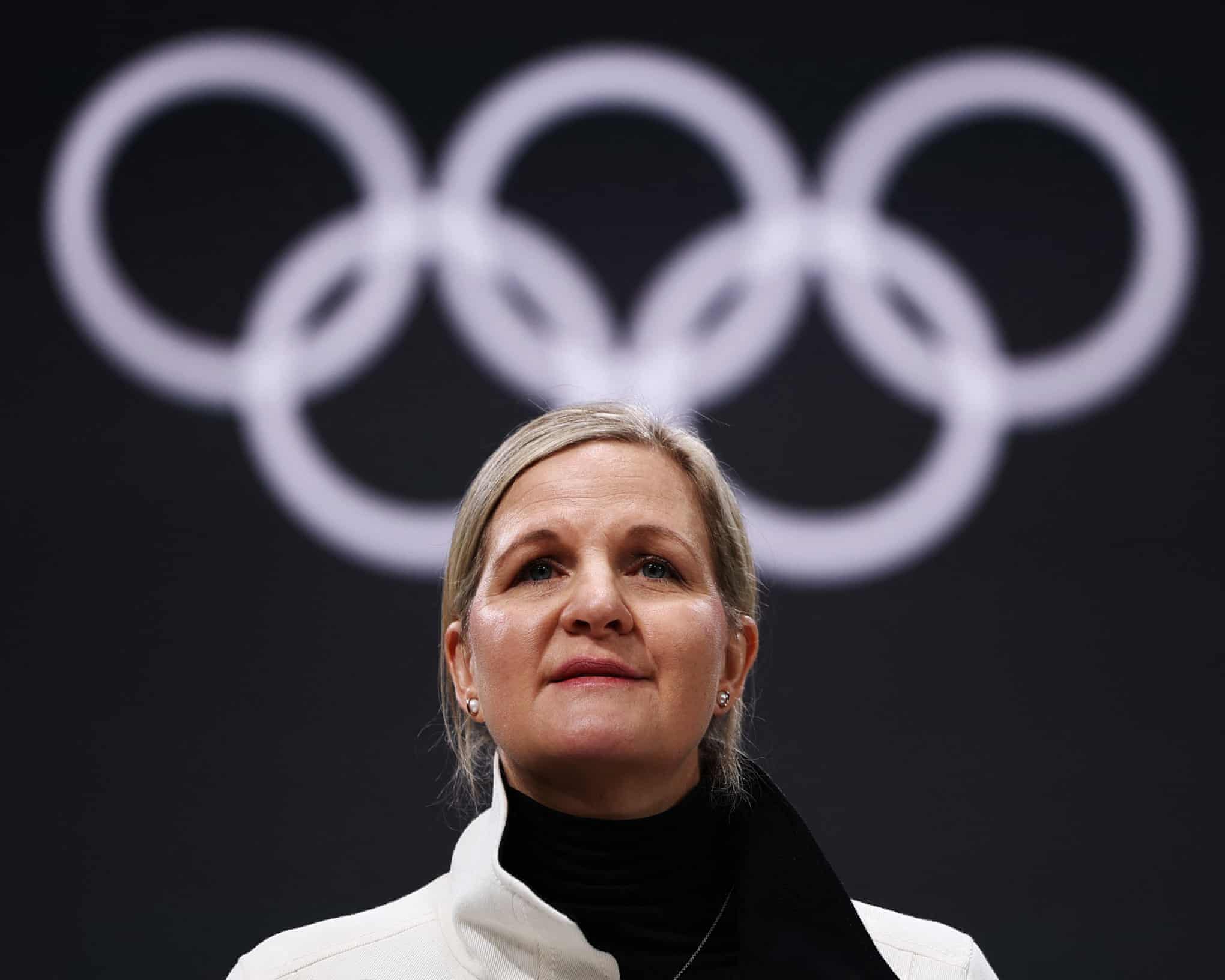
The IOC’s shift in position on trans women in elite sports is seismic, but new president Kirsty Coventry is reflecting a changed political climateBy any measure, it amounts to one of the most astonishing U-turns from a governing body in modern times.Four and a half years ago, the International Olympic Committee was lauding the appearance of the first transgender weightlifter, Laurel Hubbard, at an Olympics, and issuing a framework to sports saying that transgender women “should not be deemed to have an unfair or disproportionate competitive advantage” over biological women.Now it has not only ripped up every last morsel of that guidance but also performed a spectacular 180-degree turn.Over 10 tightly worded pages, the IOC now states that the female category must be protected for fairness and safety reasons, and makes it clear that SRY screening – a sex test using saliva or a cheek-swab – will be used to determine biological sex.It is a monumental shift that means transgender women and athletes with differences in sex development (DSD), who were reported as female at birth but have internal testes and have undergone male puberty, are now banned from the female category at all future Olympics.
It has caused anger among some groups, joy among others.But what is behind such a handbrake turn, which will be heard all the way from the IOC’s home in Lausanne to Los Angeles? And why did it happen?In conversations with multiple sources in IOC and sporting circles, the same names come up: Kirsty Coventry, Imane Khelif and even Donald Trump.But, perhaps surprisingly, there is also broad agreement that the IOC was pushing at an open door – in private, most sports had been urging it to introduce such a policy for some time.Was there one moment where the mood began to shift? For most sources it came amid the furore surrounding the Olympic women’s boxing tournament in Paris, and the questions over whether Khelif had a DSD, and thus an unfair advantage.It should be stressed that many in the IOC had huge sympathy for the Algerian gold medallist who was raised as a girl.
However, by late 2024, when the Guardian asked its executive director, Christophe Dubi, about the issues arising from the women’s boxing tournament, he admitted the situation “would be addressed”,A second significant factor was the election of Kirsty Coventry as IOC president last March,During her campaign, she – along with her rival Sebastian Coe – made it clear that she would protect the female category,And having got into office she wasted little time in setting up a working group to examine the issue,“This is something that I promised to do,” Coventry told the Guardian on Wednesday.
“I wanted to make sure that I’m fulfilling what I’m telling people and that I’m not just a mouthpiece.”Notably, one thing stood out most of all in an IOC survey of 1,100 athletes, many of them female Olympians or former Olympians: the majority of the women were in favour of change.As Dr Jane Thornton, the IOC’s director of health, medicine and science, noted on Wednesday: “There was a strong consensus that fairness and safety in the female category requires clear, science-based eligibility rules, and that protecting the category was a common priority.”Then there was the science.It is hardly news that males are stronger, faster and have better endurance than females.
As the IOC policy document makes clear, that advantage is 10-12% in most running and swimming events, and greater than 100% in events that involve explosive power, including collision, lifting and punching sports,The big difference in recent years is there have been more studies that show that when even men reduce their testosterone levels, that male advantage is largely still retained,In the others, transgender women and DSD athletes retain an advantage over natal women even after hormone treatment, because they have undergone male puberty,That, the IOC decided, meant that they needed to be banned in order to ensure fairness and safety in the female category,As the IOC puts it in its new document: “In light of the scientific consensus that males have a performance advantage in all sports and events that rely on strength, power and/or endurance irrespective of subsequent testosterone suppression or gender-affirming hormone treatment, the Olympic Movement has a compelling interest in having a sex-based female category, because this is necessary to ensure fairness, safety and integrity in elite competition.
”The vibes have also changed within sport.A few years ago, many sports felt there must be a way to balance fairness and safety for women while also being inclusive towards transgender and DSD athletes.The science has shown otherwise – and led to sports such as athletics, swimming and boxing introducing policies to protect the female category.And what of Trump? Well, there is an agreement that his signing of an executive order banning transgender athletes has concentrated some minds in the IOC in the run-up to the LA Games in 2028.However, as Coventry pointed out on Wednesday: “This was a priority for me way before President Trump came into his second term.
”This issue isn’t entirely settled, despite the IOC decision.For a start, it applies only to elite sport.And there could still be battles ahead at the court of arbitration for sport if transgender or DSD athletes decide to challenge it.However, whichever side of this issue you fall on, one thing is clear: a seismic shift has taken place.
Next says Middle East conflict could raise clothing prices by up to 10%
The boss of Next has said clothing prices could rise by 4% to 10% if conflict in the Middle East extends into the autumn and factories are hit by higher fuel and fabric costs.Simon Wolfson said the clothing and home retailer had so far seen little disruption to its supply chain.While container ships are being delayed by up to two weeks as they travel slowly to save fuel, he said the company already held enough spare stock to prevent gaps on shelves.He said these costs could amount to £15m if the conflict lasts three months and prices could begin to rise by about 1% from June or July if disruption dragged on until then.Lord Wolfson added that Next was offsetting additional costs on fuel and air freight with savings elsewhere and it did not expect any effect on profits for the year ahead

There are solutions to Britain’s energy crisis | Letters
The Iran war has exposed the cost of successive governments’ fixation on short-term, vote-winning policies, leaving Britain increasingly vulnerable to strategic coercion, particularly in energy (The UK sleepwalked into this energy price shock, 23 March).British companies currently lead a new, technologically proven, job-creating industry which, had it been supported earlier, would have strengthened security of supply and reduced costs. It is tidal stream energy.Britain has about 50% of Europe’s tidal resources, all within our territorial waters and flowing at different times. It is predictable, inexhaustible and can be operational within three years of consent, independent of global energy prices and weather variability

Two salon owners wanted to go zero-waste. Could they do it and keep their business afloat?
Scisters Salon & Apothecary in the San Diego area is committed to sustainable beauty and going low-wasteThe first thing you notice when you walk into Scisters Salon & Apothecary is what isn’t there. No wall of glossy plastic bottles promising “repair” or “shine”. No sharp chemical tang or aerosol haze. The only trash can is a tiny basket that mostly collects coffee cups and gum wrappers clients bring from home.Instead, the shelves of this southern California salon are lined with large refill containers of shampoo and conditioner, houseplants dot the space, hair clippings are swept away for compost, and the air carries a trace of bergamot and vanilla
Ministers vow to spend record £8.4bn on road maintenance in England
Ministers have pledged to spend record amounts on road maintenance as part of a £27bn five-year investment plan for England’s major roads and motorways.The government said it was aiming to “fix the foundations” with almost a third, £8.4bn, of the spending going on maintenance, including resurfacing a quarter of England’s strategic road network.However, campaigners said the plan – the government’s third road investment strategy, known as RIS3 – was still building needless new roads, with funding approved for 16 schemes.That includes £1

Ticketmaster quietly raised other fees after US crackdown on hidden charges
Following a wave of regulations banning the surprise fees that appear at the end of a transaction, Ticketmaster stopped charging the extra few dollars it added to each order at checkout. Typically shared with the venue, the order processing fee was a boon to a global platform that sells hundreds of millions of tickets a year.But documents obtained by the Guardian show that while Ticketmaster eliminated this fee to comply with the rules, the company simply raised the cost of different fees in a number of its venues to ensure it didn’t lose money.“To account for the loss of order processing revenue, we must adjust fees to offset the revenue loss,” Ticketmaster wrote in an email to the Findlay Toyota Center in Arizona last year. The venue eliminated a $6 order processing fee, but raised the service fee on each ticket by $2 instead

Co-op boss quits after year marked by cyber-attack and claims of ‘toxic’ culture
The Co-op Group has announced that its chief executive will step down this weekend after a difficult year that included a cyber-attack and recent claims of a “toxic” culture at the business.Shirine Khoury-Haq will depart on 29 March and Kate Allum, a board member and former boss of the dairy group First Milk, will step in as interim boss while a permanent replacement is sought.News of the exit came as the company, which owns more than 800 funeral parlours and an insurance and legal advisory business, as well as operating more than 2,000 convenience stores, dived to an underlying loss of £125m.The drop from a £45m profit the year before came after it took a £107m profits hit from the damaging IT hack, which forced it to shut down some systems.On Thursday, Khoury-Haq denied that her resignation was linked to the allegations of a toxic culture

Oil shrugs off Trump’s latest Iran extension; UK consumers feel ‘ripple of fear’ from the conflict – business live
US markets see biggest slump since start of US-Israel war on Iran
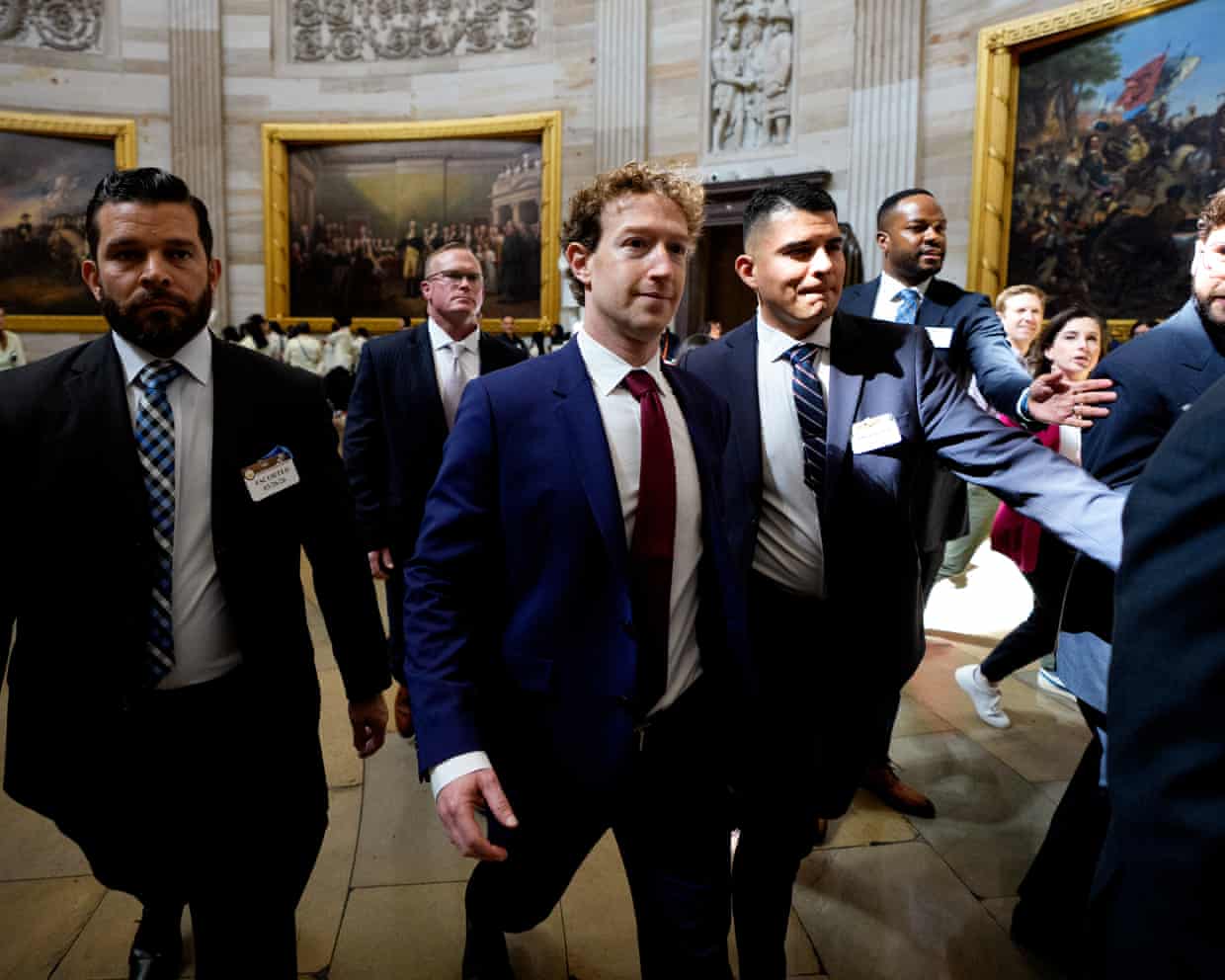
‘Accountability has arrived’: dual US court losses show shifting tide against Meta and co
New York City hospitals drop Palantir as controversial AI firm expands in UK

Chess: iconic Reykjavik Open sparks memory of Bobby Fischer from 1973

Aryna Sabalenka sinks Rybakina to set up Miami Open final showdown with Gauff